
Quick Answer
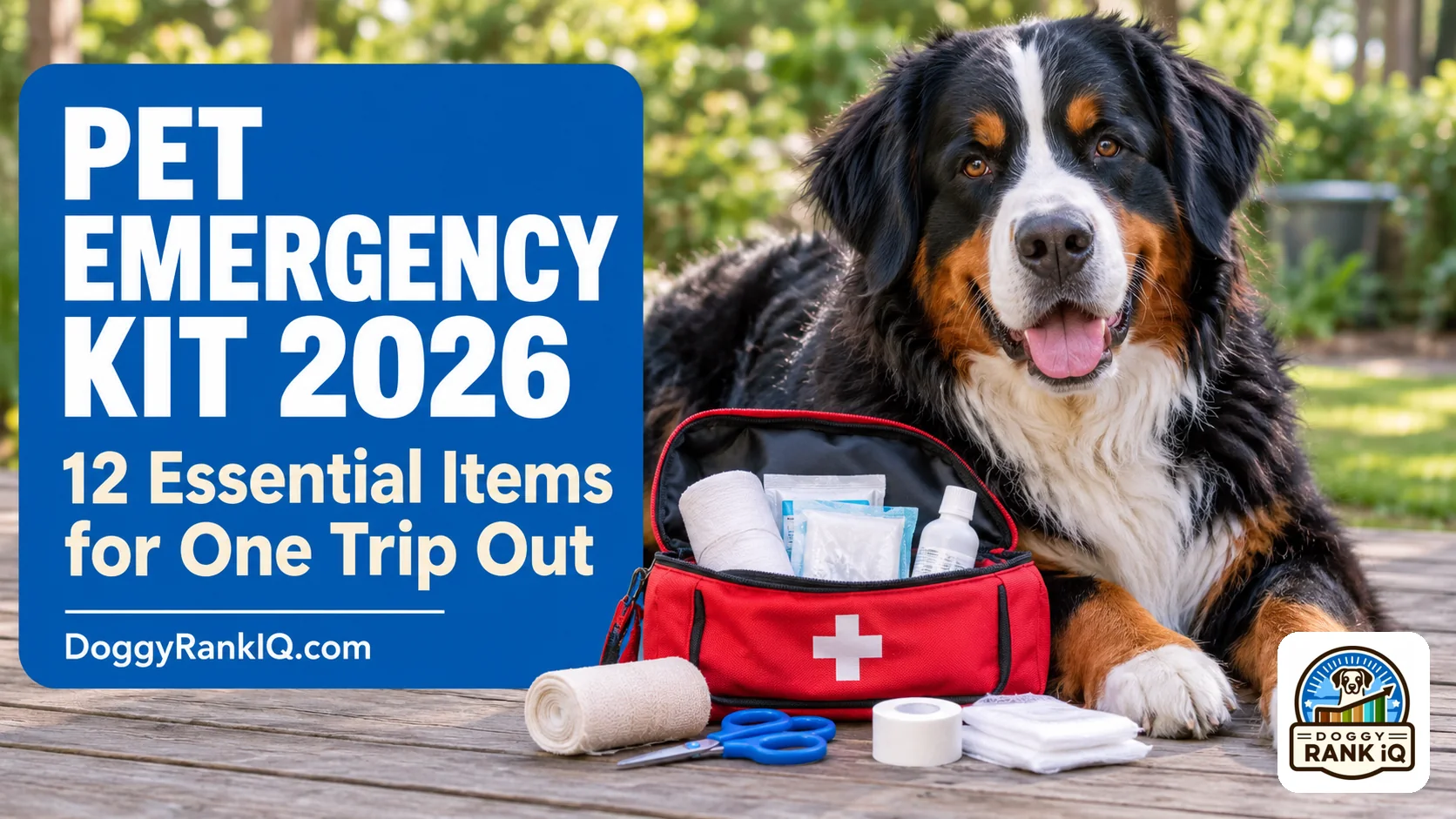
A pet emergency kit for a single evacuation trip needs twelve categories: identification, a secure carrier or harness, water, food, medication, a basic first aid kit, sanitation supplies, a crate, a comfort item, a recent photo, paperwork, and emergency contact numbers. Ready-made kits run roughly $20 to $130, and building your own typically lands near $60 to $90. The goal is a bag you can grab once and carry out the door in under five minutes.
The smoke alarm goes off at 2 a.m. and your dog is standing by the door, already panting. You have maybe four minutes before the fire department wants everyone off the block. This is not the moment to remember that the leash is in the car and the medication is in a cabinet you cannot reach. A pet emergency kit solves exactly one problem: getting your dog out the door with what he actually needs, in one bag, grabbed once.
This is not the seven-day stockpile that federal agencies recommend for sheltering in place, as outlined in Ready.gov’s guidance on pets in emergencies. It is smaller than that, built for apartment dwellers, renters near wildfire zones, and anyone who might get a knock on the door and twenty minutes to leave. A pet emergency kit for one trip out should fit by the leash hook, weigh what you can actually carry down four flights of stairs, and contain items you have already tested on your own dog.
Key Takeaways: pet emergency kit
- A pet emergency kit needs twelve core categories, scaled for a short evacuation rather than a week of sheltering.
- The American Red Cross and ASPCA build their pet disaster guidance around the same basics.
- Ready-made kits cost about $20 to $130. Building your own typically runs $60 to $90, less if you already own a crate.
- Food, water, and medication need to be refreshed on a schedule, not discovered expired during an actual emergency.
- A pet emergency kit stabilizes a dog on the way to care. It does not replace a veterinarian.
- Apartment dwellers should prioritize a single backpack over a duffel bag so both hands stay free.
- Cats and small dogs need a different kit than large dogs: carrier size, food volume, and bowl size all change.

What are you packing for?
Check the current price
Check the current price
Tap an option to see the answer.
How do I make a pet emergency kit?
Start with a bag that zips, has a shoulder strap, and sits somewhere you pass daily, a hallway closet, not a basement. Add the twelve categories below one at a time, checking them against your own dog’s size, medications, and quirks.
A sixty-pound Labrador and an eight-pound Chihuahua need different carriers, different food volumes, and different muzzles, so resist the urge to copy someone else’s exact list without adjusting for your dog. Build the kit in one sitting if you can. A kit assembled over three weeks of good intentions tends to have gaps nobody notices until the night it matters. Keep receipts or a simple inventory taped inside the bag so you know what is in there without unpacking it at 2 a.m.
What should I put in a pet emergency kit?
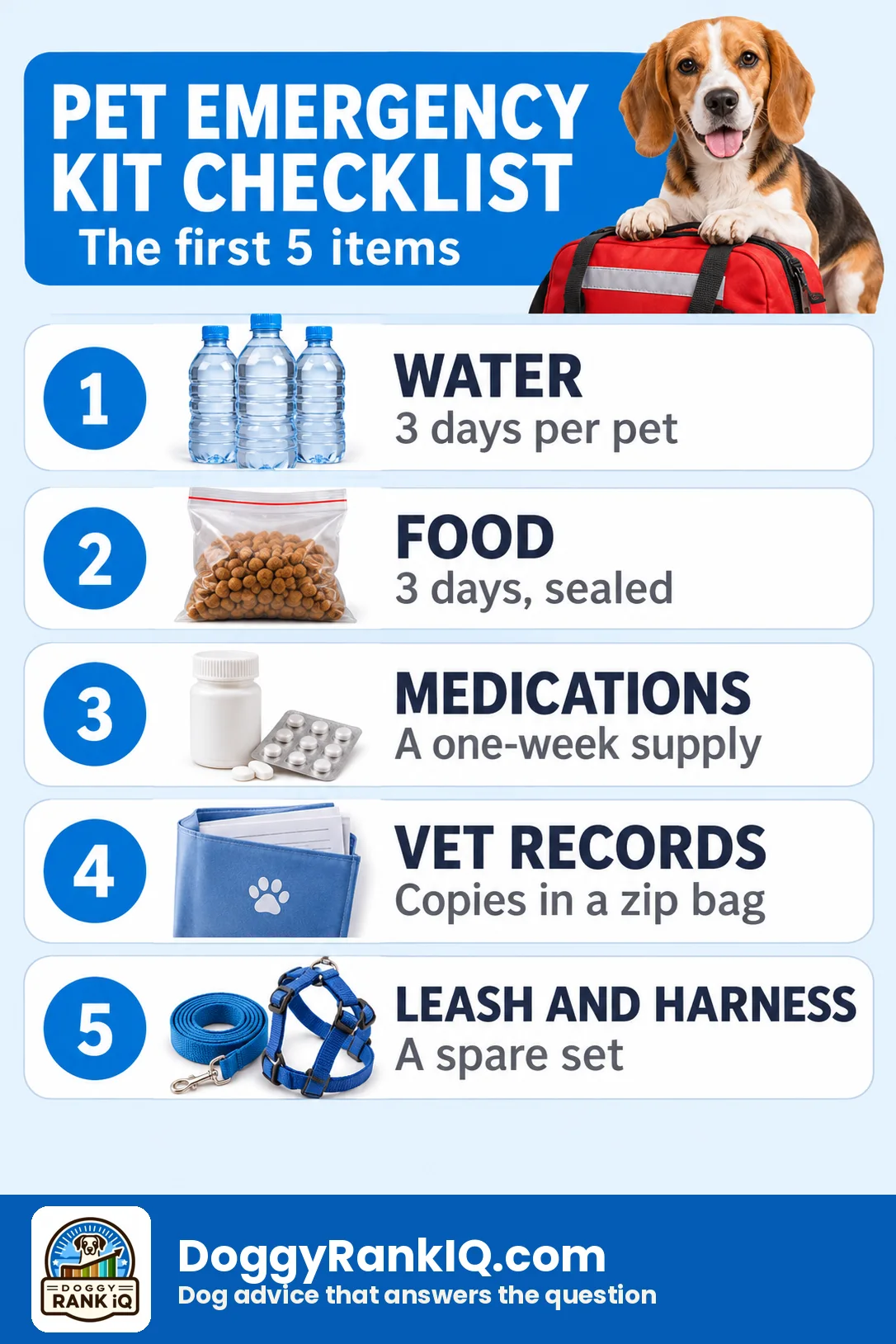
A pet emergency kit should cover identification, containment, hydration, nutrition, medication, first aid, sanitation, comfort, and paperwork, in quantities sized for one short trip rather than extended sheltering. The CDC’s pet preparedness checklist lists nearly identical categories for household pets of all types.
Here is the full list again as a quick reference before the detailed breakdown below:
- Collar, ID tag, and backup leash or slip lead
- Harness or carrier appropriate to the dog
- Water and a collapsible bowl
- Familiar food and treats
- Prescribed medication and medication instructions
- A basic first aid kit
- Sanitation supplies
- Crate or carrier for transport and containment
- Comfort item with a familiar scent
- A recent, clear photo of your dog
- Paperwork: vaccine records, microchip number, and care instructions
- Emergency contact numbers, written down
The 12 items, numbered, each with why it earns its space
1Collar, ID tag, and backup leash or slip lead
A collar that stays on and an ID tag with a working phone number matter more than most owners assume, because a stressed dog can slip a harness that fit fine on a calm Tuesday walk. Keep a spare leash or a slip lead in the bag itself, not just the one by the door, since the one by the door is often what gets left behind in the scramble. The Red Cross lists sturdy leashes and harnesses as a first-line item in its pet disaster guidance, and for good reason: a dog you cannot control at a crowded shelter intake is a dog at risk of getting loose, according to the American Red Cross.
If your dog already pulls on walks, pair this item with a no-pull harness you trust, rather than discovering a new fit issue mid-evacuation.
2Harness or carrier appropriate to the dog
A harness distributes pressure across the chest instead of the neck, useful for a dog pulling toward a startling noise or an unfamiliar crowd. For cats, small dogs, or any animal unused to vehicles, a hard-sided or collapsible carrier beats a harness alone, especially one that’s rated for your airline or car travel if evacuation means a longer drive. Check out an airline-approved carrier if there’s any chance your evacuation route includes a flight.
Measure the carrier against your dog before an emergency happens. A twelve-week-old puppy outgrows gear fast, and a carrier that fit six months ago may not now. Check the dimensions against your dog’s current weight, not the weight on the adoption paperwork.
3Water and a collapsible bowl
The ASPCA recommends enough water for several days of extended sheltering, but a one-trip kit needs less: a day’s supply in a sealed bottle or two is reasonable for a car ride and a few hours at a shelter or a relative’s house, per the ASPCA’s disaster preparedness page. A collapsible silicone bowl takes up almost no space and solves the problem of a dog who will not drink from your cupped hands, which is most dogs. If your dog is picky about stale or warm water, a portable dog water bottle with a built-in reservoir can make the difference between a dog who drinks and one who refuses.
4Familiar food and treats
Pack enough of the dog’s actual food, not a sample bag of something new, for at least a day, two if the bag has room. A diet change during a stressful event is asking for stomach upset on top of everything else. If your dog eats a prescription diet, note the exact formula name on the paperwork inside the bag.
Use a proper storage container inside the kit so kibble stays fresh and doesn’t attract pests while sitting unused for months. Keep an eye on recalls for the specific food you buy; our dog food recall tracker lists current FDA lots and UPCs worth checking before restocking.
5Prescribed medication and medication instructions
Medication is the item owners forget most often, because it lives in a kitchen drawer or a bathroom cabinet, not near the leash. Keep a small, clearly labeled supply in the kit itself, along with written dosing instructions and the prescribing vet’s phone number.
A reasonable floor for a single-trip kit is a few days of medication, with the understanding you will refill sooner for ongoing conditions. Rotate this supply every time your dog’s prescription is refilled so it never goes stale in the bag.
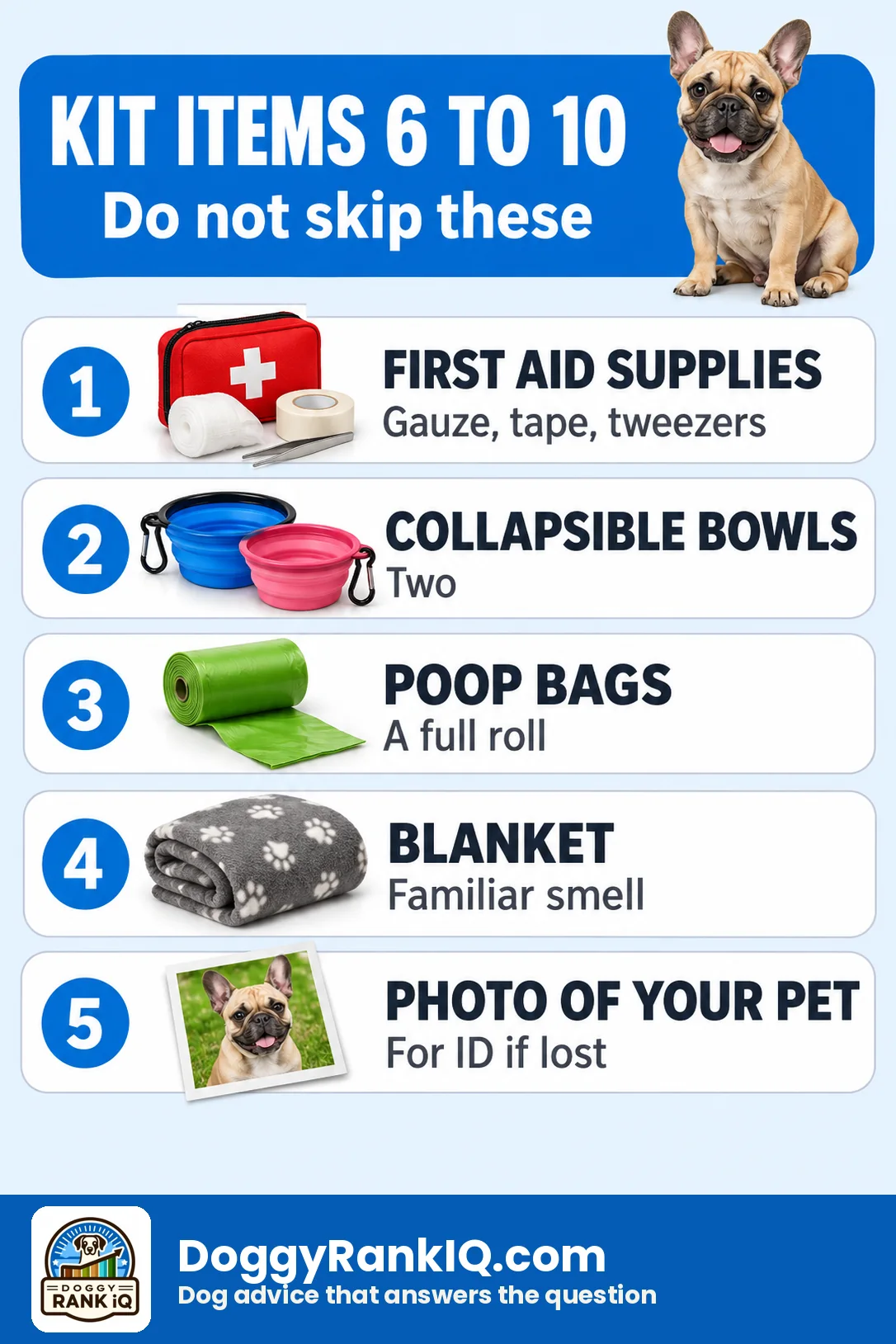
6A basic first aid kit
This is not the same as a full emergency kit, and the distinction matters. A basic first aid kit typically includes gauze, non-stick bandages, tape, blunt scissors, gloves, saline, a thermometer, a flashlight, a cold pack, a muzzle, and a reference card, meant to stabilize a dog on the way to a veterinarian, not treat an injury at home.
One line worth repeating here: current veterinary guidance advises against routinely inducing vomiting at home after a dog swallows something toxic. Call a veterinarian or poison control, bring the packaging, and skip the instinct to reach for hydrogen peroxide unless a professional tells you to use it. If hydrogen peroxide is used, it should only be under direction, at a dose set by that professional, and this detail belongs on an index card inside the kit, not relied on from memory.
7Sanitation supplies
Poop bags, a small pack of puppy pads, and a few paper towels take up almost no room and solve a real problem: a shelter intake area, a crowded car, or a relative’s unfamiliar living room is not where you want an accident with no cleanup plan. A travel-size bottle of unscented disinfectant wipe works for both the dog and surfaces nearby. Pair this with reliable poop bags so the kit doesn’t rely on whatever roll happens to be in a pocket.
8Crate or carrier for transport and containment
Separate from the carrier used for moving the dog through a doorway, a soft-sided folding crate gives your dog a contained space once you reach wherever you are going. Many shelters and even some hotels require a crate before they will accept a dog at all. If space in your apartment is tight, a collapsible wire or fabric crate that folds flat solves the storage problem the rest of the year, and a crate pad makes the space more tolerable for a dog who already hates confinement.
9Comfort item with a familiar scent
A small blanket, an unwashed t-shirt, or a favorite chew can lower a dog’s stress during an unfamiliar car ride or a loud shelter hallway. This is not an indulgence, it is a practical tool: a dog occupied with a lick mat or a familiar chew is a dog less likely to bark, pace, or try to bolt. Watch for dog body language signals like tucked tails, flattened ears, or whale eye during the trip itself, since those cues tell you whether the comfort item is actually working.
10A recent, clear photo of your dog
Keep a printed photo in the bag, not just one on your phone, in case your phone dies or gets left behind. The Red Cross specifically recommends a current owner-and-pet photo as part of its pet disaster kit guidance. If your dog ever goes missing during the chaos of an evacuation, this photo is what gets handed to shelter staff or posted on a lost-pet board.
11Paperwork: vaccine records, microchip number, and care instructions
A folded, waterproof sleeve with vaccination records, your dog’s microchip number, and a short care sheet (feeding schedule, known allergies, behavior notes) speeds up intake at any shelter or boarding facility that requires it. If someone else might need to foster or board your dog temporarily, this paperwork tells them what they need to know without a phone call to you mid-crisis.
12Emergency contact numbers, written down
Your regular vet, the nearest 24-hour emergency vet, and ASPCA Animal Poison Control at 888-426-4435 (a consultation fee may apply) should all be written on an index card, not just saved in a phone that might be dead, lost, or confiscated at an intake desk. A laminated card survives a wet backpack far better than a sticky note.
Do I actually need a pet emergency kit?
Yes, if you live anywhere with wildfire, flood, hurricane, or earthquake risk, or even just in a building where a fire alarm could force a fast exit. The Michigan State Police and Los Angeles County Department of Animal Care and Control both run annual preparedness campaigns specifically because pet owners consistently leave animals unprepared during fast-moving disasters.
A pet emergency kit is not optional if you rent an apartment above the ground floor, live in a region with regular red-flag wildfire warnings, or own a dog with daily medication. It is lower priority, though still worth having in some form, for owners in low-risk single-family homes with no chronic health conditions in the pet. The decision rule: choose to build one now if a twenty-minute notice to leave would catch you unprepared today.
How to make a DIY pet emergency kit at home
Building a emergency kit at home means gathering the twelve categories above into one bag over a single weekend, rather than buying a pre-assembled kit. Start with a backpack you already own, then shop for gaps: a collapsible bowl, a spare leash, a small first aid pouch, and a waterproof document sleeve.
Steps for assembling one at home:
- Pick the bag first (backpack, not duffel) and decide where it will live permanently.
- Pull together paperwork: vaccine records, microchip number, a printed photo.
- Add a few days of food and a sealed bottle of water, both already on hand in most kitchens.
- Buy or assemble a small first aid pouch using basic supplies.
- Label medication with dosage instructions and tuck it in alongside the vet’s phone number.
- Test the full weight by carrying it down your stairs once.
A DIY kit costs less if you already own a crate or carrier, often landing closer to $40 to $60 instead of the $60 to $90 average for a kit built entirely from new purchases.
Pet emergency kit for dogs vs cats
Dogs and cats need overlapping but not identical kits: cats generally require a hard-sided carrier at all times rather than a harness option, and their sanitation needs include a small travel litter box rather than puppy pads. A dog’s kit leans more heavily on leash and harness gear, while a cat’s kit leans more heavily on containment, since most cats will not tolerate an open car seat or a lap during a stressful drive.
Owners with both species in the home should pack two separate kits rather than one shared bag, since a cat carrier and a dog leash rarely overlap in function, and grabbing the wrong bag for the wrong animal wastes time during an actual emergency.
Pet emergency kit for exotic pets or rabbits
Rabbits, birds, and other exotic pets need a emergency kit built around temperature control and a secure carrier more than leash gear, since these animals are far more sensitive to heat, cold, and stress-related illness than dogs or cats. A rabbit’s kit should include extra hay, a water bottle rated for the cage, a towel for insulation, and a note of the animal’s normal eating and drooling behavior, since a rabbit that stops eating during a stressful event can develop GI stasis within hours.
Bird owners should prioritize a covered, ventilated carrier and a familiar perch, since sudden exposure to open air and unfamiliar noise is a leading cause of stress injury in evacuated birds, according to general guidance echoed across ASPCA pet care resources. Exotic pet kits are rarely sold pre-made, so building one at home with species-specific research is usually the only option.
Buy a ready-made kit or build your own?
A ready-made kit saves assembly time and guarantees nothing gets forgotten on the day it matters. Building your own costs about the same or slightly less if you already own a crate, and lets you match quantities to your exact dog instead of a generic kit sized for an average pet.
| Approach | Time to assemble | Customization | Typical price |
|---|---|---|---|
| Ready-made kit | Minutes, out of the box | Low, fixed contents | $19.95 to $129.99 |
| Build your own | 1 to 2 hours, over multiple shopping trips | High, sized to your dog | $60 to $90 |
Price checked 2026.
The ready-made kits compared
1Pet Emergency Survival Kit for Big Dogs
The Pet Emergency Survival Kit for Big Dogs at $89.99 is built around larger breeds, with bowls, bedding, and sanitation items sized for a dog that will not fit in a small carrier. Owners report the bag itself holds up to repeated use, according to product listings and verified buyer feedback on the Amazon page. Check the current price
2Pet Evacuation Survival Kit for Small to Medium Dogs up to 30 lbs
The Pet Evacuation Survival Kit for Small to Medium Dogs runs $79.99 and scales the same categories down for dogs under 30 pounds, which matters because a bowl or leash sized for a Mastiff is awkward for a Beagle. Check the current price
3Survival Dog Emergency Kit 72-Hour
At $129.99, the Survival Dog Emergency Kit 72-Hour is the most extensive option here, built for longer sheltering rather than a single short trip. It is worth the price mainly for owners in wildfire or hurricane zones who may be away from home for several days, not just a few hours.
4EVERLIT Pet Medic First Aid Kit, 95 pieces
The EVERLIT Pet Medic First Aid Kit at $34.99 covers the medical side specifically, with 95 pieces including bandaging and wound care supplies, matching the core first aid categories common to emergency kit guidance. Check the current price
5ARCA PET Dog First Aid Kit
The budget option, ARCA PET Dog First Aid Kit, runs $19.95 and covers the basics without the bulk of a full evacuation kit, a reasonable add-on if you are building your own bag from separate pieces rather than buying one all-in-one solution. Check the current price
Apartment and stairs: packing for one trip out
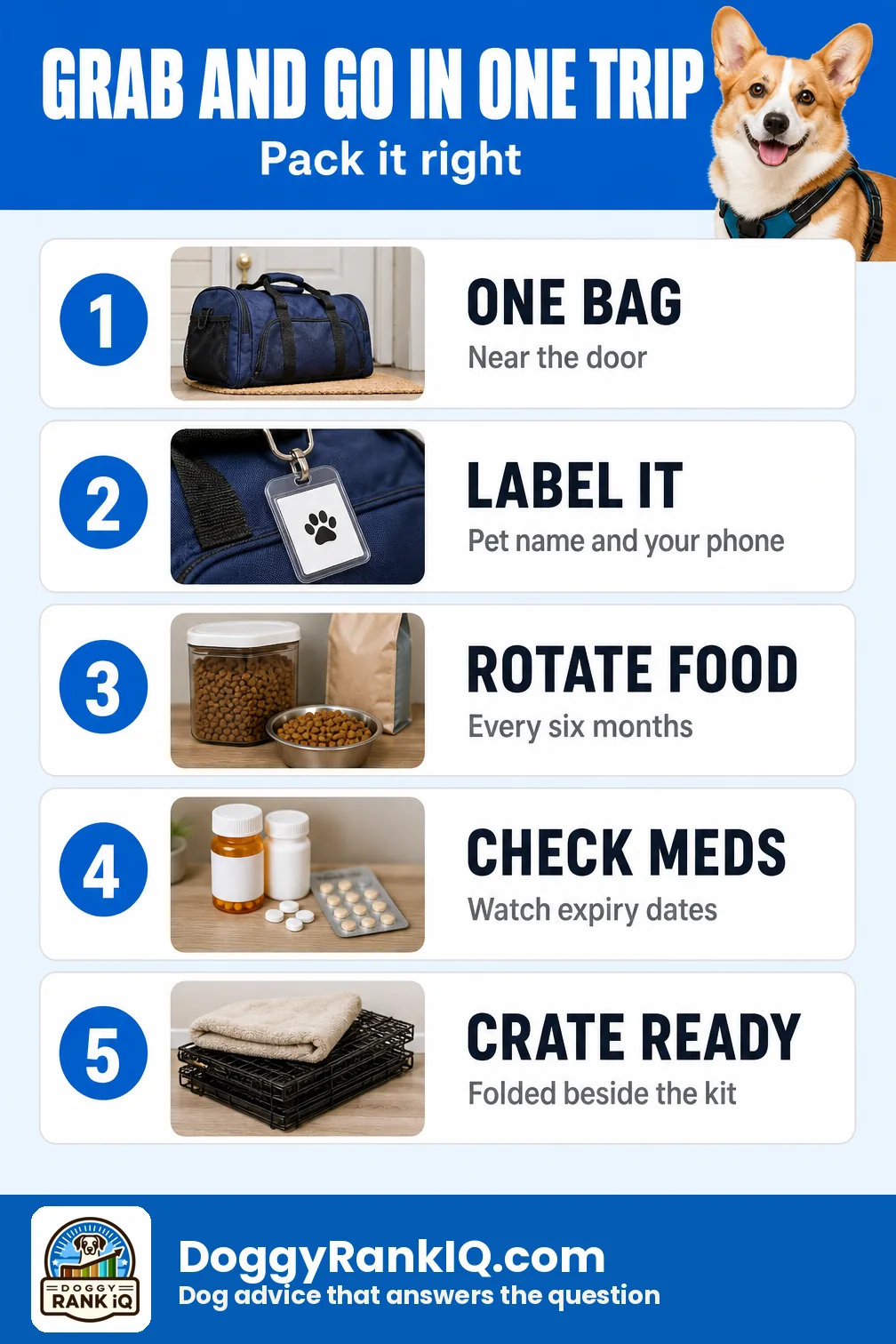
If you live on the fourth floor with no elevator, weight and bulk matter more than completeness. A kit that takes two trips down the stairs is a kit that fails during an actual fire alarm.
Pick a single backpack over a duffel bag, since a backpack leaves both hands free for a leash and a squirming dog. Keep the crate or carrier by the door year-round rather than folded in a closet, and practice carrying the full bag down the stairs at least once so you know it is manageable, not just theoretically packed.
For apartment dwellers near wildfire zones specifically, a go bag that lives permanently by the door, rather than one assembled during a red-flag warning, buys back the minutes that matter most.
Paperwork to keep in the bag
Slide a one-page summary into a zip-lock sleeve: vaccine dates, microchip number and registry, your vet’s phone number, any known allergies, and a recent photo. This single page answers almost every question a shelter intake volunteer or an emergency vet tech will ask, and it means you are not reciting your dog’s medical history from memory while also trying to calm him down.
Top 5 features we love
- Pre-measured medical supplies. The EVERLIT kit’s 95 labeled pieces remove guesswork about what belongs in a basic first aid pouch.
- Size-specific ready-made kits. Separate big-dog and small-dog kits mean the bowl, leash, and bedding actually fit the animal using them.
- Waterproof document sleeves included in several kits, which protect vaccine records from a wet backpack or a rainy evacuation.
- Collapsible bowls and crates that fold flat, solving storage problems for apartment dwellers the rest of the year.
- Budget entry points. A basic first aid kit around $20 lets owners build a emergency kit gradually rather than all at once.
Whether you buy a ready-made option or build a emergency kit piece by piece, the goal stays the same: a bag by the door, tested once, that gets your dog out safely without a single frantic search through drawers and closets.
⚠️ Things to Look Out For
- Ready-made kits often include generic treats or food samples your dog has never eaten. Swap these for your dog’s actual food before an emergency, not during one.
- Medication is rarely included in any ready-made kit, since it requires a prescription. You must add this yourself, every time.
- Check expiration dates on food and water packets inside ready-made kits at purchase, since some sit in warehouse storage for months before shipping.
- A first aid kit is not a substitute for veterinary care. The AKC is clear that these supplies stabilize a dog for transport, not treat the underlying injury (akc.org).
- If your dog takes a prescription diet or medication for a chronic condition, confirm storage requirements and shelf life with your veterinarian before relying on a kit’s default supply.
When to refresh the food, water and medication
Set a recurring reminder every three months (daylight saving time changes are an easy anchor) to check expiration dates on food, water, and any medication in the bag. Rotate food into your dog’s regular bowl rather than throwing it out, so nothing goes to waste. Medication needs more frequent checking since many formulations have shorter shelf lives than dry food or bottled water; ask your vet how often to swap it out for your dog’s specific prescription.
FAQ
The bottom line
A emergency kit only works if it lives somewhere you will actually grab it, stocked with items sized for your specific dog rather than a generic average. Build it once, check it quarterly, and keep the paperwork sleeve updated whenever your vet changes a prescription or updates a vaccine record. The best kit is the one by the door that you have actually carried down the stairs before you ever needed to.
Doggy Rank IQ: Kit Refresh Tracker
Select what you last checked to see your next refresh date.
Doggy Rank IQ
Doggy Rank IQ is reader supported. As an Amazon Associate we earn from qualifying purchases, at no extra cost to you.