Quick Answer
A lick mat for dogs is a flat rubber or silicone pad with grooves that hold soft food, so a dog has to lick for several minutes instead of swallowing a spoonful in two seconds. The strongest practical uses are slowing a fast eater, occupying a dog during a bath or nail trim, and filling a quiet gap on a long weekday. Research on food-based enrichment is encouraging but small, so treat a mat as a useful distraction tool, not a treatment for anxiety. Mats commonly sell for around $9 to $16, and the Woof LickMat was listed at $9.99 at PetSmart on October 3, 2026.
Key Takeaways: Lick Mat for Dogs
- A lick mat for dogs works by spreading a small amount of soft food across a textured surface so eating takes longer and requires repeated tongue movement.
- The American Kennel Club describes lick mats as enrichment and distraction tools, not medical treatment.
- A 2023 feeding-toy study in Veterinary World used only four dogs. Dogs spent more time eating with toys and cortisol was lower on day 7 than day 1. That is a promising signal, not proof for every dog.
- “Food-grade” means the material is safe to touch food. It does not mean the mat is safe to chew and swallow.
- Keep peanut butter labels under inspection. FDA guidance warns that xylitol can cause severe low blood sugar in dogs within 10 to 60 minutes.
- Five to fifteen minutes is a sensible session. Pick the mat up before your dog gets bored and starts chewing the edges.
- Chewers need a tougher design or a rubber treat holder like the West Paw Toppl instead of a thin silicone mat.
- Review method for the comparison below: documented manufacturer specifications and published veterinary guidance, checked October 2026. No hands-on product testing was performed for this article.
What is a lick mat for dogs and how does it work?
A lick mat is a textured feeding surface. You smear something soft into the pattern, your dog licks it out, and a thirty-second snack becomes a slow activity. That is the whole mechanism. No batteries, no app.
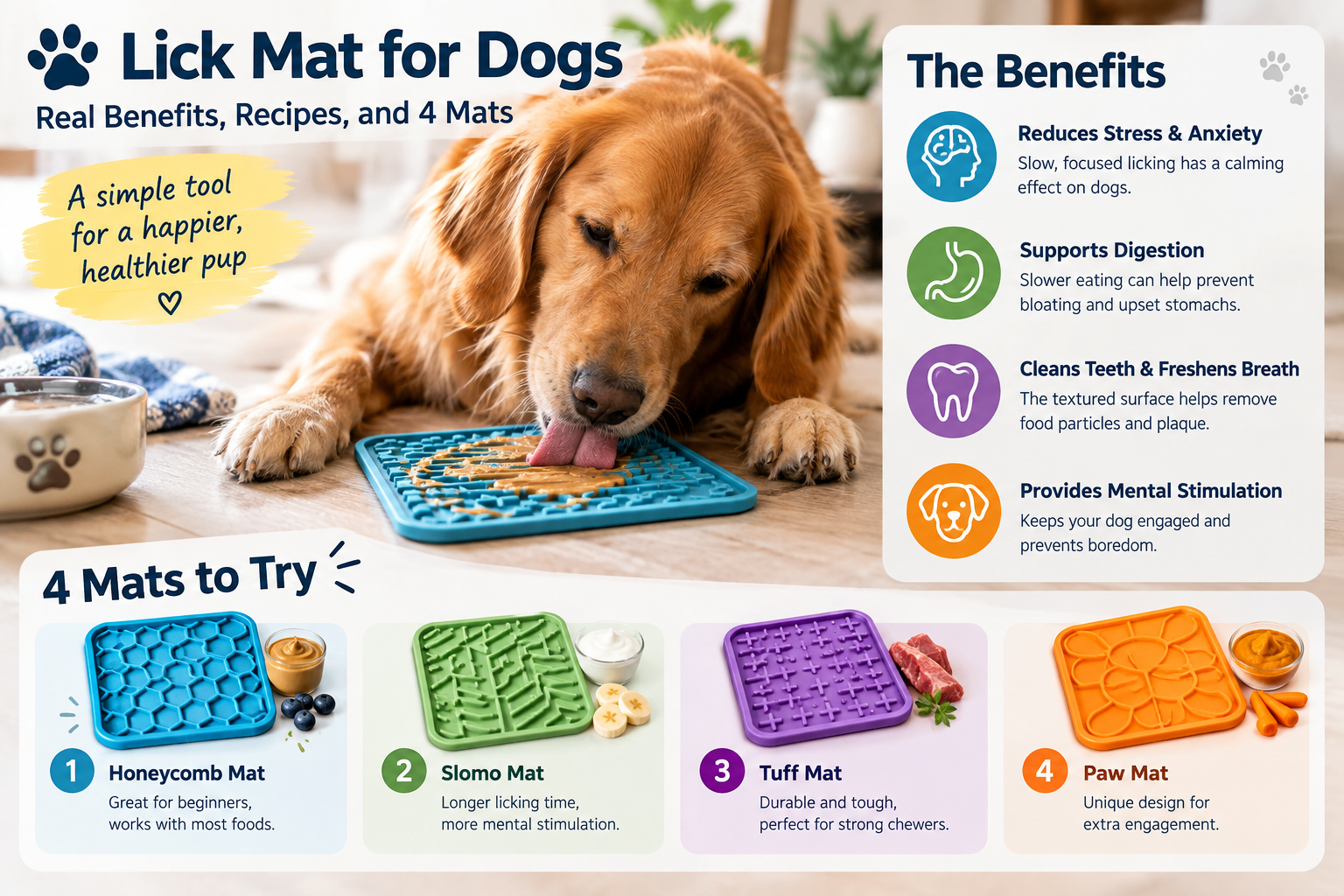
The texture does the work. Deep channels and raised nubs trap food so the tongue cannot clear it in one pass. Most mats are made from silicone or thermoplastic rubber, and many have suction cups or a tacky underside so the mat stays put instead of travelling under the sofa.
Three things change how long a mat lasts:
- Texture depth. Shallow patterns suit gentle lickers and thin spreads. Deeper grooves hold more and take longer.
- What you put on it. Runny yogurt disappears fast. Frozen pumpkin takes real effort.
- Your dog’s style. Some dogs lick methodically. Some flip the mat over and consider the matter closed. Individual variation is the rule here, not the exception.
LickiMat sells several surface patterns, including Buddy, Playdate and Soother in its Classic range, plus the sturdier Tuff range and the bowl-shaped Wobble. The brand’s own selection guide separates these by texture and by how they need to be cleaned, which is a more useful way to choose than picking a color.
Are lick mats good for dogs and their anxiety? What vets and studies say
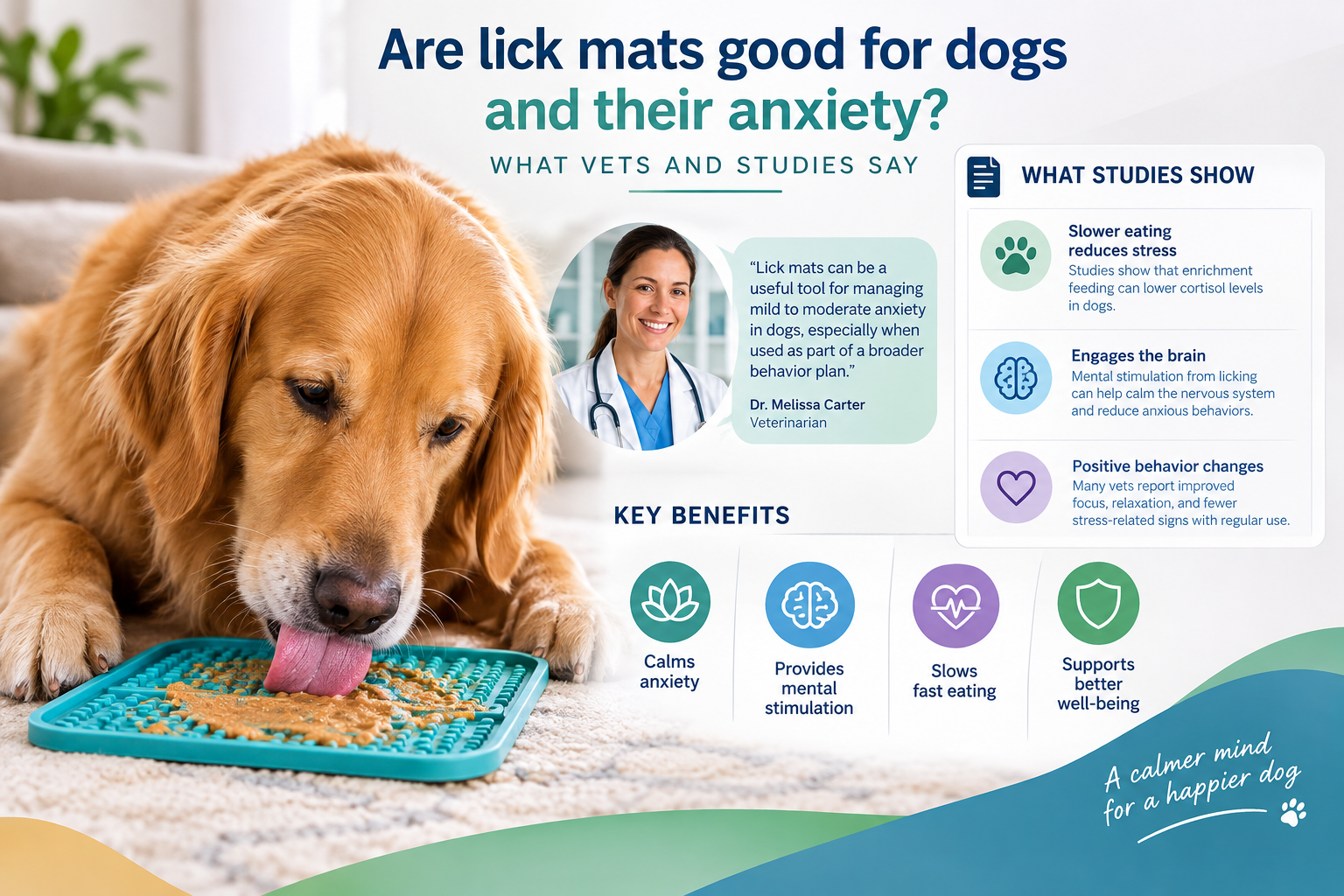
Lick mats can help a dog settle during a short, predictable stressor like a bath or a blow dry. What the evidence supports is that food-based enrichment keeps dogs busy and may lower stress markers in some conditions. What it does not support is the claim that a mat treats separation anxiety, noise phobia, or any diagnosed behavior disorder.
Here is where the facts end and marketing begins.
A 2023 study in Veterinary World compared feeding toys against stainless steel bowls. Dogs spent more time eating and interacting with the toys, and salivary cortisol was significantly lower on day 7 than on day 1 in the toy condition. The sample was four dogs. Four. That is a pilot-scale result worth following up, not a population finding.
A separate 2023 paper in Animals, published as “Ruff Morning?” on PubMed Central, looked at environmental enrichment and found that calming food enrichment was associated with more relaxed body-position scores. The dogs were given stuffed KONG toys with peanut butter, not lick mats. The useful read is that slow food engagement looks like a plausible calming activity. The study did not test a specific product.
And cortisol itself needs careful handling. A 2025 study in Scientific Reports found poor correlations between salivary and serum cortisol in healthy puppies and adult dogs, which means “lowers cortisol” is a weaker marketing claim than it sounds.
A lick mat can change what your dog is doing. Whether it changes how your dog feels is a separate question, and the research is not there yet.
Owner reports lean positive. A project funded by the Animal Welfare Foundation found owners believed enrichment feeding helped with problem behaviors, satiety and begging, while acknowledging that veterinary recommendations have run ahead of direct research on pet-dog enrichment feeding.
Practical version: use a mat as part of humane training and cooperative care. Veterinary handling programs built around reducing fear, including Fear Free, rely heavily on food during procedures for exactly this reason. If your dog panics when left alone, destroys doors, or injures themselves, a mat is not the answer. Talk to your veterinarian or a qualified behavior professional.
Best lick mat for dogs: 4 mats compared
The best lick mat for dogs is the one that matches your dog’s chewing style and your tolerance for hand washing. Four options below, chosen to cover gentle lickers, determined lickers, suction-dependent bath use, and dogs who treat a flat mat as an appetizer.
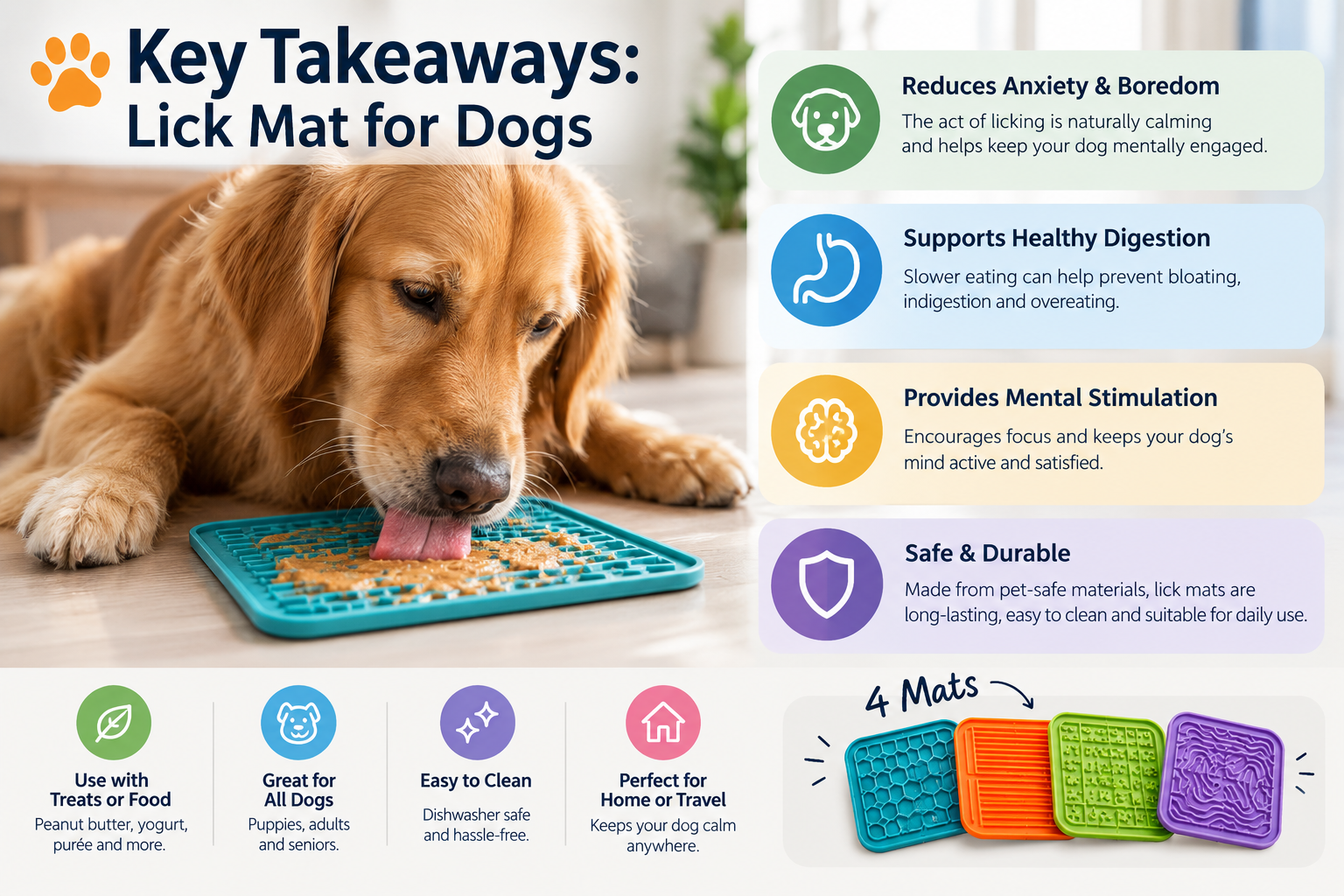
| Mat | Material and build | Dishwasher | Who it suits | Price checked Oct 2026 |
|---|---|---|---|---|
| LickiMat Soother (Classic) | Soft, fine-textured food-grade surface | Classic range is hand wash; check the pack | Gentle lickers, thin yogurt spreads, first mat | Not verified; check current retailer listing |
| LickiMat Tuff Soother | Food-grade thermoplastic rubber, 8 x 8 in, BPA, PVC, phthalate and silicone free | Yes, per manufacturer (also freezer and microwave friendly) | Firmer lickers, owners who want machine cleaning | Not verified; check current retailer listing |
| Hyper Pet IQ Treat Mat | Flexible silicone with suction cups, deeper grooves | Confirm on packaging before machine washing | Bath and tile use, dogs who push mats around | Not verified; check current retailer listing |
| West Paw Toppl | Thick moulded rubber bowl, not a flat mat | Confirm on packaging | Chewers, big appetites, freezing larger portions | Not verified; check current retailer listing |
Decision rules. Choose the Classic Soother if your dog licks politely and you are happy washing by hand. Choose the Tuff Soother if you want the dishwasher to handle it and your dog applies pressure. Choose a suction silicone mat like the Hyper Pet IQ Treat Mat if the main job is bath time on a tiled wall. Choose the West Paw Toppl or a KONG Licks style rubber item if your dog has ever removed a corner from anything.
Also compare the options on size. Check the dimensions against your dog’s muzzle and your freezer shelf. An 8 by 8 inch mat is easy to store flat. A giant mat stuffed with pumpkin is not.
Disclosure: Doggy Rank IQ may earn commission from retailer links. Recommendations follow the reader’s needs and the available evidence, never commission size.
Lick mat for dogs price and where to buy
Expect roughly $9 to $16 for a single mat from a known brand, with multi-packs and starter bundles costing more. Prices move, so treat every figure below as a snapshot with a date attached.
- The Woof LickMat was listed at $9.99 on the manufacturer’s site in September 2026, and PetSmart listed several Woof lick mats at $9.99 on October 3, 2026.
- SodaPup lists several eMat designs at $15.99 each, with a seven-piece enrichment starter pack at $65.
- Marketplace two-packs run cheaper. An Amazon search captured listings from about $9.49 to $15.95 in late 2025. Quality is less consistent, so read the material description rather than the star count.
Where to buy: brand sites, national pet chains, veterinary clinics (often stocked alongside puzzle feeders), and online marketplaces. Lick mats now sit on the same shelf as frozen treat holders such as the Woof Pupsicle and slow feeders from brands like Outward Hound, which makes a bundle tempting. Buy one mat first. See whether your dog cares.
What do you put on a lick mat for dogs?
Use a thin layer of something soft, safe and spreadable: plain unsweetened Greek yogurt, plain canned pumpkin, your dog’s own wet food, mashed banana, or xylitol-free peanut butter. Add small toppers that stick, then freeze if you want it to last longer.
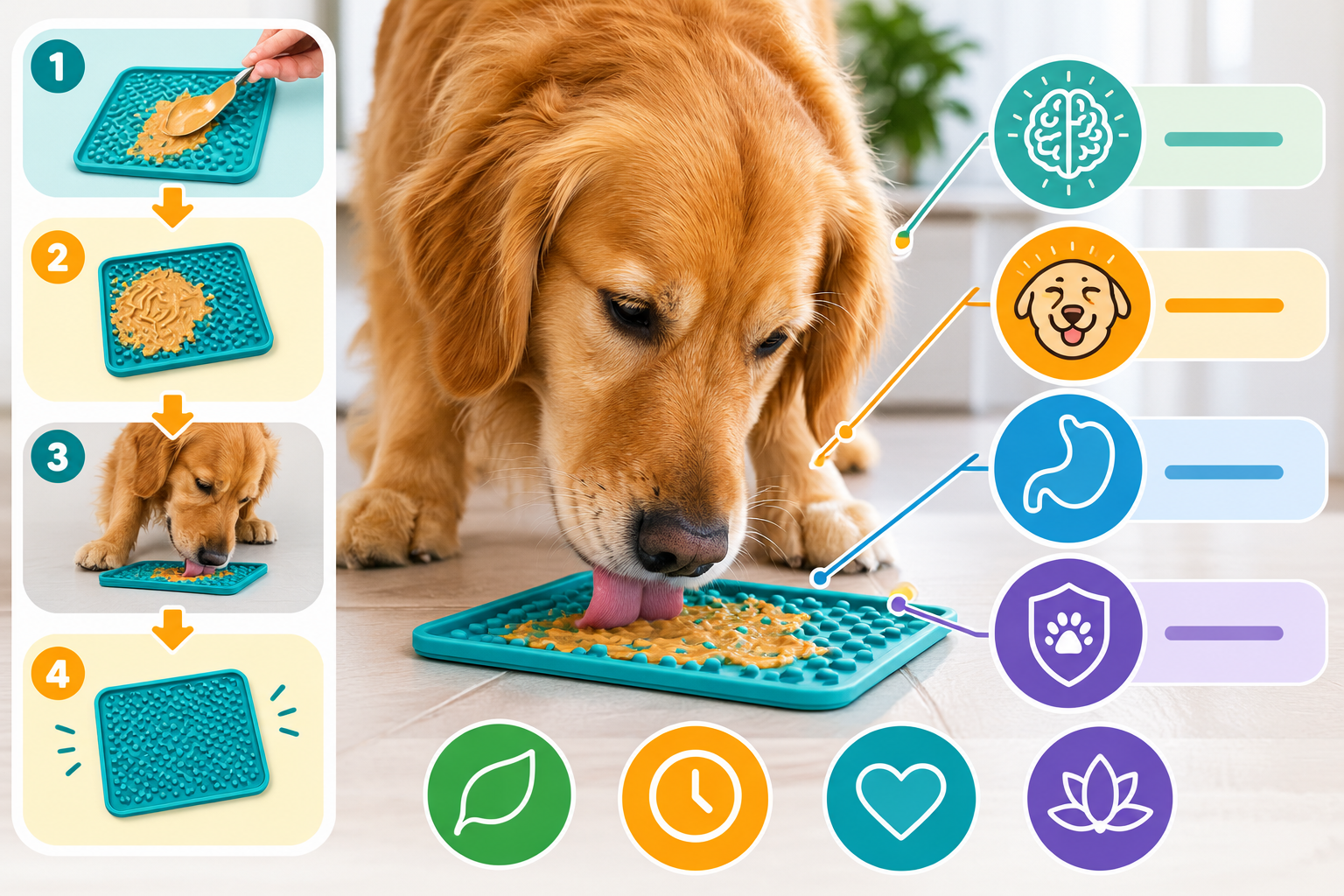
Ten combinations worth trying, all built from ordinary ingredients:
- Plain Greek yogurt with a few blueberries pressed in
- Canned pumpkin with a scatter of their usual kibble
- Wet food thinned with a splash of water, frozen flat
- Mashed banana with a light swirl of xylitol-free peanut butter
- Shredded plain cooked chicken mixed into yogurt
- Low sodium bone broth, frozen into the grooves
- Pumpkin with finely grated carrot
- Cottage cheese with chopped green beans
- Wet food with a sprinkle of their regular dental kibble
- Plain yogurt with a tiny amount of unsweetened applesauce
Keep portions small. Treats and toppings sitting above roughly 10 percent of daily food intake start displacing balanced nutrition, which matters more than people expect for small dogs. If the mat replaces part of a meal, use their own food on it. For ideas on which additions are genuinely useful, our guide to superfoods for dogs including broccoli and blueberries covers portions and limits, and the dog food toppers guide explains what to add to kibble and what to skip.
Use the builder below to assemble a recipe card in a few clicks.
Which ingredients are unsafe on a lick mat?
Keep xylitol, grapes and raisins, onion and garlic, chocolate, macadamia nuts, alcohol and very fatty leftovers off the mat entirely. The sneakiest risk is a peanut butter jar that contains a sugar-free sweetener.
- Xylitol. Found in some peanut and nut butters and many sugar-free products. FDA guidance warns it can cause profound hypoglycemia in dogs. Read the full ingredient list, not the front label. If your dog eats any, call your veterinarian or ASPCA Animal Poison Control immediately.
- Grapes and raisins. Linked to acute kidney injury in dogs, with no established safe amount.
- Onion, garlic, leeks and chives. Damage red blood cells. Skip savory spreads, gravies and seasoned leftovers.
- Chocolate and coffee. Theobromine and caffeine both cause toxicity.
- Very rich or fatty toppings. Cream cheese, bacon grease and cheese piled on thick can trigger digestive upset, and high-fat meals are associated with pancreatitis risk in susceptible dogs.
- Cooked bones and anything in chunks that could be swallowed whole. A mat is for soft spreads and small pieces.
Our list of foods dogs cannot eat covers the full set, and the guide to human foods dogs can eat safely and how much is the one to read before you improvise.
One more detail people miss. "Food-grade" on packaging means the material is suitable for contact with food. The AKC is clear that this does not make silicone, rubber or plastic safe to ingest. A mat with chunks missing goes in the bin.
Are lick mats safe for dogs, and how long should a session last?
Lick mats are generally safe with supervision, a sensible portion, and a mat that matches your dog's chewing strength. Five to fifteen minutes per session is plenty, and the mat should be collected once the food is gone.
Safety basics worth following every time:
- Supervise. Always. Especially the first three or four sessions.
- Take the mat away as soon as it is empty, before boredom turns into chewing.
- Inspect for bite marks, cracks and missing pieces, then replace the mat.
- Count the topping as part of the day's food.
- Give a frozen mat on a washable surface unless you enjoy mopping.
Best lick mats for aggressive chewers
Determined chewers do better with thick moulded rubber than with thin silicone. The LickiMat Tuff range exists for exactly this reason, and a rubber treat holder such as the West Paw Toppl or a KONG Licks style product is harder to tear than a flexible sheet. If your dog chews the mat instead of licking it, stop using a mat and switch to a stuffable rubber toy. That is a design mismatch, not a training failure.
Can puppies use lick mats?
Yes, from the time a puppy is eating solid food, with close supervision and a soft, shallow-textured mat. Use the puppy's own wet or soaked food rather than rich additions, and keep sessions short. Mats pair nicely with early handling practice: paw touches, ear checks, brush introductions. For the food side, see our guide to what growing dogs need in year one. Needle-sharp puppy teeth find mat edges quickly, so check the mat after every use.
Can senior dogs use lick mats?
Senior dogs often get along very well with lick mats, because licking needs less jaw strength than chewing. Place the mat at a comfortable height or flat on a non-slip surface so a dog with stiff joints does not have to brace. Dogs with dental pain, reduced tongue control, or a history of aspiration should be assessed by a veterinarian first. Thin, slightly warmed food works better than a rock-solid frozen mat for an older mouth.
Lick mats for dogs with sensitive stomachs
Use one ingredient the dog already tolerates, and nothing else. Plain canned pumpkin, their prescribed or regular wet food, or plain cooked chicken are the usual choices. Introduce new toppings one at a time with several days between, so a reaction can be traced to something specific. Skip dairy if it causes loose stools; our explainer on whether dogs can eat grains and dairy covers the common culprits. Dogs on a veterinary elimination diet should only get their diet food on the mat.
How do you use a lick mat for baths, nail trims, and vet visits?
Stick the mat at nose height, load it thinly, and start the procedure while your dog is licking. The aim is to pair handling with something pleasant and to stop before the food runs out, so the session ends on a good note instead of an empty mat.
A workable sequence for bath time:
- Suction the mat to the tub wall or tile at your dog's chest-to-nose height, before the water starts.
- Spread a thin layer of their usual wet food on it. Thin, so it lasts through wetting and lathering, not through the whole bath.
- Let your dog start licking, then begin with warm water on the shoulders and work back.
- Pause the handling if your dog stops licking. A dog who walks away from food is telling you the pressure is too high.
- Finish the bath, then end the session while a little food is still left.
For nail trims, do the same thing with one paw at a time and one nail per lick break. Many dogs accept a clipper on a front nail long before they accept a back paw being lifted. Build up over days, not minutes.
For vet visits, practise at home first so the mat already predicts good things. Some clinics will let you bring your own mat with a smear of your dog's food for exams and vaccinations, especially practices that follow low-stress handling protocols. Ask when you book. Never use food to hold a frightened dog in place while something painful happens, because that teaches the opposite lesson. A dog showing real fear needs a plan made with your veterinarian.
Calm, slow activities fit naturally into a dog's day, which is mostly rest anyway. Our piece on why dogs sleep so much and what the research found explains why a licking session often ends with a nap.
Dog lick mat not working? What to do
If your dog ignores the mat, the usual problem is the topping, the texture, or the timing. Change one thing at a time.
- Too hard. A fully frozen mat can be too difficult for a beginner. Start fresh and soft, then freeze later.
- Food not interesting enough. Try a higher-value spread for the first few sessions, then taper back to their regular food.
- Too much food, badly placed. A thick blob in the middle gets eaten in seconds and teaches nothing. Spread thinly to the edges.
- Mat slides around. Wet the suction cups, use tile or glass rather than carpet, or hold the mat yourself for the first try.
- Surface is strange. Some dogs dislike licking silicone. A rubber Toppl or a snuffle mat may suit better.
- Bad timing. A dog who is over-excited, newly home, or already full will not settle. Try after a walk.
- Guarding or tension. If your dog stiffens, growls or hovers over the mat near people or other pets, stop and get help from a qualified behavior professional rather than pushing through. Our article on why dogs bite their own owners and how to prevent it covers warning signs around resources.
Lick mat vs KONG toy: which is better?
Neither is better overall. A lick mat gives a flatter, calmer, mostly tongue-based activity and cleans up faster. A stuffed KONG or West Paw Toppl holds much more food, lasts longer, and suits dogs who want to chew and manipulate something.
| Factor | Lick mat | KONG or Toppl |
|---|---|---|
| Activity type | Licking, calmer | Chewing, pushing, rolling |
| Food volume | Small, thin layer | Larger portion, meal sized |
| Chewer safety | Thin mats tear | Thick rubber holds up |
| Cleaning | Wipe or dishwasher | Narrow cavities need a brush |
| Bath and grooming use | Excellent with suction | Rolls away |
Choose a mat for grooming, handling practice and short calm breaks. Choose a stuffable rubber toy for crate time, longer solo spells and strong chewers. Most households end up with one of each, which is how the cupboard situation starts.
How do you clean and maintain a dog lick mat?
Rinse the mat under warm water straight after use, before the food dries into the grooves. Wash with dish soap and a soft brush, or run it through the dishwasher if the manufacturer says the model is dishwasher safe. LickiMat markets its Tuff range specifically for dishwasher cleaning, while Classic surfaces are easier to manage by hand.
- Dried yogurt in a fine texture is the hardest thing to shift. Soak for ten minutes first.
- Use a soft brush, not an abrasive pad, so you do not score the surface.
- Air dry fully before storing, since damp grooves grow bacteria.
- Keep a second mat so one can be in the freezer while the other dries.
- Replace a mat with tears, deep bite marks or a smell that survives washing.
The AKC's guidance on lick mats stresses cleaning after each use, which matters more with raw or meat-based toppings.
What are good lick mat alternatives for dogs?
If a mat does not suit your dog, several alternatives give similar slow-feeding value. Pick based on what your dog enjoys doing, not what looks best on a shelf.
- Snuffle mat. A fabric mat where kibble hides in folds. Good for dogs who prefer sniffing to licking.
- Stuffable rubber toys. West Paw Toppl, KONG classics and KONG Licks style items. Bigger portions, more chewing.
- Woof Pupsicle. A refillable frozen treat holder for dogs who want something cold and solid.
- Puzzle feeders and slow bowls. Brands like Outward Hound make maze bowls that slow a fast eater at mealtimes.
- Scatter feeding. Toss a measured portion of kibble across grass or a towel. Free, and dogs love it.
- DIY lick mat. A clean silicone baking mat, a muffin tray, or the inside of a sturdy cardboard box can work for one session. Supervise closely, skip anything a dog might swallow, and accept that cardboard will not survive.
Enrichment does not require a purchase. It requires a few minutes and food your dog already eats.
FAQ
Are licking mats good for dogs?
Lick mats are a useful, low-effort way to slow eating and keep a dog busy during short stressors like baths and nail trims. The AKC describes them as enrichment and distraction tools. Published research supports food enrichment broadly, with small sample sizes, so avoid treating a mat as a medical intervention.
Do vets recommend lick mats?
Many veterinary and low-stress handling resources suggest food-based distraction during grooming and examinations, and lick mats are a convenient format for that. No major veterinary body has endorsed a specific mat brand, and "vet-approved" on packaging should always come with a stated basis.
How long should a dog use a lick mat?
Five to fifteen minutes is a reasonable session for most dogs. Remove the mat once it is empty so your dog does not switch from licking to chewing, and count the topping as part of the day's food.
Can a lick mat for dogs help with separation anxiety?
A mat may occupy a dog for the first few minutes after you leave, which can help a mildly unsettled dog. It does not treat separation anxiety. Panic, destruction and self-injury need a plan built with your veterinarian or a qualified behavior professional.
Is a silicone lick mat for dogs safe?
Food-grade silicone is safe for food contact and is widely used in these products, but it is not safe to swallow. Supervise every session, inspect the mat for bite damage, and replace it if pieces are missing.
Can I put peanut butter on a lick mat?
Yes, if the peanut butter contains no xylitol. Read the whole ingredient list, since xylitol appears in some sugar-free spreads, and FDA guidance warns it can cause severe low blood sugar in dogs. Keep the amount small because peanut butter is calorie dense.
What is the best frozen lick mat recipe for a hot day?
Spread plain unsweetened Greek yogurt thinly across the mat, press in a few blueberries, and freeze flat for at least an hour. It is simple, uses two ingredients, and lasts longer than a fresh spread. Blueberries and other safe produce are covered in our list of fruits and vegetables dogs can eat.
Can two dogs share a lick mat?
Give each dog a separate mat in separate spaces. Shared food surfaces create tension even between dogs who normally get along well, and a mat is a concentrated resource worth guarding.
Conclusion
A lick mat for dogs earns its place for one honest reason: it turns a spoonful of food into several minutes of calm activity, which is handy during baths, nail trims, and the long stretch between lunch and the evening walk. The research on food enrichment points in a positive direction, with small studies and careful limits, and the mat itself is cheap enough that trying one costs about the price of a bag of treats.
Your next step: buy one mat that matches your dog's chewing style, load it with a thin layer of their own wet food, and try it during the next bath. Check the dimensions, check the cleaning instructions, and check the peanut butter label before anything else goes on it.