
Last updated: November 6, 2026
Signs of arthritis in dogs: Quick Answer
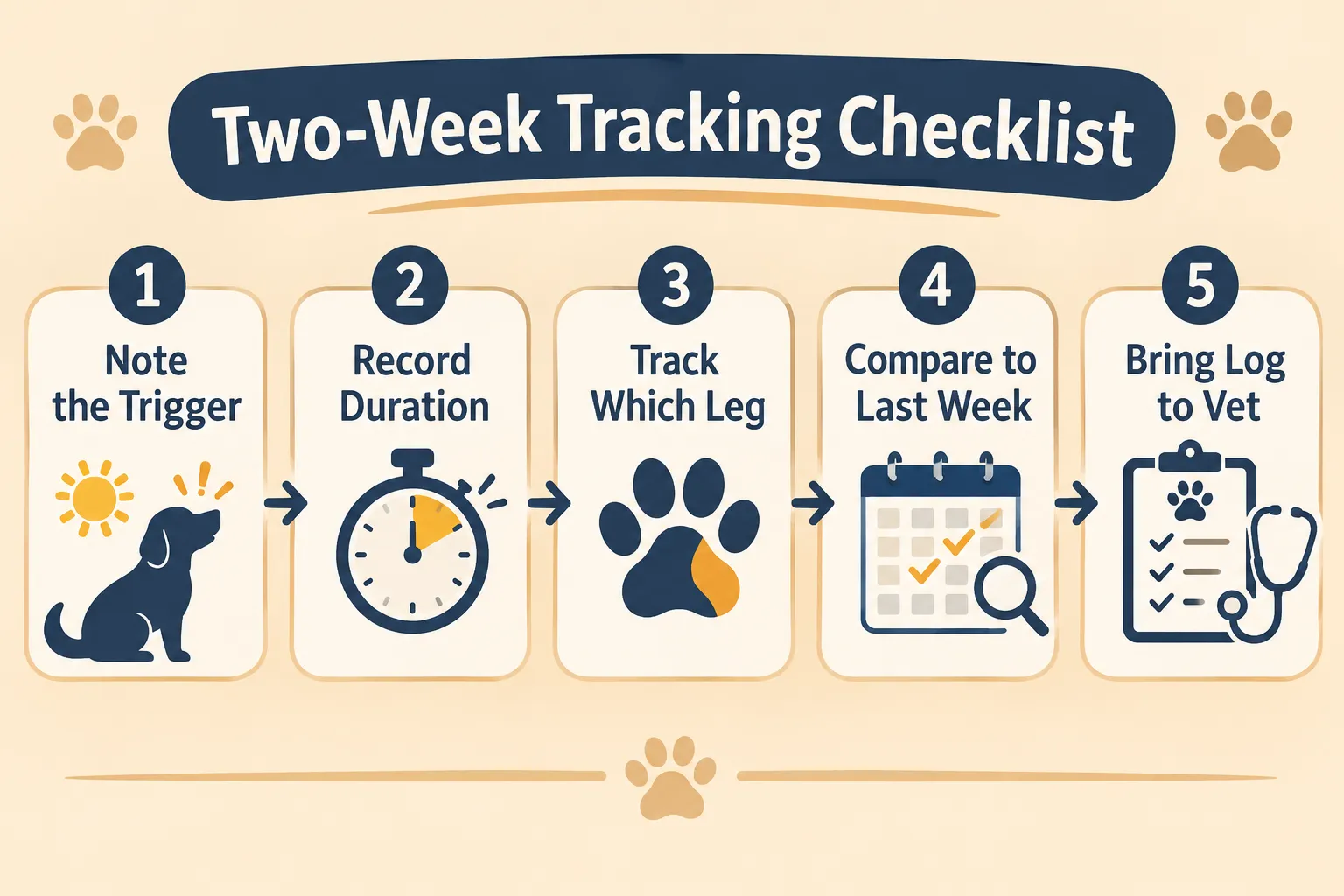
Record changes on stairs (hesitation, pausing, needing a lift) and changes after rest (stiffness for the first few steps, slow to rise, reluctance to jump) because these two situations reveal joint pain before limping becomes obvious. Track frequency and duration for one to two weeks, then bring the written log to the vet instead of describing it from memory. Signs of arthritis in dogs often hide in these ordinary moments long before a limp appears.
A dog that hesitates at the stairs twice a week is not being dramatic. Signs of arthritis in dogs usually start small, show up after rest, and get waved off as “just getting older” right up until the dog stops wanting to take walks at all.
Key Takeaways
- Osteoarthritis is one of the most common chronic conditions seen in adult dogs, and it is widely under-diagnosed because early signs are subtle, according to Cornell University’s Riney Canine Health Center.
- Pain often shows up as a behavior change (withdrawal, irritability, avoiding touch near a joint) before a visible limp ever appears, per Ohio State University’s veterinary research on pain and behavior changes.
- Imaging findings and actual pain levels do not always line up: a dog can have mild x-ray changes and significant pain, or the reverse.
- Large and giant breeds with hip or elbow dysplasia can show joint changes well before middle age, sometimes as young as one to two years old.
- Weight management is one of the single most effective tools for reducing joint load, according to the Merck Veterinary Manual.
- NSAIDs remain the most commonly prescribed class of arthritis medication in general veterinary practice.
- Arthritis cannot be reversed once cartilage damage has occurred, but early management changes the trajectory of pain and mobility over years, not months.
When to call the vet: Schedule a visit if stiffness lasts more than 10 to 15 minutes after waking, your dog stops wanting to climb stairs or jump into the car, a limp appears even once, or you notice licking at one joint repeatedly. Call right away for sudden non-weight-bearing lameness, visible swelling, or a yelp when touched near a joint.
Doggy Rank IQ Tool
Dog Movement Change Log

Tick the changes you have seen and how long. You get a visit priority and a note to bring to the vet.

Signs of arthritis in dogs
Signs of arthritis in dogs include slower movement after rest, hesitation on stairs, shorter walks, muscle loss over the hips or shoulders, licking or chewing at a joint, and mood changes like irritability when touched. These signs build gradually, which is exactly why owners miss them.
Veterinary behavior researchers at Ohio State describe a cluster of indicators worth watching in daily life, not just in an exam room, including:
- Minor or intermittent lameness that comes and goes
- Weight shifting between legs while standing
- Stiffness, especially after sleep or long rest
- Reduced willingness to walk, play, or go upstairs
- Declining stamina on walks that used to be easy
- Gradual muscle loss, often noticeable along the hind legs
- Difficulty rising from a lying position
- Trouble on slippery floors, stairs, or jumping into a car
- Behavior changes: withdrawal, irritability, or avoiding handling
Choose to start tracking today if your dog has shown any two of these more than twice in the past two weeks. One odd stumble is not a pattern. A pattern over fourteen days is worth a page in a notebook and a conversation with your vet.
A common mistake is waiting for a visible limp. Pain often shows up as behavior change first: a dog that seems “less happy,” avoids being touched near the hips, or quietly stops greeting people at the door. The limp, when it arrives, is often the later chapter, not the opening one. The American Kennel Club’s guide to osteoarthritis makes a similar point: by the time lameness is obvious, joint changes have usually been present for a while.
What are the first signs of arthritis in dogs
The first signs of arthritis in dogs are subtle: a half-second pause before stairs, slightly shorter walks, and stiffness that eases after a few minutes of movement. These are easy to dismiss because the dog still seems mostly fine.
Watch specifically for:
- A pause at the bottom of the stairs before committing to climb
- Walks that end ten minutes earlier than they used to, without complaint
- A stiff first few steps after a nap that smooths out once moving
- Reluctance to jump onto furniture or into the car, replaced by looking for a ramp or a lift
Edge case: young, high-energy dogs can show short-term stiffness after an unusually hard hike or play session that has nothing to do with arthritis. The difference is recovery time. Normal muscle soreness clears in a day or two. Early arthritis-related stiffness tends to repeat on a weekly basis, often tied to the same triggers such as cold mornings, long rest periods, or stairs.
Signs of arthritis in dogs: How do I know if my dog has arthritis
You cannot confirm arthritis at home, but you can build a strong case for the vet by tracking frequency, duration, and the specific movements that trigger stiffness or hesitation over one to two weeks. A written log turns “he’s been slower lately” into data a vet can actually use.
Three questions make the pattern visible:
- Does the behavior happen after rest, after exercise, or both?
- Is it the same leg or side every time, or does it shift?
- Has the dog’s willingness to do a specific activity, such as stairs, car jumps, or long walks, changed in the last month?
A vet combines a physical exam, range-of-motion checks, and sometimes imaging with your observations to reach a diagnosis. Imaging alone is not definitive. PetMD’s overview of arthritis diagnosis notes that x-rays confirm joint changes but do not always predict how much pain a dog is actually feeling, which is part of why your home notes carry real weight in the conversation.

Signs of arthritis in dogs: What age do dogs get arthritis
Dogs commonly show osteoarthritis signs from middle age onward, but the joint changes that lead there can start years earlier, especially in dogs with a prior injury or a breed predisposition. Senior is not a prerequisite for signs of arthritis in dogs to appear.
A dog with hip dysplasia can show joint changes by age two. A large-breed dog with no injury history might not show symptoms until seven or eight. Age matters, but history and breed matter just as much, which is why this article treats arthritis as a tracking problem at any age rather than a senior-only concern. For general questions about how aging affects sleep, cognition, or mobility more broadly, the guide on why dogs sleep so much covers that separate territory.
Signs of arthritis in dogs: Arthritis in young dogs: is that common
Arthritis in young dogs is less common than in middle-aged or senior dogs, but it is not rare, particularly in large or giant breeds with developmental joint conditions or in any dog recovering from an injury. A three-year-old Labrador with undiagnosed hip dysplasia can have joint changes that look a lot like a senior dog’s x-rays.
Example: a young, active dog that suddenly avoids jumping onto the couch after a rough play session at the dog park is showing a pattern worth tracking, not just a bruise that will heal on its own. If the hesitation outlasts a week, it belongs on the log, not on the “he’ll bounce back” shelf.
Which dog breeds are most prone to arthritis
Large and giant breeds, along with breeds prone to hip or elbow dysplasia, carry higher documented risk for developing osteoarthritis, though any dog of any size can develop it with age or injury.
Breeds frequently discussed in veterinary literature for raise joint disease risk include Labrador Retrievers, German Shepherds, Golden Retrievers, Rottweilers, and Bernese Mountain Dogs, largely tied to dysplasia rates and body size, as noted by Purina’s veterinary content team. Small breeds are not exempt; patellar luxation and long-term joint strain affect them too. Individual variation matters more than breed alone: a well-conditioned large dog can outlast a sedentary small one in joint health. For more on how breed tendencies interact with individual dogs, the piece on giant breed dog size categories is a useful companion read.

What’s the difference between hip dysplasia and arthritis in dogs
Hip dysplasia is a developmental condition where the hip joint forms abnormally, while arthritis (osteoarthritis) is the degenerative joint disease that often results from that abnormal joint wearing unevenly over time. One is a structural starting point; the other is the ongoing damage that can follow.

A dog can have hip dysplasia for years before it develops noticeable arthritis, and conversely, arthritis can develop in a perfectly normal joint after an injury with no dysplasia involved at all. Vets usually diagnose dysplasia with hip-specific x-rays taken at a young age, while arthritis diagnosis relies on a broader exam plus imaging at any age. If your dog was diagnosed with dysplasia as a puppy, treat new stiffness as a likely sign that the joint damage has progressed, and schedule a recheck rather than waiting.
How can I help my dog with arthritis pain at home
Weight management, controlled low-impact exercise, orthopedic bedding, and non-slip flooring are the main home measures that support a dog with early arthritis pain, alongside any vet-prescribed medication plan. Home care supports treatment; it does not replace a diagnosis.
Practical steps:
- Keep walks shorter and more frequent instead of one long outing
- Add rugs or runners on slippery floors near stairs and favorite resting spots
- Provide a ramp for the car or a favorite couch
- Maintain a lean body weight, since extra pounds load every joint with every step
- Consider an orthopedic bed that reduces pressure points during rest
Common mistake: owners stop all exercise once they suspect arthritis. Complete rest often worsens stiffness through muscle loss. The goal is controlled, gentle movement, not total inactivity. A vet or canine rehabilitation specialist can set appropriate limits for your specific dog, and VCA Canada’s arthritis guide recommends building exercise plans around a dog’s specific joints and weight rather than a generic routine.
Should I exercise my dog if they have arthritis
Yes, controlled exercise is recommended for most dogs with arthritis, but the type matters more than the amount. Short, frequent, low-impact sessions on flat, stable ground beat one long walk or any high-impact activity like jumping for a ball.
Good options include short leash walks, slow hill work for muscle support, and swimming where available, since water reduces joint load while still building strength. Avoid repeated jumping, hard stops on slippery floors, and sudden bursts of sprinting. Decision rule: if your dog is sore for more than a day after a specific activity, scale that activity back by half and watch the next attempt closely.
What supplements should I give my dog for arthritis
No supplement reverses arthritis, and the evidence behind common joint supplements is mixed, so any supplement should be discussed with a vet and used alongside, not instead of, a full management plan. Fish oil (omega-3 fatty acids) has some of the more consistent research behind it for reducing joint inflammation, while glucosamine and chondroitin have weaker, more inconsistent evidence across studies.
Before adding anything:
- Ask your vet whether a specific supplement interacts with current medications
- Give any new supplement at least four to six weeks before judging effect, since joint supplements are slow-acting compared to prescription pain medication
- Watch for GI upset, which is the most common side effect reported with joint supplements
If joint support products interest you alongside a vet-guided plan, the review of collagen for dogs looks at what the research does and does not support for joint health.
Can you prevent arthritis in dogs
You cannot fully prevent arthritis in dogs, especially in breeds with a genetic predisposition to joint disease, but you can meaningfully lower risk and delay onset through weight control, early treatment of injuries, and appropriate exercise during growth. Prevention here means reducing risk factors, not guaranteeing a joint stays healthy forever.
Steps with real supporting logic:
- Keep puppies, especially large-breed puppies, at a lean growth rate rather than rapid weight gain
- Treat ligament tears, fractures, or limping promptly instead of waiting them out
- Avoid repetitive high-impact exercise (like repeated jumping games) in young, still-growing joints
- Maintain a healthy adult weight throughout life, since excess weight is one of the most controllable risk factors according to Merck’s veterinary manual
What medications do vets prescribe for dog arthritis
Vets most commonly start with NSAIDs (non-steroidal anti-inflammatory drugs) designed specifically for dogs, alongside other options like monoclonal antibody injections, joint-targeted medications, and occasionally short courses of other pain relievers for flare-ups. Medication choice depends on the dog’s age, kidney and liver function, other health conditions, and how the dog responds over the first few weeks.
Common categories include:
- Canine-specific NSAIDs, which are the most frequently prescribed first-line option in general practice
- Monoclonal antibody injections, a newer class that targets a specific pain pathway rather than general inflammation
- Joint injections in some advanced cases, administered directly into the affected joint
- Short-term additional pain medication during flare-ups, layered on top of a baseline plan
These are prescription decisions for a vet to make based on bloodwork and a physical exam, not a home experiment. Never give human NSAIDs like ibuprofen to a dog; they are not safe at human dosing and can cause serious internal damage.
How much does arthritis treatment for dogs cost
Costs vary widely depending on diagnostics, medication type, and whether rehabilitation or injections are involved, and no single national figure applies to every dog or clinic. Rather than quoting an unverified number, ask your vet for a written estimate that separates diagnostic costs (exam, imaging) from ongoing costs (medication refills, rehab sessions, supplements).
Ask specifically:
- What does initial diagnosis cost, including any imaging?
- What is the monthly cost of the recommended medication?
- Are rehabilitation sessions included or billed separately?
- Is there a lower-cost starting plan if finances are tight this month?
Vets expect budget questions. Asking does not make you a less committed owner.
Is my dog limping from arthritis or something else
Limping can come from arthritis, but it can also come from a thorn, sprain, nail injury, tick-borne illness, or soft tissue strain, so a new limp should be treated as a signal to investigate rather than an automatic arthritis diagnosis. The pattern of the limp offers clues.
A limp that appears suddenly after a specific event (a jump, a fall, a hard run) points more toward injury. A limp that builds gradually over weeks, worsens after rest, and improves with gentle movement points more toward joint disease. Swelling, heat, or a dog that will not bear any weight at all on the leg needs same-day attention regardless of the suspected cause. If your dog spends time outdoors in wooded or grassy areas, rule out tick-borne illness as a possible cause of joint pain and lethargy; the guide on tick-borne diseases in dogs covers early signs that can look similar to joint pain.
Do all senior dogs get arthritis
No, not every senior dog develops arthritis, though it becomes increasingly common with age, and many veterinary sources describe it as one of the most frequently seen chronic conditions in older dogs. Genetics, lifetime body weight, activity history, and any past injuries all influence whether and how severely a given dog develops it.
A lean, well-conditioned senior dog with no joint injury history has a real chance of aging with minimal joint disease, while a dog carrying extra weight for years or one with an old injury is far more likely to show signs of arthritis by its senior years. This is why weight management earlier in life pays off later rather than only mattering after symptoms start.
Is stiffness in the morning always a sign of arthritis
No, morning stiffness is a common early sign of arthritis in dogs, but it can also result from cold weather, an overly firm sleeping surface, or a single hard day of exercise the day before. The distinguishing factor is how long the stiffness lasts and whether it repeats.
Decision rule: if morning stiffness clears within a few minutes of walking around and does not happen again until after another hard activity day, it is likely normal muscle fatigue. If it happens most mornings, lasts more than 10 to 15 minutes, or is getting slightly worse week over week, treat it as a signal worth tracking and mentioning at the next vet visit.
When should I take my dog to the vet for limping
Take your dog to the vet immediately for any limp that appears suddenly, any non-weight-bearing leg, visible swelling, or a yelp when a joint is touched. For gradual, intermittent limping, schedule a routine visit and bring one to two weeks of written observations.
A limp is never something to wait out indefinitely. Even mild, occasional limping that persists past two weeks deserves an exam, since early arthritis management changes outcomes more than late-stage management does.
Can arthritis in dogs be reversed or cured
Arthritis in dogs cannot be reversed or cured because the cartilage damage is permanent, but its progression and pain level can be managed effectively with the right combination of weight control, medication, and controlled activity. Manage is the honest word here, not fix.
Dogs diagnosed and managed early, before significant muscle loss and joint damage accumulate, generally maintain better mobility and comfort over the following years than dogs diagnosed late. That gap is the entire reason this article pushes early tracking over waiting for an obvious limp. According to IDEXX Pet Health’s primer on osteoarthritis, early intervention consistently correlates with better long-term comfort outcomes.
How to keep my senior dog comfortable
A senior dog stays most comfortable with a consistent routine: a lean body weight, shorter and more frequent walks, a supportive bed, easy footing around the house, and regular vet checkups that catch new signs of arthritis in dogs before they progress. Comfort is less about one fix and more about stacking several small, manageable habits.
Practical habits that add up over months:
- Weigh your dog every month and adjust food portions if weight creeps up
- Keep nails trimmed, since overly long nails change how weight is distributed across the paw and joints
- Set up a sleeping area away from drafts and off hard flooring
- Schedule a vet check every six months once your dog is a senior, even if nothing seems wrong
- Keep a running log of any new hesitation, slowness, or mood change, the same habit recommended throughout this guide for catching signs of arthritis in dogs early
For owners building a broader senior care routine, the dog grooming basics guide covers nail care and coat maintenance that become more important as mobility changes.
FAQ
What are the very first signs of arthritis in dogs? The earliest signs are usually a brief pause before climbing stairs, slightly shorter walks, and mild stiffness after rest that eases once the dog starts moving.
Can a young dog have arthritis? Yes, especially large breeds with hip or elbow dysplasia, or any dog recovering from a joint injury, though it is less common than in middle-aged or senior dogs.
What is the single best thing I can do at home for a dog with arthritis? Keeping your dog at a lean body weight has one of the strongest, most consistent effects on reducing joint pain and slowing progression.
Should I stop walking my dog if I suspect arthritis? No, stopping exercise entirely often makes stiffness worse through muscle loss. Shorter, more frequent, low-impact walks are the better approach.
Is limping always arthritis? No, limping can come from a thorn, sprain, nail injury, tick-borne illness, or soft tissue strain. A new limp should be checked rather than assumed to be arthritis.
How long should I track symptoms before calling the vet? One to two weeks of written notes on frequency, duration, and triggers gives a vet enough pattern to work with and is far more useful than a memory-based description.
Can supplements cure dog arthritis? No, supplements may offer some support alongside a full treatment plan, but none reverse joint damage, and the evidence for popular options like glucosamine is mixed.
Do all senior dogs eventually get arthritis? No, though it becomes more common with age. Lifetime weight, activity history, and past injuries all affect individual risk.