Quick Answer
Collagen for dogs has some real, early evidence for joint comfort in arthritic dogs, and almost none for skin and coat. The strongest canine data comes from a small number of randomized trials using measured doses of collagen hydrolysate or bioactive collagen peptides, with results showing modest improvement in lameness and gait after eight to twelve weeks. Chewy collagen sticks and most liquid collagen products have not been tested that way at all. No collagen supplement is an FDA-approved treatment for any canine condition, and veterinary sources still rank omega-3 fish oil above collagen for joint support.
Key Takeaways: Collagen for Dogs
- Collagen for dogs is a supplement, not a drug. The FDA does not pre-review most animal nutraceuticals for safety or effectiveness, per VCA’s clinical handout on undenatured collagen type II.
- Joint evidence exists but is thin. A 2024 review from Utrecht University found only three randomized controlled trials of collagen hydrolysate in dogs, with wide variation in dose, source and outcome measures.
- One trial used objective gait equipment. In a 2024 randomized trial published in PLOS ONE, dogs with osteoarthritis given bioactive collagen peptides improved on peak vertical force, vertical impulse and limb symmetry at 12 weeks, while owner-reported scores did not consistently beat placebo.
- Two different ingredients share one word. Hydrolyzed collagen peptides and UC-II undenatured collagen work through different proposed pathways, so results from one do not transfer to the other.
- Skin and coat claims are mostly borrowed from human studies. No high-quality canine skin trial turned up in guidance checked October 2026.
- Expect weeks, not days. VCA’s handout notes benefits may take several weeks to appear.
- Fish oil still leads. Cornell’s Riney Canine Health Center page on joint supplements describes EPA and DHA from fish oil as the best supported option, with products such as Dasuquin suggested as possible add-ons rather than certainties.
- Collagen sticks are chews first. They give dental and enrichment value plus calories. They are not a measured supplement dose, and worn-down stubs are a swallowing hazard.
What is collagen, and why are dog owners buying it in 2026?
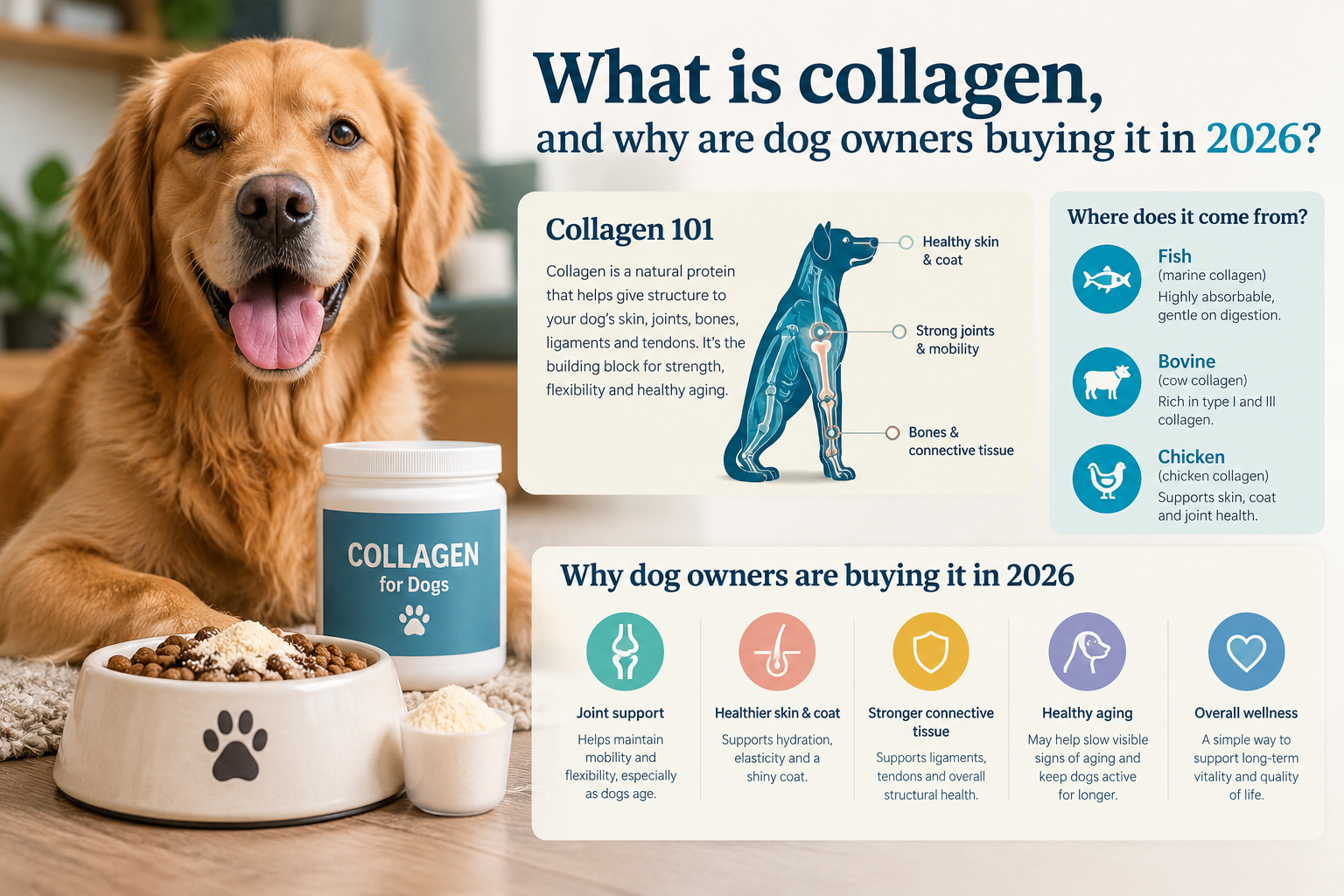
Collagen is the structural protein that holds a dog together: skin, tendons, ligaments, blood vessels, and the cartilage that keeps the ends of bones from grinding. Type I dominates skin and tendon. Type II dominates joint cartilage. When a supplement says “collagen,” it is usually selling one of three things: a hydrolyzed powder broken into small peptides, a tiny daily dose of undenatured type II collagen, or a dried chew made from animal hide.
The market has moved faster than the science. Search interest in collagen for dogs has climbed sharply over the past few years, which is market context, not evidence of anything working. Meanwhile the supplement aisle filled up with powders, soft chews, dropper bottles and sticks the size of a baguette.
What does collagen do for dogs?
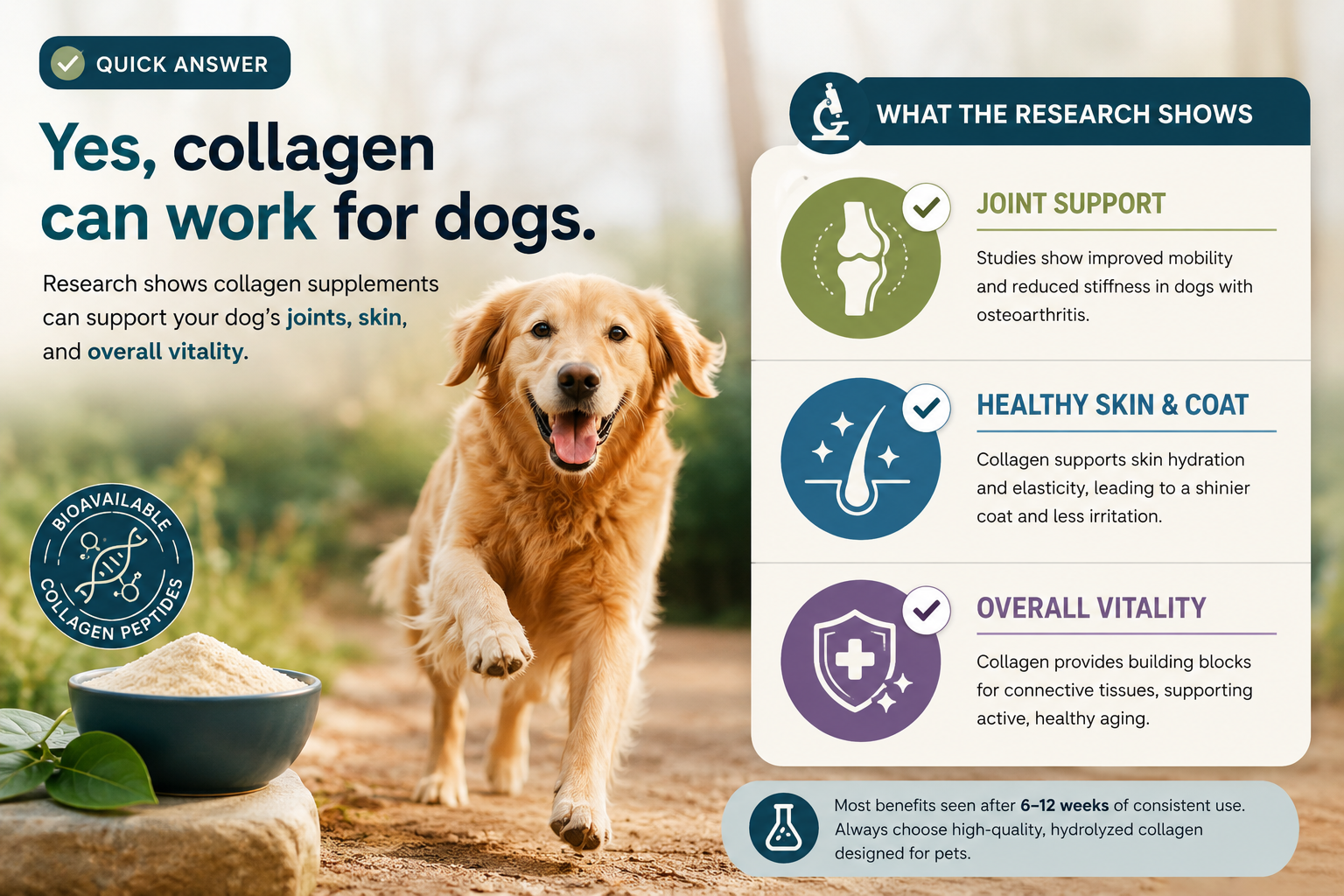
In the body, collagen does the structural work above. Swallowed as a supplement, the picture changes. Hydrolyzed collagen is digested like any other protein, delivering amino acids including glycine, proline and hydroxyproline. The Utrecht review notes these peptides may influence cartilage matrix synthesis, joint lining inflammation and cartilage-degrading enzymes, but much of that mechanistic work comes from cell cultures, rodents and other species rather than dogs. Canine bioavailability data is one of the gaps the authors specifically flag.
UC-II takes a different route. It is left undenatured and given in very small amounts, with the proposed mechanism running through immune tolerance pathways rather than raw amino acid supply.
So the honest version: collagen supplies building blocks and may act as a signal. Which of those matters more in a living dog is still being worked out.
Does collagen for dogs work? What studies on UC-II and collagen peptides found
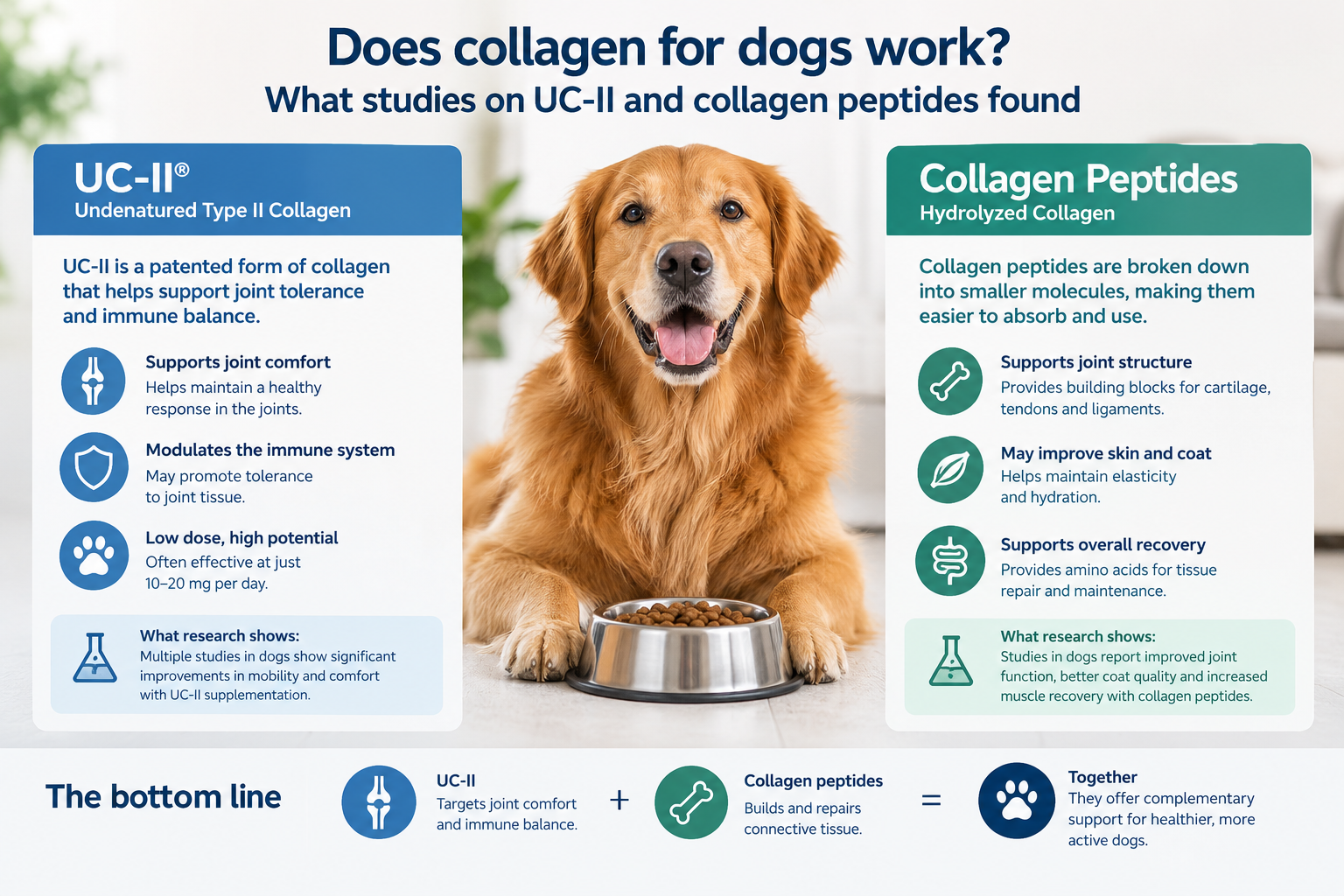
For joint comfort in dogs with osteoarthritis, collagen has promising but limited support. For skin, coat, nails and gut health in dogs, the marketing is far ahead of the published canine research.
Start with the reviewed evidence. The Utrecht University narrative review on collagen hydrolysates in canine osteoarthritis is the most useful recent synthesis, and its conclusion is careful: early results look encouraging, and the field still needs standardized dosing, larger placebo-controlled trials, validated outcome measures, and basic canine absorption data. Three randomized controlled trials is not a settled question. It is a starting line.
The earliest controlled study summarized in that review used 10 g of gelatin hydrolysate per dog per day for eight weeks and reported roughly a 30% improvement in owner-rated lameness and stiffness compared with placebo. Useful, and also owner-rated, which is the measure most vulnerable to hope.
A 2017 randomized study published in BMC Veterinary Research mixed hydrolyzed collagen with curcuminoids and green tea extract in the diet. Veterinarian-assessed pain on manipulation dropped and owner-assessed pain severity fell, but force-plate ground reaction forces and several osteoarthritis biomarkers did not improve significantly. That split matters. Two measures said better, the machine said no change.
Then the 2024 PLOS ONE trial, which compared bioactive collagen peptides against omega-3 fatty acids plus vitamin E and against placebo. Here the machine agreed: significant gains in peak vertical force, vertical impulse and limb symmetry at 12 weeks. Owner-reported pain and limb function did not consistently separate from placebo. One trial, one specific peptide product, one set of dogs.

For UC-II, the VCA handout describes it as a supplement used to support joint health and flexibility while stating plainly that rigorous trials are uncommon. Published UC-II work in dogs exists and is generally small, and Lonza’s UC-II is the branded ingredient behind most products on the shelf. A summary of the wider type II collagen research base is available if you want to read the primary literature yourself.
One more complication worth holding onto: most commercial joint products combine collagen with glucosamine, chondroitin, green-lipped mussel, turmeric, hyaluronic acid or omega-3s. When a study on one of those blends comes back positive, the result belongs to the whole formulation. Not to collagen.
Collagen sticks have the least evidence and the most shelf space. That gap is the whole story of this category.
Collagen for dogs: what each form has behind it
| Form | Canine evidence | Typical use | Cautions |
|---|---|---|---|
| UC-II undenatured collagen (e.g. Lonza UC-II) | Small trials; VCA notes rigorous studies are uncommon | Very small daily dose, joint flexibility support | Do not assume hydrolysate results apply; several weeks before any change |
| Hydrolyzed collagen peptides / gelatin hydrolysate | Three RCTs per the Utrecht review; gait gains at 12 weeks in the 2024 PLOS ONE trial | Grams per day in powder or food, osteoarthritis support | Doses in studies vary widely; adds protein and calories |
| Collagen sticks and chews (e.g. Bully Max, Redbarn) | No controlled joint or skin trials identified | Chewing enrichment, dental interest, high-value reward | Choking and blockage risk at the stub stage; supervise; count calories |
| Bone broth | No controlled canine joint trials identified; collagen content unstated | Palatability topper, hydration, fussy eaters | Avoid onion and garlic versions and added salt; treat as food, not therapy |
If you are already comparing additions to the bowl, our guide to dog food toppers worth adding to kibble covers where broth and powders sensibly fit.
Is collagen safe for dogs? Choking risk with sticks, allergies, and calories
Collagen itself is a protein, and digested collagen is generally well tolerated by healthy dogs. The real safety questions sit around the product, not the molecule: how hard the chew is, how many calories it adds, what protein it came from, and whether a supplement is replacing a diagnosis your dog needs.
Are collagen sticks safe for dogs?
Collagen sticks are safer than many rawhides for most dogs because they soften as they are chewed, but no chew is safe for every dog. Three rules keep them sensible:
- Match the size to the dog. A stick a large dog can swallow whole is the wrong stick.
- Take the stub away. The last two inches are the choking and blockage risk, not the first six.
- Supervise and count the calories. A thick collagen stick is a meaningful chunk of a small dog's daily energy, so reduce the bowl accordingly.
Dogs with a history of gulping, pancreatitis or dietary sensitivity should get vet input before any new high-protein chew.
What happens if you give too much collagen to dogs?
Overdoing collagen usually produces soft stool, gas, vomiting or a dog who is suddenly less interested in dinner. Collagen is not acutely toxic at supplement amounts, and the common problems come from excess protein and fat arriving at once, or from a chew eaten too fast. Stop the supplement, feed plainly for a day or two, and call your vet if vomiting repeats, stool stays loose beyond 48 hours, or your dog seems painful or lethargic.
Nutrient balance matters too. Collagen is an incomplete protein, so large amounts used to replace part of a complete diet can skew the overall amino acid picture. Keep supplements as additions to a diet that already meets AAFCO nutritional adequacy standards.
Collagen for dogs with allergies: is it safe?
Collagen is only as hypoallergenic as the animal it came from. A dog reacting to beef will react to bovine collagen, and chicken-sensitive dogs should avoid poultry-derived products. For allergy dogs, the label check that matters most is a single named protein source, which plenty of multi-ingredient chews never provide.
Also check the rest of the formula. Combination joint chews often carry chicken flavor, pork fat, dairy or grain carriers that will break an elimination diet. If you are mid-trial, add nothing without your vet. Our guide to which grains and dairy foods are safe for dogs explains why the carrier ingredients deserve a look.
Can puppies have collagen?
Healthy growing puppies do not need collagen supplements, and there is no canine trial support for giving them one. Puppies get their structural protein from a complete growth diet, and large-breed puppies in particular need careful calcium and energy control rather than extra additions. Collagen chews can still work as supervised chewing outlets once adult teeth are in, sized correctly and counted as treats. For the nutrition that genuinely matters in year one, see what growing dogs need from puppy food.
How much collagen should I give my dog, and how long does it take to work?
Follow the dose on the specific product, because published canine doses vary enormously and are not interchangeable between forms. Give it eight to twelve weeks before judging, and track something you can measure.
What the research used, as a reference point rather than a prescription:
- Gelatin hydrolysate: 10 g per dog per day for eight weeks in the earliest controlled trial summarized by the Utrecht review.
- Bioactive collagen peptides: the product-specific daily dose in the 2024 PLOS ONE trial, assessed at 12 weeks.
- UC-II: milligram-level daily doses, with VCA noting several weeks before benefits may appear.
The difference between 10 grams and a few dozen milligrams is not a rounding error. It is two different ingredients doing two different proposed jobs, which is exactly why the Utrecht authors call for standardized dosing.
A practical tracking method: before you start, film 20 seconds of your dog walking away from the camera and note three specific things, such as how many pauses on the usual walk, whether the dog takes the stairs unprompted, and how long it takes to settle after exercise. Review at week four and week twelve. Vague memory is a poor control group, and both the BMC and PLOS ONE trials showed owner impressions can drift away from what instruments measure. Weight is the other variable: dosing by body weight is standard, and if you are unsure which bracket your dog falls into, our dog size categories explainer sorts small through giant.
Does collagen for dogs help skin and coat?
There is no high-quality canine trial showing collagen supplements improve skin or coat, based on guidance checked October 2026. The skin and nail claims you see on dog products are largely transplanted from human research, and transplanting across species is how good science turns into bad marketing.
That does not make collagen useless for a dull coat. It makes it unproven. If coat quality is the concern, the better-supported levers are adequate dietary protein and fat, omega-3 fatty acids, parasite control, and ruling out allergy or hormonal conditions with your vet. A dog itching through the night needs a diagnosis, not a dropper.
For food-level support, read what vets actually look for in a dog food and the sensible additions in our superfoods for dogs guide.
Collagen vs glucosamine and fish oil: which has better evidence for joints?
Fish oil has the strongest support of the three in dogs, glucosamine and chondroitin have more years of use but mixed trial results, and collagen is the newest with the smallest evidence base and the most interesting recent data.
Cornell's Riney Canine Health Center page quotes Dr. Christopher Frye describing fish oil as the joint supplement with the best current literature support, and Dr. Joseph Wakshlag recommending fish oil along with selected products such as Nutramax Dasuquin as possible add-ons rather than guaranteed treatments. That framing is the honest one. Supplements sit alongside weight control, appropriate exercise, pain medication where prescribed, and physical rehabilitation.
Decision rules that hold up:
- Choose fish oil first if you are adding one thing for an arthritic dog and your vet agrees on the dose.
- Choose a combination joint product (glucosamine, chondroitin, often with collagen or green-lipped mussel) if you want the conventional approach with the longest track record of use.
- Consider collagen peptides as an addition, not a replacement, if your dog is already on a full plan and you can commit to 12 weeks and honest tracking.
- Skip the supplement aisle entirely until a limping dog has been examined. Collagen will not fix a cruciate tear, a luxating patella or hip dysplasia.
Collagen for senior dogs with arthritis
Senior arthritic dogs are the population the collagen trials actually studied, which makes them the most reasonable candidates. The 2024 PLOS ONE trial enrolled dogs with osteoarthritis and measured them on force plates, and that gait improvement at 12 weeks is the most concrete finding in this category so far.
Two caveats for older dogs. Kidney, liver and pancreatic conditions change what protein and fat additions are appropriate, so the vet conversation comes first. And a senior dog's calorie budget is tight, which makes a measured powder more sensible than a daily high-calorie chew. Diet changes by life stage are covered in our guide to what changes between puppy, adult and senior dog food.
Collagen powder vs chews vs liquid: which form works better?
Powder is the most controllable form, chews are the most convenient, liquid is the easiest to dose for tiny dogs, and sticks are chews rather than supplements. The published canine joint trials used measured intakes mixed into food, which points toward powders and veterinary formulations if effect is what you are after.
| Form | Best for | Main drawback |
|---|---|---|
| Powder | Dosing by weight, multi-dog households, calorie control | Some dogs notice it; needs mixing |
| Soft chews | Daily compliance, fussy dogs | Fixed dose, extra calories, flavor carriers |
| Liquid | Small dogs, tiny adjustments, dogs who refuse powder | Check the carrier ingredients and shelf life |
| Collagen sticks | Chewing enrichment, dental interest, high-value rewards | Not a measured dose; stub swallowing risk |
Where to buy quality collagen for dogs
Buy from brands that publish the collagen type, the amount per serving and their testing approach, and look for the National Animal Supplement Council (NASC) Quality Seal, which indicates participation in the industry's audit and adverse event reporting program rather than proof of effect. Veterinary clinics, veterinary online pharmacies and established retailers are all reasonable sources. Unbranded marketplace listings with no stated collagen type are not.
Run the label check widget above before buying. If a product cannot tell you what is in a serving, the question of whether collagen works becomes unanswerable for that particular tub.
Which collagen products are worth a look?
These are neutral fit notes based on publicly stated formulation and positioning. Doggy Rank IQ did not test these products, no prices were verified for this guide, and none of them is proven to treat any condition. Check current pricing and the ingredient panel yourself before buying, and talk to your vet if joint pain is the reason you are shopping.
- Nutramax Dasuquin. Glucosamine and chondroitin based rather than collagen led. Named on Cornell's joint supplement page as a possible add-on. Suits owners who want the most conventional, widely used option.
- Purina Pro Plan Veterinary Supplements. Clinic-channel range with clearly stated formulations. Suits owners who prefer buying supplements through a veterinary practice.
- Zesty Paws Mobility Bites. Combination soft chew that typically pairs collagen with glucosamine-type ingredients. Suits dogs who take treats readily; the fixed dose and added calories are the trade-off.
- Native Pet. Food-topper style powders and bone broth products with straightforward ingredient lists. Suits owners who want to mix a measured amount into meals.
- Taily and Bloom collagen for dogs. Newer direct-to-consumer collagen brands. Judge them on the same six label checks as anyone else, especially stated collagen type and amount per serving.
- DNA Pet liquid collagen. Liquid format, useful where small or precise doses matter. Check the carrier ingredients if your dog is on an elimination diet.
- Bully Max and Redbarn collagen sticks. Chews, not supplements. Good enrichment value, sized correctly and supervised, with the stub removed.
- Lonza UC-II. An ingredient rather than a brand. If a product relies on UC-II, the label should say so and state the milligrams.
FAQ
Is collagen good for dogs, or is it just marketing?
Both things are partly true. Collagen peptides have early randomized trial support for joint comfort in arthritic dogs, with gait improvements measured at 12 weeks in a 2024 PLOS ONE study. Skin, coat and gut claims for dogs are not supported by comparable canine evidence.
How long does it take collagen to work in dogs?
Plan on eight to twelve weeks. VCA's handout notes several weeks before any benefit may appear, and the canine trials assessed outcomes at eight and twelve weeks rather than days.
Are collagen sticks safe for dogs?
They are reasonably safe for supervised chewing when sized correctly, and the risk rises sharply once the stick is worn down to a swallowable stub. Remove the stub, supervise the whole chew, and count it as part of the day's calories.
Can I give human collagen powder to my dog?
Plain hydrolyzed collagen powder with no additives is chemically similar, but human products often include xylitol, artificial sweeteners, caffeine or botanical extracts that are unsafe for dogs. Check every ingredient, and ask your vet about the dose before substituting.
Is UC-II better than hydrolyzed collagen peptides for dogs?
No one can answer that from current canine data. They are different ingredients with different proposed mechanisms and dose ranges, and the Utrecht review specifically warns against applying results from one to the other.
Does collagen for dogs replace joint medication?
No. Supplements are additions to a plan that may include weight management, exercise adjustment, prescribed pain relief and rehabilitation. Stopping a prescribed medication in favor of a supplement should never happen without veterinary guidance.
Can dogs with allergies take collagen?
Only if the protein source is named and matches what your dog tolerates. Bovine collagen is a beef product, and multi-ingredient chews frequently add chicken, dairy or grain carriers that complicate an elimination diet.
What is the best collagen for dogs?
There is no single best product, because no head-to-head canine comparison exists. The better question is which product names its collagen type, states the amount per serving, carries the NASC Quality Seal, and fits your dog's protein tolerance and calorie budget.
Conclusion: the one next step
Collagen for dogs sits in an unusual spot: more evidence than most supplement fads, far less than the labels imply, and concentrated almost entirely on arthritic joints rather than shiny coats. The 2024 trials moved the needle on gait measures. They did not turn a powder into a treatment.
Your next step depends on why you are here. If your dog is stiff, limping or slowing down, book the veterinary exam first and ask specifically about weight, pain relief and fish oil dosing, because those have more behind them than any collagen product on the shelf. If a supplement still makes sense afterward, run the label check above, pick one product with a named collagen type and a stated amount per serving, film 20 seconds of your dog walking, and set a reminder for 12 weeks.
Then look at the video again, not at the packaging.