
Quick Answer
A ruffwear dog backpack comes in two main versions for active dogs: the Approach Pack, a lighter daypack built for short hikes, and the Palisades Pack, a higher-volume pack with removable saddlebags for overnight trips. The Approach costs about $50 (price checked 2026) and suits dogs carrying water and a few snacks on a half-day trail. The Palisades runs about $149.99 and suits dogs doing multi-day backcountry travel where the owner needs to pull the bags off at camp while the harness stays on. Measure your dog’s girth before buying either one, since a ruffwear dog backpack that doesn’t match the girth chart will rub or shift no matter how much the dog likes the trail.
Key Takeaways: ruffwear dog backpack
- The Approach Pack is the lighter, cheaper ruffwear dog backpack, built for day hikes and short outings.
- The Palisades Pack is Ruffwear’s highest-volume pack, with saddlebags that detach while the harness stays on the dog.
- Both packs share the same girth-based sizing chart, from XS (17 to 22 inches) through L/XL (32 to 42 inches).
- A loaded ruffwear dog backpack, pack plus contents, should stay at or below 25% of the dog’s body weight, per Ruffwear’s own dog pack collection page.
- At matching sizes, the Palisades weighs roughly 0.21 to 0.39 lb more empty than the Approach, which eats into the dog’s weight allowance before any water goes in.
- Even load distribution between both sides matters more for comfort than total volume.
- Not every dog takes to wearing a pack immediately; conditioning and short trial walks make the difference, as the American Kennel Club notes.
- Ruffwear also makes the Front Range Day Pack and the Hitch Hiker trailer-style pack for dogs who shouldn’t carry weight at all.
- Current U.S. listings show the Approach on clearance pricing and some Palisades colors limited in stock, so check availability before planning a trip around one.

What kind of trips do you take?
Tap an option to see the answer.
 Is Ruffwear good for dogs, and who makes it?
 Is Ruffwear good for dogs, and who makes it?
Ruffwear is an Oregon-based company that has built hiking and working gear for dogs since the 1990s, and its packs are widely used by trail dogs, search and rescue teams, and backcountry guides who need gear built for repeated outdoor use. The company’s own dog pack collection documents construction details like perforated foam padding and reinforced stitching, and outdoor retailers such as REI and Chewy carry the line alongside human backpacking brands, which says something about how it’s positioned in the market.
“Good for dogs” depends on fit and load, not the logo. A ruffwear dog backpack that’s sized correctly and loaded lightly can let an able-bodied adult dog help carry its own water on a hike. The same pack on a dog with hip issues, a puppy with open growth plates, or a senior with joint pain is a bad idea regardless of brand reputation. Ask your veterinarian before adding pack weight to a young, elderly, or already-limping dog.
Who it suits: healthy adult dogs, typically a year or older, with no diagnosed joint or spine conditions, doing hikes where carrying water and snacks reduces the owner’s load.
Who it doesn’t suit: puppies under 12 to 18 months, dogs with hip dysplasia or back issues, brachycephalic breeds in hot weather, and any dog who hasn’t been conditioned to wear a pack before a long trip.
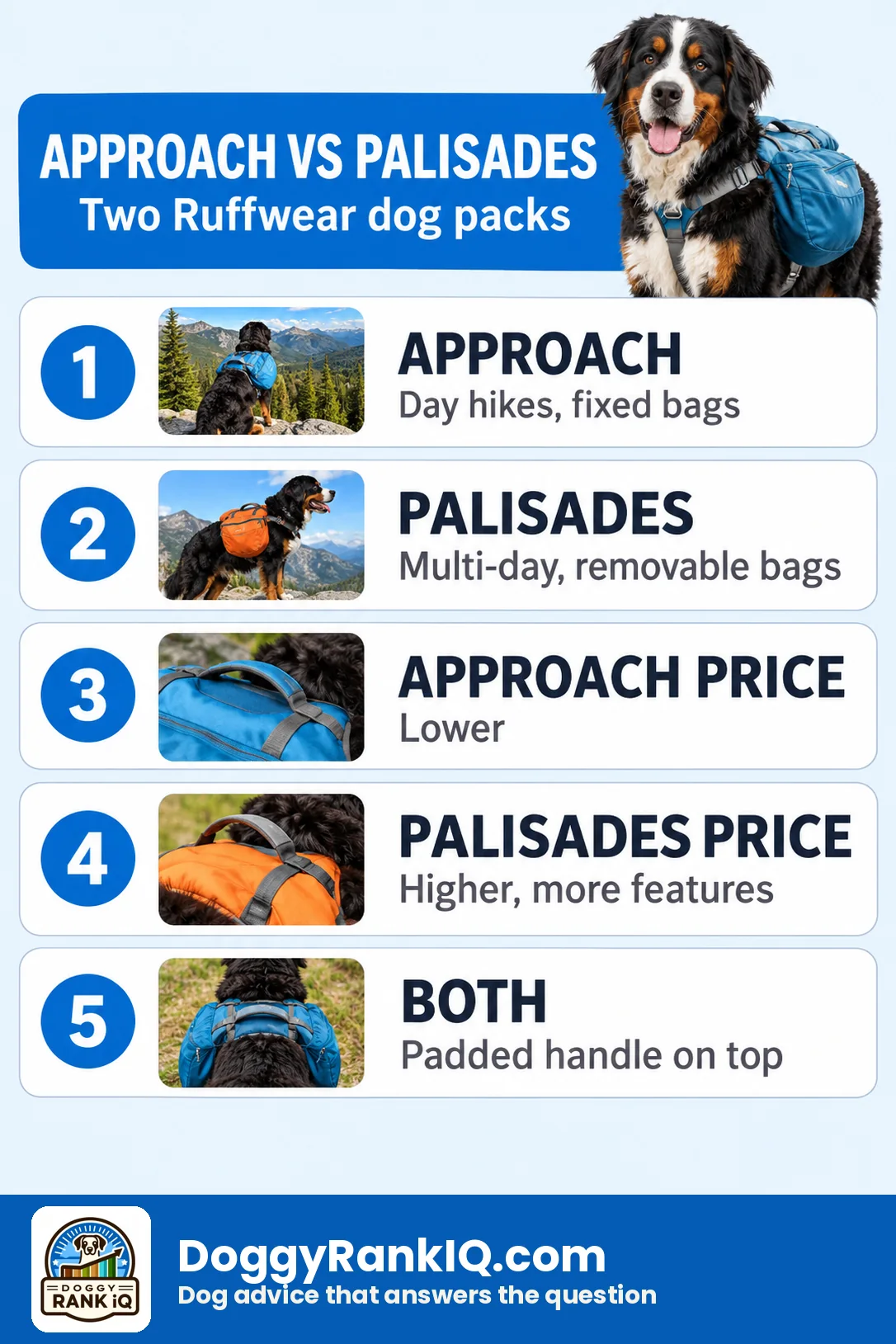
Approach vs Palisades at a glance
The table below sets the two current ruffwear dog backpack options side by side. Use it as a starting point, then check the measuring section below for girth specifics.
| Feature | Approach Pack | Palisades Pack |
|---|---|---|
| Best for | Day hikes, short outings | Multi-day backcountry trips |
| Volume | Lower, streamlined saddlebags | Ruffwear’s highest-volume pack |
| Removable bags | No, bags are part of the harness | Yes, saddlebags detach, harness stays on |
| Sizes | XS, S, M, L/XL | XS, S, M, L/XL |
| Price (checked 2026) | $50.00 (sale from $99.99) | $149.99 |
Decision rule: choose the Ruffwear Approach Pack (check the current price) if your dog’s trips rarely exceed a few hours and you mostly need water and a collapsible bowl along for the ride. Choose the Ruffwear Palisades Pack (check the current price) if you’re camping overnight and want the saddlebags off the dog’s back the moment you reach camp.
What’s the difference between Ruffwear and other dog backpack brands?
Ruffwear separates itself from generic pet-store dog packs mainly through fit precision, removable saddlebag engineering, and the fact its gear is tested against the same durability standards as human backcountry equipment. Many budget dog backpacks use a single universal size with adjustable straps, while Ruffwear builds four distinct girth-based sizes per pack, which tends to reduce rubbing and shifting.
Other differences owners notice:
- Saddlebag removal. The Palisades lets you detach the bags while the harness stays buckled on the dog, a feature not common on cheaper packs, as shown on the Palisades product page.
- Construction materials. Ripstop fabric, perforated foam padding, and reinforced stitching show up across the line, details Ruffwear documents directly on its dog pack collection.
- Price tier. Ruffwear generally costs more than off-brand packs sold on general marketplaces, though the Approach’s current clearance pricing narrows that gap.
- Warranty and support. Ruffwear backs its gear with a lifetime warranty against manufacturing defects, something many no-name competitors skip.
Decision rule: if you only need a pack for occasional walks around the block, a cheaper universal-fit pack may be fine. If your dog hikes regularly on uneven terrain, the sizing precision of a ruffwear dog backpack usually pays off in comfort over a season of use.
Ruffwear dog backpack sizes: how to measure girth
Girth, not weight, is the number that determines ruffwear dog backpack size, and both the Approach and Palisades share the same chart. Wrap a soft tape measure around the widest part of your dog’s ribcage, just behind the front legs, and compare the inches to Ruffwear’s published sizing guide on the Approach Dog Backpack page.
Current girth ranges for both packs:
- XS: 17 to 22 inches (43 to 56 cm)
- S: 22 to 27 inches (56 to 69 cm)
- M: 27 to 32 inches (69 to 81 cm)
- L/XL: 32 to 42 inches (81 to 107 cm)
A dog sitting right on the border between two sizes usually fits better in the smaller size if the dog is lean, and the larger size if the dog is barrel-chested or has a thick coat that compresses under the straps. Measure with the dog standing naturally, not stretched or crouched, and measure after a meal if your dog’s girth changes much between fasted and fed states.
Common mistake: measuring around the belly instead of the ribcage. That number is almost always smaller and leads to buying a size down, which then pinches behind the front legs on the trail.
Edge case: deep-chested, narrow-waisted breeds like Greyhounds or Dobermans sometimes measure into one Ruffwear size but need the next size up for comfortable saddlebag clearance. Check the manufacturer’s full backpacking with dogs guide for breed-specific notes before ordering.
How do you properly fit a ruffwear dog backpack?
A properly fitted ruffwear dog backpack sits level along the dog’s spine, with the saddlebags resting evenly on both sides and no gap wide enough to slide more than two fingers under the chest strap. Fit it empty first, walk the dog around, then add weight gradually once the frame sits correctly.
Steps to check fit:
- Buckle the harness with the saddlebags empty and let the dog stand normally.
- Slide two fingers under the chest strap and the girth strap; it should be snug but not tight.
- Check that the pack doesn’t slide forward over the shoulders or backward toward the hips when the dog walks a few steps.
- Look at the saddlebags from behind; they should hang level, not twisted or drooping to one side.
- Add a light load (a folded towel on each side works for testing) and repeat the walk-around check.
- Re-check fit every few months, since weight loss, weight gain, or a seasonal coat change can shift how the same size fits.
Common mistake: buying a size based on breed averages instead of an actual girth measurement. Two dogs of the same breed can measure two inches apart depending on build and coat.
How much weight a dog should carry, and how to load both sides evenly
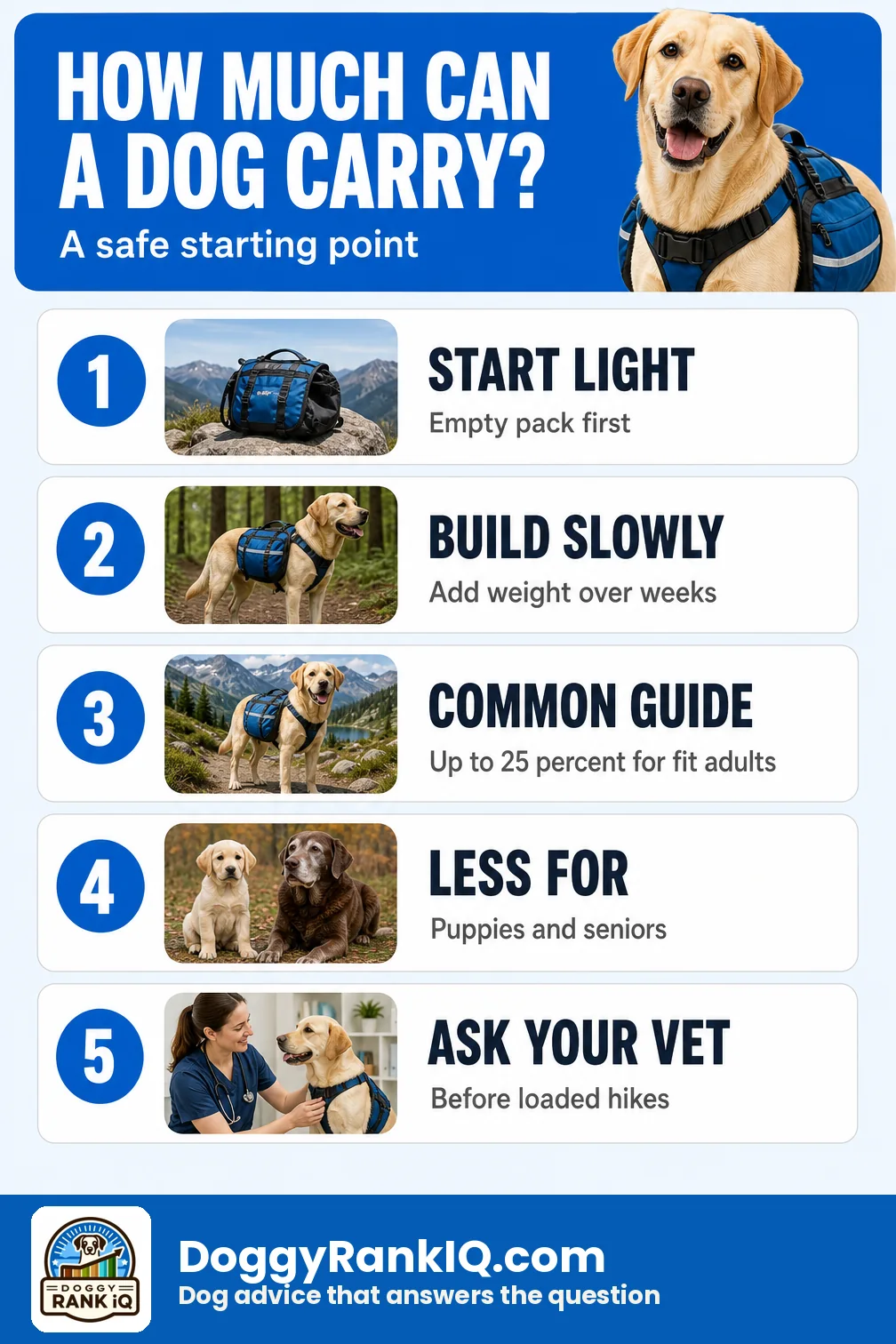
A dog’s total load, including the empty pack itself, should stay at or below 25% of the dog’s body weight, according to Ruffwear’s own dog pack guidance. That means a 50-pound dog should carry around 12.5 pounds total, pack included, not 12.5 pounds of water and food stacked on top of the pack’s own weight.
The math changes depending on which pack you buy. At the same size, the Palisades weighs roughly 0.21 to 0.39 lb more empty than the Approach, which matters most for smaller or less-conditioned dogs. A lighter pack frame leaves more of that 25% allowance for the actual water and food you want the dog to carry. A separate review from Paths and Paws walks through similar weight-limit math for the Approach specifically, which is worth reading if you’re trying to plan cargo for a smaller dog.
Practical loading steps:
- Weigh your dog and calculate 25% of that number.
- Subtract the pack’s own listed weight to find the usable cargo allowance.
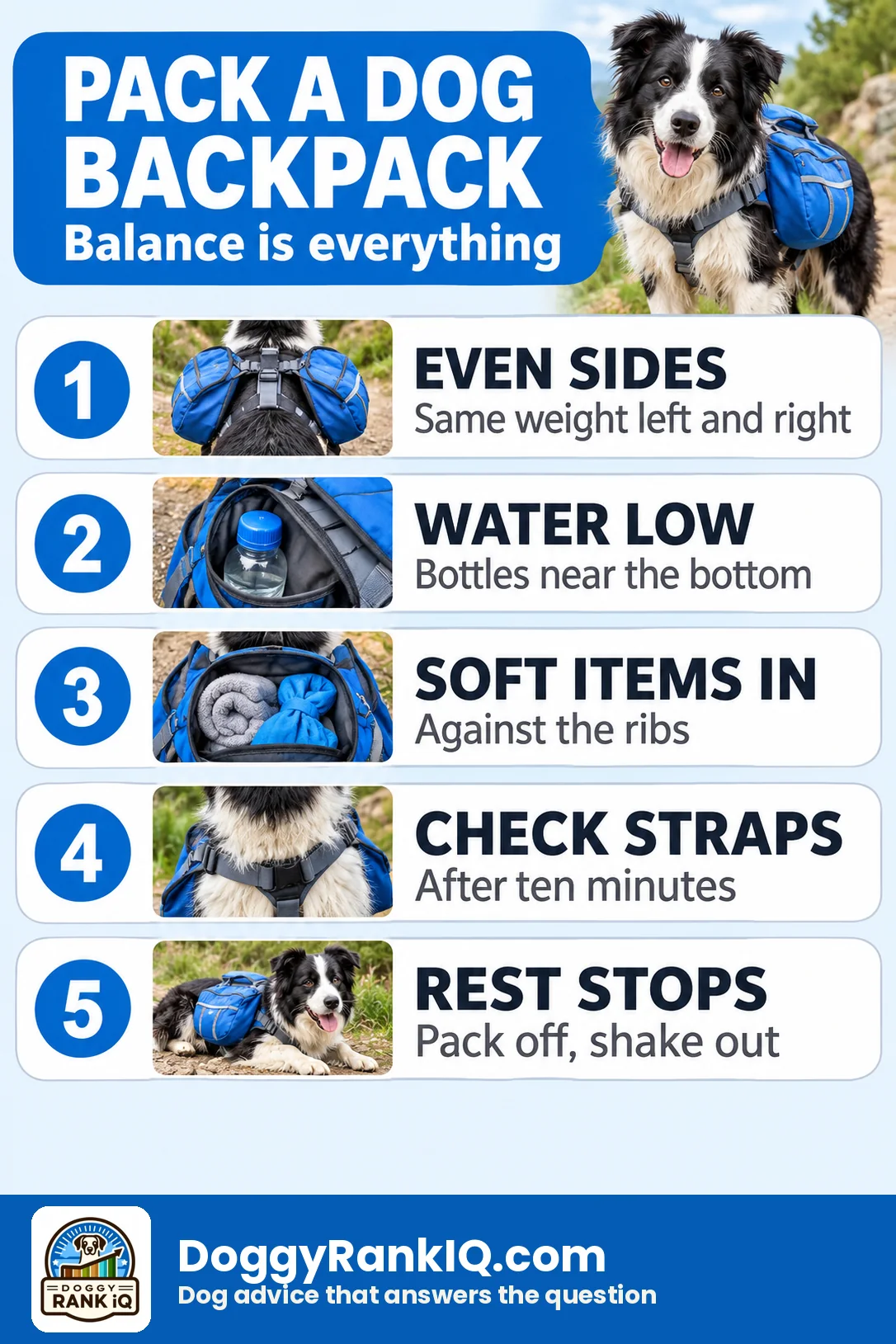
- Split water bottles, food bags, and poop bag rolls evenly between the two saddlebags.
- Use a kitchen scale to check both sides match within an ounce or two before clipping the pack on.
- Walk the dog around the yard or driveway first to watch for shifting, rubbing, or an obvious list to one side.
Decision rule: if your dog is under 15 pounds, skip the backpack idea entirely and consider a dog stroller for longer outings instead, since small dogs have very little spare carrying capacity once the pack’s own weight is subtracted.
Common mistake: loading one side with a full water bottle and the other with lighter snacks “to balance it out later.” Uneven loads pull on a dog’s spine the entire hike, not just at the end.
Can small dogs wear Ruffwear backpacks?
Small dogs can technically wear a ruffwear dog backpack sized to their girth, but the usable cargo allowance shrinks fast once the pack’s own weight is subtracted from the 25% body weight guideline. A 12-pound dog following the same math as a 50-pound dog ends up with only about 3 pounds of total carrying capacity, and the XS Approach or Palisades frame already accounts for a chunk of that.
Practical guidance for small and toy breeds:
- Dogs under 15 pounds generally don’t have enough spare capacity to make a pack worthwhile; a dog water bottle carried by the owner is more practical.
- Dogs between 15 and 25 pounds can sometimes wear the XS size with a very light load (an empty poop bag roll, a folded bandana) but shouldn’t be expected to carry water.
- Breed build matters as much as weight. A lean, long-backed small breed carries weight differently than a compact, barrel-chested one of the same number on the scale.
Decision rule: if your small dog’s XS-sized pack already uses more than a third of its 25% allowance just by being empty, skip the cargo and use the harness (if your dog has one anyway) purely for visibility or leash attachment, not for carrying.
⭐ Top 5 Features We Love
- Shared sizing system. The Approach and Palisades use the same girth-based chart, so owners who size one correctly can trust the same measurement for the other.
- Removable saddlebags on the Palisades. The bags come off at camp while the harness stays on the dog, which means no re-fitting a harness at the end of a long day, as detailed on the Palisades page.
- Perforated molded-foam chassis on the Approach. Ruffwear’s current design updates cut weight and improve airflow against the dog’s back compared with earlier versions.
- Updated flopper stopper stabilization. This keeps saddlebags from swinging side to side on uneven trail, a complaint owners raised about earlier pack generations.
- Consistent girth ranges across the line. From XS at 17 inches up to L/XL at 42 inches, the range covers most trail dog breeds without needing a custom fit.
⚠️ Things to Look Out For
- Inventory gaps. As of November 13, some Palisades colors and sizes were listed as out of stock or coming soon on Ruffwear’s own site, so check availability before counting on a specific size for an upcoming trip.
- Empty pack weight adds up fast. The Palisades’ extra 0.21 to 0.39 lb over the Approach sounds small until you’re calculating a 25% body weight limit for a 25-pound dog.
- Border sizing is common. Dogs that measure right between two girth ranges need extra attention to coat thickness and chest shape, not just the tape measure number.
- Fit complaints around the chest strap. Some owners report the Approach rubbing behind the front legs on deep-chested dogs, which usually means sizing up.
- Conditioning takes time. A dog that’s never worn weight before needs several short, empty-pack walks before adding cargo; skipping this step is the most common reason dogs resist wearing one.
Day hike or overnight: which pack fits the trip
The trip length decides which ruffwear dog backpack makes sense, more than the dog’s size does. A day hike calls for the Approach Pack’s lighter frame and smaller saddlebags, since you’re mostly packing water, a collapsible bowl, and maybe a dog water bottle for the trail. An overnight or multi-day trip calls for the Palisades, because its higher volume holds extra food and gear, and the detachable saddlebag design means you’re not stripping a full harness off a tired dog at the end of the day.
Example: a 4-hour loop hike with one water break suits the Approach. A two-night backcountry trip where the dog needs food for three days, an extra layer, and a sleeping mat suits the Palisades, assuming the dog’s weight allowance supports that load.
Decision rule: if you’re unpacking and repacking the dog’s gear more than once per day, buy the Palisades for the saddlebag removal alone. If the pack goes on in the morning and comes off at the car, the Approach does the job for less money.
Owners managing a dog’s full outdoor kit often pair the backpack with other trail gear, like a no pull dog harness for the approach trail before the pack goes on, or a dog paw balm for rough terrain that can tear up paw pads faster than flat sidewalks.
Best Ruffwear backpack model for hiking
For most hiking dogs, the Approach Pack is the better everyday hiking choice, while the Palisades is the better choice specifically for multi-day backcountry hiking where camp setup matters. The Approach’s lighter chassis and lower price make it the more practical pick for weekend trail dogs who go out for a few hours at a time.
Quick guidance by hiking style:
- Casual weekend hikers (2 to 5 miles, half-day): Approach Pack.
- Serious day hikers doing 8+ miles with elevation gain: Approach Pack, loaded carefully within the 25% guideline.
- Backcountry campers doing 2+ night trips: Palisades Pack.
- Dogs new to pack hiking at any distance: start with an empty Approach or Palisades on short walks before committing to a full trail day.
Edge case: some owners hiking long single-day routes with heavier water needs choose the Palisades anyway for its extra volume, even without an overnight stay, accepting the slightly heavier empty pack weight in exchange for more cargo room.
Are Ruffwear dog backpacks worth the price?
Ruffwear dog backpacks are generally worth the price for owners who hike regularly and want a pack with precise sizing, durable stitching, and a manufacturer warranty, but they’re a weaker value for owners who take their dog on a pack hike once or twice a year. The Approach’s current clearance price of $50 narrows the value gap considerably compared with the Palisades at $149.99.
Factors that affect whether the price makes sense:
- Frequency of use. Weekly hikers get more value per dollar than occasional weekend users.
- Dog’s size and coat. Larger dogs in the M and L/XL ranges typically fit Ruffwear’s sizing chart more reliably than very small or oddly built dogs.
- Trip type. Overnight trips justify the Palisades’ higher cost through the saddlebag removal feature alone.
- Alternatives considered. Cheaper universal packs exist, but owners often report more rubbing and shifting with non-sized gear over multi-mile hikes.
Decision rule: if your dog hikes fewer than five times a year, the clearance-priced Approach is a reasonable low-commitment buy. If your dog is a regular trail companion, the extra cost of the Palisades tends to pay off in convenience at camp.
Do dogs actually like wearing backpacks?
Most healthy, properly conditioned dogs tolerate a ruffwear dog backpack well once they’ve had several short practice sessions, but reactions vary by individual dog and depend heavily on how gradually the pack is introduced. Dogs that are rushed straight into a loaded pack on a long hike are far more likely to resist wearing one again.
Signs a dog is adjusting well:
- Normal gait, no hesitating or freezing when the pack goes on.
- Willingness to walk, sit, and turn around without trying to bite or paw at the straps.
- No excessive panting or lip-licking beyond what’s normal for the weather.
Signs a dog needs a slower introduction, as outlined by the American Kennel Club’s guide to pack training:
- Freezing in place or refusing to walk once the pack is buckled.
- Repeated attempts to scratch or chew at the saddlebags.
- A hunched or stiff gait that doesn’t loosen up after a few minutes.
Common mistake: putting a loaded pack on a dog for the first time right before a long trailhead hike. Start at home with an empty pack for five to ten minutes at a time, then add short walks, then add light weight, over one to two weeks.
How do you clean and wash a Ruffwear backpack?
Most Ruffwear packs, including the Approach and Palisades, can be hand washed with mild soap and cool water, then air dried away from direct heat; this protects the foam padding and stitching from breaking down faster than normal wear would cause. Avoid machine washing and drying, since the agitation and heat can warp the molded foam chassis.
Basic cleaning steps:
- Remove any detachable saddlebags before washing the harness portion separately.
- Spot clean light dirt and trail dust with a damp cloth and mild soap.
- For deeper cleaning, hand wash in cool water with a gentle detergent, rinsing thoroughly.
- Squeeze out excess water, don’t wring the fabric, and lay flat or hang to air dry.
- Check buckles and stitching for trail debris or small tears before the next use.
Common mistake: tossing a muddy pack straight into a washing machine after a weekend trip. This is one of the fastest ways to loosen stitching and break down foam padding ahead of schedule.
How long do Ruffwear backpacks last?
A well-maintained Ruffwear pack used on a normal hiking schedule (roughly one to three trips a month) typically holds up for several years of regular use before stitching, buckles, or foam padding show real wear. Heavier daily use, overloading past the 25% body weight guideline, or skipping hand-washing in favor of machine washing tends to shorten that lifespan.
Factors that extend pack life:
- Hand washing instead of machine washing.
- Staying within the recommended weight guideline instead of overloading saddlebags.
- Storing the pack dry, out of direct sun, when not in use.
- Checking buckles and stitching periodically and addressing small tears before they widen.
Edge case: dogs that roll in mud, brush against thorny undergrowth often, or swim with the pack on will see faster wear on fabric and buckles than dogs doing groomed trail walks, regardless of brand.
What should you actually put in your dog’s backpack?
A dog’s backpack should carry only what fits inside the 25% body weight guideline once the pack’s own weight is subtracted, and should be split evenly between both saddlebags. Water is usually the heaviest and most important item, followed by food, waste bags, and a few lightweight extras.
Typical day hike loadout (Approach Pack):
- A collapsible water bowl and a bottle or two of water, split evenly.
- A small bag of treats or kibble for breaks.
- A few dog poop bags.
- A lightweight first aid item or two, such as a bandage wrap.
Typical overnight loadout (Palisades Pack):
- Multiple days of kibble, portioned and split between sides.
- An extra water bottle or two, balanced against the Approach’s lighter cargo allowance.
- A packable dog coat or layer for cold nights.
- A sleeping mat or pad, if the dog’s weight allowance supports it.
Common mistake: packing items the dog doesn’t actually need, like a full-size toy or extra gear “just in case,” which eats into the weight budget before water and food are even loaded.
Other Ruffwear packs in one paragraph each
Front Range Day Pack. This is Ruffwear’s lighter, non-hiking-specific option, built more for everyday walks and errands than backcountry trail use, detailed on its product page and sold through REI and Chewy. It carries less volume than either the Approach or Palisades and suits owners who want a dog to carry a poop bag roll and a small water bottle on a neighborhood walk rather than a multi-mile hike.
Hitch Hiker. This is a trailer-style accessory rather than a backpack, designed to attach to a bike and let a dog ride along instead of carrying weight themselves. It’s worth mentioning here because it solves the same travel problem, getting a dog’s gear and sometimes the dog itself from point A to point B, for owners whose dog shouldn’t carry a pack at all due to age or joint health.
FAQ
The bottom line
A Ruffwear pack earns its price when the fit matches the dog’s girth and the load stays under the 25% body weight guideline Ruffwear publishes itself. The Approach Pack, at $50 (price checked 2026), covers day hikes and short trail outings without asking a dog to carry excess pack weight. The Palisades Pack, at $149.99, covers overnight and multi-day trips where removable saddlebags make camp life easier for both the dog and the owner. Measure girth carefully, condition the dog gradually, and load both sides evenly, and either Ruffwear pack should hold up to repeated trail use for years.
Doggy Rank IQ is reader supported. As an Amazon Associate we earn from qualifying purchases, at no extra cost to you.