
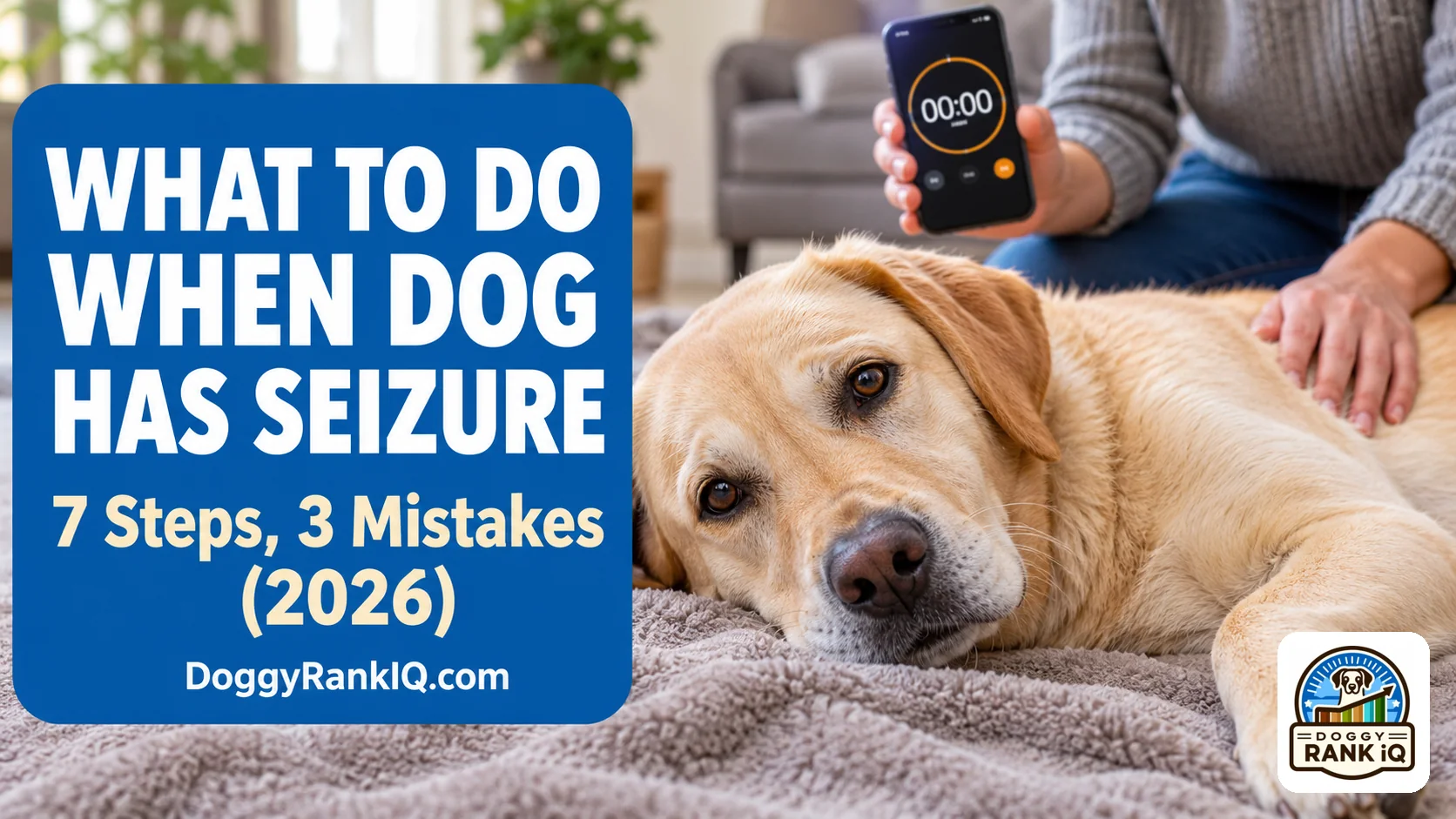
A dog on the kitchen floor, legs paddling, jaw clenched, eyes unfocused. You have about ninety seconds to decide what to do with your hands and your voice before your brain catches up with the scene.
Quick Answer
What to do when dog has seizure starts with three things: time it, clear the area, and keep your hands away from the mouth. Most seizures stop on their own within one to two minutes (avma.org). If the seizure runs past five minutes, or a second one starts before the dog fully recovers, treat it as an emergency and get to a vet immediately (avma.org, vet.cornell.edu). Afterward, keep the dog quiet, dim, and away from stairs and water until the confusion passes.
Key Takeaways: what to do when dog has seizure
- Start a timer the second the seizure begins. Perceived time is almost always longer than real time (vet.cornell.edu).
- Clear furniture, stairs, and water away from the dog. Don’t restrain the convulsing body.
- Dogs cannot swallow their tongues. Keep fingers, spoons, and water out of the mouth (avma.org, vcahospitals.com).
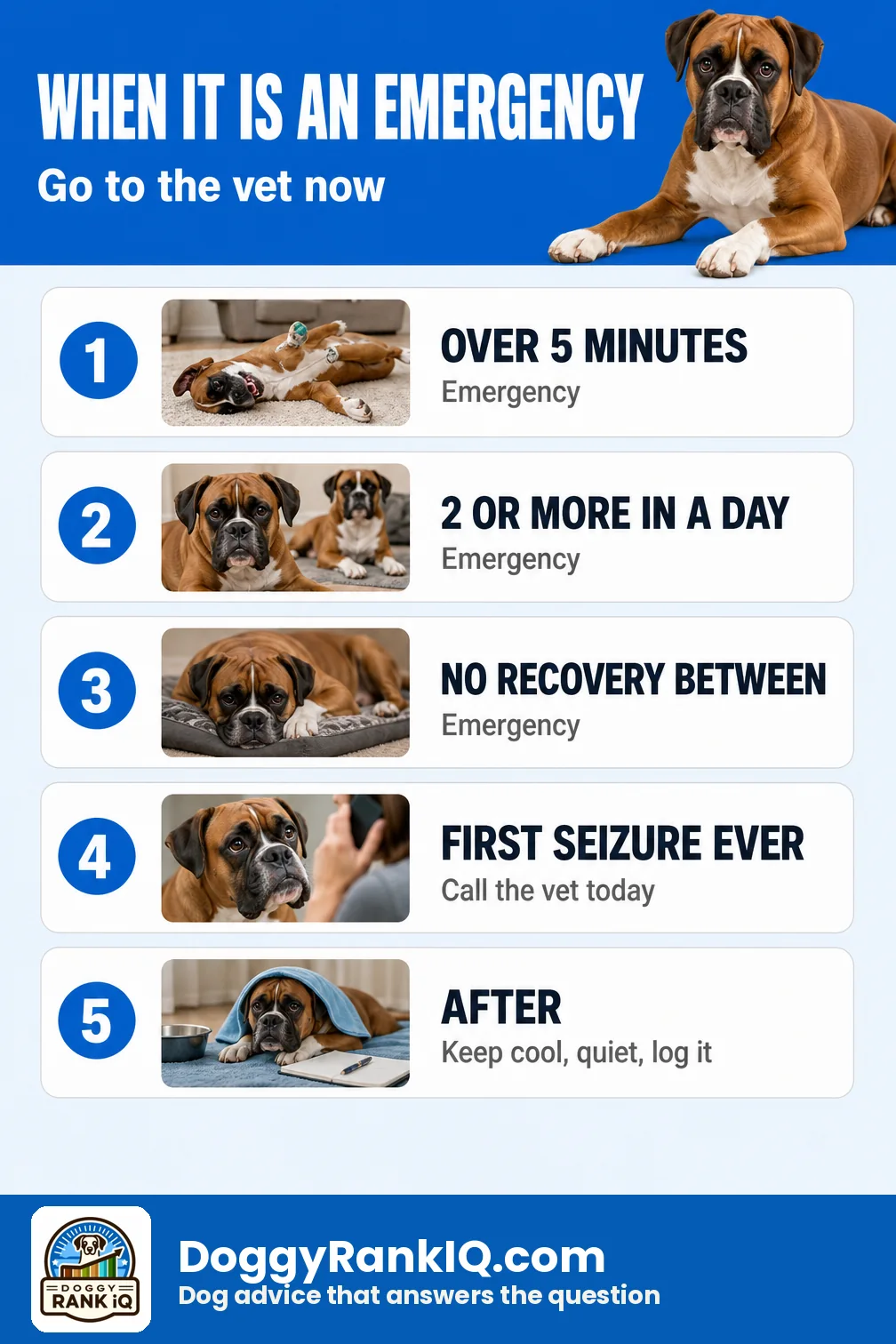
- A seizure lasting more than five minutes (status epilepticus) is a veterinary emergency (avma.org, vet.cornell.edu).
- Two or more seizures in 24 hours without full recovery between them also counts as an emergency (vet.cornell.edu).
- The post-ictal phase (confusion, temporary blindness, pacing) can last minutes to hours and is normal (vcahospitals.com).
- Idiopathic epilepsy in dogs often first appears between 6 months and 6 years of age (vet.cornell.edu, akc.org).
- Video the episode if it’s safe. It helps a vet tell seizure from fainting or tremor (vet.cornell.edu, akc.org).
- Keep a seizure log. Frequency and duration guide treatment decisions more than a single episode does.

What is happening?
Tap an option to see the answer.
The short answer: what to do when dog has seizure
Here’s the condensed version: stay calm, protect the dog from injury, do not put anything in the mouth, and call the vet if the seizure crosses five minutes or repeats. That is what to do when dog has seizure at home in a sentence, and the rest of this guide breaks it into steps you can actually follow while your hands are shaking.
Most generalized seizures in dogs run 1 to 2 minutes and resolve without intervention (avma.org, veg.com). The scary part isn’t usually the seizure itself. It’s not knowing when normal ends and dangerous begins.
7 steps to take right now
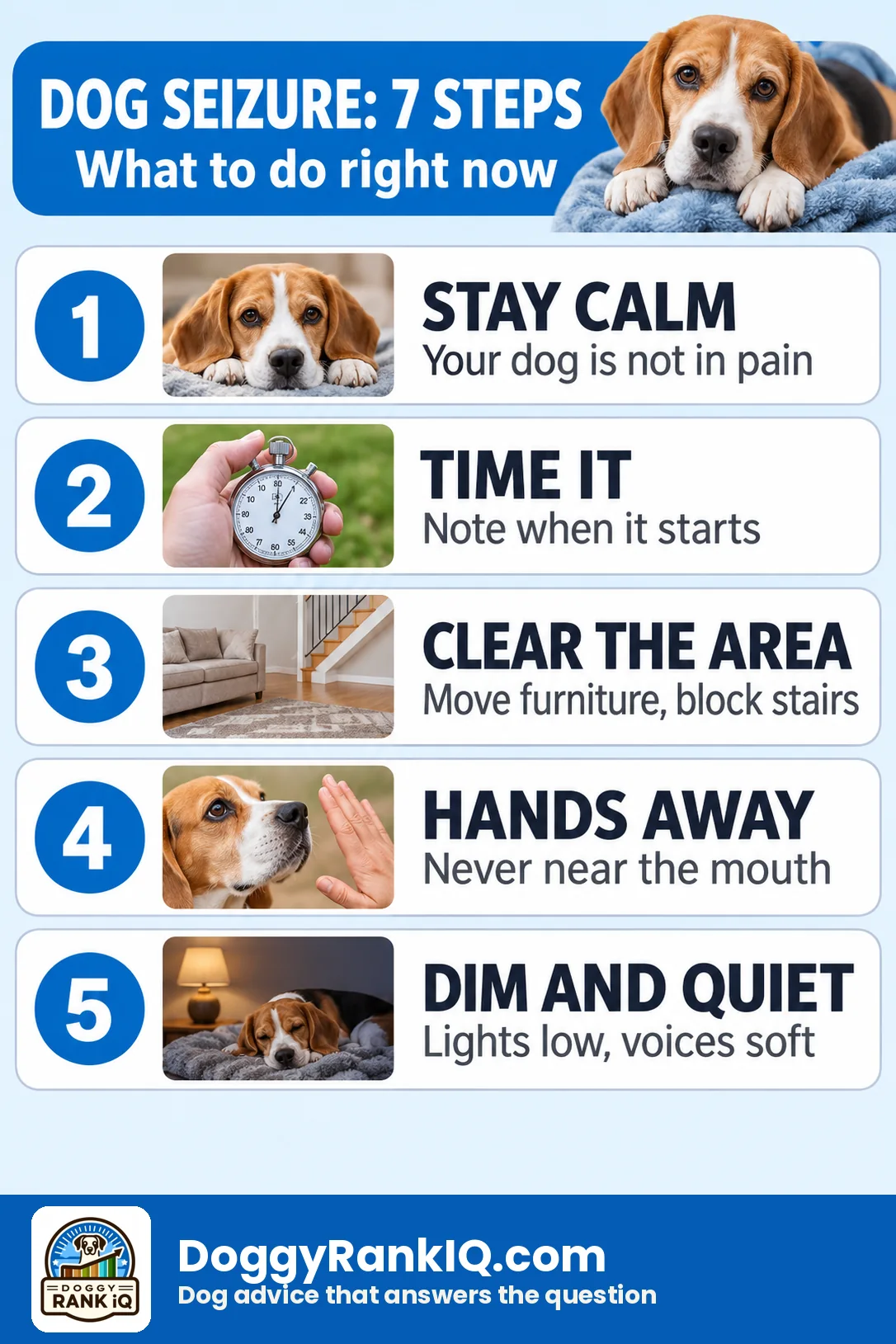
1Stay calm and check the time
Pull out your phone and start the stopwatch the moment you notice convulsing, not when you think to check. Seizures feel longer than they are, and guessing the duration is one of the least reliable things a frightened owner can do (vet.cornell.edu). A real number (“ninety seconds” instead of “forever”) is also the single most useful detail you can hand a vet on the phone.
2Clear the space, don’t move the dog unless needed
Push chairs, lamps, and toys out of the way. Block stairs. If the dog is on a couch or bed and you can reposition them to the floor without reaching near the mouth, do it gently (pdsa.org.uk). If the dog is large and actively convulsing, leave them where they are rather than risk a fall during the lift.
3Keep hands and objects away from the mouth
This deserves its own step because it’s the instinct people fight hardest to override. No fingers, no spoons, no towel wedges. Dogs do not swallow their tongues during a seizure, but an involuntary jaw clamp can break a finger (avma.org, vcahospitals.com).
4Dim lights and lower noise
Turn off overhead lights if you can reach the switch without leaving the dog. Mute the TV. Move other pets and kids to another room. Lower stimulation doesn’t shorten most seizures, but it keeps the environment calmer for the recovery that follows (medvet.com).
5Speak softly, don’t restrain
Resist the urge to hold the dog down or shout a name repeatedly. A soft, steady voice is fine. Physical restraint against convulsing muscle does nothing useful and can injure a joint (pdsa.org.uk, medvet.com).
6Record video if it’s safe to do so
A 15 to 20 second clip showing the posture, the limb movement, and whether the dog is conscious gives a vet real information, something a verbal description under stress rarely captures well (vet.cornell.edu, akc.org). Never delay getting help to film a longer seizure.
7Afterward, keep the dog cool, quiet, and call the vet
Once the convulsing stops, keep the dog in a dim, quiet space. Don’t offer food, water, or medication until the dog can stand and swallow normally. Call your vet, even for a short, isolated seizure, to log it and discuss next steps (vcahospitals.com, veg.com).
3 mistakes to avoid
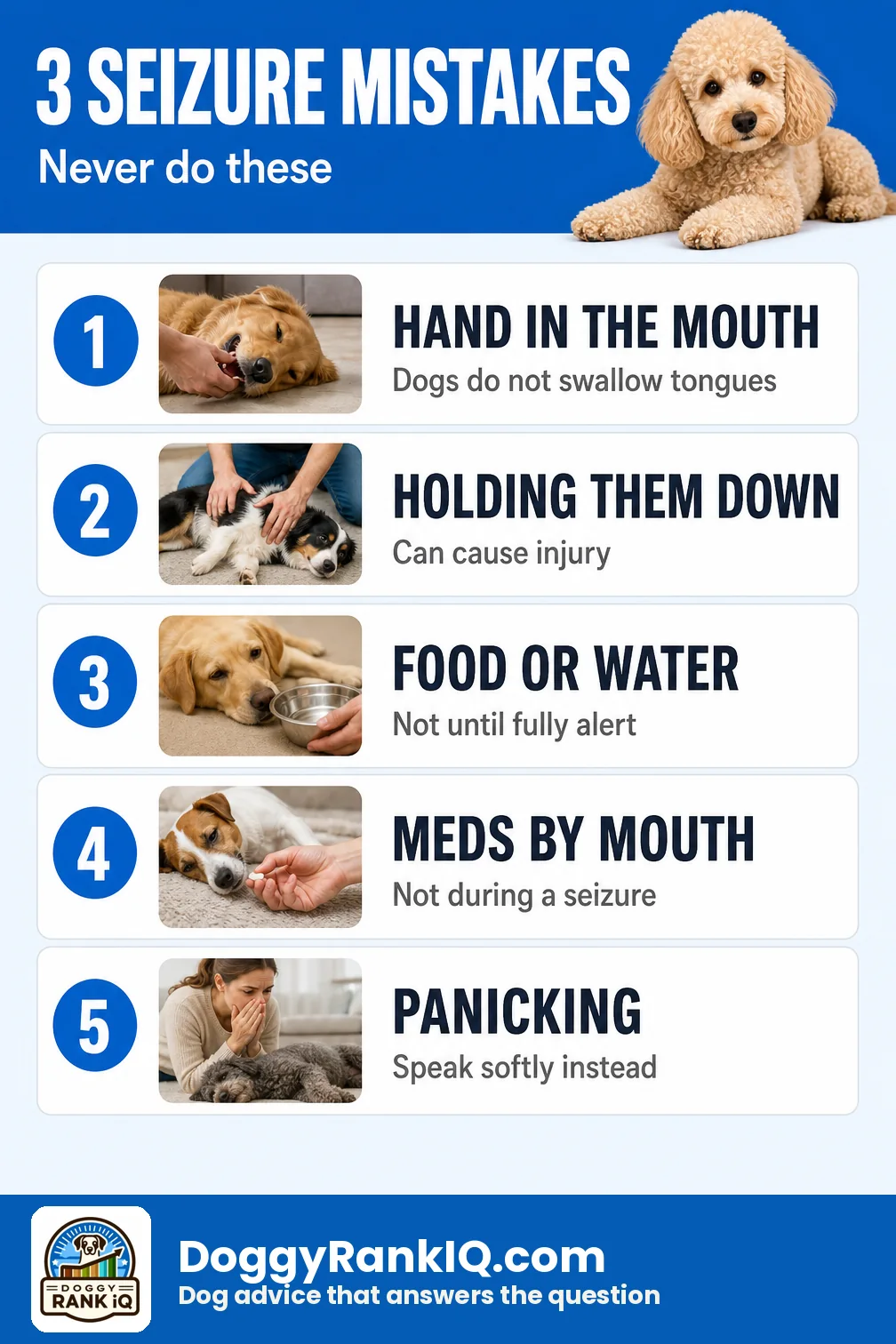
1Putting a hand or object in the dog’s mouth
Already covered above because it matters that much. This is the single most common well-meaning mistake, and the myth behind it (that dogs swallow their tongues) simply isn’t true (avma.org, vcahospitals.com).
2Holding the dog down
Restraint doesn’t stop a seizure. It just adds a strained shoulder or a bitten hand to the list of things you’re dealing with afterward.
3Giving food, water, or medicine by mouth during or right after
A dog mid-seizure or freshly out of one cannot swallow safely. Anything placed in the mouth risks choking or aspiration. Wait until the dog is alert and standing steadily before offering anything (vcahospitals.com).
Facts table: when it is an emergency
This table answers “what to do when dog has seizure” at a glance.
What a dog seizure looks like: grand mal vs focal
A grand mal (generalized) seizure involves the whole body: the dog falls, legs paddle, jaw may chomp, and there can be drooling, urination, or vocalizing (vcahospitals.com, akc.org). A focal seizure is smaller and sometimes easy to miss, limited to one limb twitching, a facial tic, or a brief odd stare.
Some focal seizures progress into generalized ones. Either type counts when answering what to do when dog has seizure: time it, clear the area, don’t restrain, and note exactly what you saw. The more precise the description (which leg, which side of the face), the easier it is for a vet to localize the activity in the brain.
After the seizure: the post-ictal phase
The post-ictal phase is the confused, uncoordinated stretch after convulsing stops, and it is normal, not a sign something new went wrong (vcahospitals.com). Dogs commonly pace, bump into furniture, act temporarily blind, or sleep hard. This can last minutes or stretch into hours.
Keep the dog away from stairs and water during this window since depth perception and balance are often off. Don’t offer food or water until your dog can stand steadily and swallow on command. Watch for a second seizure starting before this phase resolves, since that pattern shifts the situation toward cluster seizures and an emergency vet visit (vet.cornell.edu).
Dog seizures out of the blue: common causes and idiopathic epilepsy in dogs
Seizures that appear with no warning usually trace to one of a handful of categories: idiopathic epilepsy, toxins, low blood sugar, liver disease, or other brain disease (akc.org, webmd.com). Idiopathic epilepsy in dogs, meaning no identifiable structural cause, is the most frequently diagnosed seizure disorder and often shows up first between about 6 months and 6 years of age (vet.cornell.edu, akc.org).
Toxins worth ruling out fast include xylitol and chocolate; if either is a possibility, check our explainer on why grapes are toxic to dogs for a related example of how common foods turn dangerous. Life expectancy of a dog with epilepsy varies by cause and control. Dogs whose seizures respond well to medication often live a normal lifespan, while poorly controlled cluster seizures or an underlying organ disease change that picture considerably (vet.cornell.edu, webmd.com).
Breed tendencies exist (Border Collies, Labrador Retrievers, and Beagles appear often in epilepsy discussions), but individual variation is large, and a breed tendency never substitutes for a veterinary workup (akc.org).
🏥 At the vet after a first seizure: tests, treatment and what to ask
Knowing what to do when dog has seizure activity at home is the first half. The second half happens in an exam room, often the next morning, with a dog who now looks completely normal.
Expect a physical and neurological exam, then blood work and a urine test. These look for causes outside the brain: low blood sugar, liver disease, kidney problems, electrolyte changes, some toxins. For dogs between about six months and six years old with normal results and a normal exam between episodes, vets often reach a working diagnosis of idiopathic epilepsy without advanced imaging. An MRI and a spinal fluid sample are more often recommended when the first seizure comes outside that age window, when the neurological exam is abnormal, or when seizures keep coming despite treatment.
One seizure does not always mean daily medication. The consensus statement from the American College of Veterinary Internal Medicine, published in 2016, advises starting anti-seizure drugs when a dog has two or more seizures within six months, has a seizure lasting more than five minutes or a cluster of them, has unusually severe or long recovery periods, or has an identified brain lesion or injury behind the seizures. Phenobarbital, potassium bromide, levetiracetam and zonisamide are the drugs you are most likely to hear named. Each needs follow-up blood tests, and none should be stopped suddenly, because abrupt withdrawal can trigger seizures.
Ask the vet three things before you leave: what counts as an emergency for this dog, whether you should keep a rescue medication at home for clusters, and when the next blood level check is due.
“A dreaming dog wakes when you call. A seizing dog does not.”
🎥 Things that look like a seizure and are something else
Video helps most here. Record the episode if someone else can stay with the dog.
- Fainting (syncope): the dog collapses limp, often during excitement or exercise, and is back to normal within seconds, with no confused phase afterward. The cause is usually the heart.
- Vestibular episodes: sudden head tilt, flicking eyes, falling to one side. The dog stays aware and looks seasick. Common in older dogs.
- Dream twitching: paddling paws and soft woofs in sleep. A dreaming dog wakes when you call. A seizing dog does not respond.
- Pain episodes: a dog with a neck or back problem may cry out, go rigid and tremble while fully alert.
☎️ If poison might be involved
A first seizure in a dog who got into something is a different emergency. Xylitol in sugar-free gum, some human medications, slug and snail bait, certain mushrooms and toxic algae can all cause seizures. Bring the package if you have it. In the United States, the ASPCA Animal Poison Control Center answers at (888) 426-4435 around the clock, and a consultation fee may apply. Call from the car on the way to the emergency clinic. Do not wait at home for a call back.
⭐ Top 5 Features We Love
Five things worth knowing for anyone asking “what to do when dog has seizure”:
- A written log beats memory every time. Date, time, duration, and what happened before and after turn a blur of fear into data your vet can use.
- A phone timer app you already know how to use. The seizure is not the moment to learn new software.
- A quiet, low-stimulation room identified in advance. Knowing where to go saves seconds.
- A first aid kit staged somewhere accessible. Not buried in a closet behind the holiday decorations.
- A relationship with a vet who already has your dog’s baseline. Calling a stranger mid-emergency is harder than calling a known number.
⚠️ Things to Look Out For
A few cautions for anyone asking “what to do when dog has seizure”:
- A seizure crossing the 5 minute mark. Start moving toward emergency care before the clock finishes.
- A second seizure before full recovery from the first (cluster pattern) (vet.cornell.edu).
- Unusual heat: an open mouth, heavy panting, and hot ears after a long seizure suggest rising body temperature, which needs cooling with a fan or cool damp towels on the way to the vet (vet.cornell.edu).
- Sudden onset in a dog under 6 months or over 6 years, which raises the chance of a cause other than idiopathic epilepsy in dogs (akc.org).
- Any exposure to xylitol, chocolate, or unknown substances right before the episode.
How to keep a seizure log for your vet
A direct answer: record the date, start time, duration, what the dog was doing beforehand, the specific movements, and how long recovery took. Keep this in one place rather than scattered texts to yourself.
A printed or digital Pet Health Record Book for Dogs (about $8.49, price checked 2026) gives you a dedicated spot that travels with you to appointments, rather than a notes app buried under grocery lists. Check the current price (rel=”sponsored”)
Pair the written log with video whenever it’s safe to film. A vet comparing a described seizure to an actual clip can distinguish a true seizure from fainting or a movement disorder far more reliably than a verbal account alone (vet.cornell.edu, akc.org).
Helpful items to keep on hand
A short, practical list rather than a shopping spree: a stocked first aid kit, something to cool an overheated dog, and a recovery space that’s already soft and quiet.
The Dog First Aid Kit, Vet-Approved (about $34.95, price checked 2026) covers general injury basics that come up around a seizure event, like scrapes from a fall. Check the current price (rel=”sponsored”) For a broader emergency setup, our pet emergency kit guide covers the 12 items worth packing for one trip out the door.
If overheating is a concern during longer episodes, the Coleman Dog Cooling Mat 24 x 30 in (about $32.97, price checked 2026) gives a recovery spot a head start on lowering body temperature. Check the current price (rel=”sponsored”)
For the post-ictal confusion phase, a low, soft landing spot matters. The Bedsure Calming Donut Dog Bed, Medium (about $38.24, price checked 2026) gives a disoriented dog raised sides to lean into instead of open floor. Check the current price (rel=”sponsored”) If your dog shows anxious pacing afterward on a regular basis, our guide to dog anxiety medication covers what’s available, with a vet consult required before use.
Confirm any supplement, cooling product, or medication choice with your veterinarian before relying on it during a medical event.
FAQ: what to do when dog has seizure
The bottom line: what to do when dog has seizure?
Knowing what to do when dog has seizure comes down to a short list: time it, clear the space, keep hands away from the mouth, and get to a vet if it passes five minutes or repeats. Build the log now, before the next episode, and keep your vet’s number somewhere faster to reach than your memory. The next step worth taking today is printing or bookmarking the facts table above so it’s there, not buried in a search history, the next time your hands are shaking.
Doggy Rank IQ is reader supported. As an Amazon Associate we earn from qualifying purchases, at no extra cost to you.