
Quick Answer
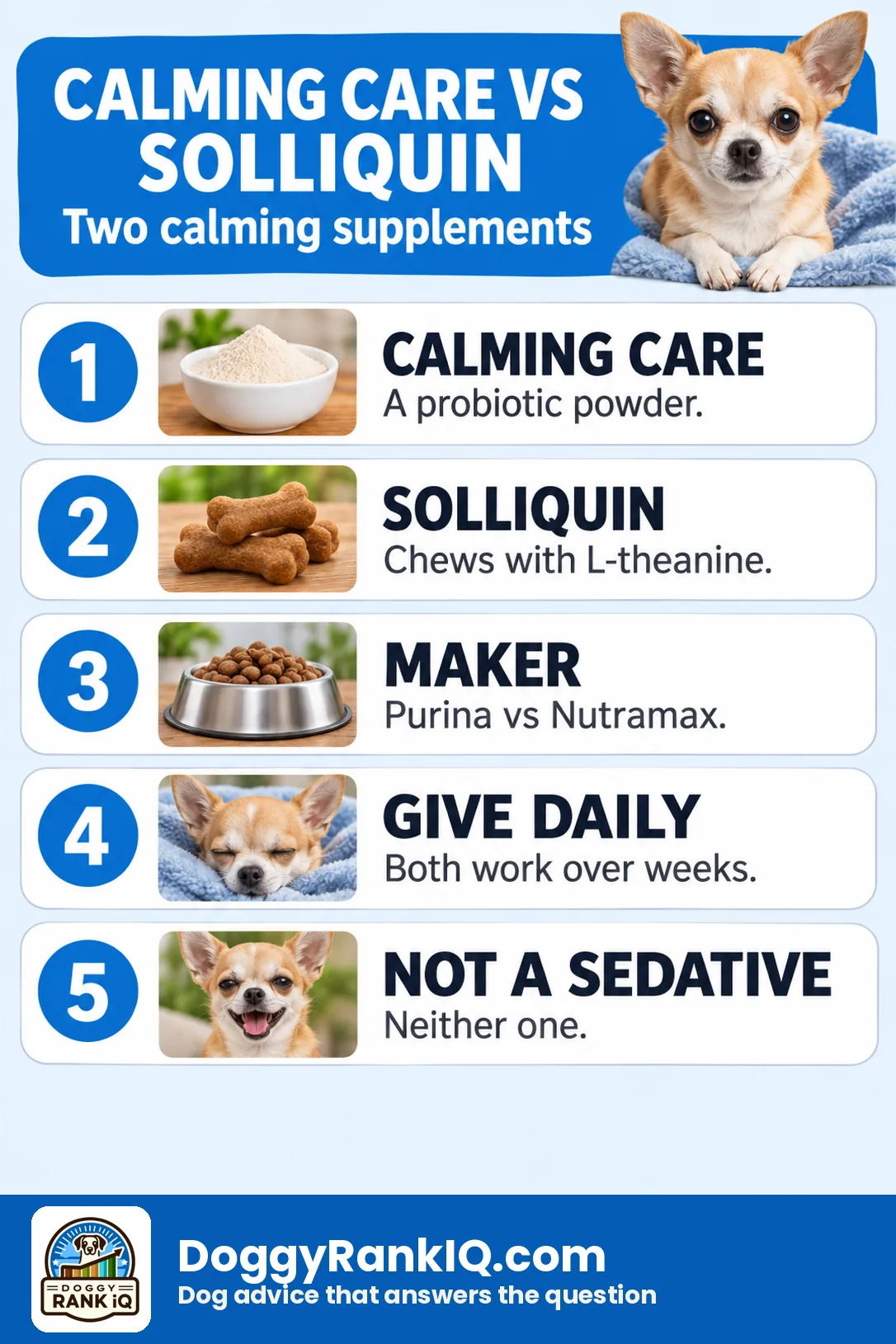
Purina Calming Care is a daily probiotic supplement built around one specific strain, Bifidobacterium longum BL999, backed by a small company-run study on dogs. Solliquin is a Nutramax chew that blends L-theanine, magnolia and phellodendron extracts, and whey protein concentrate, with most of its evidence sitting on the individual ingredients rather than the finished product. Neither one is a replacement for treating panic, aggression, or severe separation distress. For a general, storm-season or background anxiety dog, purina calming care tends to get picked first because of its strain-specific positioning, while Solliquin is often chosen when owners want a faster-acting, event-based option.
Key Takeaways: purina calming care
- Purina Calming Care delivers 1 billion CFU of Bifidobacterium longum BL999 per daily sachet, mixed into food [Purina Pro Plan Veterinary Supplements Calming Care].
- The main canine study behind Calming Care used 24 Labrador Retrievers over 15 weeks in a blinded, placebo-controlled design.
- Purina’s commonly quoted “90%” figure describes that single small study, not a guarantee for every dog.
- Solliquin combines L-theanine, magnolia/phellodendron extract, and whey protein concentrate, with a label-recommended 30 to 45 day trial period.
- Both products are nonprescription nutraceuticals, not FDA-approved medications for anxiety.
- Cost per day runs close for both, generally landing in the $0.40 to $1.13 range depending on size and package.
- Veterinary groups like AAHA recommend treating anxiety with a full plan (behavior work, environment changes, medication if needed), not a supplement alone.
- Ask a veterinarian before combining either supplement with prescription anxiety medication, since interactions have not been fully studied.
- Neither product is a substitute for emergency behavioral intervention. A dog destroying a crate or self-injuring needs a vet visit, not a chew.

What kind of worry does your dog have?
Check the current price
Tap an option to see the answer.
 What is purina calming care and how does it work?
 What is purina calming care and how does it work?
Calming Care is a daily gut-brain supplement made with a single probiotic strain, Bifidobacterium longum BL999, intended to support calmer behavior over weeks of consistent use rather than act as an instant sedative. It is sold as a powder sachet that gets mixed directly into a dog’s regular food once a day [Purina Pro Plan Veterinary Supplements Calming Care].
Each 1-gram sachet contains 1 billion CFU of the BL999 strain along with liver flavoring and maltodextrin for palatability, according to the product label [Calming Care Canine Probiotic Supplement Label]. The underlying theory is the gut-brain axis: specific strains of gut bacteria appear able to influence stress hormone signaling and nervous system activity through the vagus nerve and related pathways. This is an active area of veterinary research, and Purina has positioned BL999 as its flagship strain for this purpose, highlighting it again at its own Calming Care symposium in 2026, where veterinary researchers discussed canine wellbeing and probiotic strain research.
Purina’s label instructs owners to give one sachet daily, under veterinary supervision, mixed into regular food [Purina Pro Plan Veterinary Supplements Calming Care Dog]. This is not a situational, give-it-before-fireworks product. It is built as an ongoing daily addition, closer to a probiotic regimen than a fast-acting calming aid.
Example: a dog who gets visibly tense every Fourth of July or during a predictable storm season benefits more from starting Calming Care four to six weeks ahead of the trigger window than from giving it the morning of the event.
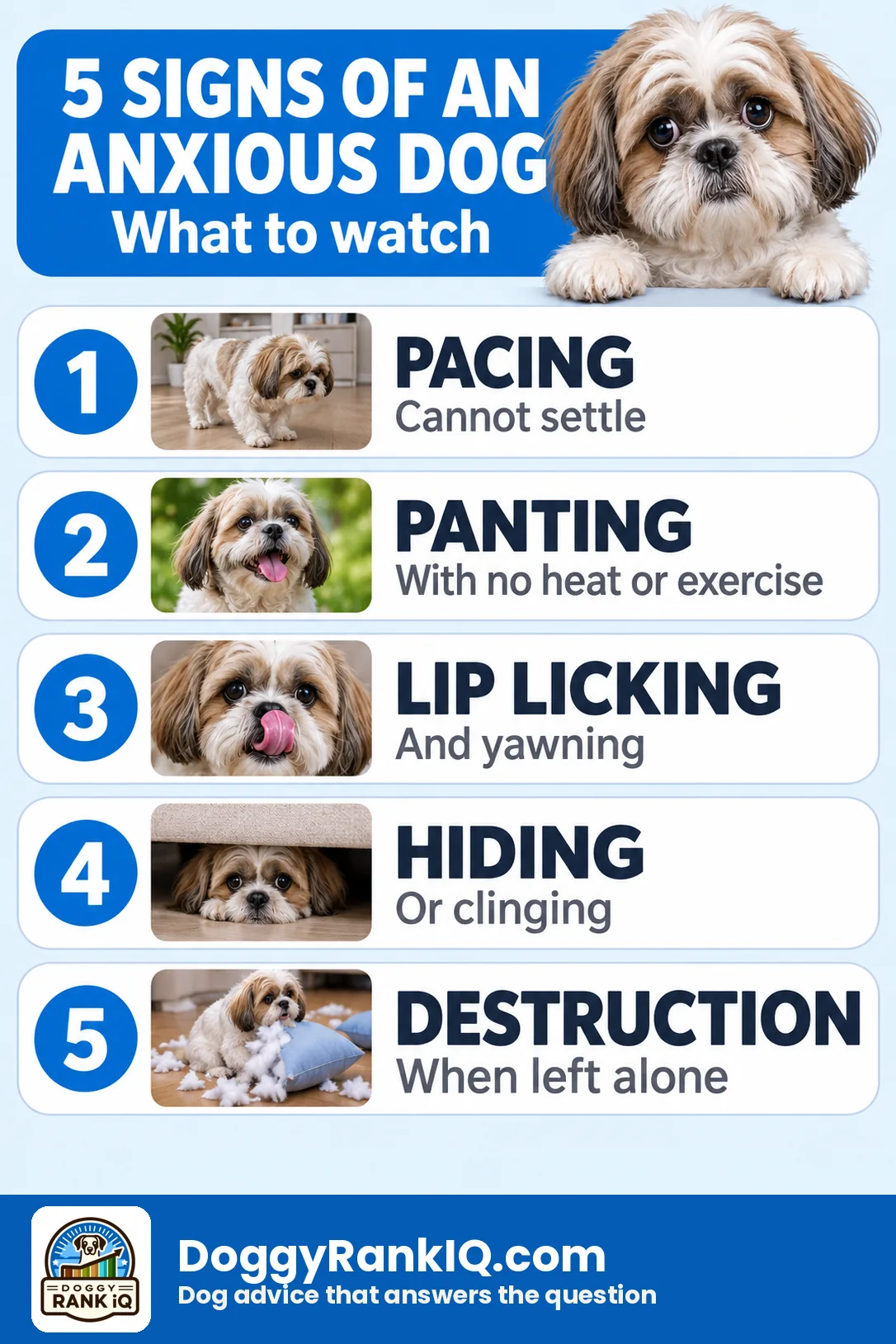
Decision rule: if your dog shows low-grade, chronic anxious behavior (pacing, whining, excess vigilance) rather than one big yearly event, a daily probiotic approach like this fits the use case better than a same-day chew.
Does purina calming care actually work for anxious dogs?
The honest answer is that Calming Care has one real, controlled study behind it, and the results look promising, but the sample size is small and the data has not been widely published for independent review. Owners should treat the “90% improvement” figure as a description of one study population, not a universal guarantee.
The core canine trial was a 15-week, blinded, placebo-controlled crossover study using 24 Labrador Retrievers that showed anxious behaviors. Purina reported improvement in more than 90% of dogs in the study, along with measurable drops in salivary cortisol, reduced heart rate, and increased heart-rate variability during stressful stimuli. Those physiological markers matter because they move the evidence beyond owner opinion alone, into measurable stress biology.
That said, a few limits are worth naming plainly:
- Twenty-four dogs, all one breed, is a narrow sample. It tells you how Labradors responded in a controlled setting, not how a Chihuahua, a Border Collie, or a senior mixed-breed dog will respond.
- The study was company-sponsored, which does not make it invalid, but it does mean outside peer review of the full dataset has been limited.
- “Improvement” in a study context can mean a reduction in specific measured behaviors. It does not mean the anxiety disappeared entirely for every dog in the trial.
Veterinary groups are consistent on the bigger picture here. Nutraceuticals as a category lack standardized efficacy testing across the industry, and supplement studies involving probiotics or amino acids are frequently small or inconclusive. The American Animal Hospital Association’s position is that behavior problems need a layered plan involving behavior modification and environmental management, with supplements or medication playing a supporting role rather than acting as a stand-alone fix.
Edge case: a dog with diagnosed, severe separation anxiety or panic disorder is not a good test case for Calming Care alone. That situation calls for a veterinary behaviorist and likely prescription medication, with a supplement layered in only if the vet agrees it fits.
Purina Calming Care ingredients vs Solliquin ingredients
The two products do not share an evidence mechanism. Calming Care relies on one bacterial strain affecting gut signaling, while Solliquin stacks several plant and amino acid compounds thought to act on the nervous system more directly.
| Feature | Calming Care | Solliquin |
|---|---|---|
| Active ingredient(s) | Bifidobacterium longum BL999, 1 billion CFU/sachet | L-theanine, magnolia and phellodendron extract, whey protein concentrate |
| Format | Powder sachet, mixed into food | Soft chew |
| Proposed mechanism | Gut-brain axis modulation | Nervous system calming amino acids and botanicals |
| Onset claimed | Weeks, daily use | Days to 30-45 days, label notes some respond faster |
| Species studied | Dogs and cats (separate strain studies) | Dogs and cats |
The practical difference: Calming Care has one clean ingredient story, easy to track and reason about. Solliquin’s blend makes it harder to isolate which ingredient is doing the work, but it also means owners get several studied compounds in one chew instead of one strain. Purina also publishes a full veterinary supplements lineup beyond Calming Care, which is worth a look if gut health or joint support are also on the radar.
Does it work? Product studies vs ingredient studies
Here’s the honest split: Purina ran a study on its actual finished product, while Solliquin’s strength comes mostly from published research on its individual ingredients rather than the finished chew itself.
Purina’s primary canine evidence is the 15-week, blinded, placebo-controlled crossover study using 24 Labrador Retrievers with anxious behaviors, described above. That is a real, controlled study design, and the physiological measurements (cortisol, heart-rate variability) add weight beyond simple owner impressions.
But the limits matter just as much as the result. Twenty-four dogs, one breed, company-sponsored, and the full dataset has not been widely published for independent review. The 90% figure describes that one small study population under those specific study conditions. It is not evidence that 9 out of 10 anxious dogs of any breed will respond the same way.
Solliquin’s situation runs differently. L-theanine has research behind it in multiple species for calming effects on the nervous system, and magnolia/phellodendron extract has supporting animal research too. But most of that evidence sits on the separate ingredients, not on a clinical trial of the finished Solliquin chew as a complete product. That is a common pattern across the supplement industry: a label can be accurate about its ingredients while still lacking a dedicated trial on the exact combined formula.
Veterinary groups are consistent on the bigger picture. Nutraceuticals, as a category, lack standardized efficacy testing, and studies of L-theanine, probiotics, and related compounds are frequently small or inconclusive. The broader position across veterinary behavior medicine is that behavior problems need a layered plan involving behavior modification and environmental management, with supplements or medication as support, not a stand-alone fix.
Related reading on the broader category: our guide to calming products for dogs breaks down more options beyond these two, and if anxiety shows up around specific routines, our piece on essential commands every puppy should learn covers training structure that often helps alongside supplements.
Purina calming care ingredients: what’s in it
Calming Care contains exactly one active ingredient: the probiotic strain Bifidobacterium longum BL999, dosed at 1 billion CFU per sachet, plus inactive flavoring and carrier ingredients to make it palatable mixed into food [Calming Care Canine Probiotic Supplement Label].
The full ingredient breakdown looks like this:
- Bifidobacterium longum BL999: the active probiotic strain, 1 billion CFU per 1-gram sachet.
- Maltodextrin: a carbohydrate carrier that helps stabilize and bulk the powder.
- Liver flavoring: added for palatability so dogs accept the sachet mixed into food.
There is no synthetic sedative, no melatonin, and no CBD in the formula. That simplicity is part of the product’s appeal: a single, traceable active ingredient is easier to discuss with a veterinarian and easier to rule in or out if a dog has a reaction.
Common mistake: some owners assume a “probiotic for anxiety” must also contain calming herbs like chamomile or valerian. Calming Care does not. If an owner wants a multi-ingredient approach, Solliquin or a different blended chew is the better fit.
How much does purina calming care cost?
Calming Care generally costs around $1.13 per day based on a standard 30-count sachet box, though exact pricing depends on the retailer and any current promotions. That makes it one of the pricier options per day compared with some competing calming chews.
Based on current Amazon listings, Solliquin’s small-to-medium formula runs the lowest cost per day, while Calming Care and the large-dog Solliquin pack land close together.
| Product | Count | Approx. cost/day | Price (checked 2026) |
|---|---|---|---|
| Purina Pro Plan Veterinary Supplements Calming Care, 30 ct | 30 sachets | ~$1.13/day | $33.99 |
| Nutramax Solliquin Soft Chews, 75 ct | 75 chews | ~$0.40/day | $29.99 |
| Nutramax Solliquin Small to Medium Dogs/Cats, 75 ct | 75 chews | ~$0.27/day | $19.99 |
A 30-day sachet box of Calming Care costs noticeably more per day than either Solliquin pack at list price, mostly because the count is smaller. If a vet suggests at least a month of a daily trial for either product, do that math before buying the smallest bag available. Also check Purina’s own retail pages, since pricing and bundle sizes shift through the year (Purina Pro Plan Veterinary Supplements, Pro Plan Vet Direct).
Where to buy purina calming care
Calming Care is sold through veterinary clinics, Purina’s own online store, and major retailers including Amazon. Buying through a vet clinic sometimes includes dosing guidance specific to a dog’s weight and history, which is useful for first-time users.
Common purchase options include:
- Shop Purina directly for the canine formula, which sometimes runs subscription discounts.
- Pro Plan Vet Direct, a retailer that partners with veterinary practices.
- Amazon listings such as the Purina Pro Plan Veterinary Supplements Calming Care, 30 ct, which is convenient for repeat orders and often includes subscribe-and-save pricing.
- Local veterinary offices, which may stock it on-site for clients already managing a dog’s anxiety as part of a broader plan.
Check the current price for Purina Pro Plan Veterinary Supplements Calming Care.
Check the current price for Nutramax Solliquin Soft Chews.
Decision rule: buy through a vet clinic if this is the first time trying a calming supplement and you want dosing input. Buy through Amazon or Purina’s own store if a vet has already approved the product and you just need to restock.
Purina calming care vs other calming treats comparison
Calming Care stands apart from most calming treats because it relies on a single probiotic strain rather than a blend of herbs, melatonin, or CBD. Chews like Solliquin, melatonin-based treats, and CBD chews generally aim for faster, more situational relief, while Calming Care is built for daily, longer-term use.
A few practical distinctions:
- Mechanism: Calming Care works through gut bacteria and the gut-brain axis. Most other calming treats work through direct nervous system compounds (L-theanine, melatonin, CBD, herbal extracts).
- Onset: Calming Care is formulated for weeks of daily use before judging results. Many calming treats, including Solliquin, are marketed with a faster possible onset, sometimes within days, though full effect may still take 30 to 45 days.
- Format: Calming Care is a powder sachet mixed into food. Most competing calming treats are chews, which some dogs find easier to accept as a treat rather than a supplement mixed into a meal.
- Species scope: Purina also sells a feline version of Calming Care with its own studied strain, while many calming chews on the market are dog-only.
For dogs with a single annual trigger (fireworks night, one yearly move, a single flight), a faster-acting chew format may be more practical than committing to weeks of daily probiotic use. For dogs with ongoing, low-grade anxiety, the daily format of Calming Care fits better long term.
Is purina calming care safe for puppies?
Calming Care does not have a strong, separately published safety dataset specific to growing puppies, so a veterinarian should weigh in before starting it in a dog under roughly one year old. This is standard caution across most calming supplements, not a flag unique to this product.
Points worth knowing:
- The core canine study used adult Labrador Retrievers, not puppies, so direct puppy-specific efficacy data does not exist in the same way.
- A puppy’s gut microbiome is still developing, so introducing an additional probiotic strain is something a vet should time appropriately, often after other vaccination and digestive milestones are settled.
- If a puppy shows anxious behavior (excessive whining, destructive chewing tied to separation, fear reactions to normal household sounds), a vet visit should come before any supplement, since puppy anxiety sometimes points to a treatable medical or developmental issue.
Edge case: a young puppy going through a single stressful event, like a first vet visit or first car ride, usually does not need a daily supplement at all. Short-term coaching and positive exposure often solve it without any product.
Purina calming care side effects: anything I should know?
Reported side effects for Calming Care are generally mild, with occasional soft stool or digestive adjustment as the gut flora shifts, consistent with how most probiotics behave in the first week or two of use. The label recommends veterinary supervision, and that is not boilerplate language, it reflects that this is a supplement given alongside, not instead of, professional guidance.
Dogs who should talk to a vet before starting either product:
- Puppies. Neither Calming Care nor Solliquin has a strong, separately published safety dataset specific to growing puppies, so a vet should weigh in on timing and dose.
- Dogs on existing medication, including SSRIs, anti-anxiety prescriptions, or other supplements, since interaction data is limited for both products.
- Dogs with existing gastrointestinal conditions, since adding a probiotic strain can shift digestion temporarily.
- Pregnant or nursing dogs, where supplement safety data is typically thin across the category.
Common mistake: owners stop a daily probiotic after four or five days because “nothing happened,” then conclude it failed. Both products are positioned as cumulative, not instant. Judge Calming Care over several weeks and Solliquin over its stated 30 to 45 day window before drawing a conclusion.
Always confirm supplement choices, dosing, and any medication interactions with your veterinarian before starting either product, especially for puppies, senior dogs, or dogs already on prescription medication.
How often should I give my dog purina calming care?
Calming Care is meant to be given once a day, every day, mixed into a regular meal, following the label’s standard dosing of one sachet per 24 hours regardless of dog size [Calming Care Canine Probiotic Supplement Label].
A simple routine looks like this:
- Open one sachet and mix the full contents into the dog’s regular food at one meal per day.
- Give it at roughly the same time daily so the gut flora shift stays consistent.
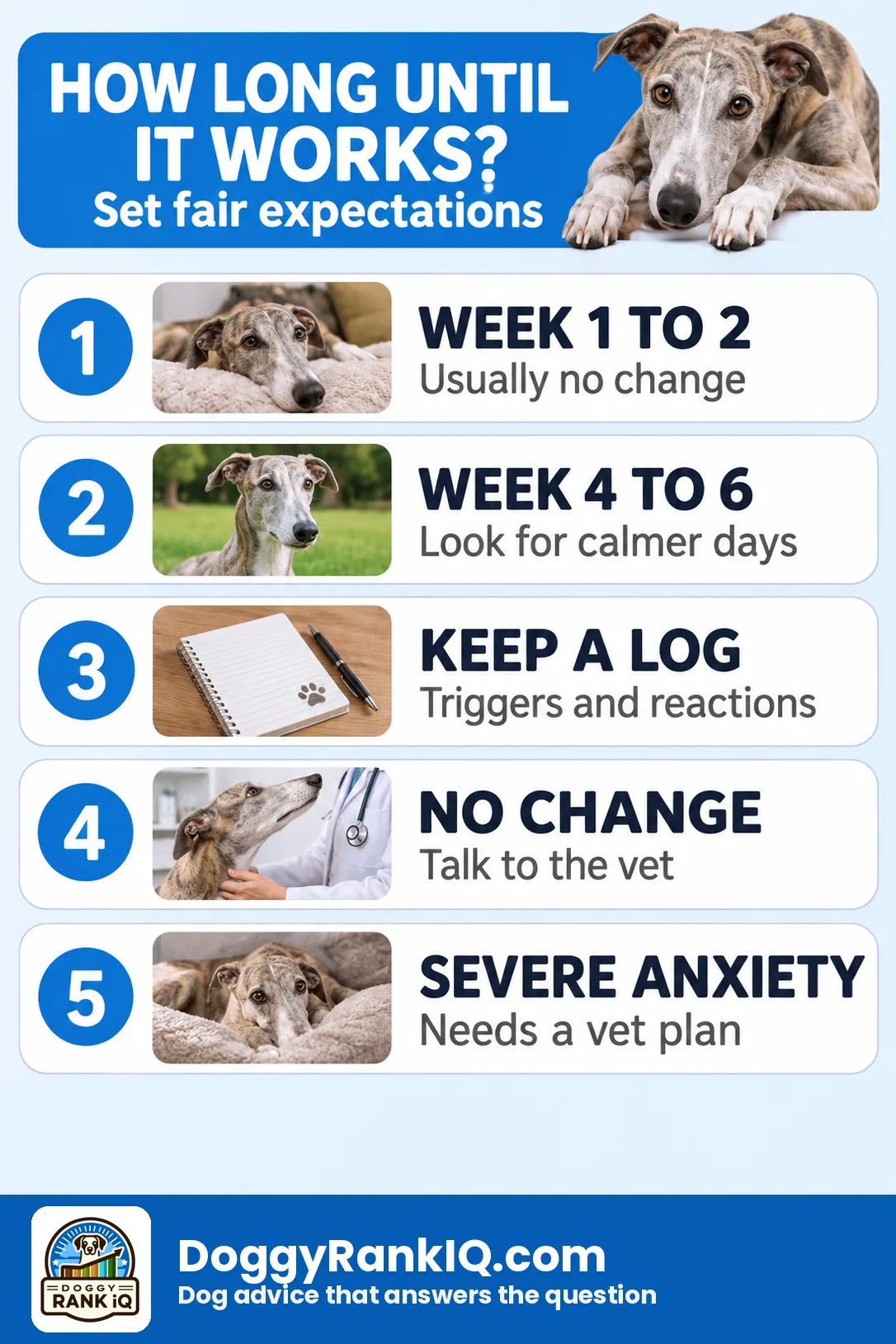
- Continue daily for at least four to six weeks before evaluating behavior changes, since the mechanism is gradual rather than immediate.
- Track behavior in a simple log (storm reactions, vet visit stress, general pacing) so changes are easier to notice compared with memory alone.
- Check in with a vet around the one-month mark to decide whether to continue, adjust, or add another layer to the plan.
Common mistake: splitting a sachet in half to “make it last longer” for a small dog. The dose on the label is not weight-adjusted, and cutting it reduces the CFU count below what the study used.
What does Purina Calming Care do?
Calming Care is marketed as a daily gut-brain supplement that may reduce everyday anxious behaviors like pacing, whining, or excess vigilance over time, not as an instant sedative. The product’s single active ingredient is Bifidobacterium longum BL999, delivered at 1 billion CFU per 1-gram sachet, mixed with liver flavor and maltodextrin for palatability.
The idea behind it is the gut-brain axis: certain gut bacteria appear to influence stress hormone signaling and nervous system activity. Purina’s label instructs owners to give one sachet daily, under veterinary supervision, mixed into regular food.
This is not a situational, give-it-before-fireworks product. It is formulated as an ongoing daily addition, closer to a probiotic regimen than a fast-acting calming aid. Owners managing predictable triggers, like thunderstorm season or a dog who startles at every delivery truck, often start it weeks ahead rather than the morning of.
Decision rule: if your dog shows low-grade, chronic anxious behavior rather than one big yearly event, a daily probiotic approach like this fits the use case better than a same-day chew.
⭐ Top 5 Features We Love
- Single, traceable ingredient (Calming Care). One strain, one dose, easy to explain to a vet or track if something changes.
- Physiological measurements in the core study. Purina’s trial tracked cortisol and heart-rate variability, not just owner opinion, which adds weight to the behavioral scores.
- Flexible dosing options (Solliquin). Nutramax sells a small-to-medium formula separately from the larger dog version, so owners aren’t stuck rationing an oversized chew.
- Chew format convenience (Solliquin). No mixing into food, which matters for dogs who pick around powder or eat separately from the family.
- Both are nonprescription and vet-accessible. Either product can be discussed and layered into a plan at a routine visit, no special referral required.
⚠️ Things to Look Out For
- Small sample size behind Calming Care’s headline number. Twenty-four dogs, one breed, is not the same as a large multi-breed trial.
- Solliquin’s finished-product trial is thinner than its ingredient research. Strong L-theanine data doesn’t automatically prove the exact Solliquin blend performs identically.
- Neither treats severe anxiety alone. Behavior modification and environmental changes remain the core of a real treatment plan, with supplements as support.
- Cost adds up for larger dogs. Multiply the daily dose by 30 and compare it honestly to a month of a behaviorist consult if anxiety is severe.
- “Natural” doesn’t mean zero interaction risk. Confirm with a vet before stacking either supplement with existing medication.
Which one fits your dog
Choose Calming Care if your dog shows chronic, background-level anxious behavior (pacing, low-grade vigilance, general tension) and you’re willing to commit to a daily routine for several weeks before judging results. The gut-brain mechanism is a slower build, and the sachet format works well for dogs who already eat wet food or have supplements mixed in daily.
Choose Solliquin if your dog has a known, predictable trigger, like a vet visit, boarding stay, or travel day, and you want a chew format that doesn’t require meal mixing. The blended formula and multiple active compounds also make sense for owners who want chew convenience and faster potential onset, especially when paired with other routine changes like consistent training reinforced through resources such as 5 essential commands every puppy should learn.
For owners still weighing calming support against other household basics, the broader doggyrankiq.com homepage and blog cover more comparisons across feeding, training, and behavior products worth reading alongside this decision.
What owners report in reviews
Owner reports on Calming Care reviews and retail feedback lean toward modest, gradual improvement, with the most common praise being “less pacing” or “settled faster during storms” after a few weeks of daily use, rather than dramatic overnight change. Some owners report no noticeable difference at all, which lines up with the mixed, small-sample nature of the underlying research.
For Solliquin, feedback commonly mentions easier administration since it’s a flavored chew most dogs accept without a fight, and some owners report quicker settling before specific events like fireworks or vet visits. As with any supplement category, anecdotal reports vary widely and are not a substitute for controlled research; what works for one dog’s anxiety triggers may do nothing for another’s.
A search through Calming Care Reddit threads and owner forums shows a similar pattern: a mix of “it genuinely helped our reactive dog relax” and “we didn’t see any change after a month.” That split is expected given the study behind it involved only 24 dogs of one breed. Individual variation between dogs is real, and a supplement that worked for a neighbor’s Labrador is not a guarantee for a different dog with different triggers, health history, and temperament.
FAQ
The bottom line
Calming Care and Solliquin solve the same owner problem from two different angles: one strain working through the gut over weeks, versus a blended chew aimed at faster, event-based calming. Neither has a large, independently replicated trial proving it works for most dogs, and both sit squarely in the supplement category, meaning they support a bigger plan rather than replace one.
For chronic, low-grade anxiety, start with Calming Care and give it the full weeks the study timeline suggests. For a known, predictable trigger like travel or a vet visit, Solliquin’s chew format and faster-possible onset make more practical sense. Either way, loop in a veterinarian before starting, especially if your dog is a puppy, senior, pregnant, or already on medication, and treat the supplement as one piece of a plan that includes behavior work and a calmer environment, not the whole solution.
Doggy Rank IQ is reader supported. As an Amazon Associate we earn from qualifying purchases, at no extra cost to you.