
Quick Answer
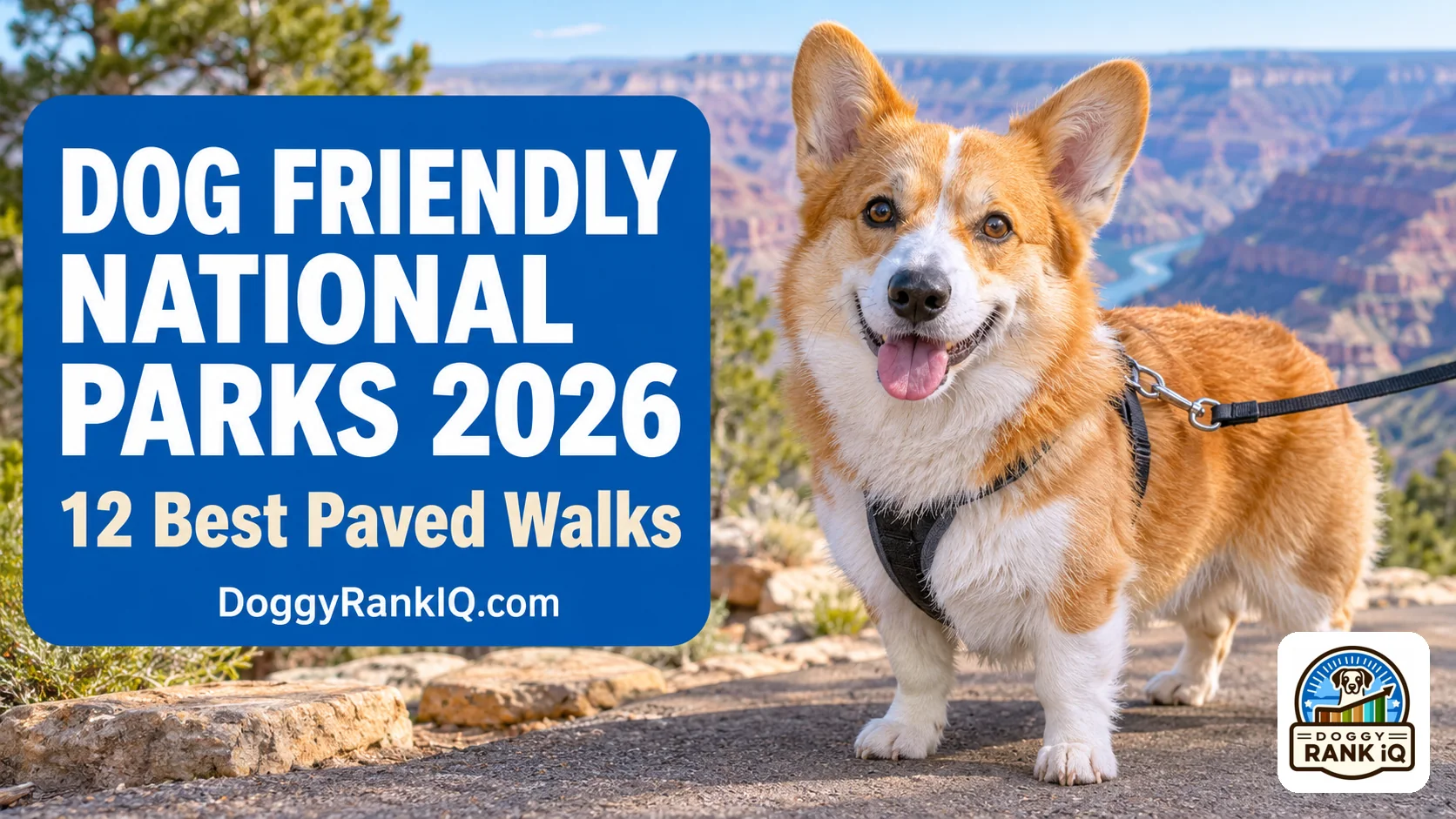
Dog friendly national parks exist, but the dog-friendly part is usually a short paved trail, not the famous backcountry route. Most dog friendly national parks let leashed dogs on roads, campgrounds, and specific paved corridors like Zion’s Pa’rus Trail or Bryce Canyon’s Shared-Use Path, while keeping dogs off wilderness and backcountry trails to protect wildlife and other hikers. The federal baseline is a six-foot leash under 36 CFR §2.15, and individual parks can add stricter rules (nps.gov). This guide lists 12 of the best paved walks so you can plan a real outing, not a parking lot stop.
Key Takeaways: dog friendly national parks
- Dogs on a six-foot leash are allowed in developed areas, campgrounds, and on roads in nearly every national park, even ones with strict trail bans (nps.gov).
- Paved or hard-surface trails are where most dog friendly national parks actually let dogs walk. Backcountry and wilderness trails are usually off-limits.
- Zion’s Pa’rus Trail (about 3.5 miles) and Bryce Canyon’s Shared-Use Path (about 6.2 miles) are two of the longest paved options open to pets (nps.gov).
- Petrified Forest allows leashed pets on any paved road or trail in the park, which is unusually generous (nps.gov).
- Pavement and sand get hot fast. Walk early and check the surface temperature with your hand before committing a paw to it.
- Never leave a dog in a parked car. Some parks, including the Grand Canyon South Rim, offer kennel services for the hours you need to go somewhere dogs can’t (nps.gov).
- The B.A.R.K. Ranger program runs in many parks and gives dogs a free badge for following the rules, which is a nice way to confirm you’re doing it right.
- Service animals under the ADA are treated differently than pets; emotional-support animals generally follow the same rules as ordinary pets (nps.gov).
- NPS pet pages get updated often (several parks updated theirs in 2026), so check the specific park’s page within a week of your trip (nps.gov).

What kind of walk do you want?
Tap an option to see the answer.
The short answer: are dogs allowed in national parks?
Yes, but with real limits. Dogs are generally welcome in parking lots, campgrounds, picnic areas, and on roads across the national park system, and a smaller number of paved trails open the door a little wider (nps.gov).
The confusion comes from treating “national park” as one rulebook. It isn’t. Each park sets its own pet policy inside the federal floor of a six-foot leash, and some parks (Yosemite, Zion, Grand Canyon) keep dogs off nearly all trails while others (Petrified Forest, Cuyahoga Valley) are noticeably more open (nps.gov, home.nps.gov). The honest version: check the specific park’s pets page before you pack the car, because “national park” tells you almost nothing about whether your dog can join the hike.
Choose a paved-trail park if your dog needs an actual walk. Choose any park at all if you’re fine with road pullouts, campground loops, and scenic drives.
The rules that apply in almost every park
Across the national park system, three rules repeat almost everywhere: leash length, where pets can go, and where they absolutely cannot.
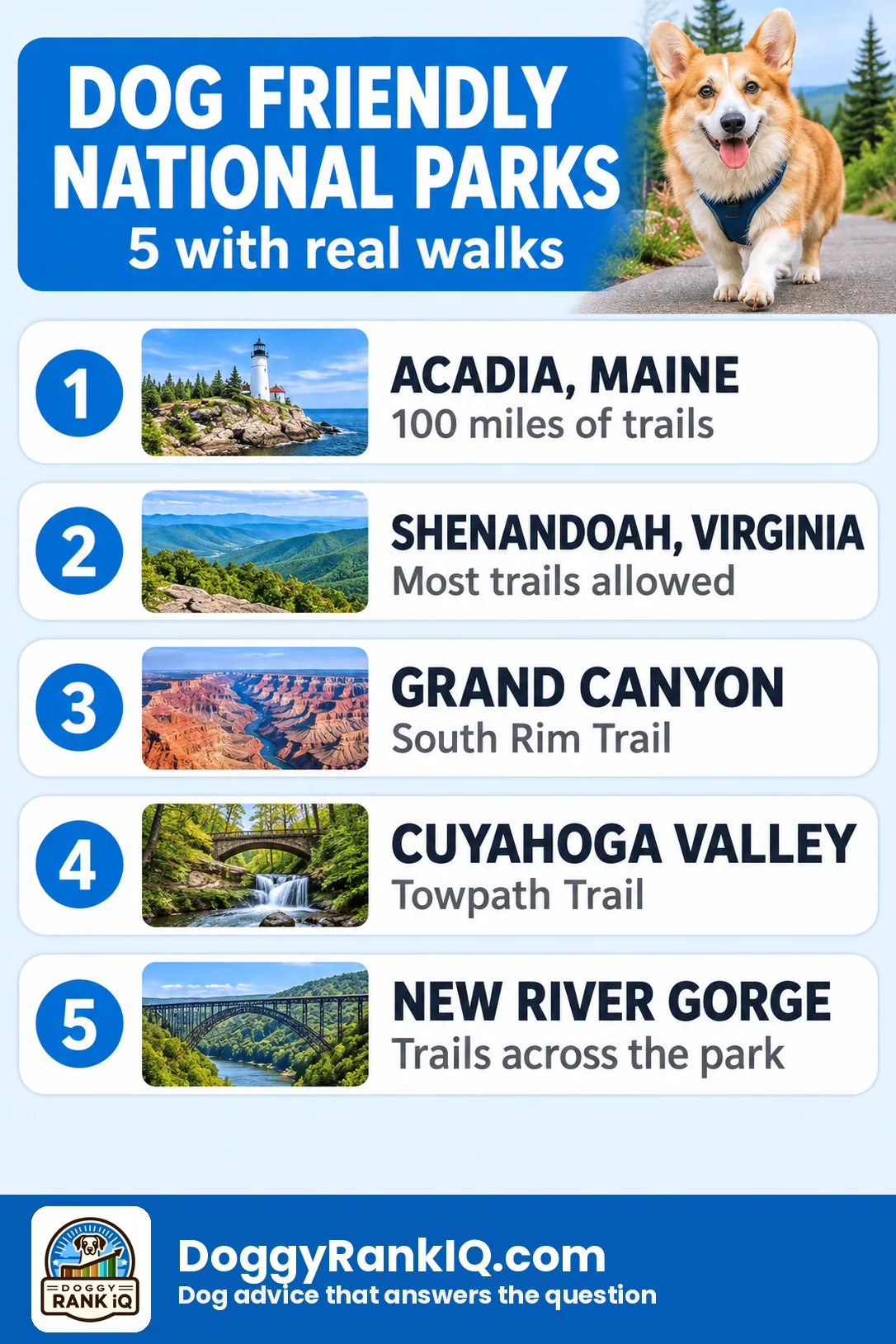
- Leash length: six feet or shorter, per 36 CFR §2.15, unless a park sets something stricter (nps.gov).
- Where pets are allowed: developed areas, campgrounds, picnic areas, along roads, and on trails specifically marked as pet-friendly (nps.gov).
- Where pets are not allowed: backcountry trails, wilderness areas, most boardwalks near sensitive wildlife habitat, shuttle buses, and the inside of visitor centers (nps.gov).
A common mistake: assuming a trail allows dogs because it’s paved. Pavement alone doesn’t grant access. Grand Canyon’s Rim Trail, for example, allows pets only on the paved section above the rim between the South Kaibab and Bright Angel trailheads, not the unpaved sections below (nps.gov). Always check the trail name against the park’s current pets page, not a general impression of the park.
Edge case: service animals under the ADA follow disability-access law, not pet policy, and can generally go where the public goes. Emotional-support animals do not get that exception; Bryce Canyon’s page states plainly that emotional-support animals must follow the same rules as pets (nps.gov).
Facts table: 12 dog friendly national parks
Distances for several parks vary by trail segment and were not independently measured for this table. Confirm exact mileage on each park’s official pets page before you go (nps.gov).
12 best paved walks, park by park
1Zion National Park: Pa’rus Trail
This is the clearest “yes” in the entire park system. The Pa’rus Trail runs from the Zion Canyon Visitor Center to Canyon Junction, about 3.5 miles one way, following the Virgin River with almost no elevation change (nps.gov). Zion reports the surface as roughly 93.6% paved and 6.4% hardwood decking, which makes it comfortable for paws, strollers, and wheelchairs alike (nps.gov).
It is also the only Zion trail where ordinary pets are allowed. Every other trail, the shuttle, and the wilderness areas are off-limits to dogs (nps.gov).
2Bryce Canyon National Park: Shared-Use Path
Bryce Canyon expanded its dog-accessible network in 2026 with a 2.7-mile viewpoint connector completing a longer link between Bryce Point and Red Canyon in Dixie National Forest, open to pedestrians, cyclists, and leashed pets (nps.gov). Inside the park, the Shared-Use Path runs about 6.2 miles, connecting the visitor center, Sunrise Point, Sunset Point, Inspiration Point, Bryce Point, and the campgrounds, with a reported maximum grade of 5% (nps.gov).
Dogs are also allowed on the 0.5-mile stretch of Rim Trail between Sunrise Point and Sunset Point, but not on any of Bryce’s unpaved hiking trails (nps.gov).
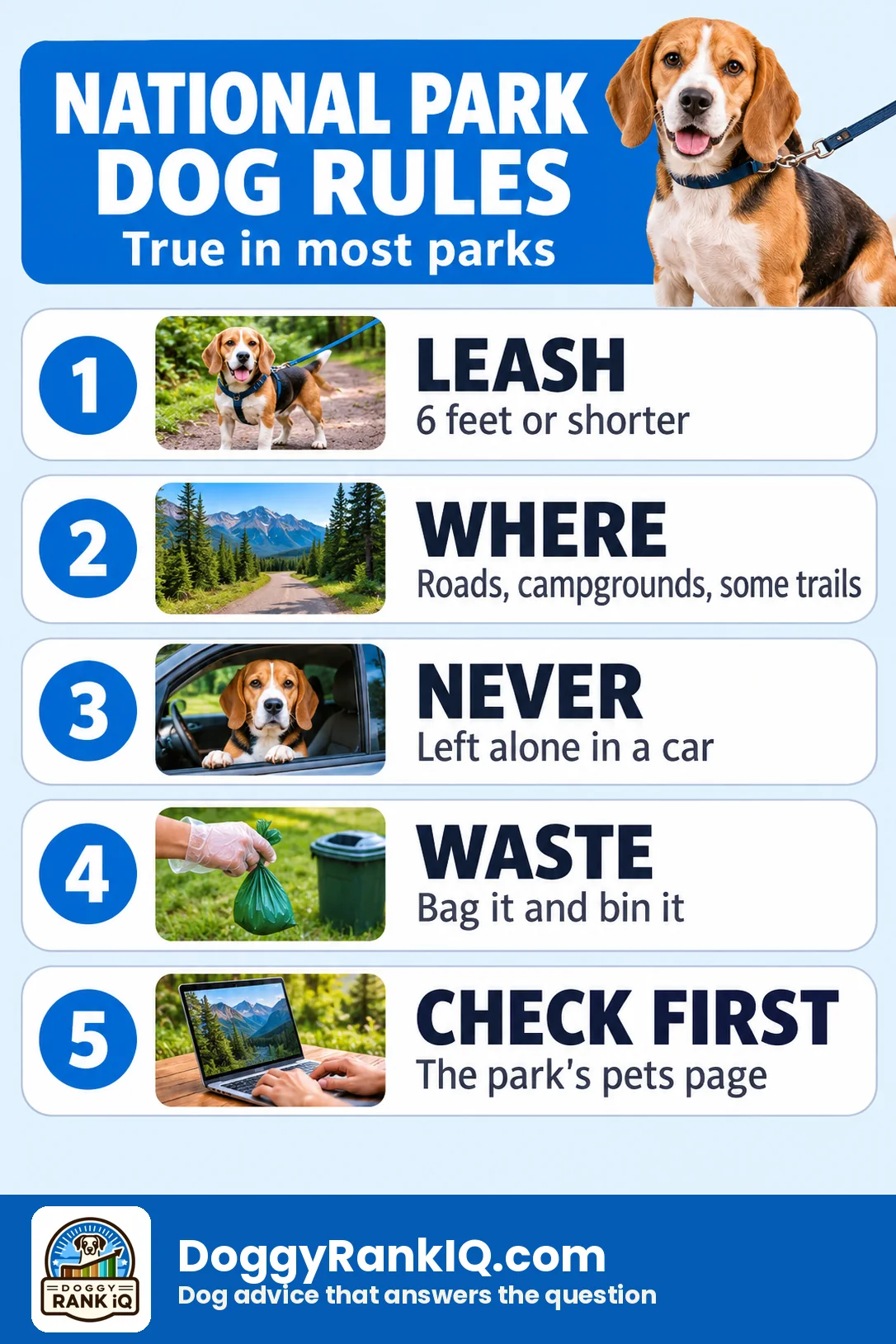
3Grand Canyon National Park: South Rim Trail (paved section)
The paved portion of the Rim Trail above the canyon rim is open to leashed dogs, giving owners genuine canyon views without a backcountry permit (nps.gov). Below the rim, on trails like Bright Angel, dogs are not allowed.
Grand Canyon’s South Rim also runs a kennel, which matters if your day includes a mule ride, shuttle, or anywhere else dogs can’t go (nps.gov). Never substitute a parked car for the kennel; cars heat up fast even with windows cracked.
4Cuyahoga Valley National Park: Towpath Trail
The Towpath Trail follows the old Ohio and Erie Canal and allows leashed dogs for its full developed length, making this one of the more generous Midwest options (nps.gov). It’s flat, shaded in sections, and connects to small towns along the route if you want a coffee stop built into the walk.
5Petrified Forest National Park: Puerco Pueblo loop
Petrified Forest stands out because leashed pets are allowed on any paved road or trail in the park, not just a single designated corridor (nps.gov). The Puerco Pueblo loop is a 0.3-mile paved walk through an ancestral Pueblo archaeological site, short enough for a senior dog or a puppy still building stamina (nps.gov).
The park also has a fenced Bark Park near the Painted Desert Visitor Center for off-leash time in a contained space (nps.gov).
6New River Gorge National Park and Preserve
New River Gorge allows leashed pets on its developed trail sections and along most roads and overlooks. Confirm current trail-by-trail status before your visit, since access can shift seasonally (nps.gov).
7Great Sand Dunes National Park and Preserve
Dogs are generally allowed in the main use area of the dunes on a leash. Sand surface temperatures climb fast in direct sun, so this is one of the parks where an early start matters more than usual.
8White Sands National Park
Leashed dogs can join road pullouts and designated dune access areas. Gypsum sand reflects heat and light intensely, so bring water for your dog even on a mild-feeling day.
9Hot Springs National Park
Hot Springs allows leashed pets on its developed walkways and around the historic bathhouse row area. It’s one of the more urban national parks, so sidewalks and street noise are part of the walk.
10Congaree National Park: Boardwalk Loop
The 2.4-mile Boardwalk Loop winds through old-growth floodplain forest. Check seasonal flooding closures before you go, since the boardwalk can be impassable after heavy rain.
11Acadia National Park: carriage roads
Acadia’s roughly 45 miles of carriage roads are broadly open to leashed dogs, plus about 100 miles of hiking trails depending on season and specific trail restrictions. The carriage roads are hard-packed gravel rather than pavement, but the smooth, car-free surface makes them one of the most comfortable long-walk options on this list.
12Shenandoah National Park
Shenandoah allows leashed dogs on most of its 500-plus miles of trails, a rare exception to the usual “dogs stay on pavement” rule. Some sections near overlooks and a handful of specific trails restrict pets, so check the current list before choosing a route.
Best dog friendly national parks by region
- West: Zion, Bryce Canyon, Grand Canyon, Great Sand Dunes, White Sands.
- Midwest: Cuyahoga Valley.
- South: Hot Springs, Congaree, New River Gorge, Petrified Forest (technically Southwest).
- East: Acadia, Shenandoah.
Choose a western pick if you want dramatic scenery with a defined paved corridor. Choose Shenandoah if trail mileage matters more than pavement, since its trail network is unusually open to dogs by national park standards.
Dog friendly national parks map: how to check a park before you go
A dog friendly national parks map is only useful if it’s current, and printed maps go stale fast. The reliable method is checking the specific park’s official pets page within a week of travel, since several pages (Bryce Canyon, Petrified Forest, Cuyahoga Valley, Grand Canyon, Great Smoky Mountains) were updated in October and 2026 alone (nps.gov).
Three things to check every time: which trails currently allow pets, whether a seasonal closure is active, and whether leash length rules differ from the standard six feet. National parks that allow dogs on paper can still restrict specific segments during nesting season, trail repair, or wildlife activity.
If you’re driving a long distance with your dog, plan rest stops the same way you’d plan them for a toddler. Our guide to dog car sickness covers how to reduce nausea on winding park roads, and a proper dog seat belt or crash-tested harness matters more on mountain switchbacks than on the interstate.
🌲 Why most park trails are closed to dogs, and where to go next door
The restrictions frustrate people who drove 600 miles with a dog in the back seat. They make more sense once you hear the reasons the National Park Service gives.
Wildlife is the first. A dog’s scent lingers on a trail and can push animals off feeding and nesting areas even after the dog has left, and a barking or lunging dog can provoke the animal you least want provoked: a bear with cubs, a moose, an elk in the fall rut. Disease runs both directions. Dogs can carry illnesses to wild canids, and can pick up plague or parasites from rodents and standing water. Then there are hazards built into the ground itself, like thermal pools in Yellowstone and cliff edges with no rail. The last reason is other visitors, some of whom are afraid of dogs or came for the silence.
None of that helps when you are standing at a trailhead sign. This does: most national parks are bordered by other public land with looser rules.
“The park gate is rarely the end of the public land. Check the map for the forest next door.”
National forests, run by the U.S. Forest Service, generally allow leashed dogs on trails, and often dogs under voice control outside developed areas. Bureau of Land Management land is similar. State parks vary, though a good share allow leashed dogs on most trails. So the dog friendly national parks list is one option, and the forest across the road is another. Before a trip, look at a map for the green and yellow patches around the park boundary and check that agency’s page for the specific trail.
A workable day near a strict park looks like this: a sunrise walk on a national forest trail outside the gate, a midday drive through the park with stops at paved overlooks where leashed pets are allowed, and an evening stroll around the campground loop. Your dog gets two proper walks and you still see the park.
⭐ Top 5 Features We Love
- Real paved mileage, not a token loop. Zion’s Pa’rus Trail and Bryce Canyon’s Shared-Use Path both run several miles, enough for a genuine outing (nps.gov).
- Scenery that doesn’t require backcountry access. Rim-level and canyon-floor views are available from pet-friendly pavement at Grand Canyon and Zion (nps.gov).
- Dedicated off-leash space. Petrified Forest’s fenced Bark Park gives dogs a break from the leash without breaking any rules (nps.gov).
- Kennel services at busy parks like Grand Canyon South Rim, useful when the day includes a dog-free activity (nps.gov).
- The B.A.R.K. Ranger program, which turns leash compliance and poop pickup into a small reward instead of a chore.
⚠️ Things to Look Out For
- Hot pavement and sand. Press the back of your hand to the surface for five seconds; if it’s too hot for you, it’s too hot for paw pads.
- Wildlife encounters. Leashed control matters most in parks with elk, bison, or ground-nesting birds near trail edges.
- Never leave a dog in a parked car, even briefly, even with cracked windows. Use a kennel service where one exists (nps.gov).
- Seasonal closures. Boardwalks at Congaree and trail segments at Shenandoah can close without much notice after storms.
- Service animal confusion. Emotional-support animals are not exempt from pet rules at parks like Bryce Canyon; only certified ADA service animals get different treatment (nps.gov).
- Elevation and distance for senior dogs. A 6.2-mile path like Bryce’s Shared-Use Path is a full-day commitment for an older dog; plan a shorter out-and-back instead of the full length.
- Puppies and stamina. Young puppies with developing joints do better on short, flat options like Petrified Forest’s 0.3-mile Puerco Pueblo loop than on multi-mile paved routes.
What to pack for a park day
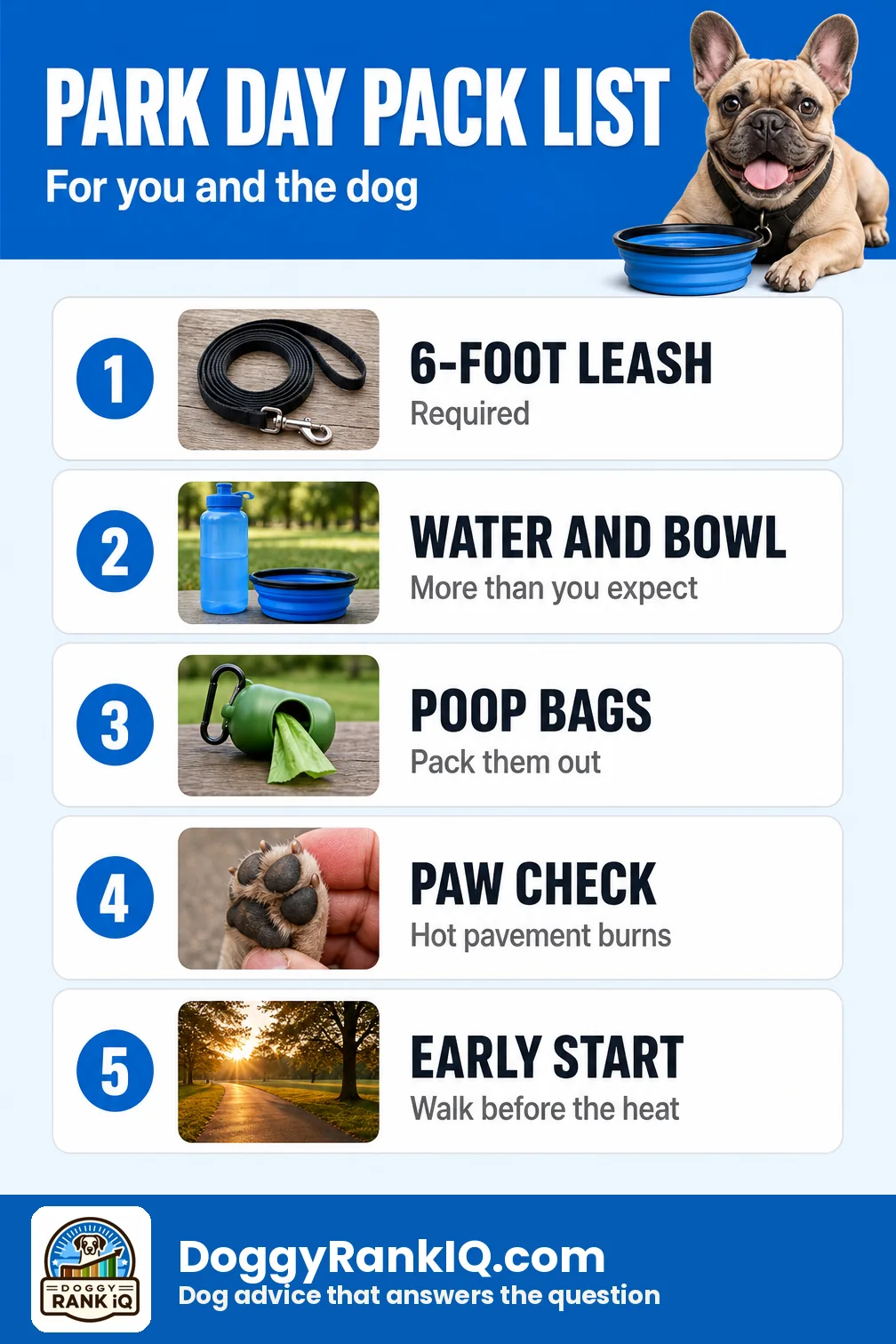
Water, shade, and a way to clean up after your dog cover most of what a paved park walk requires. Add a properly fitted leash no longer than six feet, since rangers do check, and a cooling option if you’re visiting a high desert park in summer.
For dogs prone to carsickness on the drive in, our dog car sickness guide has practical steps that don’t involve guessing. If you’re flying to reach a park, an airline-approved carrier is worth checking against your airline’s exact dimensions before booking.
Helpful park-day gear
These are general mentions based on manufacturer listings and commonly reported owner use, not hands-on testing by our team.
- Taglory 6 FT Rope Dog Leash with Padded Handle matches the federal six-foot leash rule exactly, which matters at parks that check compliance. Price checked 2026: $8.99. Check the current price
- Kalimdor Portable Dog Water Bottle, 19 oz is sized for a half-day walk and fits most trail bag side pockets. Price checked 2026: $9.99. Check the current price
- Collapsible Dog Bowls, 2 Pack with Carabiners clip onto a pack and give you separate water and food bowls without added bulk. Price checked 2026: $6.98. Check the current price
- Earth Rated Dog Poop Bag Holder and Leash Dispenser keeps you compliant with Leave No Trace rules that every park enforces. Price checked 2026: $5.98. Check the current price
- Coleman Dog Cooling Mat 24 x 30 in gives a dog a cooler spot to rest at the trailhead or campsite after a hot walk. Price checked 2026: $32.97. Check the current price
For a wider look at hydration options beyond the one listed here, see our best dog water bottle comparison.
FAQ
Are dogs allowed in some national parks?
Yes. Most national parks allow leashed dogs in developed areas, campgrounds, and on roads, and a smaller number also allow dogs on specific paved trails like Zion’s Pa’rus Trail (nps.gov). Wilderness and backcountry trails almost always remain off-limits to pets.
The bottom line
Dog friendly national parks are real, but the dog-friendly part is usually a specific paved trail, not the whole park. Pick a park from this list based on the actual walk you want, confirm the current rules on that park’s official pets page, pack water and a six-foot leash, and plan around the heat rather than around the schedule.
Doggy Rank IQ is reader supported. As an Amazon Associate we earn from qualifying purchases, at no extra cost to you.