
Quick Answer
Most grass eating is boring, in the best possible way. In a University of California, Davis survey of more than 1,500 dogs, 68% of dogs ate plants daily or weekly and only 9% looked unwell beforehand. So the honest answer to why do dogs eat grass is usually instinct, fiber, boredom, or flavor, and only sometimes nausea. Worry about the pattern instead of the plant: a sudden surge in grazing, repeat vomiting, diarrhea, low energy, eating dirt or non-food items, or grass from a lawn treated with chemicals all deserve a vet call.
Key Takeaways: Why Do Dogs Eat Grass?
- It is common. Grass was the most commonly eaten plant in the UC Davis survey, reported for 79% of dogs.
- The “self-medication” idea is not established. Veterinary guidance updated in 2026 still treats intentional vomiting as a popular theory rather than a proven one.
- Vomiting is the exception. VCA Animal Hospitals reports that fewer than 25% of dogs vomit after eating grass, and about 10% show signs of illness first.
- Grass itself has little nutritional value for dogs, and dogs cannot break down cellulose the way a cow can. A mouthful passes through or comes back up.
- The real hazards are usually on the grass, not in it: herbicides, fertilizers, slug pellets, parasite eggs, and toxic garden plants growing nearby.
- Speed matters. Gulping long, coarse blades fast is more likely to trigger a mechanical vomit than a few casual nibbles.
- Watch the whole dog. Appetite, stools, energy, and comfort tell you far more than the grass does.
- Call the vet today if grazing suddenly spikes, vomiting repeats, blood appears, the belly looks bloated or painful, or the lawn was recently sprayed.
- Reduce grazing without a battle: add safe fiber, increase sniffing and chewing outlets, and offer clean indoor greens as a swap.
- Guidance in this article was checked in October 2026.
Why do dogs eat grass? The 5 reasons research supports
Grass eating usually comes down to one of five explanations: inherited canid behavior, a pull toward fiber and gut movement, boredom and under-stimulation, plain taste and texture preference, and, less often than owners assume, an already upset stomach. Most dogs land in the first four.
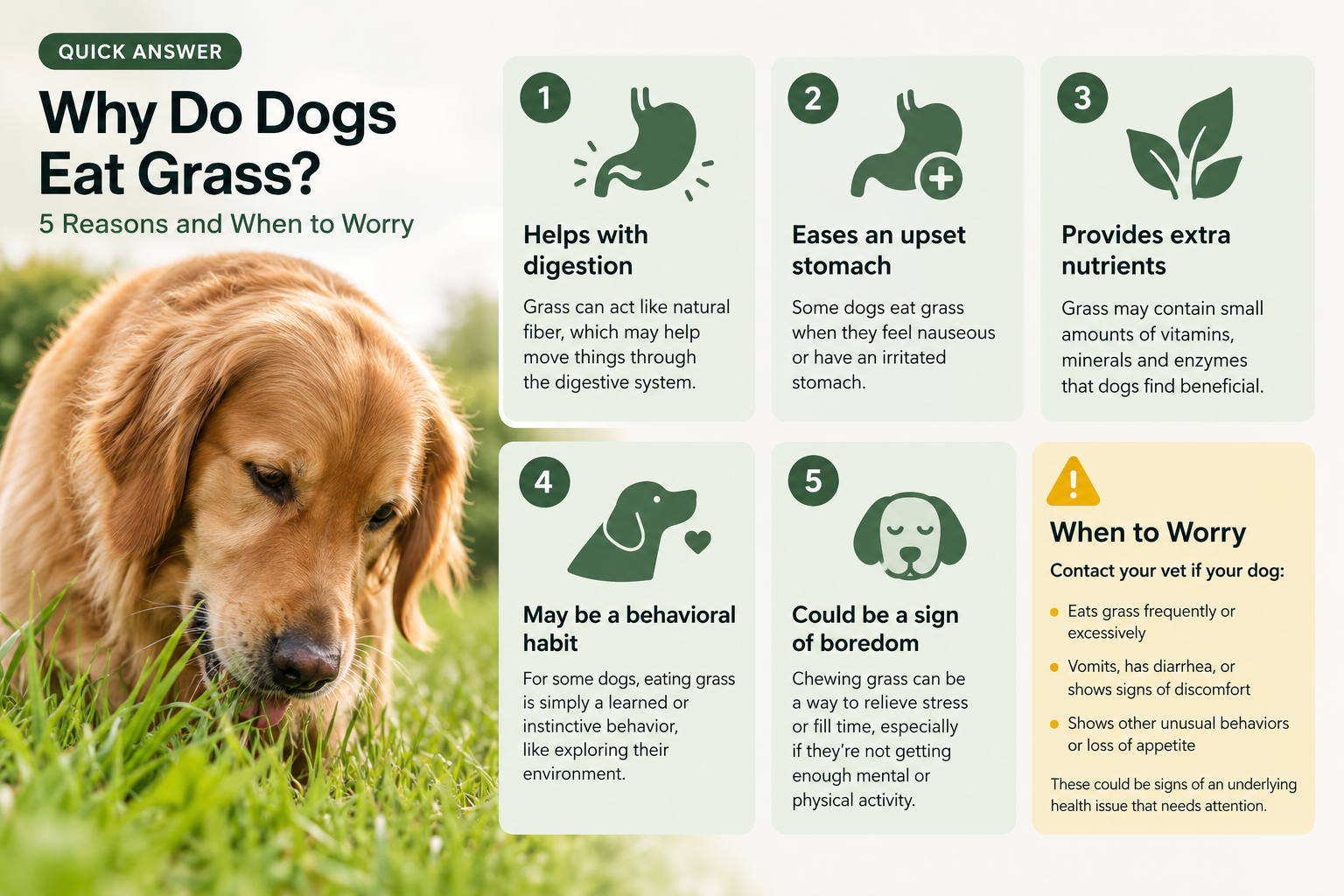
1. Ancestral behavior that never left
Plant material turns up in the stomachs and scats of wild canids, which is why some researchers treat grazing as an inherited tendency rather than a symptom. Benjamin Hart of UC Davis has argued, in work covered by veterinary conference reporting on plant eating in dogs and cats, that the behavior may have been useful to wild ancestors as a way of moving intestinal parasites through the gut. That is a hypothesis about ancestors, not a diagnosis of your spaniel. It does explain why a healthy, well-fed dog with a full bowl still stops to sample the verge.
2. Fiber and the feeling of a gut that wants to move
Grass is mostly cellulose. Dogs cannot digest it for energy, but indigestible fiber still adds bulk and can change how things move through the intestine. Some dogs seem to graze more when their stools are loose or hard, or when a meal sat heavy. If grazing tracks with constipation or sloppy stools, the diet is worth a look. Practical options sit in our guides to fruits and vegetables dogs can eat safely and what to add to kibble and what to skip.
3. Boredom, and a garden that offers nothing else
A dog alone in a fenced square of lawn for forty minutes has limited entertainment options. Grass is available, chewable, and it moves in the wind. Dogs Trust advice on grass eating notes that some dogs graze more when they have little else to do, and that mental and physical outlets can reduce it. The expensive puzzle feeder sits indoors. The lawn is right here.
4. It tastes good, which is allowed to be the whole answer
Young, tender spring blades are sweeter and softer than late-summer stalks. The UC Davis survey found younger dogs ate plants more often and sampled a wider range of species, which fits a simple curiosity-and-flavor explanation. Dogs explore the world with their mouths, the same way they explore it with their noses.
5. An upset stomach, sometimes
A minority of dogs really do graze when they feel queasy. Purina’s guidance on grass eating and vomiting describes nausea and gastrointestinal upset as one possible driver, alongside behavior and diet. The order of events matters: a dog that already feels sick and then eats grass is a different situation from a dog that eats a hedge’s worth of grass and then brings it up.
What did the UC Davis grass-eating study find?
The UC Davis work by Karen Sueda, Benjamin Hart and Kelly Cliff, published in 2008 as “Characterisation of Plant Eating in Dogs” in Applied Animal Behaviour Science, remains the largest numbers-based look at this behavior. The researchers collected 3,340 internet survey responses, of which 1,571 met the enrollment criteria.
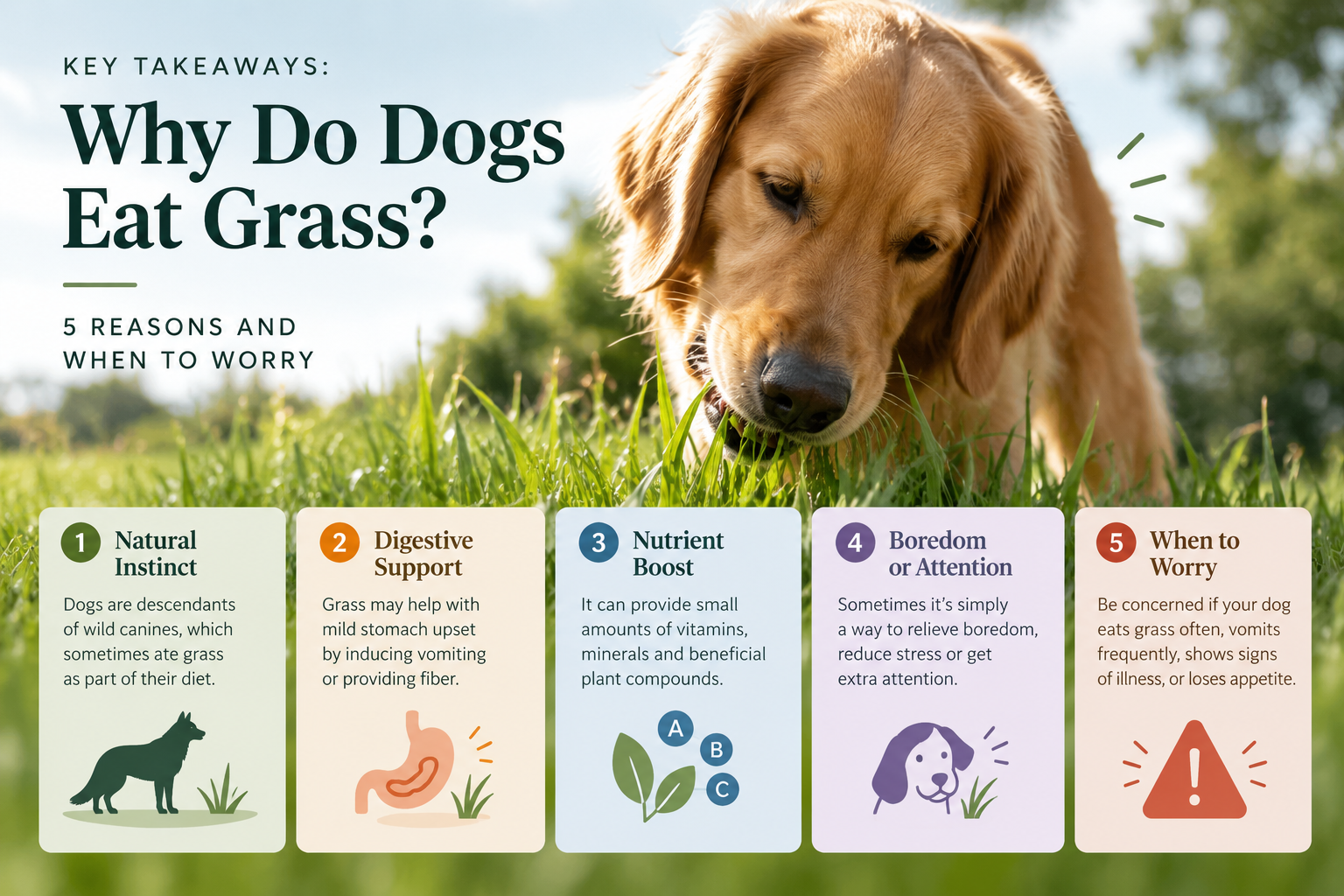
What the owners reported:
- 68% of dogs ate plants daily or weekly.
- 79% of plant-eating dogs ate grass, making it the most common plant.
- 9% frequently appeared ill before eating plants.
- 22% frequently vomited afterward.
The authors concluded that plant eating is generally normal canine behavior and was not well explained by illness, vomiting, breed, sex, neuter status, or diet type. You can read the published study abstract on plant eating in dogs directly.
Where the evidence ends. This was an owner-reported observational survey, not a controlled experiment. Owners noticed what they noticed, and nobody was watching every dog all day. It tells you that illness before grazing and vomiting after were uncommon across a large group. It cannot tell you why your individual dog is chewing the lawn, and it cannot rule out illness in one specific case. A big survey describes a population. Your vet examines a dog.
Do dogs eat grass to make themselves vomit?
Probably not on purpose, and the evidence does not support the claim. A September 2026 pet-health explainer in Taiwan’s Fire News pulled the two situations apart: dogs that start eating grass because they already feel nauseated, and dogs that vomit because they swallowed a large volume of coarse, indigestible blades in a hurry. The second group is being mechanically irritated, not performing medicine.
Two details are easy to misread.
Yellow foam is not a verdict. Dr. Jerry Klein, Chief Veterinary Officer at the American Kennel Club, notes in AKC guidance on why dogs eat grass that yellow bile commonly appears when the stomach is empty. A morning graze followed by yellow vomit can mean an empty stomach, or stomach irritation. The color alone does not name the cause.
One vomit is not a pattern. AKC’s overview of dog vomiting treats repeated vomiting, blood, weakness, and pain as the signs that change the plan, which is also how most 2026 veterinary guidance frames grass eating.
A single tidy pile of chewed grass from a bright, hungry, normal dog is a lawn-care problem. Three piles in a day from a flat, off-food dog is a veterinary problem.
Normal grazing compared with warning signs
| What to check | Likely normal grazing | Worth a vet call |
|---|---|---|
| Frequency | A few nibbles on some walks, unchanged for months | Sudden spike, frantic or non-stop grazing this week |
| Vomiting | Rare, once, then back to normal eating | Repeated vomiting, retching with nothing produced, blood |
| Other symptoms | Bright, hungry, normal stools, normal energy | Diarrhea, weight loss, drooling, tense or swollen belly, lethargy |
| What else goes in the mouth | Grass only, usually tender blades | Dirt, stones, mulch, fabric, plastic |
| Where the grass grows | Untreated lawn or known area | Recently sprayed, fertilized, roadside, or near unknown plants |
| What to do | Note it, redirect, carry on | Log it and book an appointment, same day if chemicals or collapse are involved |
Four numbers worth remembering
Is it normal for dogs to eat grass, and what does it mean when a dog eats grass?
Yes, occasional grass eating is normal canine behavior, and in most cases it means your dog is being a dog. The UC Davis authors reached that conclusion across more than 1,500 dogs, and VCA’s clinical view is that most grazing dogs are neither sick beforehand nor dosing themselves on purpose.
What it usually means, in order of likelihood:
- The dog likes the taste or texture of that particular patch.
- The dog has time on its paws and few other outlets.
- The dog’s gut wants bulk or movement.
- The behavior is simply part of the dog’s normal repertoire, as inherited as rolling in something unspeakable.
- The dog feels queasy. Possible. Just not the first guess.
Reading a single behavior as a single motive is where owners get stuck. Head tilting works the same way: one action, several plausible explanations, and the surrounding context does the real work.
Can dogs get sick from eating grass, and is grass bad for dogs to eat?
Clean, untreated grass in small amounts is low risk for most dogs. The grass itself is rarely the problem. What sits on it, grows beside it, or gets swallowed with it is where illness comes from.
Can dogs digest grass safely? Not really digest, no. Dogs lack the gut machinery to break cellulose into usable energy, so grass delivers close to no nutrition. It passes through as fiber, or it comes back up. Neither outcome is dangerous on its own.
The genuine risks:
- Lawn chemicals. Herbicides, fertilizers, slug and snail pellets, and rodent bait can all end up in a mouthful of turf. This is the scenario that justifies a same-day phone call.
- Parasites. Grass in areas used by other dogs or wildlife can carry roundworm eggs, hookworm larvae, lungworm via slugs and snails, and Giardia cysts.
- Toxic plants nearby. A dog browsing the border may sample more than grass. The ASPCA Animal Poison Control toxic plant list is the quickest free reference for checking a specific species, and their emergency line handles suspected poisonings.
- Mechanical trouble. Long, tough grass swallowed in bulk can irritate the throat, and occasionally grass awns or seed heads lodge in the nose, ears, or between toes. Large volumes have, rarely, contributed to obstructions.
- Pesticide drift from roadside verges, which also tend to collect exhaust residue and litter.
Food-related gut upset can look a lot like grazing-related gut upset, which is why our guide to foods dogs cannot eat and the toxic list every owner needs is worth a read before you blame the lawn.
When should I worry about my dog eating grass?
Worry when the behavior changes, when the rest of the dog changes, or when the grass came from a treated or unknown area. Those three triggers cover nearly every case that turns out to matter.
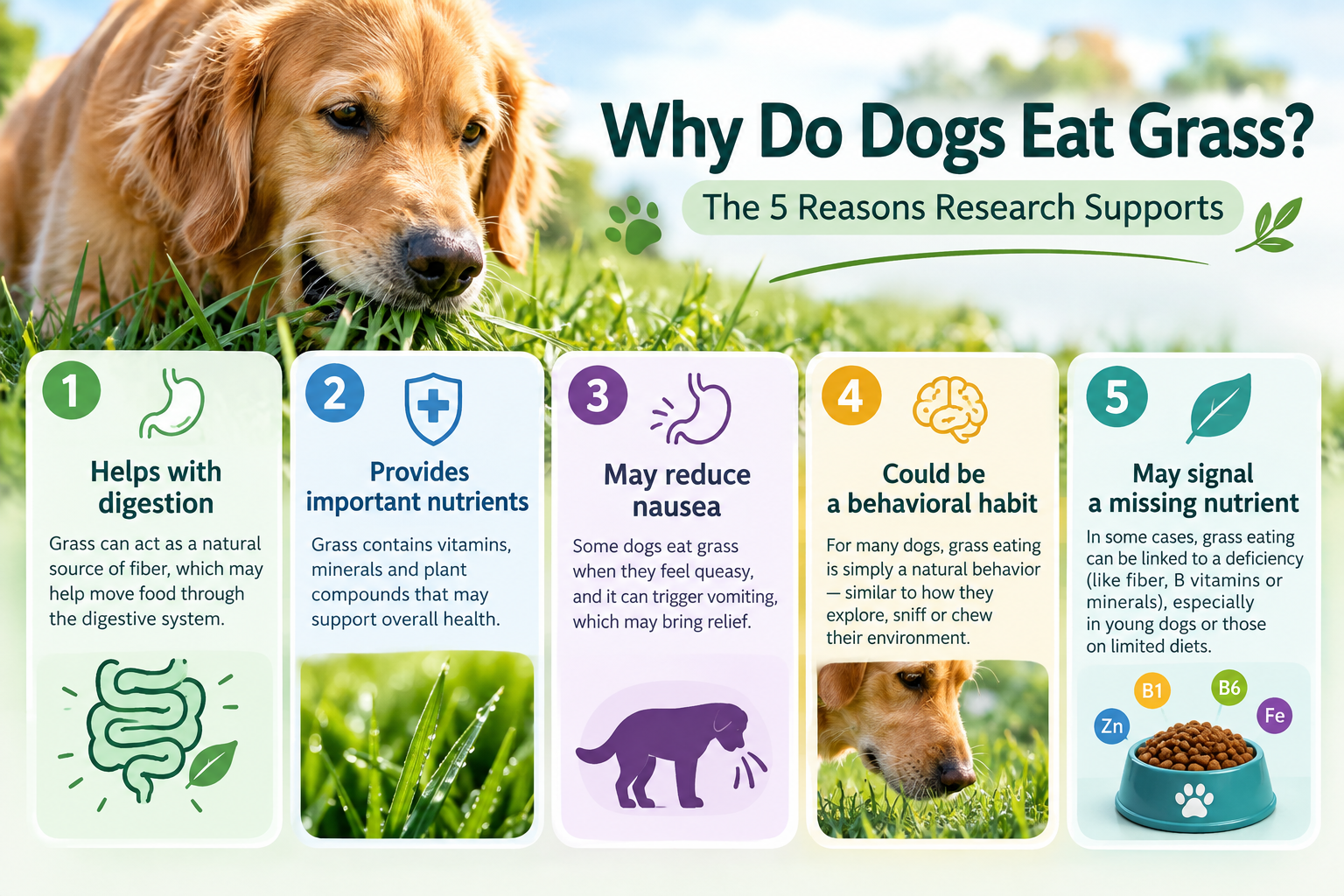
Call your veterinarian the same day if you see:
- Grass eaten from a lawn sprayed or fertilized in the last few days, or any suspected pellet or bait exposure
- Repeated vomiting, retching that produces nothing, or blood in vomit or stool
- A tense, swollen, or painful belly, or a dog that keeps stretching into a bowing position
- Lethargy, weakness, pale gums, or refusing food for more than one meal in a small dog or two in a larger one
- Frantic, driven grazing that you cannot interrupt with food or a favorite toy
Dog suddenly eating grass like crazy: what a sudden increase suggests
A sharp change in a stable behavior is the clearest signal in this whole subject. Nausea, acid reflux, dietary intolerance, inflammatory gut disease, parasites, dental pain, and sometimes stress can all push grazing upward. Purina’s 2026 update keeps the emphasis on the overall pattern rather than the presence of grass in vomit, which is good advice for an owner standing on a lawn at 7 a.m. trying to make a decision.
Keep a three day log: time, how much, what came back up, appetite, stools, energy. A log converts “he’s been weird lately” into something a vet can work with.
Does eating grass mean my dog has worms?
No, grass eating is not a reliable sign of worms. The UC Davis survey found no clear link between plant eating and illness in general. Worms show up through other clues: visible segments or spaghetti-like worms in stool, a pot-bellied puppy, scooting, weight loss despite a good appetite, or a dull coat. Grass can be a route of infection if it carries parasite eggs or larvae, which is an argument for routine fecal testing and a current parasite prevention plan, not for panicking about grazing itself.
What is the difference between normal and excessive grass eating, and how much grass is too much?
There is no published safe gram limit for grass, so judge it by behavior, not by weight.
- Normal: a few mouthfuls, intermittently, with no change in appetite, stools, energy or comfort.
- Excessive: grazing that replaces part of a meal, continues for many minutes at a time, happens multiple times a day when it did not before, cannot be interrupted, or produces vomiting after most episodes.
- Pica territory: the dog has moved on to dirt, stones, mulch, or fabric. That pattern deserves a workup for gut disease, nutritional problems, and compulsive behavior, and it is a reason to review our piece on why dogs sleep so much and what a change in energy can mean if lethargy is also in the mix.
Why do some dogs eat grass more than others?
Individual variation, age, and daily routine explain more than breed does. The UC Davis survey did not find breed, sex, neuter status, or diet type to be good predictors of plant eating, but it did find that younger dogs ate plants more often and tried more plant species.
Patterns that show up in practice:
- Puppies and young dogs sample everything, grass included. Mouth-led exploration is part of normal development.
- Dogs with long solo stretches in a garden have fewer alternatives and more lawn.
- Fast eaters and dogs on long gaps between meals sometimes graze more in the morning, when the stomach is empty.
- Dogs with a history of gut sensitivity may graze more during a flare.
What this does not give you is a breed rule. Two Labradors in the same house can split the behavior between them, which is exactly what “individual variation” looks like at ground level.
How do you stop a dog from eating grass safely?
Rule out illness first, then make the lawn less interesting than the alternatives. Punishing grazing tends to produce a dog that eats grass faster when you are not looking, which is the opposite of what you want.
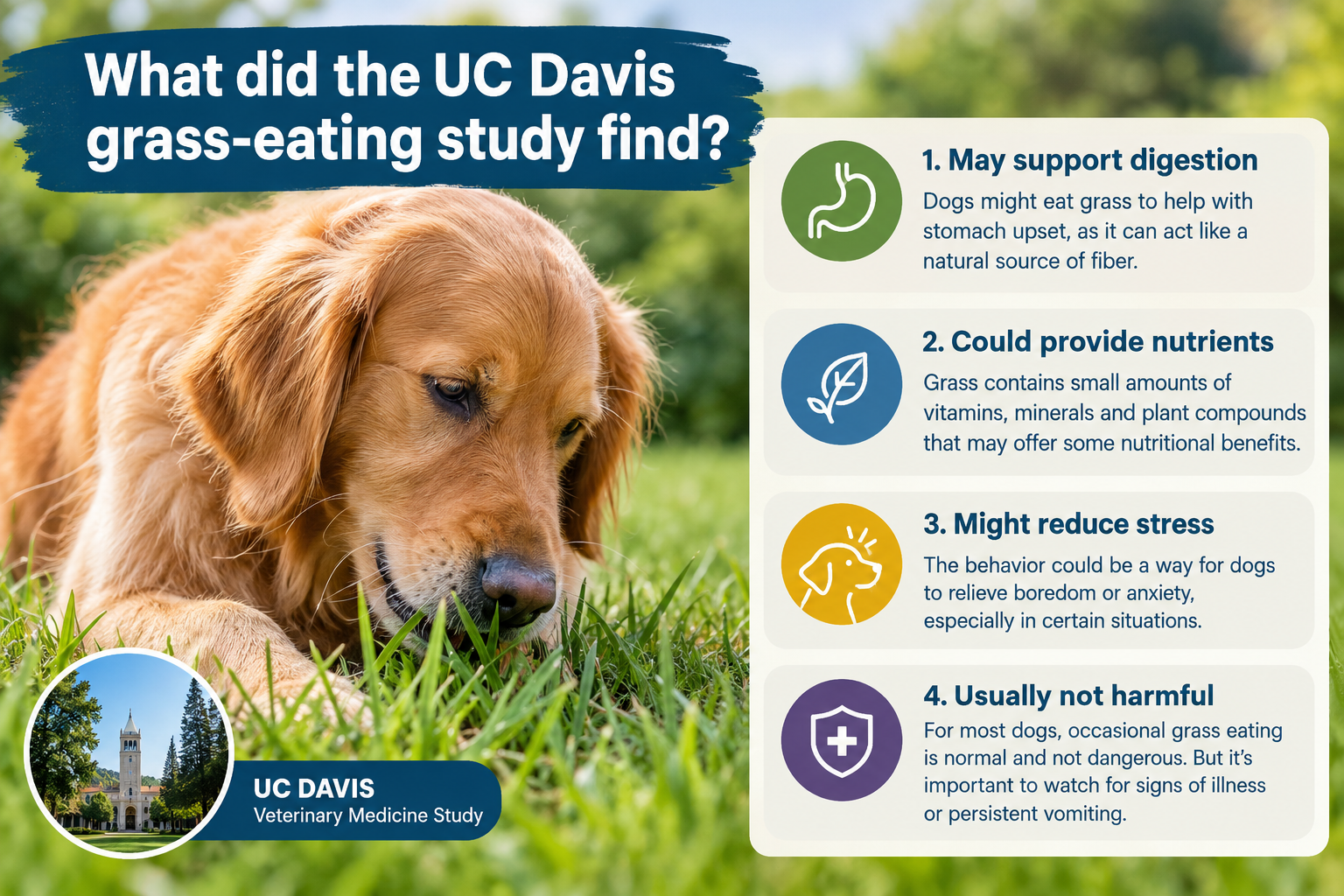
Step 1: Get a health check if anything else changed. Appetite, stools, weight, energy, breath smell. Bring the log.
Step 2: Look at fiber and feeding routine. Splitting meals so the stomach is not empty for long stretches helps some dogs with morning bile vomiting. Added fiber helps others. Plain canned pumpkin and green beans are common choices, and our list of superfoods for dogs including broccoli and blueberries covers portioning. For dogs with diagnosed gut issues, a veterinary therapeutic diet such as Hill’s Prescription Diet w/d is a high-fiber option your vet can prescribe. It suits dogs with specific fiber-responsive conditions, not every grazer, and it requires veterinary authorization. Purina Pro Plan Veterinary Diets FortiFlora is a probiotic supplement sometimes used alongside diet changes for loose stools. Fit note: probiotics are a support measure, not a treatment for the cause, and your vet should decide whether either product belongs in the plan.
Step 3: Add outlets that beat chewing turf. Sniffing work does heavy lifting here. Scatter feeding, a snuffle mat, a long line on safe ground, and a stuffed chew toy. A KONG Classic stuffed with wet food and frozen gives a dedicated chewing outlet and suits most medium chewers. Check the size chart against your dog’s weight and jaw strength, supervise heavy chewers, and retire any toy that cracks.
Step 4: Offer clean greens as a swap. If your dog clearly wants to chew something green, grow something you control. Pet Greens wheatgrass kits are sold as indoor grass for pets and let you skip the chemical question entirely. DoggieLawn sells real grass pads, mainly for toilet training in apartments, so treat chewing as a secondary use and supervise. Fit note for both: neither is a treatment, and neither replaces a vet visit if grazing is driven by illness.
Step 5: Manage the environment. Skip treated lawns, keep your own untreated or observe the product’s re-entry interval, fence off border plants, check the ASPCA toxic plant list before planting, and teach a cheerful “leave it” plus a reliable recall so you can interrupt without a tug of war.
Apartment owners and first-time owners often get the best results from the enrichment step alone, because the lawn is not the dog’s main option any more. If you are still building the basics, our guide to the best dogs for first time owners covers routines that leave less idle time to fill.
FAQ
Should I let my dog eat grass?
A few mouthfuls of clean, untreated grass is generally fine for a healthy dog. Interrupt it if the lawn has been sprayed or fertilized, if the grass is roadside or in a heavily used dog area, if your dog gulps large amounts fast, or if grazing is a new or escalating habit.
Why do dogs eat grass and throw up?
Two different sequences get confused. Some dogs feel nauseated first and then graze. Others swallow a large volume of coarse blades quickly, which irritates the stomach and comes straight back up. The 2008 UC Davis survey found only 22% of plant-eating dogs frequently vomited afterward, so vomiting is not the usual outcome.
Why do dogs eat grass when sick?
Nausea and gut discomfort can increase grazing in some dogs, and veterinary guidance lists gastrointestinal upset as one possible driver. Only about 9% of dogs in the UC Davis survey frequently appeared ill before eating plants, so illness explains a minority of cases rather than most.
What is a dog lacking when they eat grass?
Usually nothing measurable. The UC Davis survey found no clear link between plant eating and diet type, and grass supplies almost no nutrition dogs can absorb. Fiber intake and feeding schedule are the parts of the diet most worth reviewing with your vet.
Why do dogs eat grass and dirt together?
Eating dirt alongside grass moves the picture toward pica, which can be linked to gut disease, anemia, nutritional problems, or compulsive behavior. Dirt eating also raises the risk of parasites and swallowed stones. Book a veterinary assessment rather than waiting it out.
What should I do if my dog eats grass?
Note the time, the amount, and whether anything came back up. Check whether the lawn was treated. Then watch appetite, stools and energy for 24 hours. Call your vet if vomiting repeats, if your dog is flat or off food, or if any chemical exposure is possible.
Can my dog eat grass after a flea or worm treatment?
Topical and oral parasite treatments for the dog are a separate issue from lawn products. The caution applies to anything applied to the grass. Follow the label’s re-entry time for any lawn treatment, and ask the manufacturer or your vet if the interval is not stated.
Does grass eating in puppies need different handling?
Puppies sample widely, so some grazing is expected. The extra care is around parasites and swallowed objects, since young dogs are more vulnerable to both. Keep worming up to date, supervise closely, and feed a diet suited to growth, which our guide to puppy food and what growing dogs need in year one covers.
Conclusion
The research answer to why do dogs eat grass is reassuring and slightly dull: for most dogs, it is ordinary behavior with ordinary motives, and the vomiting theory everyone repeats has never been properly established. The signal is not the grass. The signal is change, in how often, how fast, and how the dog looks afterward.
One next step: start a three day grass log today. Three columns, nothing fancy. Date and time, how much was eaten and from where, and anything that followed, including vomit, stool changes, appetite or energy. If all three days look stable and your dog is bright, carry on and add one more sniffing or chewing outlet to the day. If the log shows a rising pattern, repeat vomiting, or any treated lawn, take it to your vet while the details are still fresh.
Dog Advice That Actually Answers the Question. Guidance here was checked in October 2026 and is general information, not a substitute for your own veterinarian’s assessment.