
Quick Answer
The short version of the Farmer’s Dog pancreatitis story: no court has found that the food causes pancreatitis in dogs. What exists is a class action complaint filed on April 24, 2026, Trott v. The Farmer’s Dog, Inc., Case No. 1:26-cv-03410 in the Southern District of New York, which alleges the company sold meals as complete, balanced and vet formulated without prominently disclosing how much fat they contain during the initial purchase. The Farmer’s Dog called the suit baseless in June 2026, said its recipes meet AAFCO and NRC standards, and said its feeding trials measured biomarkers including lipase and triglycerides without abnormal results. Allegations are not findings. If your dog has a pancreatitis history, the number that matters is grams of fat per 1,000 kcal, and the target comes from your veterinarian.
Key Takeaways: Farmer’s Dog Pancreatitis
- The Farmer’s Dog pancreatitis conversation online is driven by one lawsuit and a lot of owner posts. Neither is controlled safety data.
- The April 2026 complaint alleges that three of four recipes exceed 25% fat on a dry matter basis, 40% of calories from fat, and 45 grams of fat per 1,000 kcal. Those are the plaintiff’s figures, not a court’s conclusion.
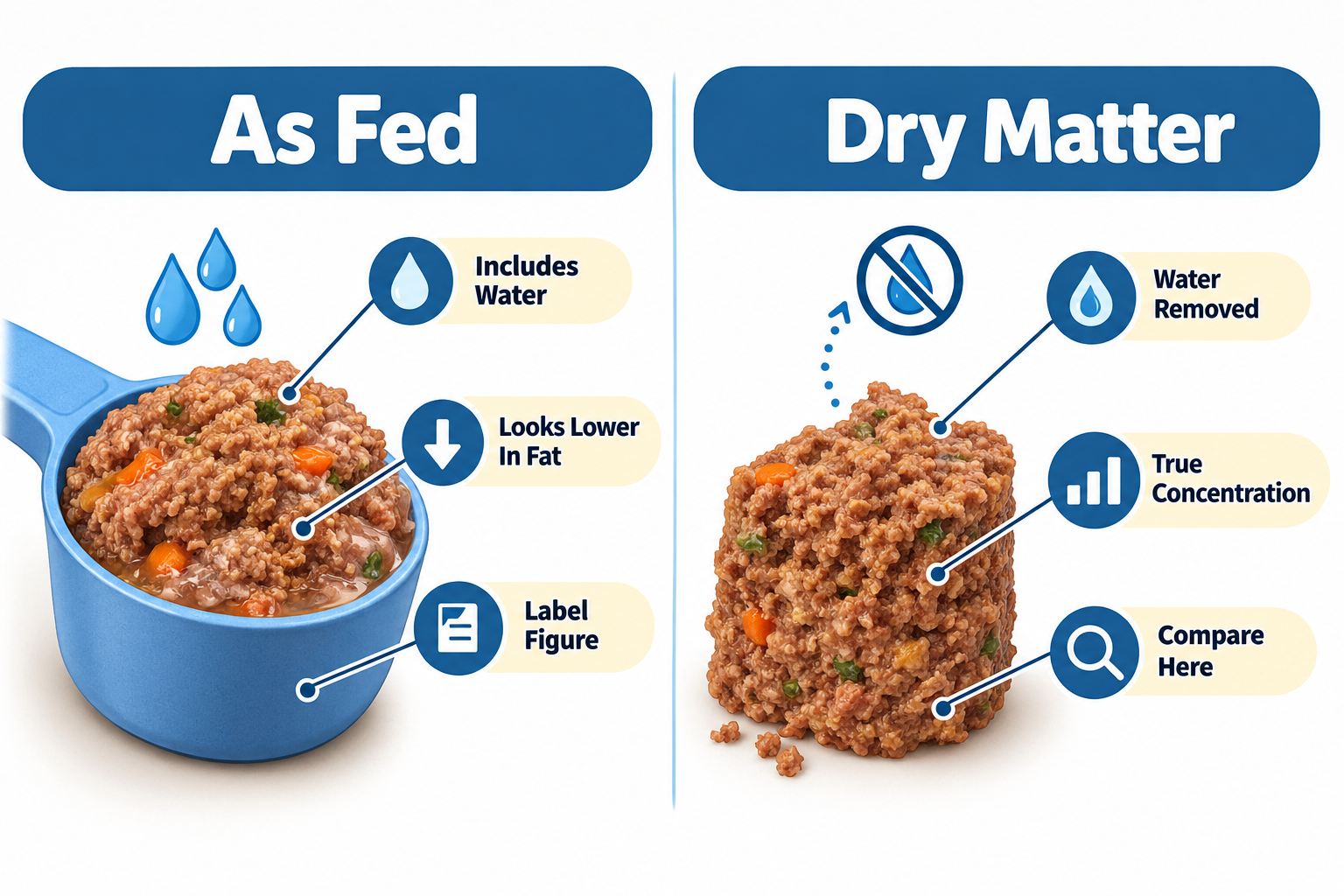
- A central claim is about presentation: the complaint says fat was shown on an as fed basis, which includes water and can make a moist food look leaner than it is on a dry matter comparison.
- The Farmer’s Dog says it has served more than a billion meals and that its recipes meet established nutrient profiles. Scale is not the same as an epidemiological study comparing pancreatitis rates across diets.
- By late August 2026 the company had reportedly moved to compel arbitration, with briefing completed on August 28, 2026. No settlement, dismissal or liability finding has been reported.
- Canine pancreatitis is frequently idiopathic, meaning no single cause can be pinned down, even by a vet with bloodwork and imaging in hand.
- If your dog has had pancreatitis once, a diet choice should be made with your vet using a fat target in grams per 1,000 kcal, not a brand’s marketing page.
- Vomiting that will not stop, a hunched posture, refusal to eat and lethargy are reasons to call a veterinarian the same day, whatever food is in the bowl.
Guidance in this article was checked October 2026.
What is The Farmer’s Dog, and why are people worried about pancreatitis?
The Farmer’s Dog is a subscription service that ships gently cooked, refrigerated dog food in portioned packs, sized to a profile you fill in for your dog. It sits in the fresh category alongside Ollie, Nom Nom and JustFoodForDogs. The pitch is simple and effective: real meat and vegetables, human grade kitchens, measured portions, delivered.
Worry about pancreatitis attached itself to that pitch for one unglamorous reason. Fresh food is often richer in fat than the dry food a dog was eating before, and dietary fat has long been discussed as a trigger for pancreatitis in susceptible dogs. Add a lawsuit, add a search bar, add the natural human instinct to look for a cause the moment a dog gets sick, and you get a month of posts.
One of the most shared examples is short and bleak. On the r/DogFood forum, user u/LindaBinda55 wrote:
“Just stopped TFD. Mini doxies was getting pancreatitis too often.”
That is a real owner describing a real decision. It is also not evidence of cause. Miniature dachshunds are among the small breeds frequently discussed as pancreatitis prone, the dogs had a history, and nobody ran a controlled comparison. The post deserves sympathy, not a conclusion.
What does the 2026 Farmer’s Dog lawsuit allege?
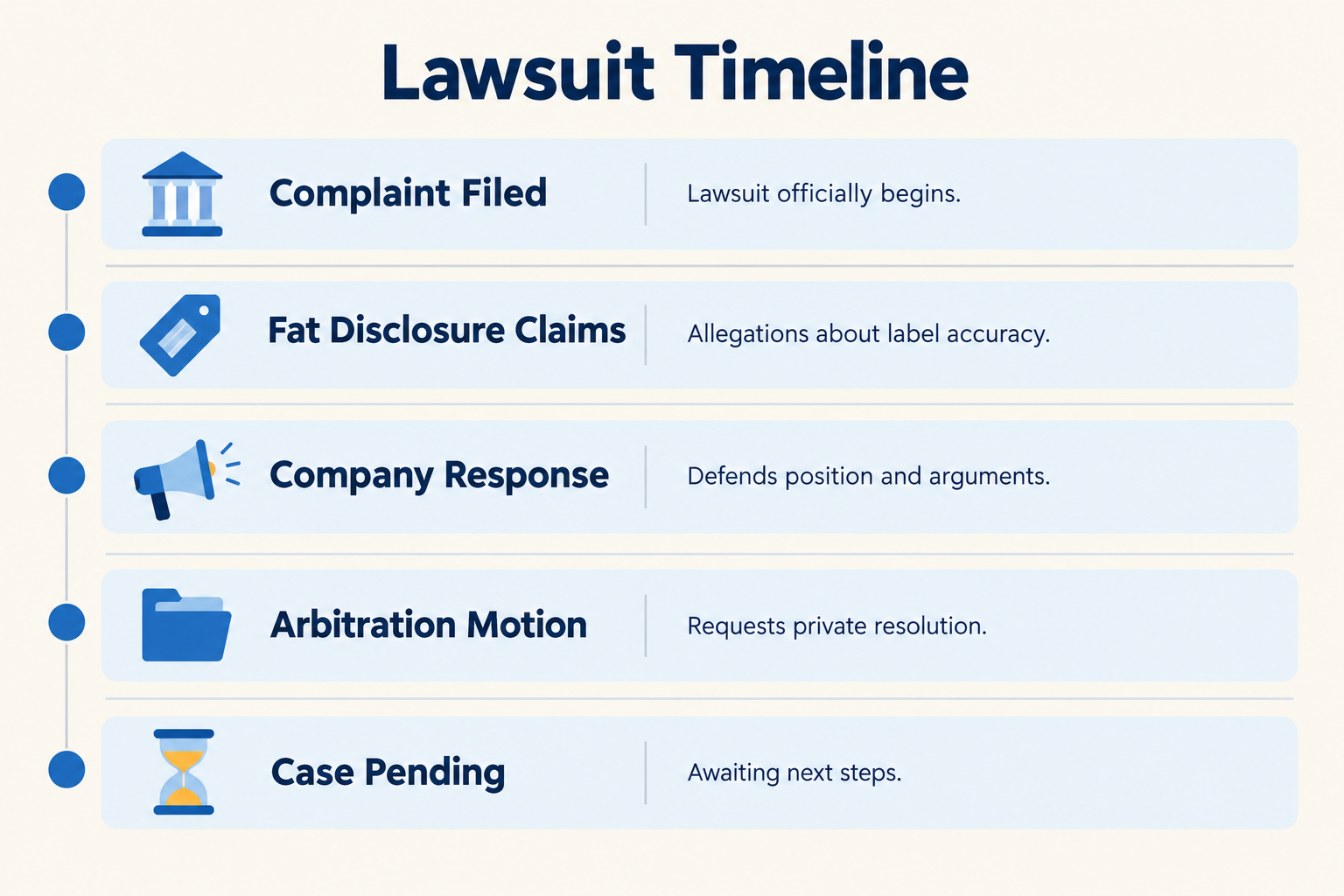
The lawsuit alleges deceptive marketing about fat content, not a proven link between the food and disease. Amy Trott filed the complaint on April 24, 2026 in federal court in Manhattan, bringing claims for breach of express and implied warranty, fraud, and violations of the New Hampshire Consumer Protection Act, and seeking class certification, damages, restitution and injunctive relief.
What the complaint actually says
Pulled apart, the complaint makes a few connected arguments:
- The meals were marketed with words like complete, balanced, healthy, vet formulated and personalized.
- Fat percentages were presented on an as fed basis, which includes the food’s water weight.
- Because fresh food is high in moisture, an as fed percentage can read low next to a dry kibble number, even when the dry matter fat is considerably higher.
- Three of four recipes allegedly exceed 25% fat on a dry matter basis, 40% of metabolizable energy from fat, and 45 grams of fat per 1,000 kcal.
- Labels give minimum crude fat guarantees, so actual fat may run above the stated minimum.
That last point is worth a pause. Minimum guarantees are standard on pet food labels across the industry. On its own it does not establish mislabeling. It does mean that a guaranteed analysis is a floor, not a measurement of the bag in your fridge.
Allegations versus findings
A filed complaint is one side’s written argument. It has not been tested by discovery, expert testimony or a ruling. Reporting from Petful’s tracking of the case indicates The Farmer’s Dog moved to compel arbitration, with briefing fully completed on August 28, 2026 and the answer deadline stayed while the court decides. No settlement, dismissal or finding of liability has been identified.
So the honest status in October 2026: an early stage consumer protection case about disclosure, still fighting over where it will even be heard.
What the company said
The Farmer’s Dog published a response on June 9, 2026 calling the suit baseless. The company stated that its recipes meet AAFCO and NRC nutrient standards, that feeding trials measured biomarkers including lipase and triglycerides without observing abnormal results, and that it has served more than one billion meals to millions of dogs. Its educational pages also stress that canine pancreatitis is often idiopathic, meaning a specific cause frequently cannot be established.
Both of those claims have limits worth saying out loud. Feeding trial biomarkers in a small group of healthy dogs are not a population study of pancreatitis risk. And a billion meals shows volume, not a rate comparison against other diets.
Farmer’s Dog Pancreatitis Claims: What the Evidence Supports
The evidence supports this much and no more: fat content is a legitimate thing to ask about for a pancreatitis prone dog, and nothing in the public record establishes that The Farmer’s Dog causes pancreatitis. There is no published peer reviewed study comparing pancreatitis incidence in dogs fed The Farmer’s Dog against dogs fed other diets.
What we have instead is three separate categories of information that get blended together in comment sections:
- Allegations from the April 2026 complaint, including the dry matter fat figures.
- Company statements, including the AAFCO and NRC compliance claim and the biomarker results.
- Owner reports on Reddit, Facebook groups and review aggregators, which describe timing but cannot isolate cause.
Owner reports matter for a different reason than people think. They are useful for spotting a question worth investigating. They are poor at answering it, because dogs who develop pancreatitis often have other things going on: a stolen slice of pizza, a dose of medication, undiagnosed endocrine disease, extra body weight, or a breed tendency. Timing feels like proof. It is not.
If you want a sense of how customer sentiment splits, independent review roundups such as Bestie Paws’ write up of the Farmer’s Dog controversy collect both the positive and negative accounts. Read them as sentiment, not science.
Run the number yourself
The useful move is to stop arguing about percentages and convert whatever food you are considering into grams of fat per 1,000 kcal, which is the unit vets tend to use for fat restriction. Enter the figures from the manufacturer’s own nutrient page.
How The Farmer’s Dog compares with other fresh brands and prescription low fat diets
Fat figures change with recipe revisions, and this article will not print numbers it cannot attribute to a named source. So the table below tells you what each option is, what fat data is publicly verifiable, and who it suits. Then you run the number yourself with the calculator above.
| Diet | What it is | Fat data status, checked Oct 2026 | Who it suits |
|---|---|---|---|
| The Farmer’s Dog | Gently cooked subscription, portioned packs | As fed minimums on brand pages. The April 2026 complaint alleges three of four recipes exceed 45 g fat per 1,000 kcal | Healthy adult dogs with no fat restriction, owners who want portion control |
| Ollie | Fresh and baked subscription recipes | Published per recipe on the brand’s nutrition pages; not independently verified here | Owners wanting recipe variety; convert to g per 1,000 kcal before comparing |
| Nom Nom | Fresh portioned subscription meals | Published per recipe by the brand; not independently verified here | Similar audience to the above; same conversion step applies |
| JustFoodForDogs | Fresh food plus veterinary support recipes, some for gastrointestinal needs | Brand publishes nutrient profiles; vet support lines are dispensed with professional input | Owners who want fresh format with a veterinary therapeutic option |
| Hill’s Prescription Diet i/d Low Fat, Royal Canin Gastrointestinal Low Fat, Purina Pro Plan Veterinary Diets EN Low Fat | Therapeutic low fat diets sold through veterinarians | Exact fat per 1,000 kcal is on each product’s technical sheet; ask your vet for the current figure | Dogs with diagnosed or recurrent pancreatitis, hyperlipidemia, or fat intolerance |
Decision rule: if your dog has never had pancreatitis and keeps a healthy weight, fresh food brand choice is mostly about budget, convenience and stool quality. If your dog has had one confirmed episode, start from the prescription low fat column and let your vet decide whether anything else is appropriate. Our guides on how to judge a dog food brand before you buy it and what the protein, fat and carb numbers on a label mean go deeper on the label reading side.
What causes pancreatitis in dogs?
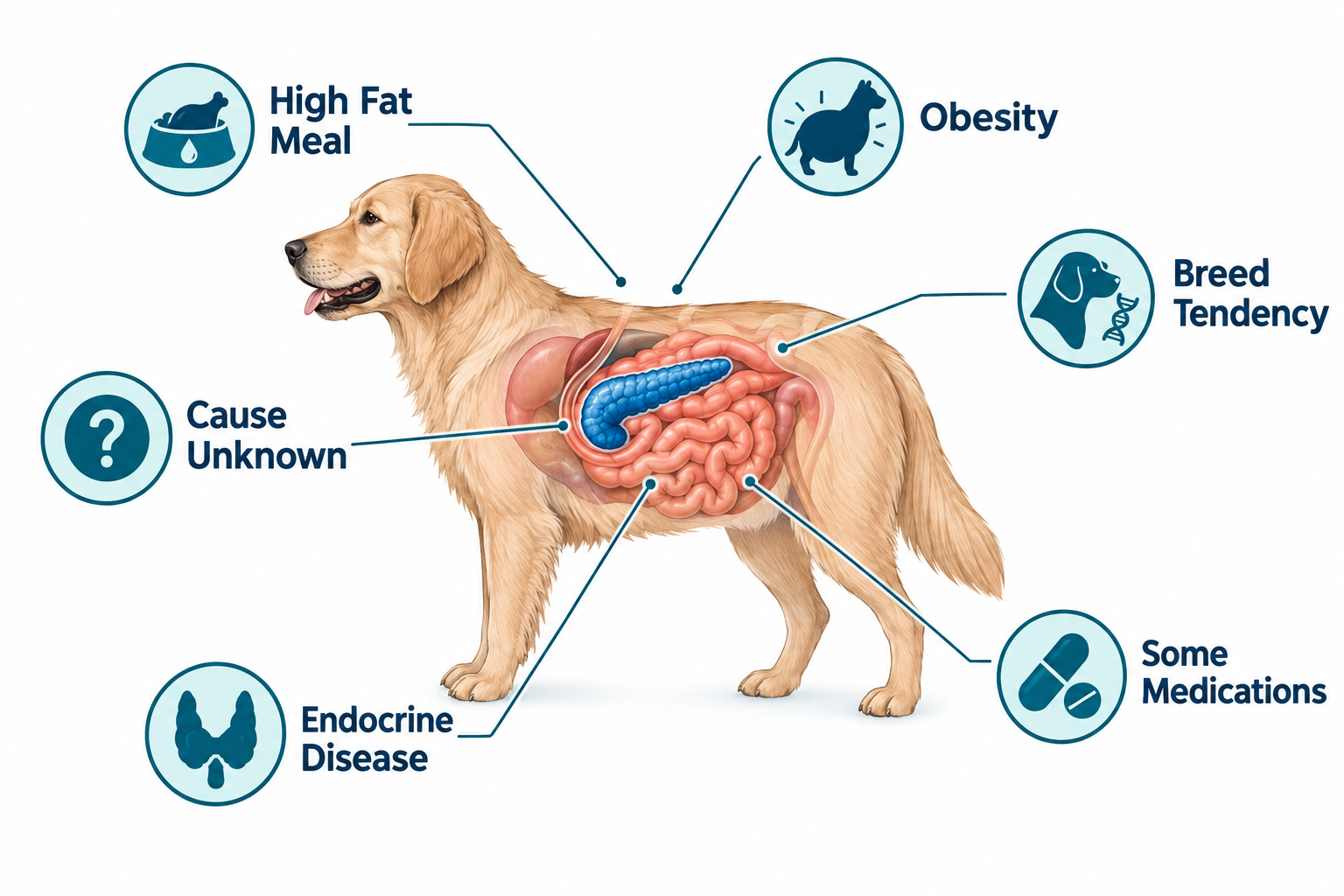
Pancreatitis is inflammation of the pancreas, and in dogs the cause is often never identified. High fat meals, obesity, certain medications, endocrine disease and breed tendency all appear in the risk discussion, and plenty of cases arrive with none of them clearly present.
The commonly discussed contributors include:
- A sudden rich or fatty meal. The classic holiday scenario: drippings, trimmings, a dropped sausage. Educational material from veterinary sources and from The Farmer’s Dog’s own explainer on whether dog food can cause pancreatitis covers the dietary indiscretion route.
- Excess body weight. Carrying extra fat is part of the risk conversation and is one of the few factors an owner can change directly.
- Breed tendency. Miniature schnauzers, Yorkshire terriers and miniature dachshunds come up repeatedly in clinical discussion, in some cases alongside inherited fat metabolism differences. Breed tendency describes a group pattern and does not predict any individual dog.
- Medications and other illness. Some drugs and some endocrine conditions, including diabetes and Cushing’s disease, appear in the risk picture. This is a vet conversation, not a label reading exercise.
- No identifiable cause at all. Idiopathic cases are a large share, which is exactly why a single diet rarely gets convicted on timing alone.
Is The Farmer’s Dog safe for a dog with a pancreatitis history, and who should skip it?
For a dog with a confirmed pancreatitis history, a standard fresh recipe is not the default choice, and the decision belongs to your veterinarian rather than a subscription quiz. Dogs recovering from or prone to pancreatitis are often placed on a therapeutic low fat diet with a specific fat ceiling, and most mainstream fresh recipes are built for healthy adult dogs instead.
Groups who should talk to a vet before starting or continuing any fresh food, including The Farmer’s Dog:
- Dogs with one or more confirmed pancreatitis episodes.
- Dogs with diagnosed hyperlipidemia or high triglycerides.
- Breeds with a documented tendency, including miniature schnauzers, Yorkshire terriers and miniature dachshunds, especially with a family or personal history.
- Overweight dogs on a weight loss plan, where calorie density and fat both matter.
- Dogs with diabetes, Cushing’s disease, or a history of fat intolerance and chronic soft stool.
- Dogs already stable on a prescription diet. Stability is worth protecting.
Dogs who generally do fine with a fresh diet: healthy adults at a good weight, no pancreatic history, no fat sensitivity, in a household where portion sizes are respected and the counter surfing is under control. If you are weighing cost and convenience in general, our look at whether a fresh dog food delivery subscription is worth it and the comparison of fresh and air dried food against dry kibble cover the trade offs without the courtroom drama.
What should a dog with pancreatitis eat?
A dog with pancreatitis usually eats a veterinary low fat diet, in small frequent portions, with no table food and no fatty treats, under a plan set by the treating vet. During an acute episode, the feeding plan is part of medical treatment and may involve hospitalization, fluids and anti nausea medication before food is reintroduced at all.
For longer term management, the usual components look like this:
- A named therapeutic diet. Hill’s Prescription Diet i/d Low Fat, Royal Canin Gastrointestinal Low Fat and Purina Pro Plan Veterinary Diets EN Low Fat are the three most commonly dispensed options in general practice. Each publishes a technical sheet with fat per 1,000 kcal. Ask for the current figure.
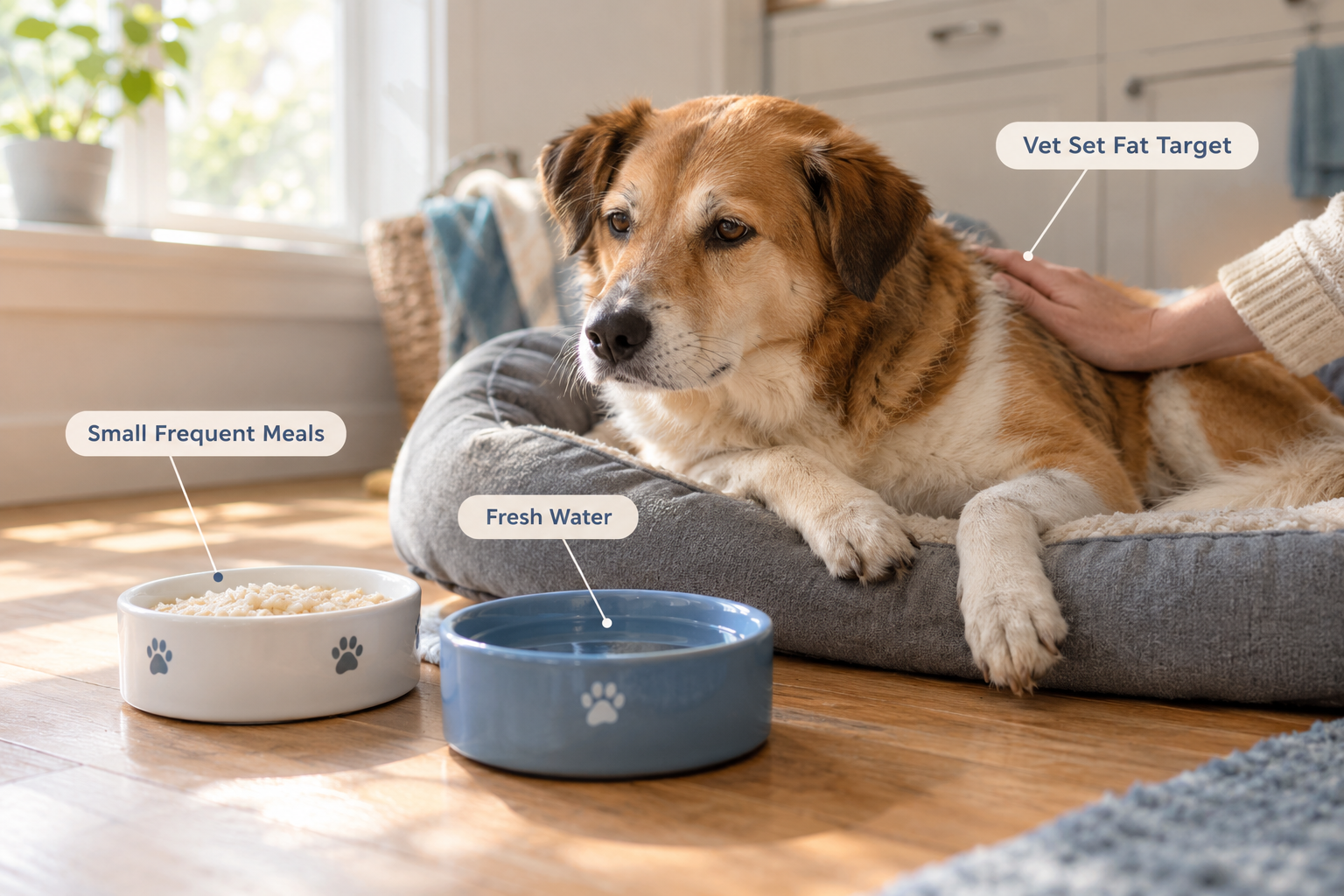
- A fat ceiling in grams per 1,000 kcal. Your vet sets it based on your dog’s history and bloodwork. Write it on a sticky note on the fridge. It makes every future food decision faster.
- Small, frequent meals. Three or four smaller portions rather than one large one is a common approach.
- Treat discipline. Cheese, peanut butter, trimmings and most dental chews can wreck an otherwise careful plan. Plain green beans or a few pieces of the measured daily food work better. Our safe list of fruits and vegetables dogs can eat is a reasonable starting point to check against.
- A slow transition. Any food change goes gradually unless your vet says otherwise. The method is in our guide on switching dog food without upsetting their stomach.
If you want a fresh format for a pancreatitis prone dog
Fresh food is not automatically off the table, but the order of operations changes. Ask your vet first, then look at veterinary support lines from companies like JustFoodForDogs, or at a home cooked plan designed by a board certified veterinary nutritionist. A standard retail fresh recipe chosen from a website quiz is the part to avoid. For a wider view of condition specific feeding, see our overview of vet recommended dog food for specific health problems.
How to comfort a dog with pancreatitis at home
Comfort measures support the treatment plan; they do not replace it. Keep water available unless your vet has told you to withhold it, offer a warm quiet bed away from household traffic, keep walks short and slow, and hand feed the prescribed food in small amounts if appetite is poor. Let the dog choose a position. Many dogs with abdominal pain settle into a hunched or praying stretch, and forcing them flat does not help. Call the clinic rather than guessing if pain seems to be getting worse.
What are the warning signs that need an emergency vet?
Repeated vomiting, abdominal pain, refusal to eat, lethargy and diarrhea are the classic signs, and together they justify a same day veterinary call. Dogs do not reliably show a tidy symptom set, which is why timing matters more than certainty.
Signs to act on quickly:
- Vomiting more than once or twice, especially with no interest in water
- A hunched back, a stretched out bow with the rear end up, or flinching when the belly is touched
- Sudden refusal of a meal the dog normally wants
- Marked lethargy, hiding, or unwillingness to stand
- Diarrhea, sometimes with an unusually foul smell
- Fever, pale gums, rapid breathing or collapse, which call for emergency care now
Signs of worsening in a dog already diagnosed: vomiting returning after it had settled, pain increasing, gums going pale or tacky, breathing effort rising, or any dog who becomes hard to rouse. That is an emergency visit, not a wait and see.
Diagnosis generally combines the physical exam, bloodwork and imaging with a pancreatic lipase test such as the IDEXX Spec cPL test, which measures canine pancreatic lipase immunoreactivity. In clinic quick versions of lipase testing are common too. A single result is interpreted alongside the exam and ultrasound rather than on its own.
How do you know whether a food is making your dog sick?
You rarely know with certainty, which is frustrating but true. What you can do is build a record a vet can actually use:
- Note the exact product and recipe name, the daily amount fed, and the date you started it.
- Log every symptom with a date and time, including stool quality.
- List all treats, chews, human food, supplements and medications.
- Stop the suspected food only after speaking to your vet, so the change does not complicate an active workup.
- Report any suspected food related illness to the manufacturer and to the FDA’s pet food complaint process, which is how patterns get spotted across many households.
Common mistake: switching foods four times in two weeks while the dog is unwell. Each change adds a new variable and makes the gastrointestinal picture harder to read. One change at a time, written down. Our notes on feeding dogs with sensitive stomachs and food allergies cover the elimination approach in more detail.
FAQ
Is the Farmer’s Dog pancreatitis lawsuit proof the food is unsafe?
No. The April 2026 complaint contains allegations about fat disclosure and marketing language. As of October 2026 no court has ruled on the merits, and reporting indicates the case was still in arbitration briefing in late August 2026.
Does The Farmer’s Dog cause pancreatitis?
No published study establishes that it does. Dietary fat is one recognized risk factor for pancreatitis in susceptible dogs, and canine pancreatitis is frequently idiopathic, so individual cases rarely trace cleanly to one food.
How much fat is in Farmer’s Dog food?
The brand publishes crude fat minimums on an as fed basis, which includes water. The complaint alleges that converting to dry matter puts three of four recipes above 25% fat, above 40% of calories from fat, and above 45 grams of fat per 1,000 kcal. Use the brand’s current nutrient page and the calculator above rather than an older figure.
Do vets recommend The Farmer’s Dog?
Some veterinarians are comfortable with fresh cooked diets that meet AAFCO nutrient profiles for healthy adult dogs, and others prefer brands with long running feeding research and in house veterinary nutritionists. For a dog with pancreatitis, most general practitioners reach for a therapeutic low fat diet instead.
What is the best low fat dog food for pancreatitis?
The best one is the therapeutic diet your vet prescribes and your dog will actually eat. Hill’s Prescription Diet i/d Low Fat, Royal Canin Gastrointestinal Low Fat and Purina Pro Plan Veterinary Diets EN Low Fat are the three most widely dispensed options, each with a published fat per 1,000 kcal figure.
Can I feed The Farmer’s Dog to a dog with a history of pancreatitis?
Only with your veterinarian’s agreement, and usually not as a first choice. A dog with a confirmed history generally needs a defined fat ceiling, which standard fresh recipes are not designed around.
Which dog foods can cause pancreatitis?
No single commercial food has been shown to cause pancreatitis across dogs. Higher fat diets, rich table scraps and sudden diet changes are the dietary factors that come up most in clinical discussion, with individual variation deciding which dogs react.
Is fresh food riskier than kibble for a pancreatitis prone dog?
Format matters less than fat per 1,000 kcal and total calories. A high fat kibble and a high fat fresh recipe raise the same question. Convert both to grams of fat per 1,000 kcal, then compare.
Conclusion
The Farmer’s Dog pancreatitis story in 2026 is a disclosure lawsuit, not a verdict. A complaint says the fat was presented in a way that made rich recipes look lean. The company says its recipes meet AAFCO and NRC standards and that its feeding trial biomarkers were normal. A judge has not weighed in, and no study compares pancreatitis rates between this diet and others. Everything else in your feed is sentiment.
Your next step is small and genuinely useful. Open the nutrient page for whatever food is in your fridge right now, find the crude fat percentage and the kcal per kilogram, and run them through the calculator above. Take the grams of fat per 1,000 kcal figure to your vet, along with your dog’s weight and any gastrointestinal history, and ask one question: is this number appropriate for this dog? If your dog has already had pancreatitis, ask for a fat ceiling in writing. That number will outlast every lawsuit update.
If you want help comparing specific recipes, get in touch with Doggy Rank IQ and bring the label.