
The same bag of kibble gets handed to owners by veterinary nutritionists and torn apart in forum threads the same afternoon. One crowd points to feeding trials. The other points to the ingredient panel and the word “by-products.” Both are reading real information. They are just weighing different things.
Quick Answer
Yes, Purina Pro Plan is a good dog food by the standards most veterinary nutritionists use: it is formulated by qualified staff, tested against AAFCO nutrient profiles or feeding trials, and backed by a large in-house research operation. So the better version of the question “is Purina Pro Plan good” is which line suits your dog, because the Sensitive Skin and Stomach range is built for ordinary digestive and coat sensitivity, not for diagnosing a food allergy. That job belongs to a vet-supervised elimination diet. Guidance and product pages here were checked October 2026. No affiliate links appear in this article.
Key Takeaways: Is Purina Pro Plan Good?
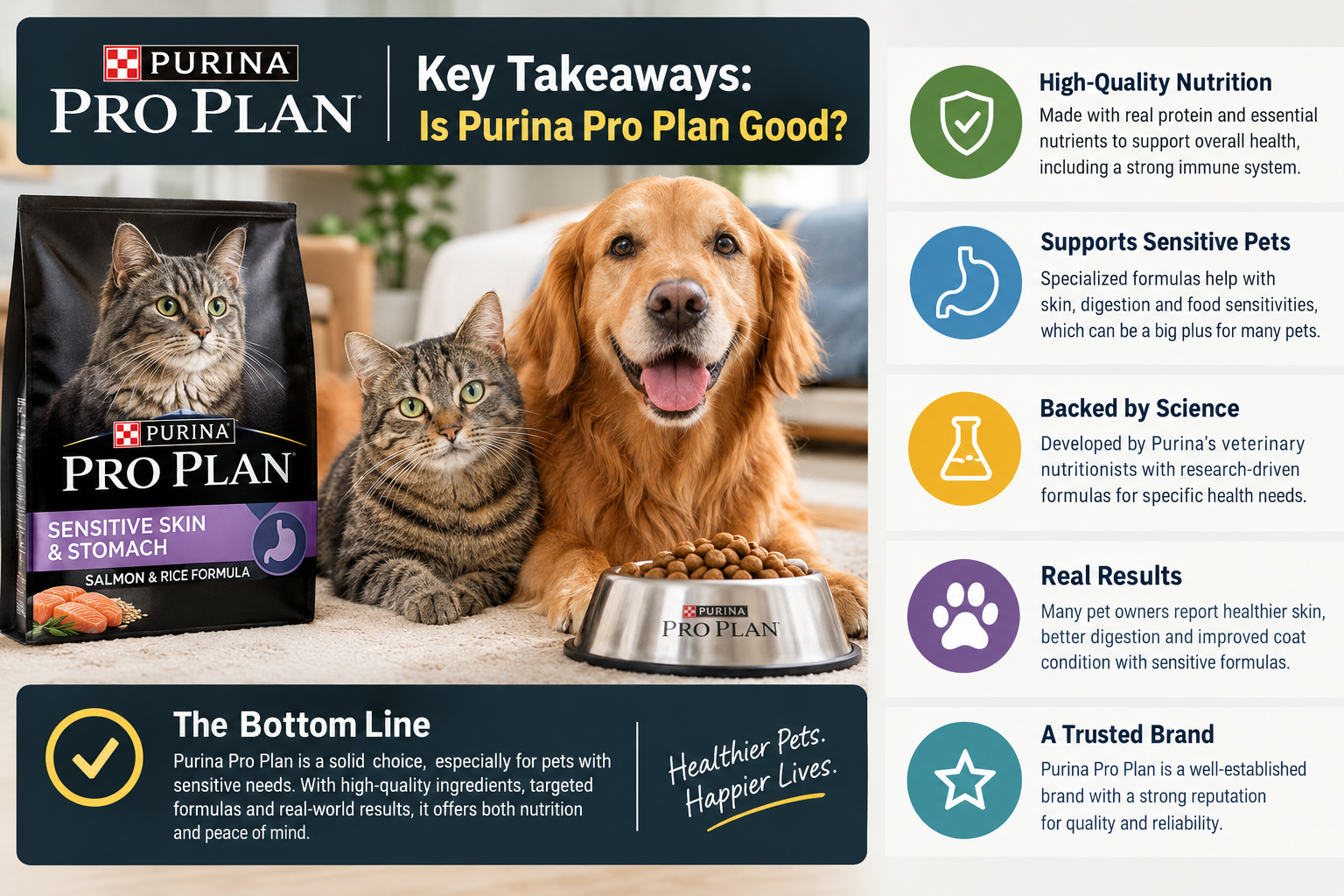
- The quality case is about process, not poetry. The WSAVA Global Nutrition Committee’s guidance on selecting a pet food tells owners to ask who formulates the diet, whether nutritionists are employed, how finished food is tested, and whether research is published. Pro Plan answers those questions on paper. Most boutique brands cannot.
- “Full of fillers” does not hold up. Rice, corn, oat meal and beet pulb-style fibres are digestible energy and fibre sources, and named by-product meal is organ tissue, not floor sweepings.
- Five Sensitive Skin and Stomach formulas cover most sensitive dogs: Salmon and Rice, Lamb and Oat Meal, Large Breed, Small Breed, and Puppy.
- Sensitive stomach formulas are not allergy diets. The Merck Veterinary Manual’s guidance on cutaneous food allergy calls for an exclusive novel or hydrolysed protein trial, which is what Pro Plan Veterinary Diets HA and EN exist for.
- Recall record matters, and it is short. Purina’s product FAQ page stated no current Pro Plan pet food recall when checked October 3, 2026. Verify anything lot-specific through the FDA recalls and withdrawals database.
- Price sits below prescription diets and roughly alongside Hill’s Science Diet and Royal Canin. Exact per-pound cost swings by retailer and bag size, so check current pricing yourself rather than trusting any figure in a blog post.
- Individual variation decides the outcome. A food that fixed your neighbour’s loose stool can do nothing for your dog, and that is not a failure of either dog.
What is Purina Pro Plan, and how does it compare to other premium dog foods?
Purina Pro Plan is Nestlé Purina’s science-led retail range, sold alongside the separate prescription-only Pro Plan Veterinary Diets line. It sits in the same competitive group as Hill’s Science Diet, Royal Canin and Iams: large companies with employed nutritionists, owned manufacturing, and published research.
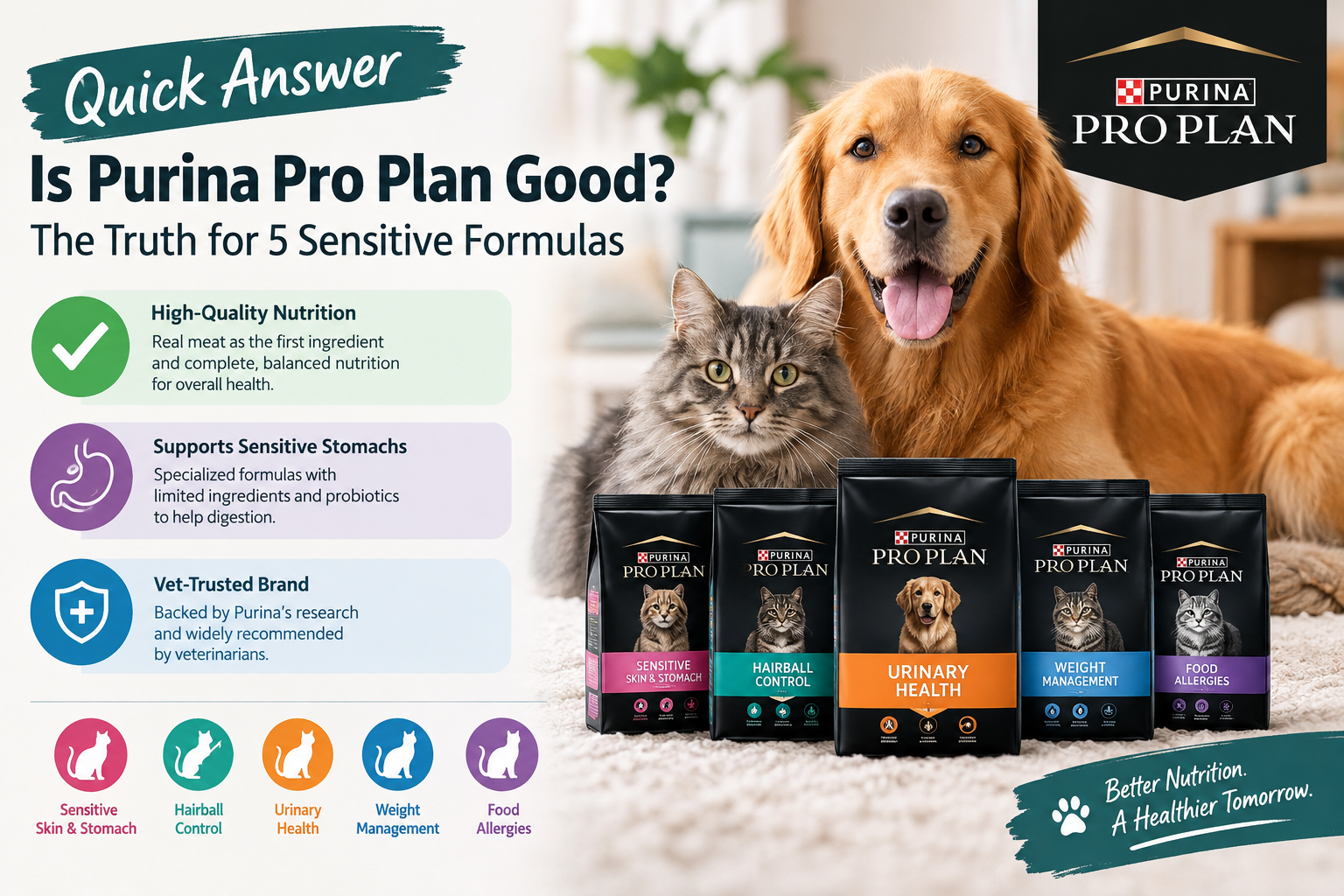
The range is unusually wide. Purina’s Pro Plan dog food hub lists specialised lines for sensitive skin and stomach, weight management, large and small breeds, every life stage, plus the high-fat Sport 30/20 performance foods. In April 2026 Purina also launched a newer digestive line, Pro Plan AdvantEDGE, which uses salmon as the first ingredient and a combined prebiotic, probiotic and postbiotic blend. It is a separate product family from the older Sensitive Skin and Stomach range, which still exists and still fills most shelves.
Where boutique brands compete on ingredient storytelling, Pro Plan competes on formulation infrastructure. That is the honest difference, and it is the one veterinary guidance keeps pointing at.
For a broader look at how the big manufacturers stack up, see our comparison of Purina, Hill’s, Royal Canin and Iams.
Why do vets recommend Purina Pro Plan?
Vets recommend Purina Pro Plan because it satisfies the practical questions in the WSAVA pet food selection guidance, which prioritises qualified formulation, nutrient testing, quality control and research over ingredient marketing. It is a judgement about how the food is made, not about whether the label sounds wholesome.
)
Those questions, in plain terms:
- Who formulates the food? A board-certified veterinary nutritionist or PhD animal nutritionist, or a sales team with a recipe idea?
- Are nutritionists actually employed? Full time, in house, named.
- How is the finished food tested? Nutrient analysis of the final product, not just the ingredient spec sheet.
- What quality control exists? Ingredient screening, batch testing, own factories.
- Has research been published? Peer-reviewed work, not just claims.
Purina states that Pro Plan is supported by nearly 500 scientists, including nutritionists, veterinarians and behaviourists, on its Pro Plan products page. That figure is company-reported and has not been independently audited, so treat it as a description of scale rather than a verified score. Even discounted, it describes a research operation most small brands do not have.
The second piece is the label claim. The FDA explains that a food marked complete and balanced must either meet an AAFCO nutrient profile or pass an AAFCO feeding trial. That is a real, checkable standard. Words like “holistic,” “premium” and “human grade” are not.
Where the facts end: none of this predicts your individual dog’s tolerance. A food can be properly formulated and still give one particular dog soft stool for a fortnight. Vet familiarity also plays a role. Clinics see Pro Plan constantly, so they know how dogs usually respond to it, and that experience nudges recommendations. Useful, but it is clinical experience, not a trial result.
If you want the full checklist before you shop, read what makes a dog food good and the six things that matter.
Is Purina Pro Plan full of fillers?
No. The common “filler” complaints target rice, corn, oat meal, beet pulp fibre and named by-product meals, and each of those does identifiable nutritional work. A filler, properly defined, would be an ingredient with no nutritional contribution. These are not that.
What the critics are actually objecting to, ingredient by ingredient:
- Rice and oat meal. Digestible carbohydrate and fibre. Rice in particular is standard in gastrointestinal diets because it is gentle and absorbs well.
- Corn. Ground corn supplies energy, linoleic acid and protein. It is a common allergen in internet lore and an uncommon one in veterinary dermatology practice.
- Beet pulp. A moderately fermentable fibre associated with firmer stool. Much maligned, rarely understood.
- Poultry by-product meal. Rendered organ tissue such as liver, kidney and lung. Nutrient dense. Aesthetically unappealing to humans, which is most of the objection.
- Animal fat and fish oil. Palatability, skin and coat support, essential fatty acids.
The Dog Food Advisor review of Purina Pro Plan dry foods is a good example of the other scoring system: ingredient-list ratings that penalise grains and by-products on principle. It is a transparent method and it is not the same method a veterinary nutritionist uses. Knowing which lens a review is using explains most of the disagreement you will find online, including the long-running Reddit arguments.
A fair criticism does exist: Pro Plan kibble is not a low-carbohydrate food, and if you specifically want a high meat inclusion, grain-free or fresh-cooked diet, this range will not give you that. Want to understand the actual numbers on a bag? Start with what protein, fat and carbohydrate figures mean in dog food.
Is Purina Pro Plan good for sensitive stomachs and loose stool?
For dogs with mild, non-specific digestive sensitivity, Pro Plan Sensitive Skin and Stomach is a reasonable first commercial food to try, and many owners report firmer stool within one to two weeks of a gradual switch. It is not a treatment for ongoing diarrhoea, and persistent loose stool needs a diagnosis rather than another bag.
The formulas are positioned for everyday sensitivity. Purina describes the adult Sensitive Skin and Stomach salmon and rice food as highly digestible, with oatmeal, rice, fish oil and omega fatty acids for skin and coat support. Purina also offers wet options such as a turkey and oat entrée in gravy for dogs who need a softer texture or more moisture.
What the evidence supports: single-protein, rice- or oat-based, moderate-fat diets with added fibre tend to produce better stool quality in dogs with functional sensitivity. That is standard nutritional management, reflected across general guidance on feeding dogs with sensitive stomachs and in the round-ups of gastrointestinal support foods published for 2026.
Where the facts end: no independent trial shows this specific retail formula outperforming its direct competitors. Owner reviews, including the generally positive ones you will find on retailer pages and in sensitive-stomach food comparisons, are reports, not controlled results.
Decision rule: choose the sensitive formula if your dog is otherwise healthy, eating well, and producing stool that is simply softer than you would like. Book the vet instead if there is weight loss, blood, vomiting, a sudden change, or diarrhoea lasting more than a couple of days. Two days of diarrhoea in a puppy is a phone call, not a shopping decision.
And switch slowly. Our guide to changing dog food without upsetting their stomach covers the seven to ten day overlap that prevents you blaming the new food for a problem the transition caused.
The 5 Sensitive Skin and Stomach formulas compared
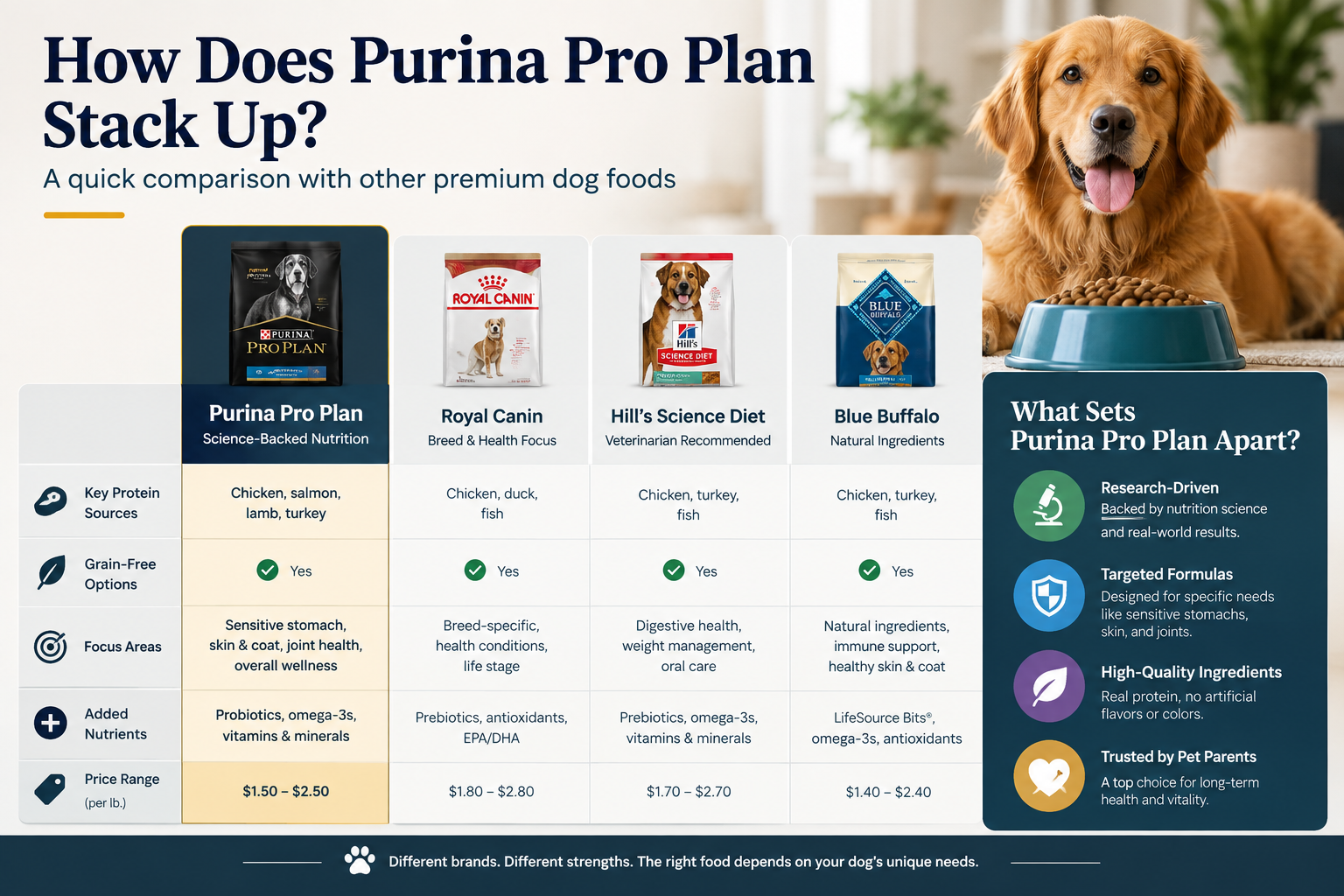
The range splits by protein source and by dog size or life stage. Purina’s Sensitive Skin and Stomach collection page lists salmon, turkey and lamb as the principal protein choices across dry and wet formats, with puppy, adult, senior, small breed and large breed versions.
| Formula | First protein | Life stage / size | Who it suits |
|---|---|---|---|
| Sensitive Skin & Stomach Salmon & Rice | Salmon | Adult, all sizes | The default pick. Dogs avoiding chicken, or needing omega-3 support for a dull or flaky coat. |
| Sensitive Skin & Stomach Lamb & Oat Meal | Lamb | Adult, all sizes | Dogs who refuse fish, or who did poorly on poultry. Oat meal instead of rice as the main grain. |
| Large Breed Sensitive Skin & Stomach | Salmon | Adult, large breed | Dogs over roughly 50 lb. Larger kibble, joint support including glucosamine. |
| Small Breed Sensitive Skin & Stomach | Salmon | Adult, small breed | Dogs under roughly 20 lb. Smaller bites, denser calories per cup. |
| Puppy Sensitive Skin & Stomach | Salmon | Growth | Puppies with soft stool or itchy skin. Includes DHA for brain and vision development. |
Calorie density differs between these formulas, especially small breed versus large breed. Rather than quote a kcal per cup figure we cannot verify for your exact bag, check the calorie content statement printed on the packaging and feed to that number. Purina also runs senior versions of the same idea, such as the senior salmon and rice dry food, for dogs over seven.
Which Purina Pro Plan formula is best for my dog?
Work in this order:
- Size and life stage first. A growing puppy needs a growth formula. A 90 lb dog needs the large breed version. These are not interchangeable.
- Then the protein. If chicken has been the suspect, pick salmon or lamb. If your dog dislikes fish, lamb and oat meal.
- Then the format. Dry, wet, or dry topped with wet for fussy eaters and older dogs.
- Then wait. Give it 10 to 14 days after the transition finishes before you judge the stool.
Does Purina Pro Plan cause allergies in dogs?
No dog food causes allergies. A dog develops sensitivity to specific proteins it has eaten before, and a food containing that protein then triggers signs. Pro Plan is not unusual in this respect, though its heavy use of chicken and poultry by-product meal across the range matters if poultry is your dog’s trigger.
Two things get mixed up constantly:
- Food intolerance produces digestive signs without an immune reaction. Fat content, fibre level or a sudden switch can all be the cause.
- Food allergy is immune mediated and commonly shows up as itchy skin, recurrent ear infections or paw chewing, sometimes alongside gut signs.
The Merck Veterinary Manual is direct about diagnosis: suspected food allergy is investigated with an exclusive novel-protein or hydrolysed-protein diet, roughly two to four weeks for gut signs and eight to twelve weeks for skin signs, and treats, flavoured medications, supplements and chews can invalidate the whole trial. One dental chew from a visiting relative, trial over.
This is the honest limit of the retail range. A bag whose first ingredient is salmon or lamb is not automatically a limited-ingredient diet. It may contain other animal-derived ingredients and carries ordinary production cross-contact risk. That is exactly why prescription options exist: Pro Plan Veterinary Diets HA uses hydrolysed protein, and EN Gastroenteric targets digestive disease, both under veterinary supervision. Royal Canin and Hill’s run comparable prescription lines.
Common mistake: rotating through four retail “sensitive” bags in six weeks, then concluding the dog is allergic to everything. You have not run a trial. You have run a shuffle. For the structured version, see our guide to dog food for sensitive stomachs and food allergies.
Is Purina Pro Plan good for weight management, and what about very active dogs?
Yes on both counts, but with different formulas. Pro Plan runs reduced-calorie and weight management adult formulas with higher protein relative to fat, and separate Sport Performance 30/20 foods with 30% protein and 20% fat for dogs with genuinely high workloads.
The two get confused in both directions. A pet dog who walks 40 minutes a day does not need Sport 30/20, and feeding it is a reliable way to add weight. A working gun dog in season, or a dog doing repeated high-intensity activity, may genuinely need that density.
Decision rules:
- Dog carrying extra weight, normal activity: weight management formula, measured portions, and a vet weight check to set a target.
- Dog at a healthy weight with hard physical work: Sport 30/20, fed to body condition.
- Dog who is overweight and has a sensitive stomach: talk to your vet. Calorie restriction and digestibility pull in different directions, and a prescription metabolic diet may do the job better.
Weighing food rather than scooping it is the single most useful change most households can make. A kitchen scale costs less than one bag of kibble.
How much does Purina Pro Plan cost, and is it worth the price?
Pro Plan sits in the upper-middle tier: more expensive than supermarket brands, broadly comparable to Hill’s Science Diet and Royal Canin retail lines, and well below prescription diets and fresh subscription food. Retail prices move constantly by store, bag size and promotion, so the only figures worth quoting are manufacturer ones.
At the April 2, 2026 launch of the AdvantEDGE line, Purina listed suggested prices of $24.98 for 3.5 lb, $58.98 for 12 lb and $81.98 for 22 lb. Those are manufacturer suggested prices and may not match what you see in October 2026.
How to compare the options properly: calculate cost per day, not price per bag. Take the bag price, divide by the number of cups or grams in the bag, then multiply by your dog’s daily portion. A 30 lb bag that looks expensive often beats a small bag by a wide margin per day, and larger bags suit larger dogs who will finish them before the fat oxidises.
Is it worth the price? For an average healthy dog, you are paying for formulation standards and consistency rather than for exotic ingredients. That is a fair trade if what you want is a reliable food. If your budget is tight, a cheaper food from the same kind of manufacturer beats an expensive boutique bag with no nutritionist behind it. Our guides to cheap dog food that is still good and whether premium dog food is actually worth paying for go further into that trade-off.
Has Purina Pro Plan been recalled?
No current Purina Pro Plan recall was identified in the sources reviewed in October 2026. Purina’s product FAQ, updated October 3, 2026, states there is no current Pro Plan pet food recall. That is a manufacturer statement, so confirm anything lot-specific through the FDA recalls and withdrawals database or your veterinarian.
The most relevant historical event involved Pro Plan Veterinary Diets EL Elemental dry dog food in 2023, voluntarily recalled over potentially elevated vitamin D. The FDA’s record of that recall shows it was completed and terminated, and it concerned a prescription veterinary diet rather than the over-the-counter Sensitive Skin and Stomach products on shop shelves.
How to check for yourself, in two minutes:
- Search the FDA recalls and withdrawals page for the brand name.
- Compare the lot code and best-by date printed on your bag against any listed codes.
- Keep that code photographed on your phone until the bag is finished. If anything is announced later, you will not be squinting at a bin bag.
Every large manufacturer has a recall history. What matters is whether problems are caught, announced quickly, and resolved.
Purina Pro Plan vs Hill’s Science Diet vs Royal Canin vs Blue Buffalo: how do they compare?
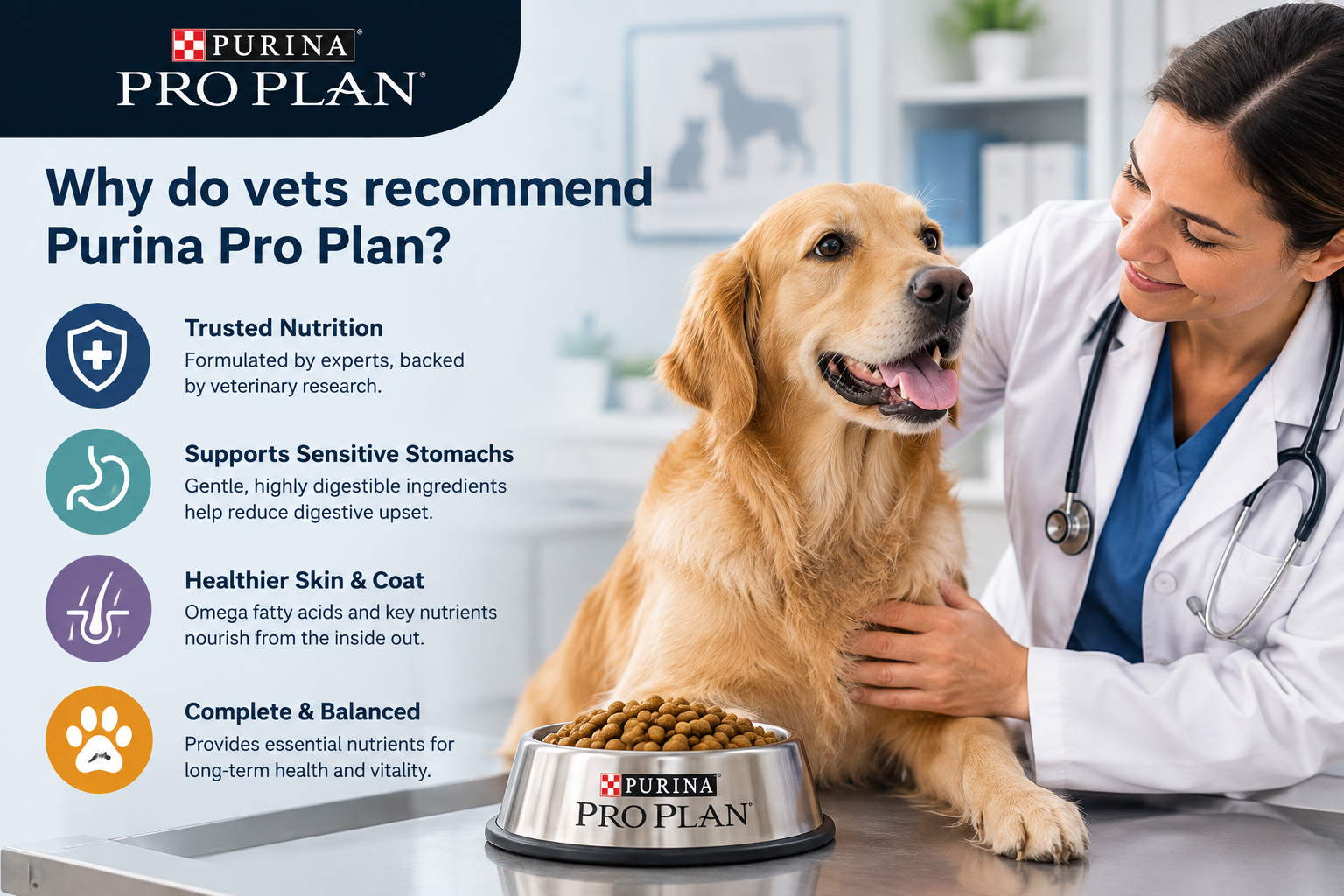
Pro Plan, Hill’s Science Diet and Royal Canin are close competitors on the measures veterinary guidance uses, and the choice between them usually comes down to your dog’s response, your vet’s familiarity and local price. Blue Buffalo competes on ingredient presentation rather than on research volume, which is the real difference between the two groups.
| Brand | Formulation and research | Sensitive or GI options | Typical retail tier | Best fit |
|---|---|---|---|---|
| Purina Pro Plan | Large in-house science staff, own manufacturing, published work | Sensitive Skin and Stomach, AdvantEDGE, plus Veterinary Diets HA and EN | Upper middle | Widest retail choice by size, life stage and protein |
| Hill’s Science Diet | Long-standing nutrition research, veterinary clinic presence | Sensitive Stomach and Skin retail range, plus prescription i/d and z/d | Upper middle to high | Owners who want the most clinic-aligned retail brand |
| Royal Canin | Strong breed-specific and size-specific formulation, prescription expertise | Digestive Care, plus prescription hydrolysed and GI diets | Upper middle to high | Breed-specific feeding and dogs already on a prescription line |
| Iams | Same parent-company research base as Pro Plan, simpler range | Fewer specialised sensitive options | Mid | Budget-aware owners who still want a large-manufacturer food |
| Blue Buffalo | Ingredient-led positioning, less published research | Basics limited-ingredient range | Upper middle | Owners prioritising grain-free or ingredient-list preferences |
Pro Plan vs Science Diet specifically: both meet the same formulation criteria. Science Diet has the deeper clinic presence and a slightly more clinical feel. Pro Plan has the wider retail catalogue and often the better price per pound, plus palatability that fussy dogs frequently accept. If your dog is doing well on either, switching for brand reasons alone gains you nothing except a week of transition stool.
Blue Buffalo vs Pro Plan: if you judge food by the ingredient list, Blue Buffalo reads better. If you judge by the WSAVA questions, Pro Plan answers more of them. Both positions are defensible, and your vet will likely prefer the second.
For the longer side-by-side, we keep a dedicated Purina Pro Plan explainer covering formulas, life stages and cost and a walkthrough of which Pro Plan line fits your dog.
FAQ
Is Purina Pro Plan good for everyday feeding?
Yes. For most healthy adult dogs, Pro Plan is a suitable complete and balanced daily food, provided you pick the right life stage and size formula and feed the portion printed on the bag adjusted for your dog’s body condition.
Do vets recommend Purina Pro Plan?
Many do, because it meets the formulation, testing and research criteria set out in WSAVA’s pet food selection guidance and because clinics see consistent results with it. That is a judgement on manufacturing standards, not a promise about your individual dog.
Is Purina Pro Plan full of fillers?
No. Rice, corn, oat meal and beet pulp supply energy and fibre, and named by-product meal is organ tissue. Ingredient-list review sites score these ingredients harshly, which explains much of the online criticism.
Which Sensitive Skin and Stomach protein should I choose?
Salmon and rice is the usual starting point and the easiest to find. Choose lamb and oat meal if your dog dislikes fish or reacted poorly to poultry previously. Turkey appears in several wet formulas.
Has Purina Pro Plan been recalled in 2026?
No current Pro Plan recall was found in the October 2026 sources reviewed here. The relevant past event was the 2023 Pro Plan Veterinary Diets EL Elemental recall over potential excess vitamin D, which the FDA lists as completed and terminated.
Can Pro Plan Sensitive Skin and Stomach replace a prescription allergy diet?
No. A suspected food allergy needs an exclusive novel-protein or hydrolysed-protein trial under veterinary supervision, such as Pro Plan Veterinary Diets HA. A retail salmon formula is not a limited-ingredient diagnostic diet.
How long before I see a change in my dog’s stool?
Finish a seven to ten day gradual transition, then allow another 10 to 14 days. If stool is still loose after that, or if there is blood, vomiting or weight loss at any point, contact your vet instead of changing food again.
Is Purina Pro Plan good value compared with fresh food subscriptions?
On cost per day it is considerably cheaper than most fresh delivery services, and it carries a stronger formulation and testing record than many of them. Fresh food wins on palatability and moisture content for some dogs.
Conclusion: the verdict and your next step
So, is Purina Pro Plan good? By the standards veterinary nutritionists actually apply, yes. It is formulated by qualified staff, tested against recognised standards, made in company-owned facilities, and backed by more research infrastructure than almost any boutique competitor. The “fillers” complaint describes a different scoring system, not a safety problem. The real limitation is specific and worth repeating: the Sensitive Skin and Stomach range manages everyday sensitivity, and it does not diagnose allergies.
Your next step: take a photograph of your current bag’s ingredient panel and calorie statement, then pick the one Sensitive Skin and Stomach formula that matches your dog’s size and life stage. Buy the smallest bag available. Transition over seven to ten days, write the date on the bag, and give it a fortnight before you judge anything. If the itching or loose stool is still there, that photograph and those dates are exactly what your vet needs to start a proper food trial.
One bag. One transition. One decision at a time.
#dogfood #purinaproplan #sensitivestomach