
Quick Answer: Is a Pomeranian Right for You?
A pomeranian suits you if you want a bold, portable, deeply attached companion and you are genuinely willing to manage barking and coat care. This is a 3 to 7 pound toy spitz with a sled dog’s attitude and a double coat that needs brushing two or three times a week. Poms do well in apartments, do badly in homes that want silence, and need early socialization to stay friendly with strangers and other dogs. Budget for dental care and toy breed orthopedic screening, because the mouth and the kneecaps are where the money usually goes.
Key Takeaways: Pomeranian
- Size and weight: the AKC standard calls for 3 to 7 pounds, with 4 to 6 pounds preferred in the show ring. Males and females are close in size, unlike most breeds.
- Lifespan: commonly 12 to 16 years, one of the longer-lived toy breeds.
- Popularity: the pomeranian moved from No. 22 to No. 19 in the AKC’s 2025 breed ranking.
- Health screening: the three recommended evaluations for breeding dogs are patella, cardiac, and an ophthalmologist exam. Thyroid, hips, and Legg-Calve-Perthes are optional extras.
- Coat: never shave a pomeranian for convenience. The double coat can regrow patchy or not at all.
- Puppy uglies: the awkward coat stage usually starts around 4 to 6 months, and a full adult coat can take up to 2 years.
- Barking: alerting and arousal, not defiance. Reward-based threshold work beats shouting, which just adds noise to noise.
Where Does the Pomeranian Come From?
The pomeranian is a shrunken sled dog. Its ancestors were large German Spitz working dogs from the Arctic lines that hauled loads, guarded property, and herded livestock in cold climates, which explains the stand-off double coat, the pricked ears, and the tail that curls over the back like it is showing off.
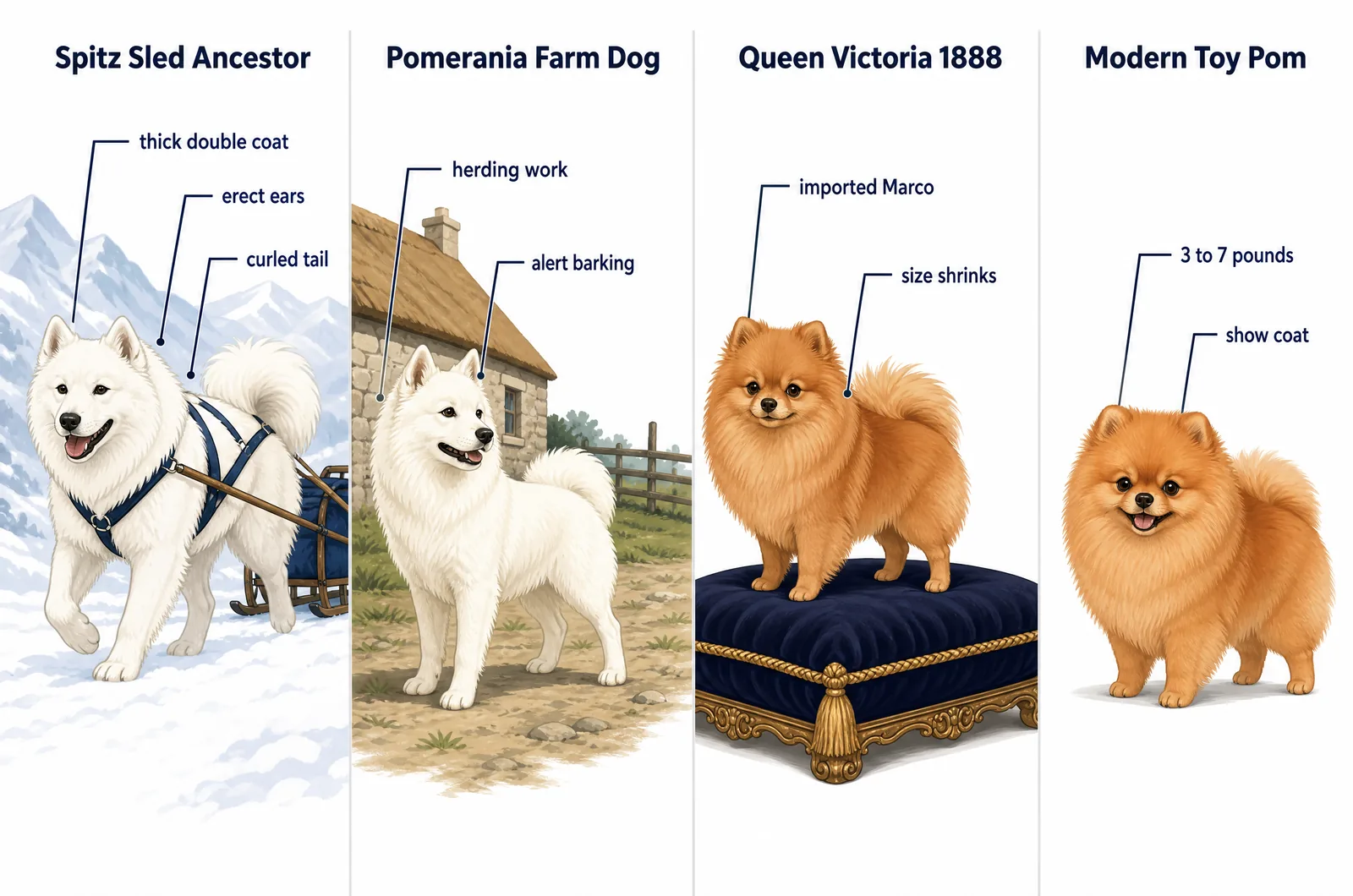
The breed takes its name from Pomerania, the region along the Baltic coast of what is now northern Poland and Germany. Dogs there in the 1700s and early 1800s weighed roughly 20 to 30 pounds. White was common. They were farm dogs with opinions.
Then came the royal part, which genuinely changed the breed. Queen Victoria encountered small Pomeranians in Italy in 1888 and brought several back to England, including a red sable dog named Marco who weighed about 12 pounds. Marco won in the show ring, the public noticed, and British breeders began selecting hard for smaller dogs in richer colors. Within roughly two decades the average weight dropped by about half. By the time the American Kennel Club recognized the breed in 1900, the modern toy proportions were already taking shape.
That history matters for ownership. You are living with a northern working dog compressed into a five-pound frame. The alert barking, the independence, the willingness to argue with a Labrador three hundred percent its size, all of that came along for the ride (honestdog.de).
What Makes the Pomeranian So Special (and So Cute)?
Pomeranian owners almost never describe the breed as “a nice little dog.” They describe a personality that happens to be portable. The loyalty runs unusually deep, and the dog tends to attach to one or two people with real intensity.
The cuteness is structural, and it is not an accident of fashion. A few things stack up:
- Neoteny. Large round eyes, a short muzzle, and a domed skull trigger the same caregiving response in humans that infant faces do. Poms hit several of those markers at once.
- The ruff. The outer guard coat stands away from the body over a dense undercoat, so the dog reads as a sphere with a face. Even a lean Pom looks round.
- Expression. The breed standard asks for an alert, fox-like expression, which is why a Pom can look mildly scandalized by a plastic bag.
- Movement. A brisk, bouncy trot that makes a 6 inch dog look like it is late for something important.
What owners mention most often is the mismatch between size and nerve. A Pomeranian will greet a delivery driver with the volume of a dog ten times heavier, then fall asleep against your neck twenty minutes later. If you want a dog that enjoys being carried and still has firm views about the hallway, this is the one. For a broader look at how breeds sort by personality fit, our guide to choosing the best dog breed for your situation covers the trade-offs.
Pomeranian Size, Weight and Lifespan
A pomeranian stands 6 to 7 inches at the shoulder and weighs 3 to 7 pounds, with 4 to 6 pounds preferred in the show ring. Sex differences are small compared with most breeds. Lifespan usually runs 12 to 16 years.
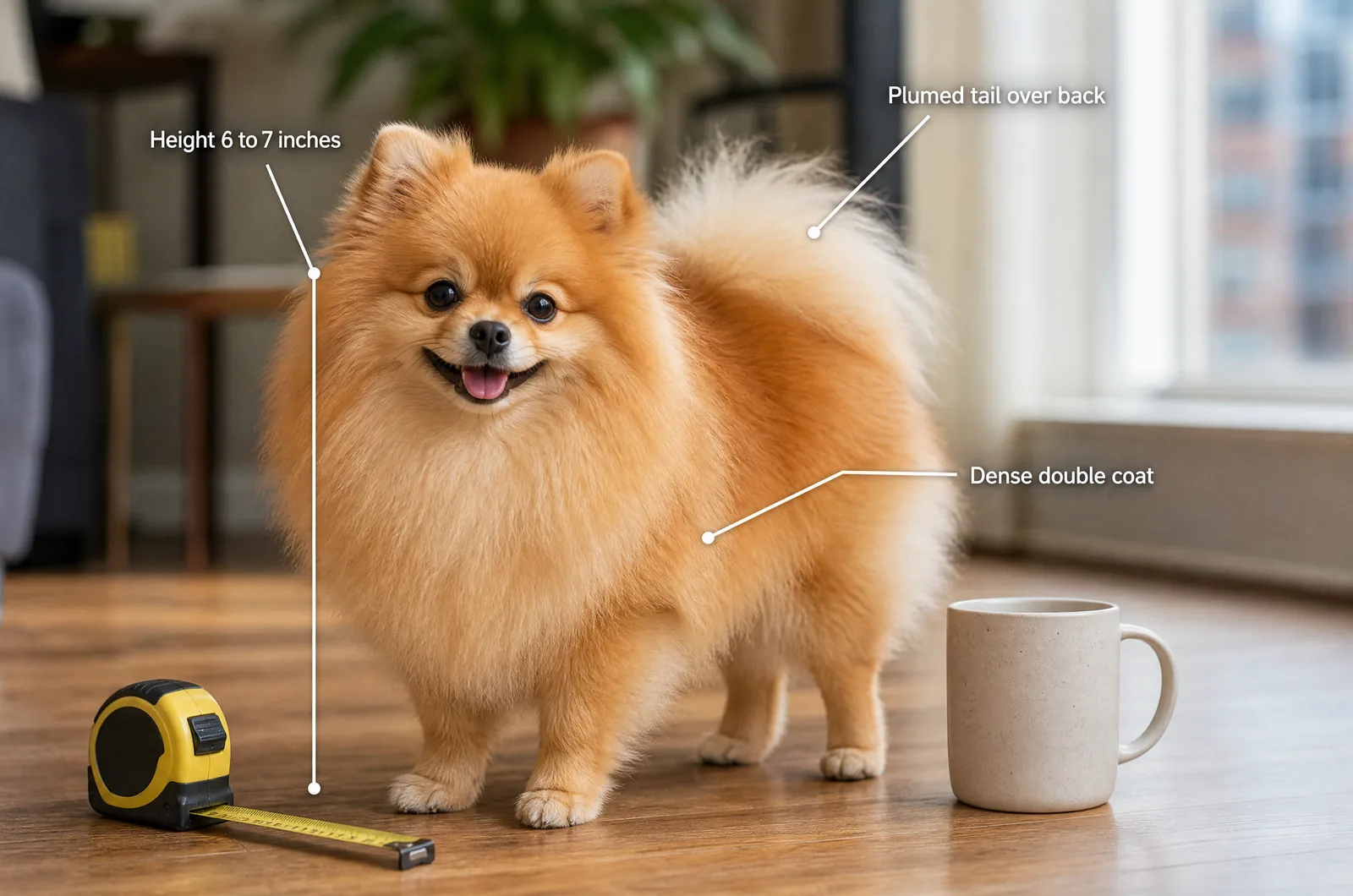
| Measure | Male Pomeranian | Female Pomeranian | Note |
|---|---|---|---|
| Height | 6 to 7 inches | 6 to 7 inches | Essentially identical |
| Weight | 3 to 7 lb | 3 to 7 lb | Show preference 4 to 6 lb |
| Lifespan | 12 to 16 years | 12 to 16 years | Dental care affects the top end |
| Adult size reached | ~10 to 12 months | ~10 to 12 months | Coat matures much later |
A pomeranian puppy reaches adult body size around 10 to 12 months, but adult coat and adult judgment arrive later. Expect full coat anywhere from 12 months to 2 years, and expect the brain to settle somewhere around 18 months to 2 years.
A caution on the “teacup” label. It is a marketing term, not a size class recognized by any registry. Dogs deliberately bred under 3 pounds carry higher risk of hypoglycemia, fragile bones, dental crowding, and birth complications. If a seller is charging a premium for extreme smallness, that premium is buying you veterinary bills (qualzucht-datenbank.eu). If you are still sorting out where dogs fall on the size scale generally, our dog size guide lays out the categories.
What Is the Pomeranian Temperament Like?
The pomeranian temperament is extroverted, inquisitive, confident, and vocal. The breed standard uses words like buoyant, cocky, and commanding, which is a polite way of saying this dog thinks it runs the building.
In practice, veterinary breed profiles describe Pomeranians as fun-loving, energetic, bold, quick to learn, and sometimes stubborn. Some are reserved or aloof with strangers. Some are genuinely rude to unfamiliar dogs, particularly large ones, which is a bad combination when you weigh five pounds (vcahospitals.com).
A few traits worth planning around:
- Alert barking is baseline. Poms were bred from watchdog stock. They announce things. All things.
- Velcro attachment. Many Poms shadow one person room to room and dislike being shut away.
- Independence streak. They learn fast and then negotiate. Training sticks best with short, upbeat, reward-based sessions.
- Wide individual variation. Genetics, early handling, and socialization between 8 and 16 weeks matter more than the breed label. Two Poms from the same litter can turn out very differently.
The single highest-value investment in the first six months is calm, repeated exposure to strangers, surfaces, noises, children, and other dogs at a distance the puppy can handle. A pomeranian who missed that window often becomes a barky, suspicious adult, and that is far harder to unwind than it is to prevent. Learning to read the early warning signs helps, and our guide to dog body language covers what stress looks like before the barking starts.
Are Pomeranians Good With Kids and Other Pets?
Pomeranians can be excellent family dogs with school-age children who understand how to handle a small animal, and they are a poor match for homes with toddlers. The problem is physics, not temperament.
A 5 pound dog can be seriously injured by a fall from a sofa, a dropped toy, a door, or a foot. Many Pomeranian bites happen because the dog is frightened, cornered, or being squeezed, and a small dog with no exit learns that teeth work. That is a management failure, not a character flaw.
Practical rules that work:
- Children under about 7 interact with the Pom on the floor, seated, with an adult present. No carrying.
- Give the dog a crate, pen, or raised bed that children are never allowed to reach into.
- Teach the “four paws on the ground” greeting instead of grabbing.
- Watch for lip licking, whale eye, turning away, and freezing. Those come before the growl, and the growl comes before the bite. Never punish a growl. You are deleting the warning, not the feeling.
With other pets, Poms often live happily with cats and with other small dogs. The risk is off-leash play with large dogs. A friendly Labrador paw landing wrong can break a toy breed’s leg, and a Pom who picks fights with bigger dogs is writing checks its body cannot cover. Use small-dog-only areas. Families comparing options may also want our list of child-friendly pet choices.
Who Is the Pomeranian Made For, and Who Should Skip It?
Choose a pomeranian if you want a small, devoted, entertaining companion and you have both the patience for barking work and the budget for toy breed dentistry.
Good fit:
- Apartment and condo residents who can manage noise with training and window management. Poms rank well among apartment-friendly dog breeds.
- Seniors who want a lap-sized dog with modest exercise needs and plenty of personality.
- First-time owners who enjoy training and will actually do the daily five minutes.
- Households where someone is home much of the day, or where the dog gets genuine company.
- People who want a dog small enough to travel with and sturdy enough in spirit to enjoy it.
Skip the breed if:
- You live somewhere with strict noise complaints and no appetite for training work.
- You have children under 5 or frequent toddler visitors.
- You want a low-grooming dog. A Pom is not that.
- You need a running partner or a hiking dog. Poms overheat and tire fast.
- You work long days away and the dog would be alone 9 hours routinely.
Decision rule: if the barking is a dealbreaker rather than a project, pick a quieter small breed. Bichon Frise, Havanese, Cavalier King Charles Spaniel, and Coton de Tulear are all friendlier to shared walls. If you specifically want a tiny alert dog and are weighing a pomeranian vs a Chihuahua, the Pom generally needs more grooming and is usually warmer with strangers, while the Chihuahua needs far less coat work, tolerates heat better, and often bonds more exclusively to one person.
How Much Exercise Does a Pomeranian Need?
Most adult Pomeranians do well on 30 to 45 minutes of activity a day, split into two or three short sessions, plus daily mental work. They are energetic for their size, but they are not endurance dogs.
A workable daily pattern:
- Morning walk, 15 to 20 minutes, on a body harness rather than a collar. Leash pressure on a toy breed throat is a real risk when tracheal collapse is on the table.
- Indoor play, 10 minutes. Fetch down a hallway, flirt pole, tug with a soft toy.
- Evening sniff walk, 15 minutes. Let the nose lead. Sniffing tires a dog more than pace does.
- Enrichment, 10 minutes. Snuffle mat, scatter feeding, a frozen stuffed toy, or three minutes of trick training.
Poms genuinely enjoy agility, rally, trick titles, and therapy work. The mental side is not optional. A bored Pomeranian barks, and that is usually the actual cause behind “he barks at nothing.”
Edge cases: puppies under 4 months should keep walks short and skip stairs and jumps off furniture, because growing toy breed joints and kneecaps do not need the impact. In heat above roughly 80°F, cut walks short and go early or late. Labored breathing, blue or pale gums, or collapse is an emergency. Call a vet immediately, do not wait it out.
Pomeranian Grooming and Shedding
Pomeranians shed year-round with heavier seasonal blowouts, and they need brushing two to three times a week, more during a coat blow. Never shave the coat for convenience.
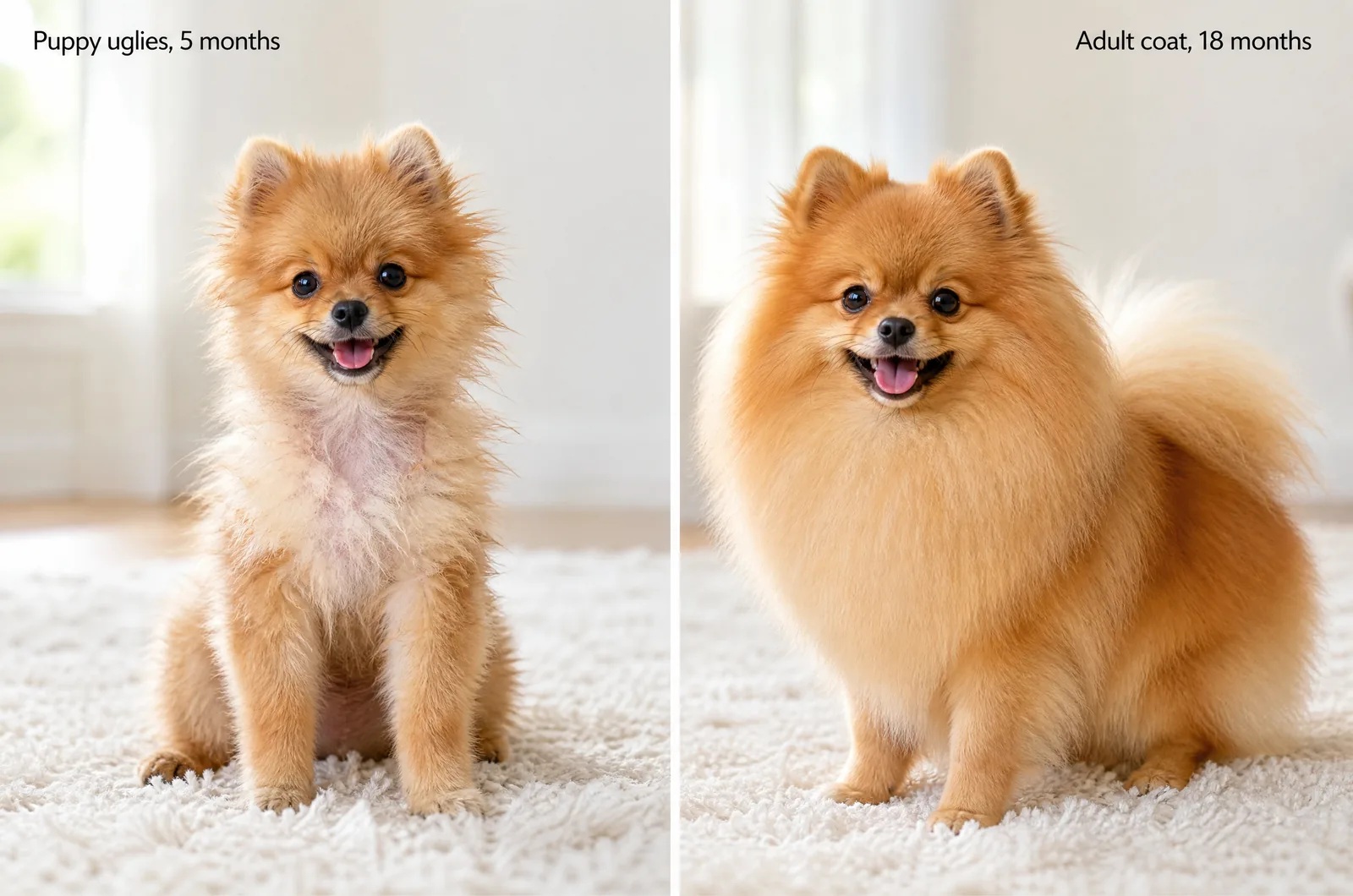
The coat is double: a soft dense undercoat and a long, harsh, stand-off outer coat. Shaving removes the guard hairs that insulate against both cold and heat, and current coat-care guidance warns that the coat may regrow unevenly or not at all, a pattern often called post-clipping alopecia. Light tidying of feet, sanitary areas, and ear edges is fine. If clipping is medically necessary, do it with veterinary input (qualzucht-datenbank.eu).
A realistic routine:
- Brushing: line brush with a pin brush, then a slicker on the undercoat. Work in sections down to the skin. Mats form behind the ears, in the armpits, and around the back legs.
- Bathing: every 3 to 6 weeks with a dog shampoo. Dry fully with a forced-air or cool dryer. A damp undercoat causes hot spots.
- Nails: every 3 to 4 weeks. Long nails change the foot angle and stress small joints.
- Teeth: this is the big one. Brush daily or near daily. Toy breeds crowd 42 teeth into a tiny jaw and periodontal disease is common by age 3. Our guide on whether you need to brush your dog’s teeth covers technique.
- Ears and eyes: check weekly, wipe tear staining with plain water.
Common mistake: brushing only the surface. The topcoat looks fine while the undercoat felts into a solid mat underneath, and by the time you find it, clipping is the only humane option. Brush to the skin or do not bother. For general technique, see our beginner’s dog grooming guide.
Common Pomeranian Health Problems
The most common pomeranian health problems are dental disease, luxating patella, tracheal collapse, Alopecia X, and heart disease. Responsible breeders screen for patella, cardiac, and eye conditions before breeding (honestdog.de).
Luxating patella. The kneecap slips out of its groove. Signs include a skipping step, holding a back leg up for a few strides, then carrying on normally. Mild grades are managed with weight control and muscle conditioning. Higher grades may need surgery.
Tracheal collapse. The windpipe cartilage weakens and flattens. The signature sign is a dry, honking cough, often triggered by excitement, pulling on a collar, or drinking fast. Use a body harness for every walk. Keep the dog lean. Smoke and heavy fragrance make it worse. Blue gums or breathing distress is an emergency, call a vet.
Alopecia X. Symmetrical hair loss over the trunk, thighs, and tail with darkened skin, usually with no itching. There is no established genetic test for it, and management varies (honestdog.de). Rule out thyroid disease and Cushing’s first.
Dental disease. Retained baby teeth, crowding, and early tartar. Expect professional cleanings under anesthesia on a schedule your vet sets.
Heart disease. Degenerative mitral valve disease is common in older toy dogs. A new murmur or a cough at rest deserves an exam.
Other. Hypoglycemia in very young or very small puppies, collapsing trachea’s cousin reverse sneezing (usually harmless), Legg-Calve-Perthes, and Chiari-like malformation, a skull and spinal cord issue reported in brachycephalic-skulled toy breeds. Neurological signs such as persistent scratching at the neck without contact, yelping when picked up, or weakness need a vet, not a forum.
Screening before you buy matters more than any supplement after. Ask the breeder for the patella, cardiac, and eye results on both parents, in writing.
What Do Pomeranians Love to Eat? Favorite Foods and Feeding
Most adult Pomeranians eat roughly 1/4 to 1/2 cup of small-kibble food per day, split into two meals, with the exact amount set by body condition rather than the bag chart. Puppies under 4 months need three or four small meals to avoid blood sugar crashes.
Pick a food that meets AAFCO standards for the right life stage, in a small-breed kibble size the dog can actually chew. Our walkthrough on reading a dog food label and what AAFCO means is the fastest way to compare brands honestly.
Treats Poms tend to love, in tiny amounts:
- Freeze-dried single-ingredient meat, broken into pea-sized pieces
- Plain cooked chicken or turkey, no skin, no seasoning
- Blueberries, green beans, carrot sticks, cucumber
- Small pieces of plain cooked sweet potato
- A dab of plain unsweetened pumpkin
Treats should stay under about 10% of daily calories, which on a 5 pound dog is startlingly little. One biscuit can be a quarter of the day’s food. Break everything smaller than feels reasonable.
Foods to avoid: chocolate, grapes and raisins, onions and garlic, macadamia nuts, xylitol (also labeled birch sugar, in peanut butter and gum), alcohol, cooked bones, and anything heavily salted. Xylitol is a veterinary emergency even in small amounts.
A weight note that owners underestimate: one extra pound on a Pomeranian is roughly 20% of body weight. That changes knee load and breathing effort directly. You should feel the ribs with light pressure and see a waist from above. If you are switching foods, do it over 7 to 10 days using our food transition guide.
How to Train a Pomeranian
Pomeranians learn quickly with short, reward-based sessions and lose interest fast with repetition or correction. Three to five minutes, two or three times a day, beats one long session every time.
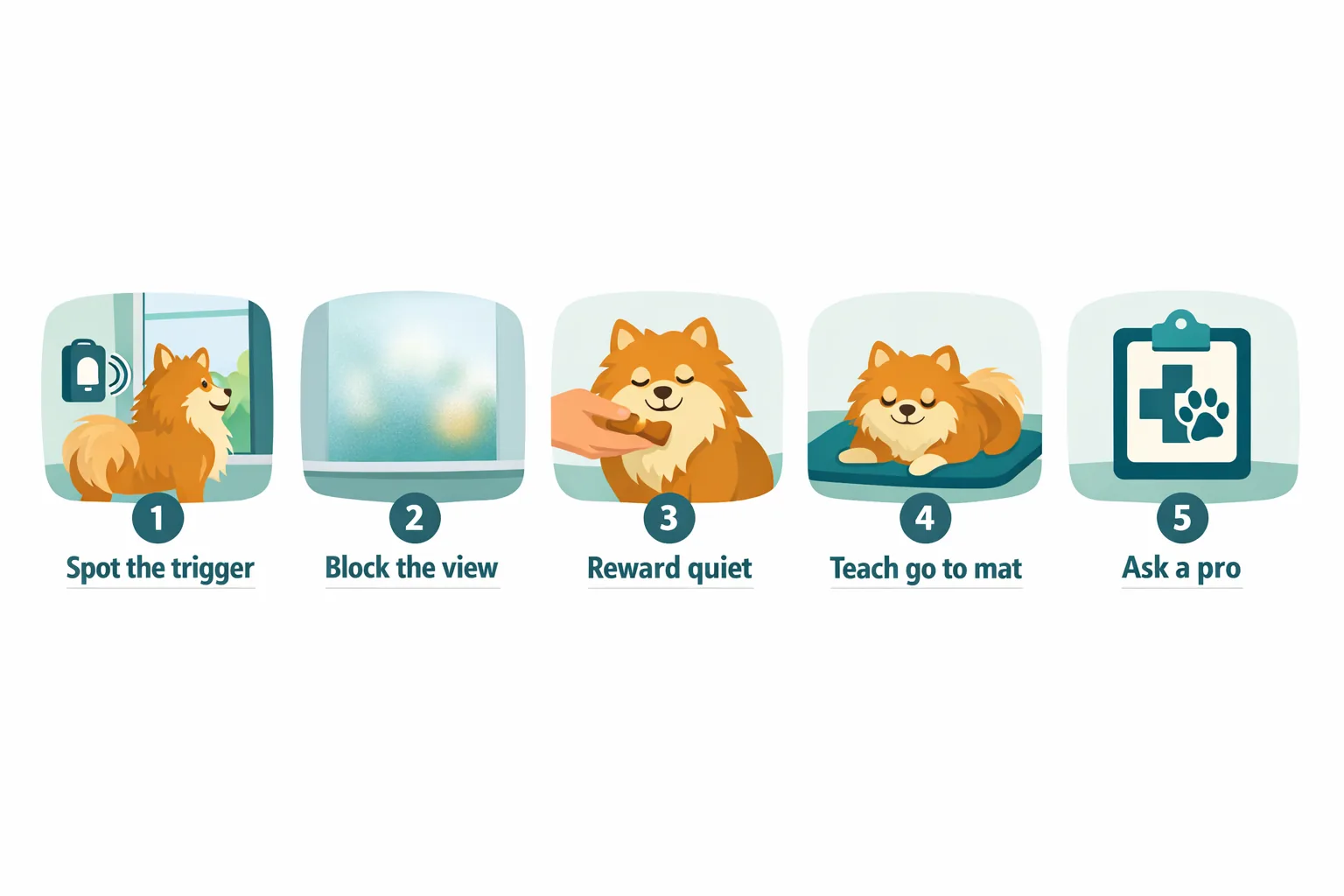
The barking plan, which is the request we see most. Barking is alerting, arousal, fear, attention-seeking, or frustration, not disobedience. Yelling over it adds excitement without teaching an alternative.
- Name the trigger. Doorbell, hallway footsteps, window traffic, being left alone, or boredom. Write down when it happens for three days.
- Reduce the exposure. Frosted window film, moving the dog bed away from the front door, white noise, closed blinds during peak hallway hours. This is not cheating. It lowers the daily rehearsal count.
- Reward quiet before the bark. Catch the half second of silence after the first sound and mark it. Waiting until the dog has barked 20 times teaches the chain.
- Teach a replacement. “Go to mat” or “come to me” gives the dog a job when the trigger fires. Build it with no trigger present, then add the trigger at low volume.
- Work below threshold. If the dog cannot take a treat, you are too close or too loud. Back up.
- Get help when barking is sudden, escalating, fear-linked, or paired with physical signs. That can be pain, not behavior.
Potty training. Small bladders, small accidents, easy to miss. Take the puppy out every 45 to 60 minutes while awake, immediately after sleep, play, and food. Reward outside within two seconds of finishing, not after coming back in. Clean indoor accidents with an enzymatic cleaner, because standard cleaners leave scent markers. Cold or rainy weather causes regression in Poms more than most breeds, so consider a covered potty spot or a sheltered patch.
Skip punishment entirely. A frightened toy dog shuts down or snaps. For the basics, see our 5 essential commands every puppy should learn.
Try It: Pomeranian Puppy Uglies Timeline
Many pomeranian puppies go through an awkward stage where the soft puppy fluff sheds out before the adult coat arrives, leaving a scruffy, patchy, slightly embarrassed-looking dog. Enter your Pom’s age and current coat condition to see where you are in the transition and what actually helps the adult coat come in.
Doggy Rank IQ Tool
Pomeranian Puppy Uglies Timeline

Many Pom puppies go through an awkward coat stage as the puppy fluff sheds out. Enter your Pom's age and coat to see where you are and how to help the adult coat grow in.
How Much Does a Pomeranian Cost?
A pomeranian puppy from a health-testing breeder in the US typically runs $1,500 to $3,500, with show-quality or rare-color dogs going higher. Rescue adoption usually falls between $200 and $600.
Rough budget, US figures, estimates based on common veterinary and retail pricing rather than a single published survey:
| Cost area | First year estimate | Yearly after |
|---|---|---|
| Purchase or adoption | $200 to $3,500 | n/a |
| Vet (vaccines, spay/neuter, exams) | $500 to $1,200 | $200 to $450 |
| Food and treats | $200 to $400 | $200 to $400 |
| Grooming (professional, every 6 to 8 weeks) | $400 to $800 | $400 to $800 |
| Supplies (crate, harness, pen, brushes, beds) | $250 to $500 | $75 to $150 |
| Training class or private session | $150 to $400 | optional |
| Dental cleaning under anesthesia | sometimes year 2 | $400 to $1,200 when needed |
Realistic first-year total excluding purchase price: roughly $1,500 to $3,200. Steady years after: roughly $900 to $1,800, plus dental cleanings.
Watch for the cheap puppy that is not cheap. A $600 Pomeranian with no patella, cardiac, or eye screening on the parents can turn into a $4,000 knee surgery. Pet insurance for a toy breed typically costs $25 to $55 a month and is most useful if bought before any condition appears.
Pomeranian Puppy Tips for the First 90 Days
The first 90 days decide how much barking, reactivity, and handling trouble you live with for the next 14 years. Prioritize socialization and body handling over obedience commands.
Weeks 1 to 2:
- Set up a pen or crate as a safe zone nobody disturbs. Our notes on a puppy crying in the crate at night cover the first rough evenings.
- Feed 3 to 4 small meals. Watch for wobbliness or lethargy, which can mean low blood sugar in a very small puppy. That is a same-day vet call.
- Potty breaks every 45 to 60 minutes while awake.
- Block stairs and sofa jumps. Add ramps or steps.
Weeks 3 to 6:
- Socialization, done properly: one new calm experience a day at a distance the puppy stays relaxed. Umbrellas, bicycles, men in hats, wheelchairs, vacuum at low volume, children walking past.
- Handling practice daily. Touch paws, ears, mouth, tail, 10 seconds, treat. This is what makes nail trims and toothbrushing possible later.
- Introduce the body harness indoors before you ever walk on it.
Weeks 7 to 12:
- Start short alone-time reps so separation does not become a barking problem. Thirty seconds, then two minutes, then ten.
- Begin brushing to the skin, two sessions a week, even though the puppy coat does not need it yet. You are training tolerance, not managing mats.
- Enroll in a well-run puppy class. Confirm the trainer separates small dogs during play.
- Track teething. Retained baby teeth are common in toy breeds, so flag any double row of teeth at the 6 month exam. Our puppy teething timeline shows what normal looks like.
Biggest mistakes people make raising a pomeranian puppy: carrying the dog everywhere so it never learns to walk through the world, laughing at the barking when the dog is 8 weeks old, skipping toothbrushing, and letting the puppy jump off furniture.
What Pomeranian Owners Say
Owner reports line up closely with the breed’s known pressure points. Three real posts, quoted as written.
“He barks constantly at everything and everyone”
Posted by an owner on r/Pomeranians. The word doing the work here is “constantly.” That usually means the dog is rehearsing the behavior dozens of times a day, which makes it stronger every day. The fix starts with environment, not obedience. Block the window view with frosted film, move the bed away from the front door, run white noise during hallway traffic hours. Then add the reward-for-quiet and go-to-mat work. Expect weeks, not days. If the barking started suddenly in an adult dog, book a vet exam first, because pain and hearing loss both show up as new noise.
“She knows she is supposed to potty outside”
Posted by an owner on r/pomeranian. The honest reading is that she probably does not know it yet, at least not reliably in every room of the house. Toy breeds often generalize poorly, so “outside” can mean “the back step” and nowhere else. Go back to a strict schedule, supervise or confine with nothing in between, reward within two seconds outside, and clean indoor spots with an enzymatic cleaner. Also rule out a urinary tract infection, which is common and easy to miss in small females.
“CM is thought to affect more than 50% of Pomeranians”
Posted by an owner on r/Pomeranians regarding Chiari-like malformation. Treat the percentage as an owner-community figure rather than a verified prevalence rate, because imaging studies in Pomeranians are limited and many affected dogs never show signs. What is worth acting on is the symptom list: persistent scratching at the neck or shoulder without making contact, yelping when picked up or when the head moves, sensitivity around the head, or hind limb weakness. Those warrant a veterinary neurology referral, not a forum thread.
Pomeranian FAQ
How long do Pomeranians live? Most Pomeranians live 12 to 16 years. Dental care, keeping the dog lean, and screening for heart and knee problems have the biggest effect on the top end of that range.
Do Pomeranians shed a lot? Yes. Pomeranians shed year-round with two heavier seasonal blowouts. Brushing to the skin two to three times a week controls it. Shaving does not reduce shedding and can damage the coat permanently.
When does a Pomeranian puppy become an adult? Body size is usually complete by 10 to 12 months. The adult coat can take up to 2 years, and settled adult behavior typically appears around 18 months to 2 years.
Are Pomeranians good apartment dogs? Yes on size and exercise needs, with a caveat on noise. They need active barking management, window control, and daily enrichment to live well with shared walls.
How do I stop my Pomeranian barking at the door? Reduce the trigger first (block the view, add white noise), then reward silence the moment it happens, then teach a specific alternative like going to a mat. Shouting adds arousal and teaches nothing.
Pomeranian vs Chihuahua, which is better? Neither is better overall. Choose a pomeranian for a fluffier, often more outgoing dog and accept the grooming. Choose a Chihuahua for minimal coat care and better heat tolerance, accepting a frequent one-person bond.
What are the most common Pomeranian health problems? Dental disease, luxating patella, tracheal collapse, Alopecia X, and heart valve disease in older dogs. Ask breeders for patella, cardiac, and eye evaluations on both parents.
Why is my Pomeranian puppy losing fur at 5 months? That timing matches the normal puppy coat transition, which usually begins around 4 to 6 months. Patchy loss with sharp edges, itching, redness, or odor is not normal and needs a vet exam.