
Quick Answer: Is a Rottweiler Right for You?
A rottweiler suits confident owners who want a calm, powerful guardian and will do the training work. This is a 95 to 135 pound working dog descended from cattle-driving and butcher’s cart dogs around Rottweil, Germany, recognized by the AKC in 1931. Expect roughly 8 to 10 years of life, serious strength on leash, heavy loyalty to family, and real responsibility around insurance and local rules. Skip the breed if nobody at home has time for daily structured exercise and two years of consistent, humane training.
Key Takeaways: Rottweiler
- Size: males typically 24 to 27 inches and 95 to 135 pounds, females 22 to 25 inches and 80 to 100 pounds, per the AKC breed page.
- Lifespan: usually 8 to 10 years. UK VetCompass data from the Royal Veterinary College found an average life expectancy of about 9 years for the breed (rvc.ac.uk).
- Health screening to demand: the American Rottweiler Club asks breeders for OFA hips at 24 months or older, cardiac exam at 24 months or older, elbow radiographs, an eye exam by a board-certified ophthalmologist, and DNA testing for JLPP, with at least one parent genetically clear.
- Neutering timing matters: a 2023 Scientific Reports study of Australian Rottweilers linked neutering before one year with roughly 1.5 years shorter expected lifespan in males and about 1 year in females (nature.com). Association, not proof. Discuss timing with your vet.
- Longevity research is active: the Exceptional Aging in Rottweilers Study has enrolled around 440 dogs living at least 30% longer than breed average since 2003.
- Legal reality in 2026: no nationwide U.S. ban exists, but Rottweilers still appear on many insurer restricted-breed lists, and Milwaukee only dropped its breed-specific rules on July 14, 2026.
- Temperament per the AKC standard: calm, confident, courageous, self-assured, somewhat aloof with strangers, with an inherent desire to protect home and family.
Where Does the Rottweiler Come From?
The rottweiler comes from Rottweil, a town in southwestern Germany, where butchers used powerful cattle dogs to drive stock and pull meat carts. The Roman connection is older and softer. The American Rottweiler Club’s judges’ study guide says the breed is believed to descend from Roman drover dogs that moved with armies, drove livestock and guarded supplies, and it says plainly that this origin is not documented.
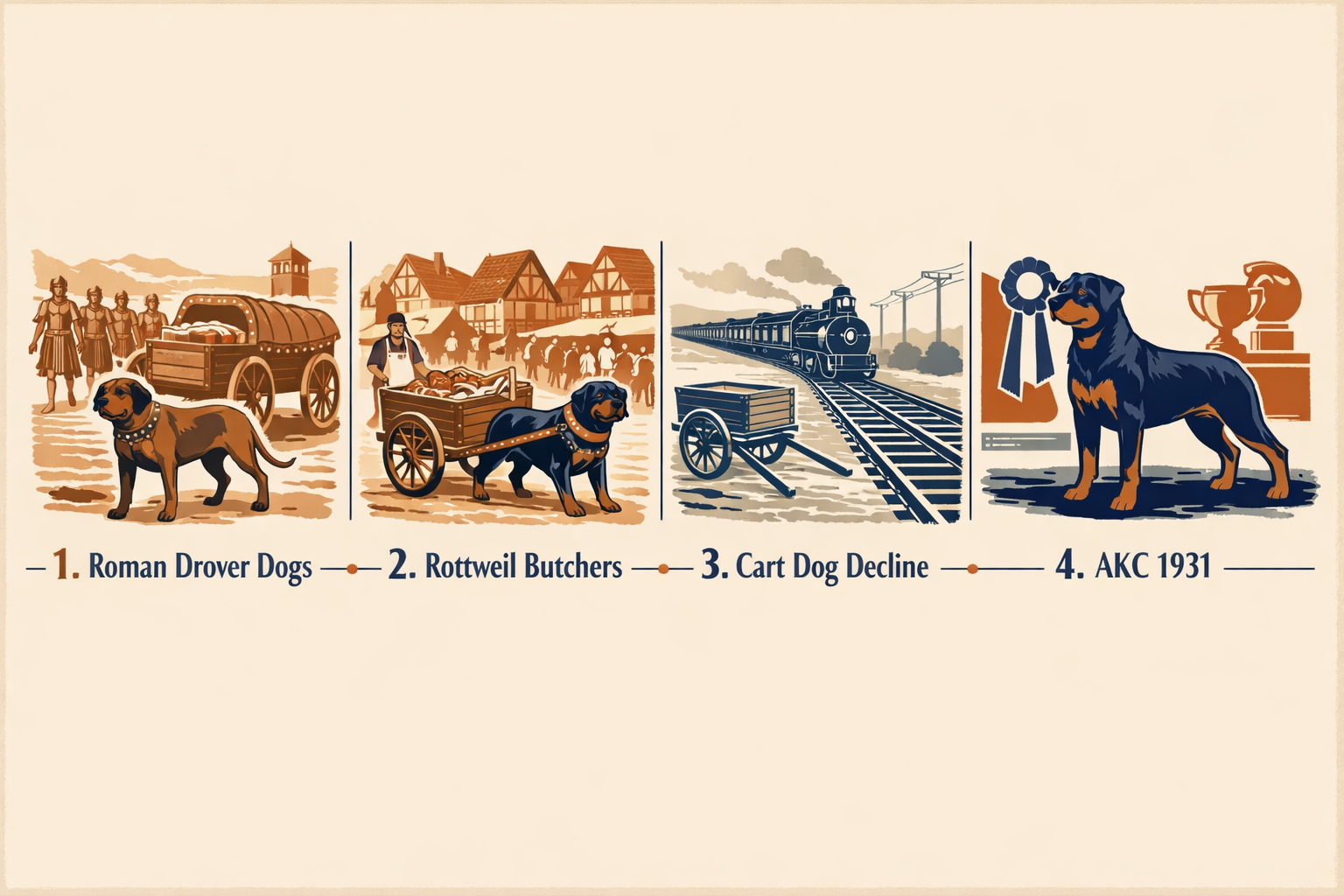
So treat the legion story as plausible background, not pedigree.
What is better supported is the German working period. Local dogs around Rottweil herded, guarded property, and carried the butcher’s purse strapped around the neck on market day. When railways took over livestock transport in the 1800s, cart work dried up and numbers crashed. Breed clubs formed in Germany in the early 1900s, police work gave the dogs a new job, and the AKC recognized the Rottweiler in 1931.
That history explains the dog you meet today. A drover dog needs independence, nerve, and enough body to push a stubborn bull. It does not need to love strangers. If you want a breed bred to greet everybody, look at the friendliest dog breeds for families instead.
What Makes the Rottweiler So Special (and So Cute)?
What owners love most is the contrast: a dog built like a safe that behaves like a 100 pound shadow with a soft face. The appeal is not just looks. It is the way a well-raised rottweiler attaches itself to its people and then tries, visibly, to get things right.
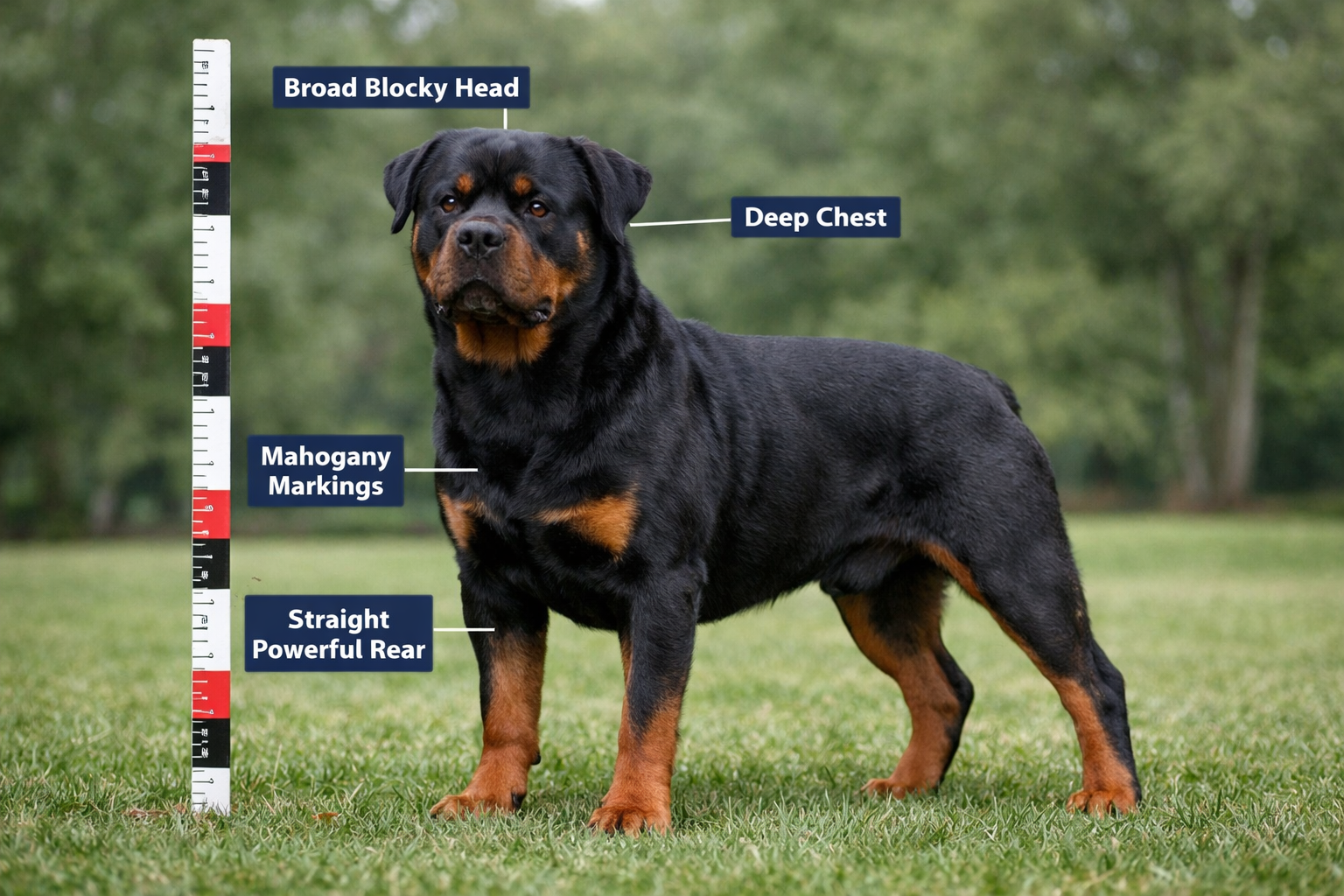
The cuteness is specific:
- The lean. Many Rottweilers greet by pressing a shoulder into your leg instead of jumping. Full body weight. No warning.
- The eyebrow dots. Two tan markings above the eyes that move with every expression and make a serious dog look permanently concerned about your choices.
- The nub wiggle. Docked or natural, the whole back half goes.
- The grumble. A low conversational rumble that sounds alarming to guests and means nothing worse than “you are late with dinner.”
- The sudden lap theory. A 110 pound dog who has decided it fits on a couch cushion.
The working side is just as attractive. Rottweilers are generally quick learners who want a job, which is why they show up on lists of the most obedient dog breeds and in police, search, and service work. The catch is maturity. Most owners report the real personality lands somewhere after age two, when the teenage noise settles into the calm, watchful adult the breed is known for.
Rottweiler Size, Weight and Lifespan
Male Rottweilers typically stand 24 to 27 inches and weigh 95 to 135 pounds; females stand 22 to 25 inches and weigh 80 to 100 pounds, according to the AKC breed page. Average lifespan sits around 8 to 10 years, with UK VetCompass work reporting roughly 9 years (rvc.ac.uk).
| Measure | Male rottweiler | Female rottweiler | German Shepherd (comparison) |
|---|---|---|---|
| Height | 24 to 27 in | 22 to 25 in | 22 to 26 in |
| Weight | 95 to 135 lb | 80 to 100 lb | 50 to 90 lb |
| Typical lifespan | 8 to 10 yrs | 8 to 10 yrs | 7 to 10 yrs |
| Coat work | Short double coat, heavy seasonal shed | Same | Longer double coat, heavier shed |
| Build | Blocky, heavy bone | Lighter, more refined head | Leaner, more angulated |
Rottweiler vs German Shepherd, decision rule: choose the Shepherd if you want more handler-focused drive, faster off-switch recovery, and a dog that generally tolerates longer high-intensity work. Choose the rottweiler if you want lower baseline activity in the house, less vocal reactivity, and a dog that guards by presence rather than noise. Shepherds usually shed more. Rottweilers usually cost you more in doorframes.
They sit firmly in the large category rather than giant. If you are unsure where your dog lands, our guide on large versus giant breed sizing sorts it out.
What Is the Rottweiler Temperament Like?
The AKC breed standard describes the desired rottweiler temperament as calm, confident, courageous, self-assured, and somewhat aloof with strangers, with an inherent desire to protect home and family. That is the written goal. Individual dogs vary a lot.
Are Rottweilers actually aggressive, or is that a myth? Both halves are wrong. The breed is not inherently vicious, and breed alone does not predict an individual dog’s behavior. But the breed is large, strong, and bred to act on territorial judgment, so the consequences of poor socialization are worse than they would be with a 20 pound dog. Bite statistics mostly record severity and reporting bias, not temperament. Our piece on breeds reported in attack data explains why those tables mislead people.
What you can expect from a typical well-bred, well-raised rottweiler:
- Reserved rather than friendly with new people. Neutral is a good outcome, not a failure.
- Strong attachment to household members, often including one favorite.
- Quiet alertness. Less barking than many guardian breeds, more staring.
- A stubborn teenage phase from roughly 8 to 20 months where learned cues get “forgotten.”
- Noticeable settling after the second birthday.
Male vs female difference: males are usually bigger, slower to mature, and more likely to posture at other male dogs. Females often mature faster, train earlier, and can be sharper about personal space with other female dogs. Neither sex is reliably “easier.” Individual temperament and breeder selection matter more than sex.
Are Rottweilers Good With Kids and Other Pets?
Rottweilers can be excellent family dogs with children they were raised around, and the AKC describes them as both playmate and protector while stressing socialization. The honest caveat is physics: a happy 110 pound dog can knock a toddler flat without a trace of bad intent.
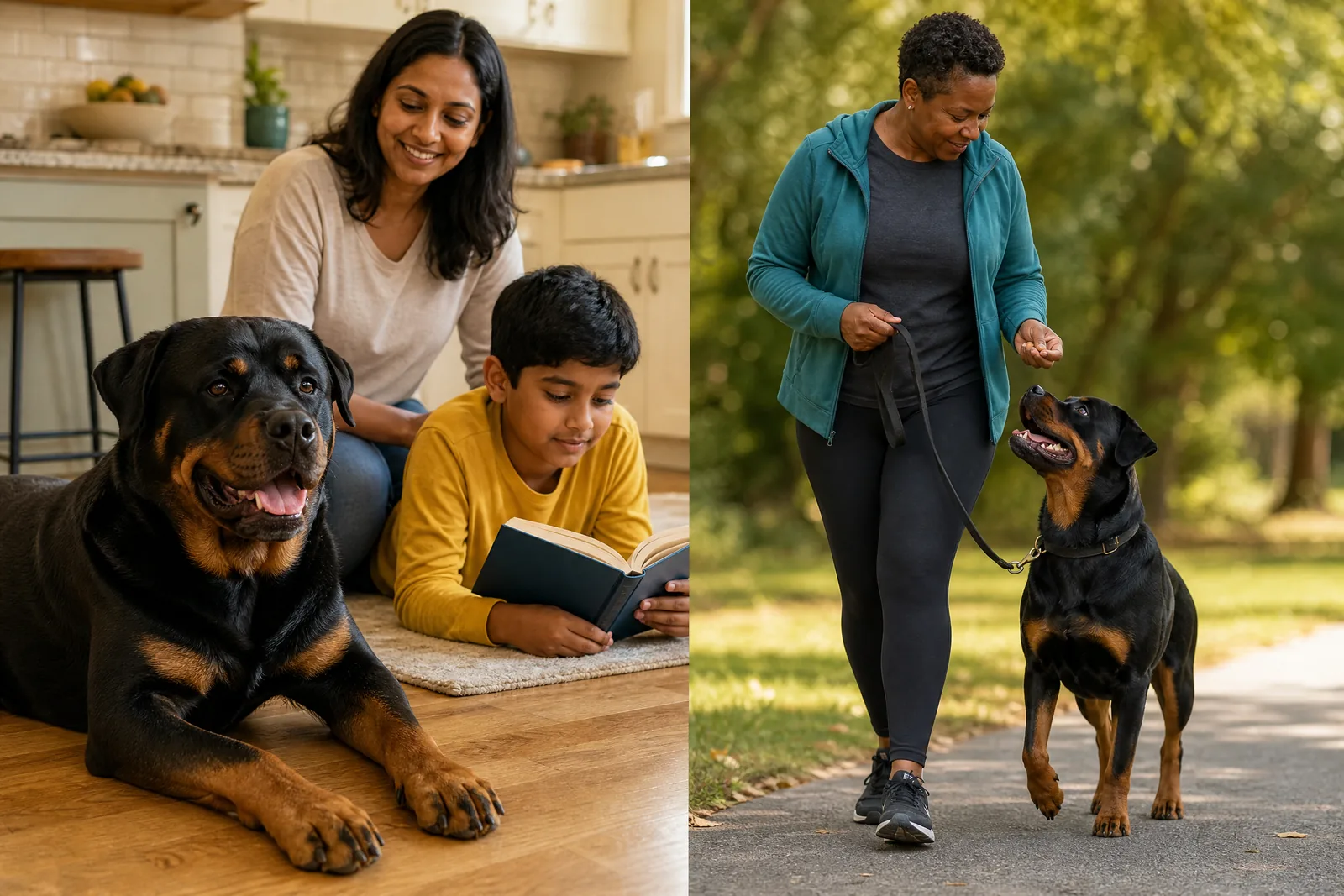
Practical rules that work:
- Supervise all young-child interactions. Not because the dog is suspicious. Because tails, shoulders, and excited turns are hazards.
- Teach a “go to mat” cue early so the dog has a legal place to be when kids get loud.
- Protect the food bowl and chew area. Give the dog a closed room for meals.
- Work on the body-slam greeting before it is 100 pounds. Our walkthrough on stopping a dog from jumping up is worth doing in month three, not month thirty.
- Herding leftovers show up. Some Rottweilers nudge or bump running children. Interrupt and redirect, do not punish.
With other pets, early exposure does the heavy lifting. Raised-together cats are usually fine. Adult same-sex dog introductions are the hardest case, so go slow and use the parallel-walk introduction method. Families weighing alternatives can compare against our list of family friendly breeds for kids.
Who Is the Rottweiler Made For, and Who Should Skip It?
The rottweiler suits people who want a serious guardian and enjoy the training part. It does not suit people who want a low-effort pet that happens to look impressive.
Good fit if you:
- Have handled a strong dog before, or will hire a qualified trainer from week one.
- Are home enough to give 60 to 90 minutes of daily activity plus mental work.
- Have confirmed in writing that your insurer and landlord allow the breed.
- Want a dog that deters without barking, similar in role to the breeds in our protection dog breeds guide.
Skip it if you:
- Travel constantly or work 12 hour days with no help.
- Have frequent houseguests, a busy short-term-rental setup, or small children plus no fenced space.
- Cannot physically manage a dog that may outweigh half your body weight.
- Need a breed with no housing or insurance friction.
First-time owners: possible, but only with support. A first-timer who books puppy class before pickup, hires a trainer, and commits to daily handling usually does fine. A first-timer who plans to “figure it out” generally ends up at the 14 month mark with a dog they cannot walk.
Can a rottweiler live in an apartment? Yes, if exercised properly. They are low-activity indoors and relatively quiet. The problems are elevators, narrow hallways, startled neighbors, and building breed clauses. Check the lease before the deposit. Compare against our apartment-friendly breeds list if the building is strict.
Are Rottweilers banned where you live? There is no national U.S. ban as of November 2026, and more than 20 states now limit local breed-specific legislation. Rules remain local and shifting: Milwaukee removed its pit bull and Rottweiler restrictions on July 14, 2026, replacing them with a behavior-based system requiring at least one documented incident, a 30 day management plan, and a 72 hour window to challenge a designation. Insurance is the bigger practical barrier. Many homeowners and renters carriers list the breed, applying exclusions, surcharges, higher deductibles, or outright denial. Get written confirmation before you buy.
How Much Exercise Does a Rottweiler Need?
Plan on 60 to 90 minutes of daily activity for an adult rottweiler, split into two sessions, plus 15 to 20 minutes of structured brain work. Under-exercised Rottweilers do not pace. They renovate.
A workable weekly pattern:
- Daily: two 30 to 45 minute walks on a front-clip harness or well-fitted flat collar, with loose-leash practice built in.
- 3x per week: controlled pulling or weight-bearing work the breed enjoys, like a weighted backpack on flat ground or sled-style drag work with correct gear and vet clearance.
- Daily: 10 minutes of obedience reps, scentwork, or a puzzle feeder. Enrichment lowers household chaos more than extra distance does.
- Avoid: repetitive forced jogging or long-distance running before 18 months, and hard pavement work in heat. Deep-chested, heavy dogs overheat fast.
Common mistake: treating the leash problem as an exercise problem. If your dog drags you, more walking just builds a stronger puller. Fix the leash skill, then add mileage.
Edge case: older Rottweilers with hip arthritis often do better with three short walks and swimming than with one long outing.
Rottweiler Grooming and Shedding
Rottweilers are low-maintenance to groom and moderate to heavy shedders. The short double coat needs about 10 minutes of brushing a week most of the year, and daily brushing for two or three weeks during spring and fall coat blow.
What you actually need:
- A rubber curry or grooming mitt for weekly loose-hair removal. Short black hair weaves into upholstery like thread.
- An undercoat rake for the seasonal shed. Work outside.
- Bath every 6 to 10 weeks, or after the pond. Over-bathing dries the skin.
- Nails every 3 to 4 weeks. Heavy dogs with long nails change their gait, which stresses already vulnerable joints.
- Ears and teeth weekly. Floppy ears trap moisture.
Drool is light compared with mastiffs, but it exists after drinking. Keep a towel near the bowl. New owners can start with our beginner’s dog grooming walkthrough.
Common Rottweiler Health Problems
The main Rottweiler health risks are hip and elbow dysplasia, osteosarcoma (bone cancer), heart disease including subaortic stenosis, cruciate ligament rupture, eye conditions, and bloat. Average life expectancy sits near 9 years in UK VetCompass data (rvc.ac.uk).
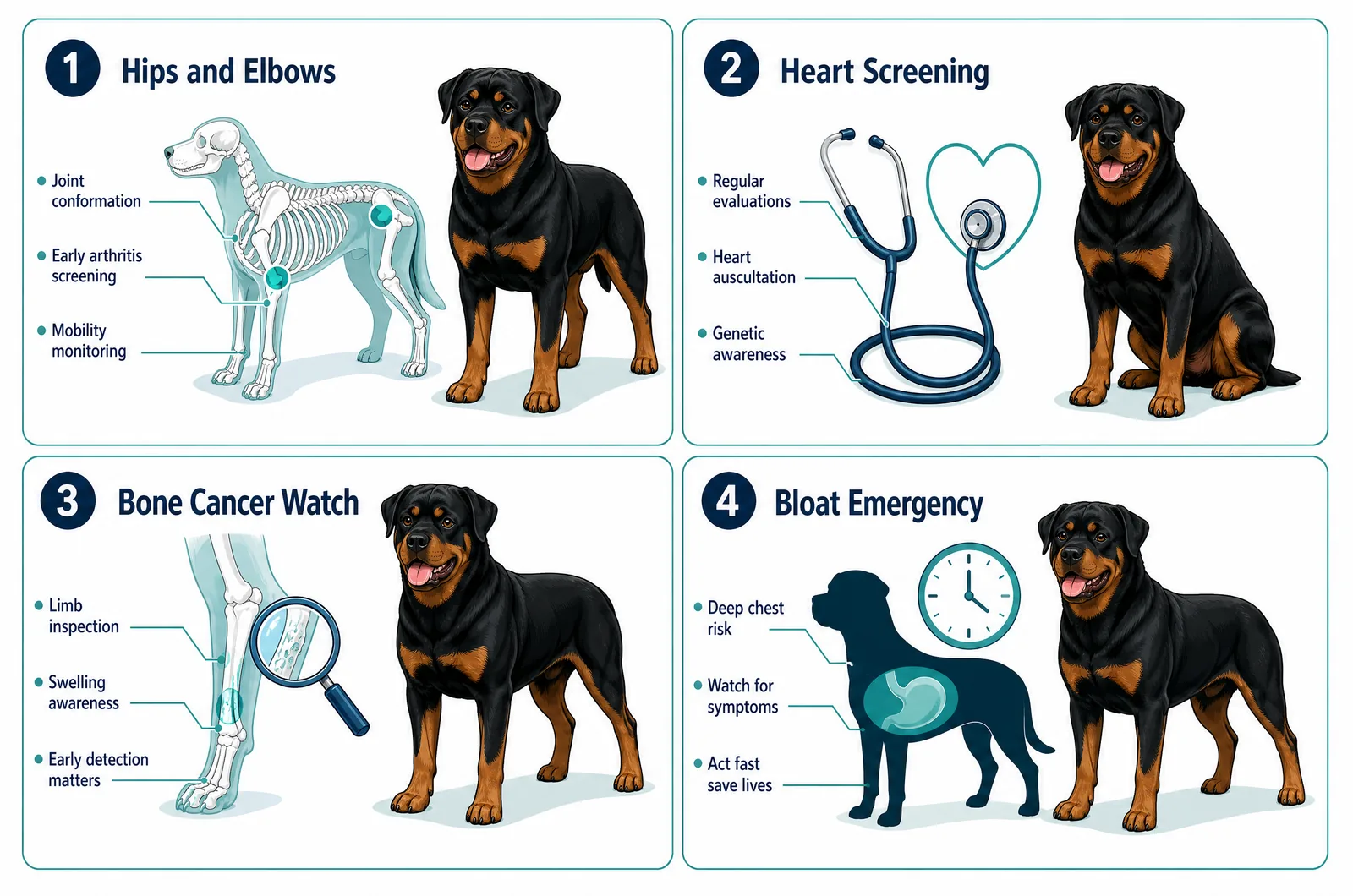
Screening to demand from any breeder. The American Rottweiler Club’s health statement asks for OFA hip certification at 24 months or older, a cardiac evaluation at 24 months or older, elbow radiographs, an eye exam by a board-certified veterinary ophthalmologist, and DNA testing for juvenile laryngeal paralysis and polyneuropathy (JLPP), with at least one parent genetically clear. A CHIC number means the required tests were completed and published. It does not mean the dog is disease-free. Ask to see the actual results, plus family history on longevity, cancer, temperament, and joints.
Osteosarcoma is the one that scares experienced owners, and it should. Watch for a persistent limp, swelling on a limb, or sudden lameness in a middle-aged or older rottweiler. Do not wait it out. Get imaging.
Neutering timing. A 2023 Scientific Reports study of Australian Rottweilers found dogs neutered before one year had expected lifespans about 1.5 years shorter in males and 1 year shorter in females compared with intact dogs, with neutering before 4.5 years also associated with shorter lifespan (nature.com). That is observational data from records, not a rule for every dog. Bring it to your vet and decide together based on sex, home setup, and cancer history in the line.
Longevity research worth knowing: the Exceptional Aging in Rottweilers Study has enrolled roughly 440 dogs living at least 30% beyond breed average since 2003, building lifetime medical histories to find what protects them. A July 21, 2026 publication from the Gerald P. Murphy Cancer Foundation’s Center for Exceptional Longevity Studies extended that work into parity and late-life frailty. Nothing there changes your care plan yet. It does suggest the breed’s ceiling is higher than the average implies.
Emergency signs: call a vet immediately. A swollen hard belly with unproductive retching and restlessness can be bloat, which kills within hours. Read the bloat symptom checklist now, not later. Also urgent: collapse, labored breathing, heatstroke signs, or sudden hind-limb weakness with back pain.
What Do Rottweilers Love to Eat? Favorite Foods and Feeding
Feed an adult rottweiler a large-breed formula with controlled calcium, split into two measured meals, typically 4 to 6 cups a day depending on weight and activity. Puppies need large-breed puppy food specifically, because fast growth on the wrong calcium level damages joints.
Treats the breed tends to go for:
- Plain cooked chicken or turkey, no seasoning
- Freeze-dried liver (tiny pieces, high value for training)
- Carrot sticks and green beans, good for dogs watching weight
- Plain pumpkin puree, useful for loose stool
- Frozen stuffed toys for crate time
Foods to avoid completely: grapes and raisins, onions and garlic, xylitol, chocolate, macadamia nuts, cooked bones, and alcohol. Also skip high-fat scraps. Deep-chested breeds do not need a pancreatitis episode on top of everything else.
Practical feeding rules:
- Two meals, never one giant bowl. Use a slow feeder if your dog inhales food.
- No hard exercise for an hour either side of meals.
- Keep a visible waist. Obesity multiplies joint and cancer risk.
- Switch foods over 7 to 10 days using our food transition guide.
- Check the label properly. Our AAFCO label explainer covers what a statement of nutritional adequacy actually promises.
Joint supplements are popular in this breed. Evidence for glucosamine is mixed. Ask your vet before spending.
How to Train a Rottweiler
Train a rottweiler with clear rules, short daily sessions, and reward-based methods, starting the week the puppy comes home. The breed is intelligent and willing, but it tests boundaries hard between 8 and 20 months, and heavy-handed corrections on a dog this strong create conflict rather than compliance.
The plan that actually works:
- Socialization first, before 16 weeks. Calm exposure to surfaces, sounds, strangers at a distance, and other vaccinated dogs. Neutral is the target, not excited greeting.
- Leash skills before strength. Teach loose-leash walking at 10 weeks in your hallway. Use a front-clip harness. Stop walking when the leash tightens, every single time, for six boring weeks.
- Bite inhibition. Puppy nipping is normal and ferocious in this breed. Redirect to a tug or chew, end the game when teeth hit skin, and give rest. Overtired puppies bite hardest. Most “aggressive puppy” calls are actually sleep deprivation.
- Impulse control daily. Wait at doors, sit before food, leave-it with real temptation.
- Handle the teenage regression without panic. Go back to easier versions of known cues. Raise the reward value. Reduce freedom temporarily. It passes.
- Hire help early if you are new. A credentialed trainer using humane methods at month three costs far less than a behavior consult at month fifteen.
How to train a rottweiler not to be aggressive: you mostly prevent it rather than fix it. Buy from health and temperament tested parents, socialize before 16 weeks, never encourage guarding games, reward calm behavior around strangers, and get professional help at the first sign of stiff staring, growling at approach, or resource guarding. Do not punish growls. A growl is information.
Try It: Rottweiler Growth Tracker
Enter your puppy’s current age and weight and the tracker estimates adult size plus a growth note for that stage. Rottweilers keep filling out until roughly two to three years old, so knowing whether your dog is ahead of or behind curve helps with food portions and joint-safe exercise choices.
Doggy Rank IQ Tool
Rottweiler Growth Tracker

Rottweilers grow fast and keep filling out until about 2 to 3 years old. Enter your puppy's age and weight to see a rough adult size estimate and growth tips.
How Much Does a Rottweiler Cost?
Expect roughly $1,500 to $3,500 for a rottweiler puppy from a health-tested breeder in the U.S., with first-year total costs commonly landing between $3,000 and $5,000 and ongoing yearly costs around $1,800 to $3,000.
| Cost item | Typical U.S. range |
|---|---|
| Puppy from health-tested breeder | $1,500 to $3,500 |
| Rescue or breed-club adoption | $200 to $600 |
| First-year setup (crate, vet, neuter, gear) | $1,200 to $2,000 |
| Food per year (large breed) | $700 to $1,300 |
| Training classes and private sessions | $300 to $1,200 |
| Pet insurance per year | $600 to $1,400 |
A cheap puppy is the most expensive option available. Untested parents mean hip surgery at 18 months, which can run several thousand dollars on its own. Ask for OFA numbers and JLPP results before you ask about price.
Budget separately for the homeowners policy. Some insurers will not write the breed at all, some add a surcharge, and some assess the individual dog’s bite history instead. Get it in writing first.
Rottweiler Puppy Tips for the First 90 Days
The first 90 days decide most of what your adult rottweiler becomes. Socialization closes fast, and a 20 pound puppy is far easier to teach than a 70 pound adolescent.
Weeks 1 to 2: crate training, a fixed potty schedule, sleep enforcement (14 to 18 hours a day), name recognition, and gentle handling of paws, ears and mouth. Keep the house boring and predictable.
Weeks 3 to 6: puppy class with a humane trainer. Controlled exposure to umbrellas, vacuums, car rides, men in hats, bikes, children at a distance, and different floor surfaces. Reward calm observation, not excited approach.
Weeks 7 to 12: loose-leash foundations, recall on a long line in a fenced area, impulse control at doors and bowls, and short alone-time practice to prevent separation problems.
Non-negotiables:
- No stairs, no jumping off furniture, no forced running on hard surfaces.
- Measure every meal. Overfeeding a growing rottweiler damages joints.
- Interrupt nipping with a redirect, never with a scruff or alpha roll.
- Invite calm adults over weekly so visitors stay normal, not an event.
- Start a vet relationship early so handling is routine before anything hurts.
What Rottweiler Owners Say
Owners are candid about this breed, which is useful. Three recurring themes come straight from the r/Rottweiler community.
“being dragged down the street on walks 6/7 days a week”
That is from an owner on Reddit in a thread titled Hope for all stubborn Rottie owners. Practical fix: stop walking for distance for two weeks. Do ten minutes of leash work in a boring hallway or driveway where nothing competes with you, mark and reward every step with a loose leash, and use a front-clip harness so pulling stops being rewarding. Add distraction only when the hallway version is perfect. Boring is the whole method.
“How do you deal with the stigma?”
Posted by an owner on Reddit in this thread on breed stigma. Practical fix: let the dog’s behavior argue for you. A rottweiler that sits calmly on a loose leash while someone passes changes more minds than any explanation. Cross the street to give nervous people space rather than proving a point. Keep insurance and vaccination records tidy. And know your local ordinance, because rules change, as Milwaukee showed in July 2026.
“It tries SO HARD to please”
From an owner on Reddit in this post. Practical use: that effort is your training budget. Keep sessions to five minutes, end while the dog still wants more, and reward the attempt rather than only the perfect result. Dogs that try hard get discouraged fast by unclear criteria.
Rottweiler FAQ
How long do Rottweilers live on average? Usually 8 to 10 years. UK VetCompass research from the Royal Veterinary College reported an average around 9 years (rvc.ac.uk). Lean body weight, joint care, and early cancer detection matter most.
Are Rottweilers good with kids? Many are, especially when raised with them. Supervise all interactions with toddlers because of size, teach a settle cue, and give the dog a child-free space for meals and rest.
Can a rottweiler be a first dog? Yes, with support. Book puppy class before the dog arrives, hire a humane trainer, and commit to daily leash and impulse-control work through the teenage phase.
How much do Rottweilers shed? Moderate year-round and heavily for a few weeks in spring and fall. Weekly brushing most of the year, daily during coat blow, plus an undercoat rake.
Rottweiler vs German Shepherd, which is better? Neither is better overall. Shepherds generally offer more drive and vocal alertness with more coat care. Rottweilers offer a calmer indoor presence and quieter deterrence with more raw strength to manage.
Are Rottweilers banned in the U.S.? No nationwide ban exists as of November 2026, and over 20 states restrict local breed-specific laws. Local ordinances, housing rules, and homeowners insurance still vary widely, so confirm all three in writing before buying.
What is the difference between male and female Rottweilers? Males are larger, mature later, and more likely to posture with other males. Females usually mature faster and can be sharper with other females. Breeding and training matter more than sex.
When should a rottweiler be neutered? There is no universal rule. A 2023 Scientific Reports study found Australian Rottweilers neutered before one year had shorter expected lifespans (nature.com). That is an association from records, so decide timing with your vet based on your dog and home situation.
Next step: before anything else, call your insurer and read your lease, then find a breeder who will show you OFA hip and elbow results plus a JLPP clear parent. Do those two things and most rottweiler regrets disappear before they start.