
Quick Answer: Is a French Bulldog Right for You?
A french bulldog suits a calm, indoor-leaning, air-conditioned home with a vet budget to match. They are affectionate, funny, genuinely good apartment dogs, and they come with a flat face that makes breathing harder than it looks. The breed has topped the American Kennel Club’s popularity rankings since 2022, which means a lot of poorly bred puppies are in circulation. Buy from a breeder who health tests, screen the parents’ breathing, and plan for heat management from day one.
If you want a hiking partner, a summer beach dog, or a low-cost first dog, pick a different breed.
Key Takeaways: French Bulldog
- The Royal Kennel Club’s 2026 genetic analysis of more than 4,000 respiratory grading assessments estimated BOAS at 16 to 20% in that tested group, with respiratory function 22 to 45% heritable. Breathing can be bred better.
- In a 2026 Italian owner survey of 100 French Bulldog households, 72% knew about breathing risk before buying and 42% still reported breathing problems, with 71% reporting snoring during sleep.
- A 2026 accelerometry study in Animal Welfare found French Bulldogs and Pugs with more severe BOAS moved less overall and spent less time at high activity. Breathing disease shapes ordinary daily life.
- The University of Cambridge BOAS clinic grades dogs after a three-minute trot test, because some affected dogs look fine standing still.
- Adult size is roughly 16 to 28 pounds and 11 to 13 inches tall, with a typical lifespan around 10 to 12 years.
- Japan Airlines Cargo will not carry Bulldogs or French Bulldogs at any time of year. Air travel plans need checking before you buy.
- Expect $3,000 to $8,000 for a well-bred puppy and a first-year total that often lands between $5,000 and $10,000 once vet care, insurance and gear are counted.
Where Does the French Bulldog Come From?
The breed started as a small English Bulldog, then crossed the Channel with lace workers from Nottingham during the 1800s industrial shifts. In France those little bulldogs got mixed with local terriers and ratters, picked up the upright “bat ear,” and became a favorite of Paris shopkeepers, cafe owners and, famously, the city’s working women who posed with them in postcards.
American buyers then did something that shaped the breed permanently. In the 1890s, US fanciers insisted on the bat ear over the English-preferred rose ear, and the French Bull Dog Club of America wrote it into the standard. That single aesthetic decision is why your dog’s ears look like satellite dishes today.
What nobody wrote into the standard was airway function. Over roughly 130 years the muzzle got shorter, the skull got wider, and the head got big enough that most litters are now delivered by planned cesarean section. Breeder costs reflect that, and so do puppy prices.
The modern french bulldog is a 19th century companion dog carrying 21st century popularity pressure. The history is charming. The anatomy is the part that needs attention.
What Makes the French Bulldog So Special (and So Cute)?
Three things explain the obsession: the face, the size, and the temperament underneath both.
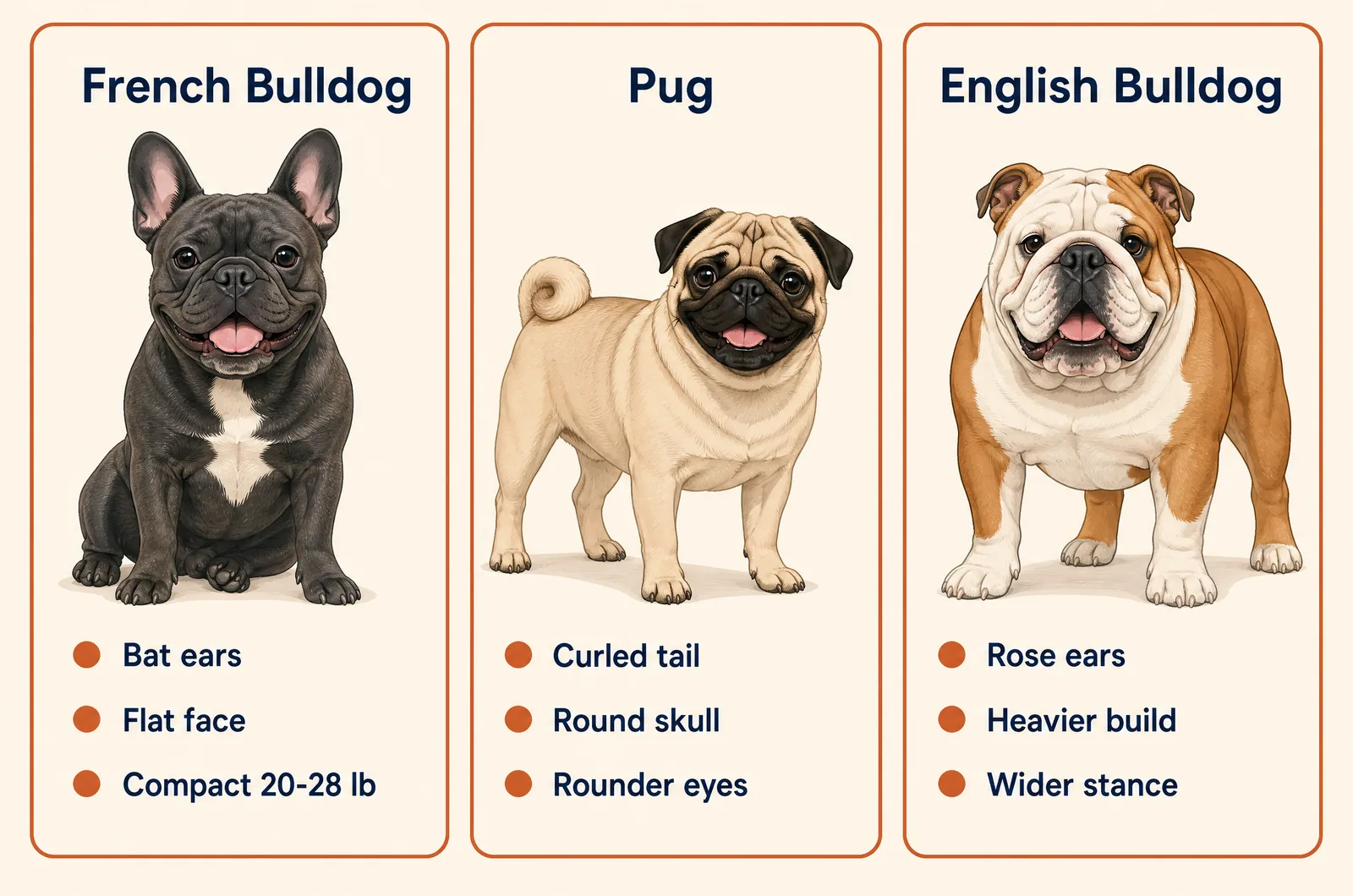
The cuteness is not an accident of taste. Frenchies carry what researchers call pedomorphic features: a round skull, a shortened muzzle, large forward-facing eyes and a flat forehead. Human brains respond strongly to that layout, which is the same reason baby mammals across species look appealing to us. The bat ears add an alert, slightly absurd expression that photographs well, and photography is a real part of this breed’s rise.
Then there is the personality. Owners consistently describe Frenchies as velcro dogs: sociable with strangers, usually easy with other dogs, physically affectionate to an almost comic degree. They are quiet compared to most small breeds. They are not frantic. They lean on you, snort, and fall asleep.
That bond is the honest reason people keep choosing the breed even after reading the health section. It is a strong one. For a wider look at why certain breeds dominate the rankings, see our guide to America’s favorite dog breed.
French Bulldog Size, Weight and Lifespan
A french bulldog stands about 11 to 13 inches at the shoulder and weighs under 28 pounds by breed standard, with a typical lifespan near 10 to 12 years. Males usually run a few pounds heavier and blockier than females.
| Measure | Male | Female |
|---|---|---|
| Height at shoulder | 11 to 13 in | 11 to 12 in |
| Adult weight | 20 to 28 lb | 16 to 24 lb |
| Full growth reached | 10 to 14 months | 10 to 12 months |
| Typical lifespan | 10 to 12 years | 10 to 12 years |
Two numbers matter more than the averages. First, weight. A Frenchie two pounds overweight breathes measurably worse, and weight is the single variable you control completely. You should feel ribs under light pressure and see a waist from above.
Second, lifespan is affected by breathing grade. Severely affected dogs face higher heatstroke risk, more anesthesia complications, and more surgery. A well-bred, lean, moderately muzzled dog with good airflow has a genuinely different outlook than an extreme one.
Edge case worth knowing: “mini” or “teacup” Frenchies are not a recognized variety. They are usually underweight dogs, runts, or crosses, often sold at a premium.
What Is the French Bulldog Temperament Like?
Expect a sociable, people-focused, moderately stubborn companion dog that prefers being near you to doing a job. The french bulldog temperament sits closer to “comedy roommate” than “working partner.”
Core traits most owners report:
- Affectionate and physical. Lap sitting, leaning, following you to the bathroom. If you want independence, this is the wrong breed.
- Social with people and dogs. Usually friendly on meeting, though proper puppy socialising still matters.
- Low to moderate barking. They grunt, snort, scream occasionally, and bark less than most terriers.
- Stubborn, not stupid. They learn quickly and then negotiate.
- Sensitive to tone. Harsh correction shuts them down. Food and play work far better.
Separation tolerance is the common trouble spot. A breed selected for constant companionship often struggles with long workdays alone. Build alone-time practice in week one rather than month six.
Individual variation is real. Two Frenchies from the same litter can differ in confidence, noise level and drive. Meet the parents if you can, and ask the breeder which puppy settles fastest when handled.
Are French Bulldogs Good With Kids and Other Pets?
Generally yes, with supervision and size-appropriate rules. French Bulldogs are sturdy, tolerant, and not typically reactive, which makes them one of the better small breeds around children.
Practical guidance:
- Toddlers: supervise every interaction. A 24-pound dog can be knocked, sat on, or pulled, and a Frenchie with a compromised airway handles pressure on the chest badly.
- School-age kids: teach the “leave the sleeping dog alone” rule. Brachycephalic dogs often sleep poorly already, so interrupted rest matters more here than in other breeds.
- Other dogs: usually friendly. Some males get pushy with other males around resources. Neutral-ground introductions help.
- Cats: often fine, especially raised together. Prey drive is low but not zero.
Rough play is the real risk, not aggression. A Frenchie will chase and wrestle past the point where its breathing can keep up, especially indoors on a warm evening. Cut the session before the dog starts open-mouth gasping.
If you are comparing family options, our roundup of family-friendly dog breeds gives a wider view before you commit.
Who Is the French Bulldog Made For, and Who Should Skip It?
Choose a french bulldog if you want a small, affectionate, low-exercise indoor companion and you can afford both the purchase and the vet care. Skip it if your life involves heat, distance, or a tight emergency budget.
Good fit if you:
- Live in an apartment or small home with air conditioning
- Work from home or have short, predictable absences
- Want a dog that is content with two 20-minute walks
- Have $100 to $200 a month available for insurance plus care
- Live somewhere with mild summers, or can walk at dawn and after dark
Poor fit if you:
- Run, hike, or spend summer weekends outdoors with your dog
- Live in Phoenix, Houston, Miami or anywhere with long hot seasons and limited cooling
- Fly frequently with a dog in cargo (many carriers refuse the breed outright)
- Need a first dog that is cheap and simple
- Cannot absorb a $4,000 surprise vet bill
On apartments specifically, the breed scores well: quiet, small, minimal exercise demand. See our picks for apartment-friendly dog breeds if you are weighing alternatives.
A healthier alternative with a similar vibe? Consider a Boston Terrier from a moderate-muzzle line, a Miniature Schnauzer, or a small mixed-breed rescue. None of them have the Frenchie face. That is the point.
How Much Exercise Does a French Bulldog Need?
Plan on 30 to 45 minutes of total daily activity, split into short sessions, scheduled around temperature rather than your calendar. French bulldog exercise needs are low by volume and high by supervision.
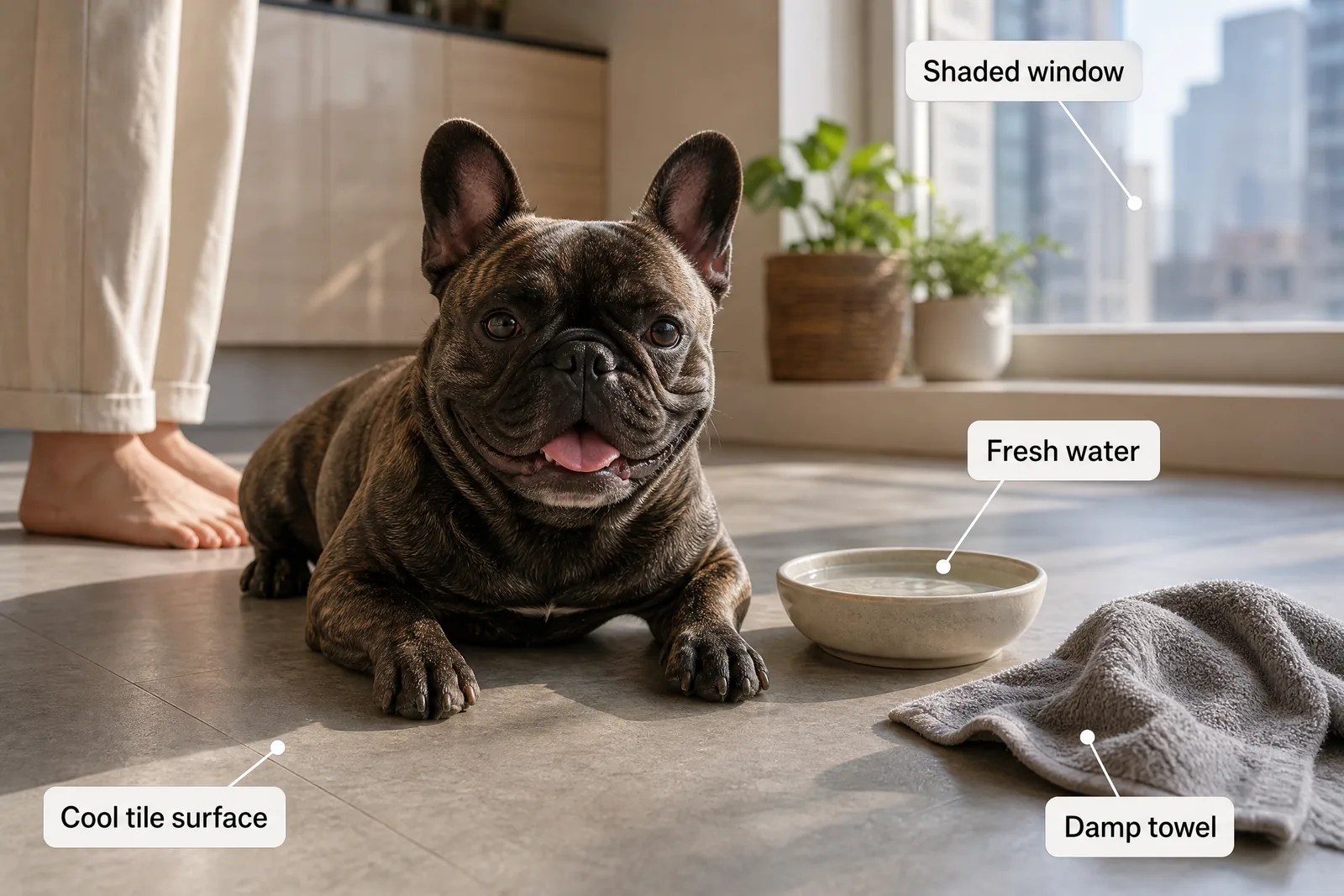
The 2026 Animal Welfare accelerometry study is useful here. Researchers compared French Bulldogs, Pugs and longer-muzzled dogs and found that dogs with more severe BOAS recorded less total daily movement and less high-intensity activity. That study measured activity, not happiness, and it cannot tell you what any single dog can tolerate. But it supports what vets already say: breathing grade limits ordinary life, not just athletic performance.
Practical rules:
- Walk below 70°F (21°C) when possible. Above 80°F, skip the walk and do indoor enrichment.
- Test the pavement with the back of your hand for seven seconds.
- Use a Y-front harness, never a collar. Tracheal pressure is the last thing this airway needs.
- Stop at the first change in breathing sound, not when the dog collapses.
- Swap distance for brain work. Snuffle mats, scatter feeding, short training sessions, puzzle toys.
Can French Bulldogs swim? Most cannot safely. Dense bone, short muzzle, front-heavy build. If you own a pool, a life jacket and a fence are both required, and unsupervised water access is a real drowning risk.
French Bulldog Grooming and Shedding
Short coat, moderate shedding, low brushing time, and one job that is easy to skip: the face folds. French bulldog shedding is steadier than people expect for such a short coat, with heavier periods in spring and fall.
Weekly routine:
- Brush once or twice a week with a rubber curry mitt. Ten minutes.
- Clean facial folds and the nose rope every two to three days with a soft damp cloth, then dry completely. Trapped moisture causes yeast and that distinctive sour smell.
- Check the tail pocket. Many Frenchies have a recessed tail with a skin pocket underneath that collects debris and gets infected quietly.
- Nails every three to four weeks. Short nails change how the dog stands, which matters for a front-heavy breed.
- Ears weekly. Open bat ears collect dust readily.
Bathe roughly monthly with a gentle shampoo. Over-bathing dries out skin, and skin allergies are common in the breed. If you are new to coat care, our beginner’s guide to dog grooming covers tools and frequency across coat types.
About fluffy French Bulldogs and long haired French Bulldogs: the long coat comes from a recessive Fibroblast Growth Factor 5 variant. It is a real genetic coat type, not a scam, but it is heavily marketed at a premium. A fluffy french bulldog has exactly the same airway as a smooth one. Coat length does not improve breathing, and merle blue french bulldog colouring carries its own eye and hearing concerns when merle is bred to merle.
Common French Bulldog Health Problems
Brachycephalic obstructive airway syndrome is the defining health issue, and it sits on a spectrum rather than being present or absent. French bulldog health problems also include spinal, skin, eye and birth-related conditions.
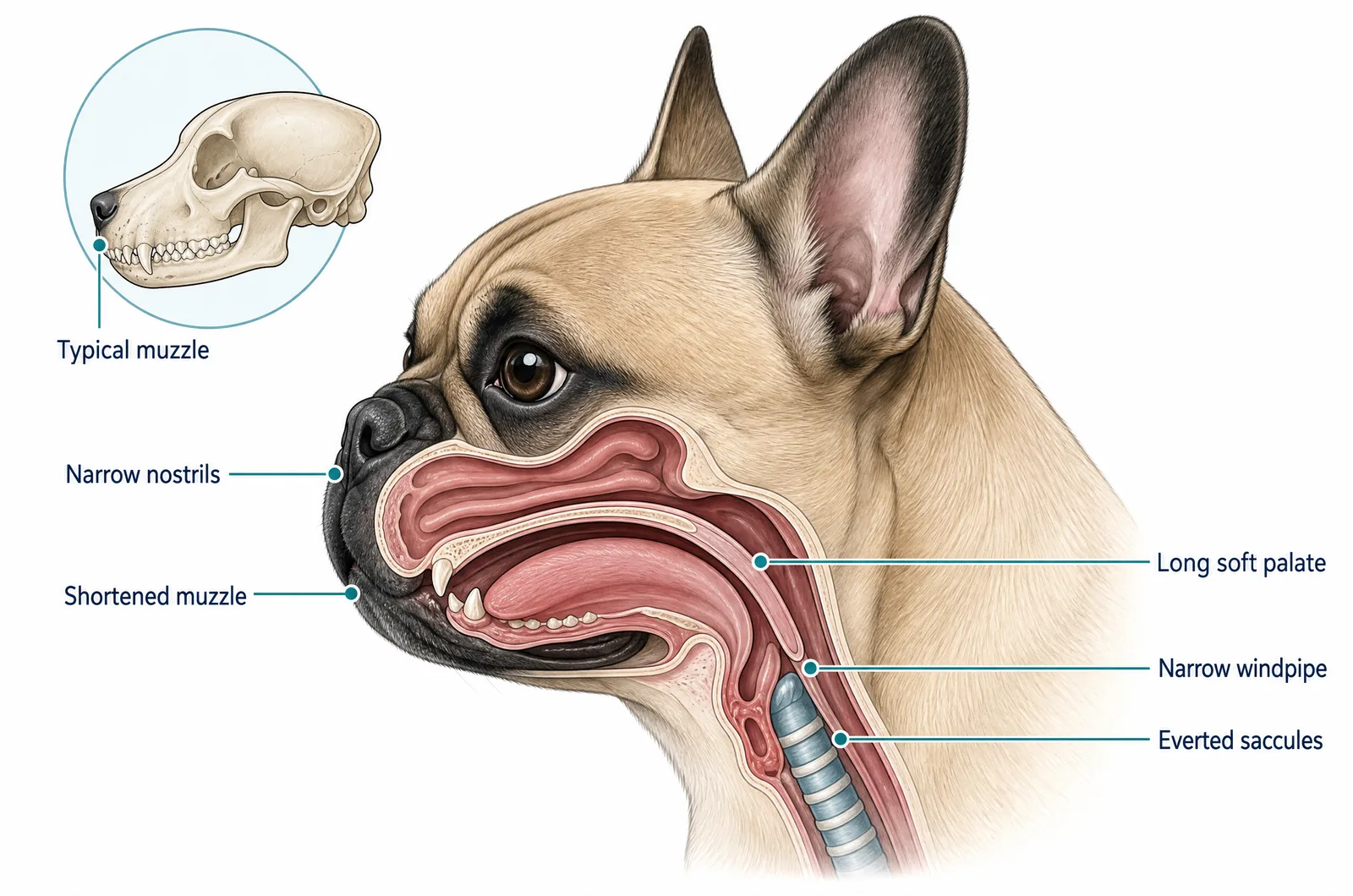
Why do French Bulldogs have breathing problems? The skull was shortened over generations, but the soft tissue inside was not. The result is a long soft palate in a short space, narrowed nostrils, a narrow windpipe, and in many dogs everted laryngeal saccules. Air gets pulled through a smaller opening against more resistance. RCVS Knowledge describes the signs as ranging from noisy breathing to exercise intolerance, sleep disruption, regurgitation, collapse and dangerous heat intolerance.
How common is it? The Royal Kennel Club’s 2026 analysis of over 4,000 Respiratory Function Grading Scheme assessments put prevalence at 16 to 20% within the dogs tested. That figure deserves a caveat the Club itself acknowledges: dogs presented for breathing assessment are often breeding stock from health-focused owners, so they are not a random sample. Clinical studies using exercise testing have reported higher rates. The encouraging finding is heritability of 22 to 45%, meaning selection on measured breathing can shift the population.
Other conditions to know:
| Condition | What it looks like | What to do |
|---|---|---|
| BOAS | Snoring, snorting, gagging, poor stamina | Grade with a vet, surgery if Grade II or III |
| Intervertebral disc disease | Reluctance to jump, wobbly or weak back legs | Weak back legs is an emergency. Call a vet now |
| Heatstroke | Panting that will not settle, drooling, collapse | Emergency. Cool with water and go to a vet |
| Skin fold dermatitis | Red, smelly folds | Daily cleaning, vet if raw |
| Cherry eye and corneal ulcers | Red mass in eye corner, squinting | Vet appointment, eyes are urgent |
| Hip and elbow dysplasia | Stiffness, altered gait | Screened parents reduce risk |
French bulldog vs pug: which is healthier? Both are high-risk brachycephalic breeds and both appear in the same BOAS research. Pugs generally face higher rates of eye injury and some spinal issues; Frenchies face higher cesarean rates and more disc disease. Neither is a safe default. The healthier dog in either breed is the individual with a longer muzzle, open nostrils and a Grade 0 or I breathing score.
French bulldog vs English Bulldog differences: the English Bulldog is roughly twice the weight (40 to 50 pounds), has a heavier wrinkled body, rose ears instead of bat ears, and a shorter average lifespan. The Frenchie is more portable and generally more active.
What Do French Bulldogs Love to Eat? Favorite Foods and Feeding
Feed a measured, moderate-calorie complete diet twice a day from a slow bowl, and treat weight control as a breathing treatment. The best food for french bulldogs is usually an AAFCO-complete small-breed formula with a named protein first and calories you can actually track.
Foods this breed tends to go genuinely silly for, in small amounts:
- Plain cooked chicken or turkey, no skin, no seasoning
- Green beans (excellent low-calorie filler for a dog on a diet)
- Carrot coins, frozen in summer
- Blueberries
- Plain pumpkin puree, useful for loose stools
- A spoon of plain unsweetened yogurt if dairy agrees with them
Foods to avoid entirely: grapes and raisins, onion and garlic, xylitol, chocolate, macadamia nuts, cooked bones, and anything fatty enough to trigger pancreatitis. Also skip very hard chews, since brachycephalic jaws and crowded teeth break on them.
About the gas. Frenchies swallow air while eating because of the face shape, and that air has to go somewhere. Fixes that actually help: a slow-feeder or snuffle mat, smaller more frequent meals, a single-protein diet if you suspect a trigger, and no sudden food changes. Transition new food over 7 to 10 days. Our walkthrough on switching dog food without stomach upset has the schedule, and the guide to reading a dog food label and AAFCO statements explains what the bag is actually promising.
Typical adult intake lands around 25 to 30 calories per pound of body weight per day, but that varies with activity. Weigh food. Eyeballing it is how a 22-pound dog becomes a 28-pound dog.
How to Train a French Bulldog
Train in short sessions with food, start in week one, and expect house training to take longer than the internet promises. French Bulldogs are capable learners with a low tolerance for repetition and a strong opinion about rain.
What works:
- Two or three sessions of three to five minutes daily. Long sessions overheat them and bore them.
- High-value food, cut small. Boiled chicken beats biscuits.
- Mark and reward. A clicker or a consistent “yes” speeds everything up.
- Potty training on a clock. Out after waking, after eating, after play, every 90 minutes for a young puppy. Accidents usually mean the schedule slipped, not that the dog is defiant.
- Crate as a rest space, introduced with food, never used as punishment.
- Alone-time drills from week one: two minutes, then five, then fifteen.
What fails: shouting, leash corrections, long drills, and training outdoors in summer heat. The breed shuts down under pressure and then looks stubborn. It is not defiance, it is a dog deciding the activity is unpleasant.
Known difficulty: recall is mediocre because they are not biddable in the retriever sense, and because they cannot run far enough to chase you down. Keep them on leash in unfenced areas. Permanently.
Call a certified behavior professional for separation distress, resource guarding or dog-directed aggression. Humane training only. Aversive tools around a compromised airway are both unkind and physically risky.
Try It: Frenchie Heat and Breathing Check
Flat-faced dogs overheat faster than most breeds, and the danger window starts at temperatures that feel mild to you. Pick today’s conditions and your dog’s breathing grade below to see how risky a walk is and which warning signs to watch for.
Doggy Rank IQ Tool
Frenchie Heat and Breathing Check

Flat-faced dogs overheat faster than most breeds. Pick today's conditions and your Frenchie's breathing to see how risky a walk is and what to watch for.
How Much Does a French Bulldog Cost?
Budget $3,000 to $8,000 for a well-bred puppy, $5,000 to $10,000 for the whole first year, and $2,000 to $4,000 per year after that. French Bulldogs are expensive to maintain, and the variable that moves the total most is health, not food.
Why the puppy price is high: most litters require a planned cesarean, litters are small (often three to five puppies), and artificial insemination is common. A breeder doing health testing, BOAS grading and a C-section is carrying real costs. A $1,200 Frenchie on a classifieds site is not a bargain, it is a deferred bill.
Rough first-year budget:
- Puppy: $3,000 to $8,000
- Vaccines, neuter or spay, exams: $600 to $1,200
- Pet insurance: $60 to $120 a month, higher in cities
- Food: $400 to $700
- Crate, harness, bed, cooling mat, gates: $300 to $600
- Training class: $150 to $400
Then the breed-specific possibilities: BOAS corrective surgery commonly runs $2,000 to $5,000, and spinal surgery for disc disease can exceed $8,000. Insure before symptoms appear, because pre-existing exclusions are the whole game. Our breakdown of whether pet insurance is worth it walks through what the policies actually cover.
French Bulldog Puppy Tips for the First 90 Days
Get a vet exam in week one, set a potty and rest schedule immediately, and build heat habits before summer arrives. A french bulldog puppy settles fastest with routine and very short lessons.
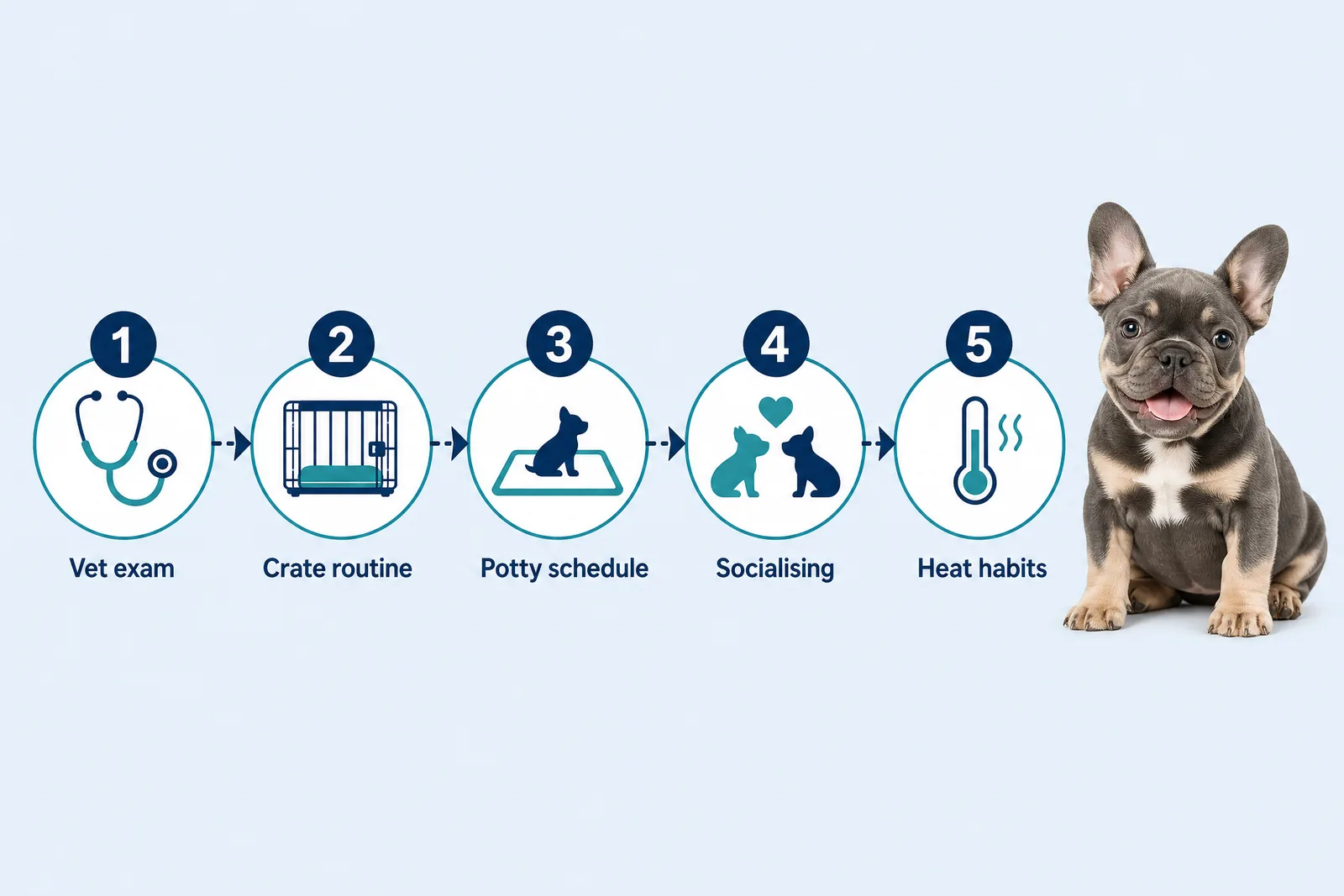
Days 1 to 14 Vet exam including an honest conversation about breathing at rest. Start crate training with food. Potty breaks every 90 minutes and after every sleep, meal and play session. Keep the home cool. Note how the puppy breathes while asleep, since sleep disruption is a recognized BOAS sign.
Days 15 to 45 Socialising while vaccination status allows: carried outings, car rides, meeting calm adult dogs, different floor surfaces, hoovers, doorbells. Introduce the harness. Handle paws, ears and folds daily so grooming is boring later. Begin two-minute alone-time drills.
Days 46 to 90 Short leash walks in cool parts of the day, five minutes per month of age. Puppy class if available. Teach a settle on a mat. Start a fold-cleaning routine. Weigh monthly and keep the puppy lean.
Things to buy early: a Y-front harness, a cooling mat, a slow feeder, a raised bowl if your dog gulps, baby gates to block stairs, and a thermometer for the room.
Red flags in the first 90 days that justify a same-day call: breathing that worsens, blue or grey gums, repeated regurgitation, collapse, or weak hind legs.
What French Bulldog Owners Say
Owner discussions are blunter than breeder brochures, and more useful.
“I dearly love her and would die for her”
That line came from an owner on Reddit in a thread titled, word for word:
“Do you guys ever feel guilty for having a French bulldog?”
Both quotes come from the same conversation, and the tension in it is the honest state of the breed. The practical response is not guilt, it is action. If you already own one, you can still change outcomes: get a BOAS grade from your vet, keep the dog at a lean weight, manage heat seriously, and if the grade is II or III, ask for a surgical referral rather than waiting. Owners who adopt or rescue a Frenchie are not responsible for how it was bred.
“I unfortunately don’t enjoy walks with my Frenchie”
Another owner on Reddit wrote that as a thread title. It is a common frustration: stubborn stops, heavy breathing, a dog that plants itself on the sidewalk. Three fixes help. First, check the breathing grade, because refusing to walk is sometimes a dog telling you it cannot. Second, change the time of day and the surface temperature. Third, stop measuring success in distance. A ten-minute sniffing route gives most Frenchies more mental satisfaction than a forced mile, and scatter-feeding dinner in the yard counts as enrichment.
French Bulldog FAQ
How long do French Bulldogs live? Most live 10 to 12 years. Lean body weight, a low BOAS grade and insured access to timely surgery are the factors most likely to move an individual dog toward the upper end.
Can French Bulldogs handle hot weather? Poorly. They cool mainly by panting, and a restricted airway makes panting less effective. Risk starts around 70°F with sun or humidity. Many airlines refuse them entirely, including JAL Cargo, which will not carry French Bulldogs at any time of year.
Are French Bulldogs good for first time dog owners? Behaviorally, yes. Medically and financially, no. The training load is manageable, but a first-time owner needs to be ready for fold cleaning, heat planning, insurance and a possible four-figure surgery.
Do French Bulldogs shed a lot? Moderately, year-round, with heavier spring and fall periods. The hairs are short and stiff and they embed in upholstery. One or two brushings a week with a rubber mitt keeps it manageable.
What should I look for when choosing a puppy? Open, round nostrils rather than slits. A visible muzzle, not a flat wall. Quiet breathing at rest. Proof of parental health testing, including respiratory grading, plus hip, elbow and eye screening. The Royal Kennel Club recommends respiratory assessment from 12 months, repeated every two years for breeding dogs.
Is snoring normal for a French Bulldog? It is common, which is not the same as harmless. Snoring, snorting and gagging are early BOAS signs. Worsening noise, exercise intolerance, fainting or slow recovery after activity all warrant a veterinary assessment.
Can French Bulldogs be left alone all day? Not comfortably. Four to six hours is a reasonable ceiling for most adults, built up gradually. Longer absences need a walker or daycare, and daycare only if the facility understands heat management.
Are things changing for the breed? Some. EU Regulation 2026/1818 bars breeding establishments from using dogs with extreme conformational traits that create high welfare risk, and the heritability findings in the 2026 Royal Kennel Club analysis suggest measured selection can improve breathing across generations. Buyer demand decides how fast that happens.
The useful next step: if you already have a french bulldog, book a breathing assessment and get a baseline weight recorded this month. If you are still choosing, visit two breeders, ask for the respiratory grading paperwork, and walk away from anyone who calls the snoring cute.