
Quick answer: Is Kirkland dog food good? For most healthy adult dogs, the grain-inclusive Kirkland Signature lines are a reasonable, low-cost kibble made by a large contract manufacturer. The newer concern sits with the grain-free Nature’s Domain lines, which are the subject of a class action filed in June 2026 alleging they were sold as healthy despite a claimed link between pulse-heavy diets and canine heart disease. Those are allegations, not proven findings. The FDA has not concluded that grain-free food causes dilated cardiomyopathy. Guidance below was checked October 2026 and is general information, not a diagnosis.
Is Kirkland Dog Food Good? Key Takeaways
- Kirkland Signature and Nature’s Domain are store brands made under contract, and the pet food maker named alongside Costco in litigation is Schell & Kampeter Inc., which does business as Diamond Pet Foods, per the filed 2020 complaint in Shaw v. Costco.
- A new class action is pending. West et al. v. Costco Wholesale Corp., Case No. 26-cv-2182, was filed in the Western District of Washington in June 2026 over Nature’s Domain grain-free products and was still listed as pending in July 2026, according to Truth in Advertising’s case summary.
- The FDA has not proven causation. The agency reports cases in both grain-free and grain-containing diets and says it does not know the specific connection, per its questions and answers on non-hereditary DCM.
- The suspicion has moved from “no grain” to “lots of pulses.” Tufts reported on June 22, 2026 that diet-associated DCM tracks with diets high in peas, lentils, chickpeas and beans, in both grain-free and grain-inclusive foods, in its Petfoodology update.
- A large 2026 cohort analysis found no significant link. Dog Aging Project data published in Veterinary Medicine and Science reported an odds ratio of 1.05 for new cardiac diagnoses with owner-reported grain-free feeding (95% CI 0.91 to 1.21, p = 0.52), in O’Brien et al..
- The practical move is simple for most owners: if there is no medical reason to avoid grains, pick the grain-inclusive Kirkland recipe instead of the grain-free one.
- Dogs already diagnosed with heart disease need different advice. Tufts cardiology service guidance favors grain-inclusive diets from makers with strong nutritional quality control, as described by the Cummings School on heart disease and nutrition.
Is Kirkland Dog Food Good? What It Is Made Of and Who Makes It
Kirkland dog food is a Costco store brand sold in two main families: Kirkland Signature, which mostly uses named meats with rice and other grains, and Nature’s Domain, which is the grain-free range built on sweet potato, peas and lentils. Both are produced under contract rather than in a Costco-owned plant.
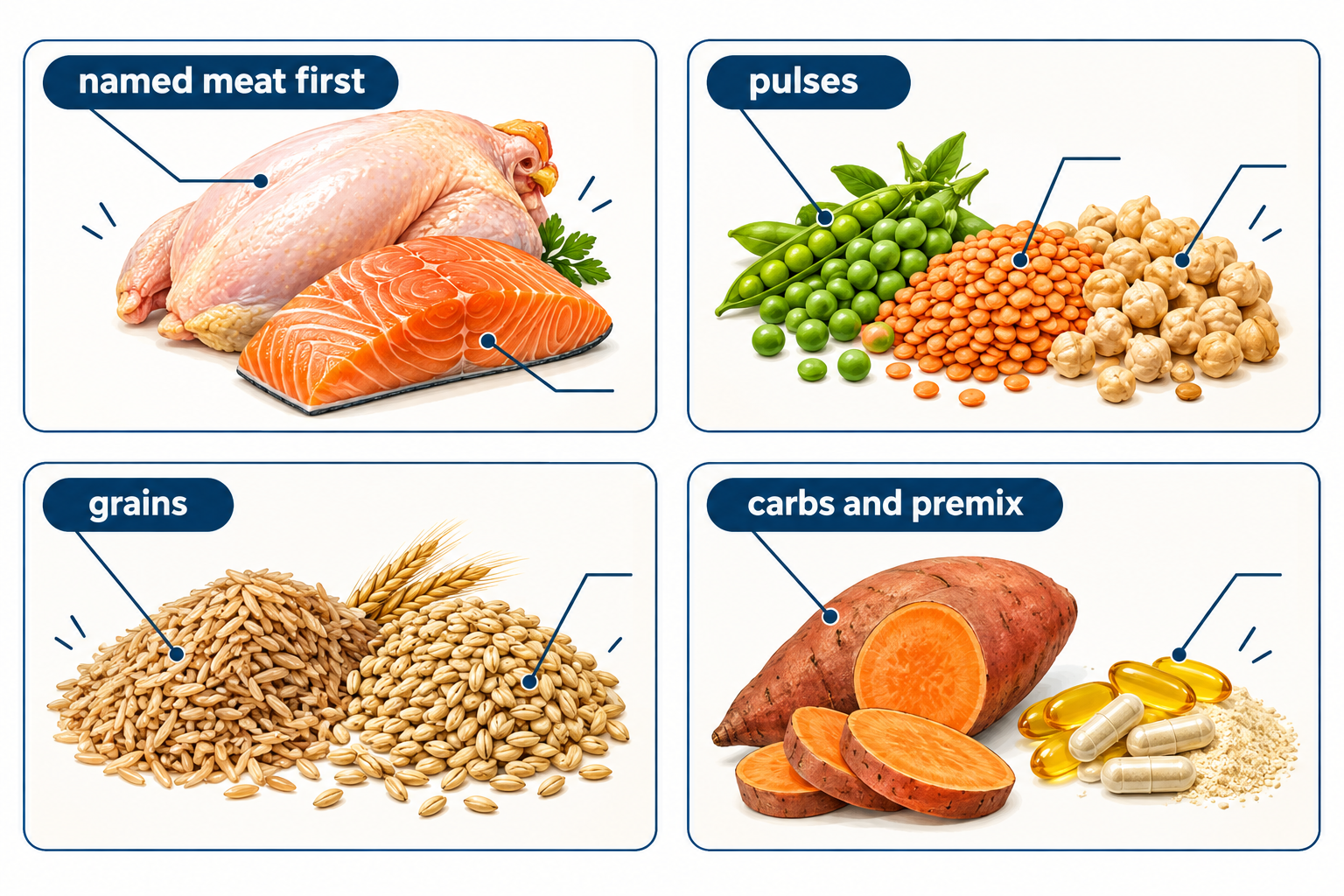
On the manufacturer question, the cleanest public paper trail comes from litigation. The 2020 class action caption names Costco Wholesale Corporation together with Schell & Kampeter Inc. doing business as Diamond Pet Foods as defendants over Nature’s Domain products, which is why reviewers consistently describe Diamond as the producer. Coverage of the same filing from Law Commentary’s summary of the Costco and Diamond Pet Foods class action describes the same pairing.
Typical ingredient patterns, based on Dog Food Advisor’s review of the Kirkland Signature dry lines and its review of Nature’s Domain grain-free canned food:
- Named animal protein near the top, usually chicken, chicken meal, lamb meal or salmon meal.
- Grains in the Kirkland Signature lines, commonly rice and barley.
- Pulses and sweet potato in Nature’s Domain, which is exactly the ingredient pattern now under scientific scrutiny.
- A standard vitamin and mineral premix, plus added fats and sometimes dried fermentation products.
If label reading is the part that makes your eyes glaze, start with our plain guide to how to read a dog food label and what AAFCO means. The AAFCO nutritional adequacy statement is the single most useful sentence on any bag, and it is almost always in tiny print near the feeding chart.
Kirkland dog food grain-free lawsuit: what happened?
Two separate lawsuits get mixed together online, and they allege completely different things. One is about wheat showing up in food sold as grain-free. The other is about heart disease marketing claims.
The 2020 case: wheat in “grain-free” food. Shaw et al. v. Costco Wholesale Corp. and Schell & Kampeter Inc. d/b/a Diamond Pet Foods, Case No. 3:20-cv-06078, was filed November 3, 2020. Plaintiffs alleged independent testing found material amounts of undisclosed wheat in products marketed as grain-free, including Nature’s Domain Turkey Meal & Sweet Potato Formula and Nature’s Domain Puppy Chicken & Pea Formula, according to Top Class Actions’ report on the grain-free labeling claims. Related litigation against Diamond, Shaw et al. v. Schell & Kampeter Inc., Case No. 2:20-cv-01620-RAJ, resolved with an $8 million grain-free products settlement covering several Nature’s Domain recipes, including beef and sweet potato, turkey and sweet potato, salmon meal and sweet potato, puppy chicken and pea, and small breed salmon and lentil.
A settlement is a resolution, not a scientific verdict. It does not establish that every bag was mislabeled or that any dog was harmed.
The 2026 case: heart disease marketing claims. West et al. v. Costco Wholesale Corp., Case No. 26-cv-2182, was filed in the Western District of Washington in June 2026. The complaint alleges Nature’s Domain grain-free products were marketed as healthy and safe despite an alleged association between pulse-heavy diets and canine dilated cardiomyopathy. As of July 2026 the case was listed as pending. The Seattle Times reported on the filing as a consumer protection action.
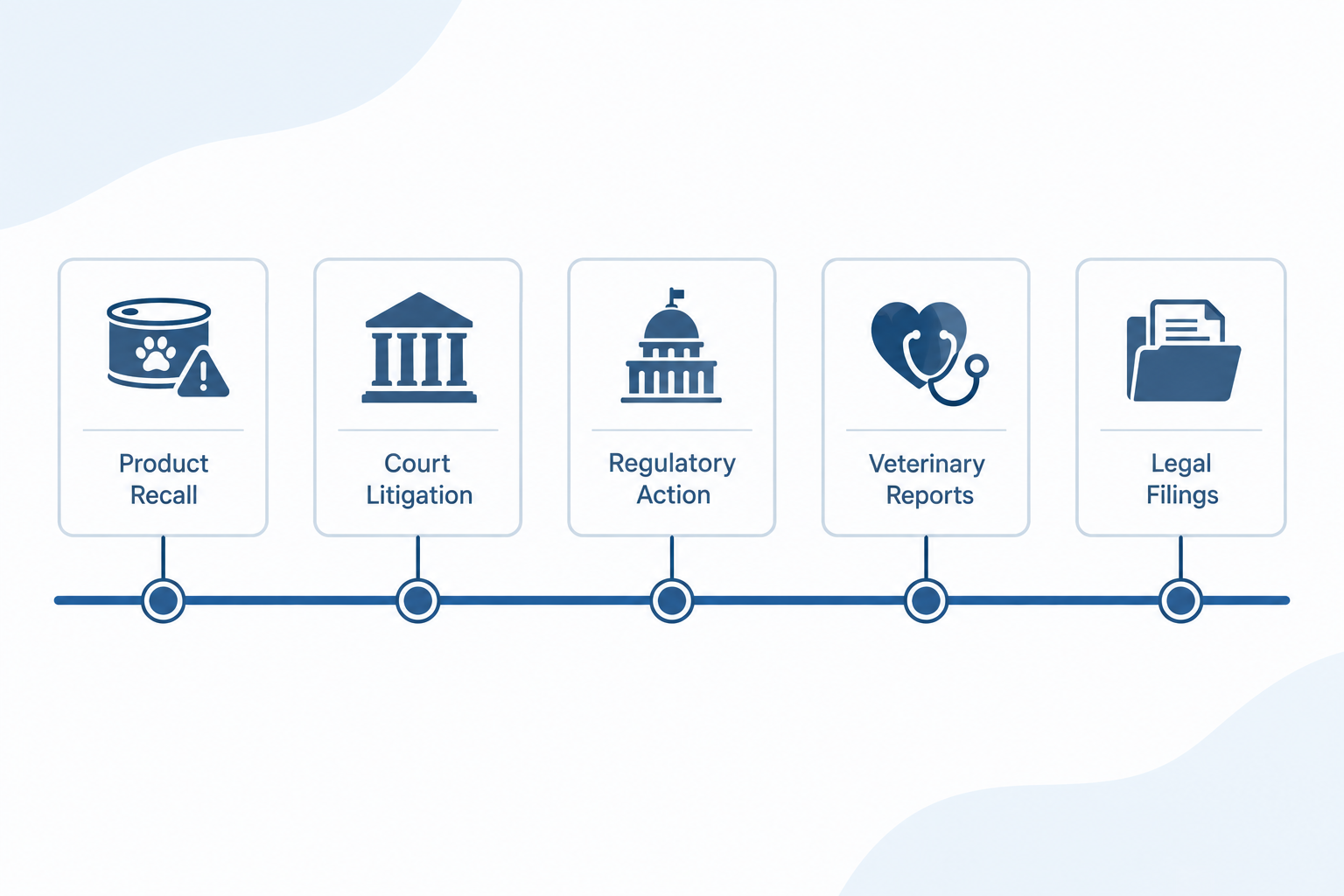
26-cv-2182
Case number of the June 2026 Costco grain-free class action, W.D. Wash., listed pending July 2026 (Truth in Advertising)
$8 million
Diamond Pet Foods grain-free products class action settlement from the earlier labeling litigation (Top Class Actions)
OR 1.05
Odds ratio for new cardiac diagnosis with grain-free feeding, 95% CI 0.91 to 1.21, p = 0.52 (Dog Aging Project, 2026)
Dec 2022
When the FDA stopped routine DCM investigation updates pending meaningful new science (FDA)
2012
Year Kirkland products were included in the broad Diamond Pet Foods Salmonella recall
Does Kirkland dog food cause heart problems?
No regulator or peer-reviewed study has established that Kirkland dog food, or grain-free food generally, causes heart disease in dogs. The evidence points at a pattern in some recipes, not a proven cause, and the two most recent credible updates disagree about how worried owners should be.
What the FDA actually says: reports of non-hereditary DCM involved both grain-free and grain-containing diets, many reported diets listed pulses high in the ingredient panel, and the agency has not determined the diets are inherently unsafe or identified the specific connection. The investigation was paused in December 2022, with the agency saying it would resume routine updates only if meaningful new scientific information appeared. Paused is not the same as cleared, and it is also not the same as proven.
What Tufts found: the June 22, 2026 Petfoodology update describes diet-associated DCM as clustering around diets high in pulses such as peas, lentils, chickpeas and beans, appearing in both grain-free and grain-inclusive foods. Tufts also states the problem does not appear to be caused by grain deprivation or a simple taurine deficiency. That distinction matters for shoppers. A bag that adds a little rice but still leans on peas and lentils has not necessarily solved anything.
What the largest recent dataset found: the 2026 Dog Aging Project analysis in Veterinary Medicine and Science looked at owner-reported grain-free feeding and new cardiac diagnoses over two years and found no statistically significant association (odds ratio 1.05, 95% CI 0.91 to 1.21, p = 0.52).
The honest summary: the risk, if it exists, appears tied to heavy pulse content in specific formulations, is not demonstrated at population level, and is not established for any particular brand.
What that study did not establish. It relied on owner-reported diet, used broad cardiac diagnosis categories rather than confirmed diet-associated DCM, and ran over a limited follow-up window. It cannot rule out a small risk in specific breeds or specific recipes. Golden Retrievers and a handful of other breeds featured heavily in earlier case reports, and breed-level questions are not answered by an overall odds ratio.
Is Kirkland dog food safe after the lawsuit?
For a healthy adult dog, the grain-inclusive Kirkland Signature recipes remain a defensible budget choice, and no current official recall was confirmed in the sources checked for October 2026. The pending lawsuit concerns marketing claims about Nature’s Domain grain-free food. It has not produced a safety finding, a recall, or a court ruling.
A decision rule that keeps this simple:
- Choose grain-inclusive Kirkland Signature if your dog has no diagnosed grain allergy and you want the lowest-risk version of a warehouse budget food.
- Choose a different brand entirely if your dog has diagnosed heart disease, is in a breed line with known cardiac issues, or your vet has asked you to avoid pulse-heavy diets.
- Stay on Nature’s Domain only with a conversation, meaning ask your vet whether your specific dog, breed and recipe warrant a change or a cardiac screen.
The common mistake here is panic switching overnight. Abrupt diet changes cause more immediate misery (loose stools, skipped meals, a dog giving you a wounded look at 6am) than the theoretical risk you are avoiding. Use a seven to ten day transition, which we walk through in how to switch dog food without upsetting their stomach.
Kirkland label check tool
Kirkland dog food price: how much does it cost?
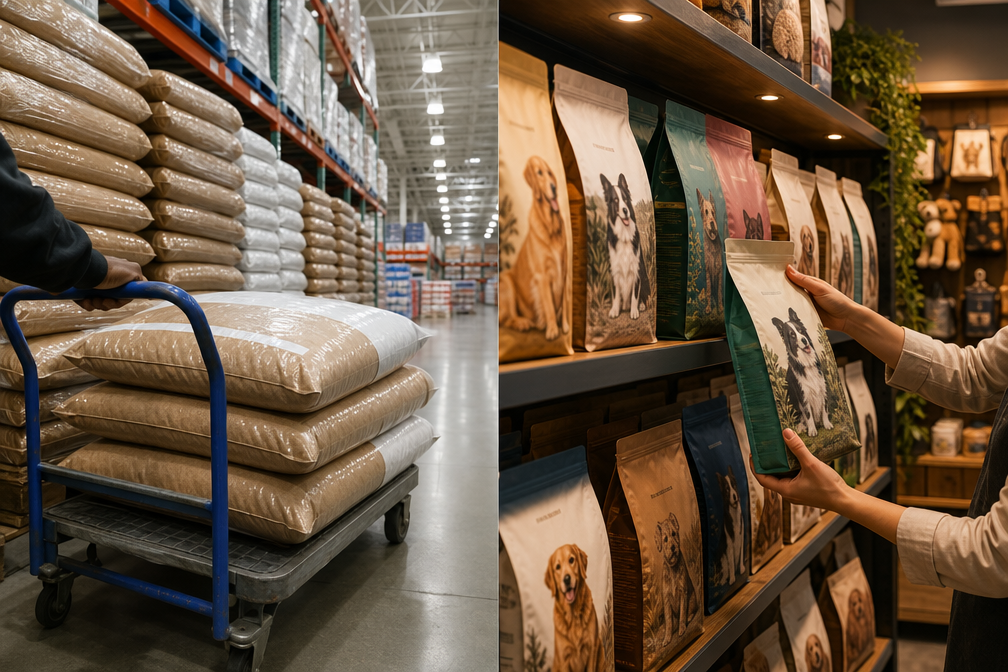
Kirkland dry food is sold in large bags at warehouse-club pricing, which is the main reason owners ask about it in the first place. Exact prices are not published consistently online, vary by region and warehouse, and no verified October 2026 figure appeared in the sources checked for this article, so no number is quoted here.
The useful skill is comparing cost per pound and cost per day rather than cost per bag. Do it at the shelf:
- Divide the shelf price by bag weight to get price per pound.
- Read the feeding chart for your dog’s weight to get cups per day.
- Work out cups per bag (roughly four cups per pound of dry kibble for most kibble densities, which varies by product).
- Compare with your current food on daily cost, not bag price. A denser food fed in smaller portions can close the gap.
A bigger bag only saves money if the food stays fresh long enough to finish it. Fat oxidizes, and a 40 pound bag sitting open in a humid garage for three months is a false economy. If budget is the driving factor, our roundup of cheap dog food that is still good covers the same tradeoff across brands.
Kirkland dog food reviews: what do vets say?
Most veterinary nutrition guidance does not rank brands by name. It ranks manufacturers by what they can prove about formulation, staffing and quality control, which is where a store brand faces its hardest questions.
The criteria clinicians commonly apply, reflected in the Tufts cardiology service guidance on heart disease and nutrition, include diets that meet WSAVA-style quality questions, use common named meats, contain grains when there is no medical reason to avoid them, and come from companies with strong nutritional quality control.
Where Kirkland sits against that list:
- Named meats: yes, in most recipes.
- Grain-inclusive option: yes, in the Kirkland Signature lines.
- Published answers on who formulates the diets, staff qualifications and feeding trials: not listed in the sources checked here, which is the main reason some vets prefer a different brand for medical cases.
Third-party review sites such as Dog Food Advisor’s Kirkland Signature dry assessment generally grade the recipes favorably for the price. Review-site stars are not veterinary endorsement. For how clinicians weigh this, see what vets actually look for in a dog food.
Kirkland dog food vs Purina Pro Plan and Blue Buffalo: which is better?
For a dog with a medical condition or a cardiac history, Purina Pro Plan generally wins on documented research capability and quality control. For a healthy adult dog on a tight budget, Kirkland Signature grain-inclusive recipes deliver more of that per dollar than most premium bags. Blue Buffalo sits in between on price and tends to market harder than it documents.
| Factor | Kirkland Signature | Purina Pro Plan | Blue Buffalo |
|---|---|---|---|
| Price tier | Lowest of the three | Mid to high | Mid to high |
| Grain-inclusive options | Yes, in Kirkland Signature lines | Yes, extensive | Yes |
| Owns its manufacturing | No, contract made (Diamond Pet Foods named in litigation) | Yes, company-owned plants | Partly |
| Published feeding trial and nutritionist detail | Not listed in sources checked | Widely published by the company | Limited |
| Vet clinic familiarity | Moderate | High | Moderate |
| Best fit | Healthy adult dogs, budget priority | Medical cases, performance, cardiac caution | Owners wanting ingredient-led marketing |
Choose Purina Pro Plan if your dog has heart disease, a sensitive gut that has failed other foods, or your vet wants a brand with documented quality control. Choose Kirkland Signature if you have a healthy adult dog, you are already a Costco member, and the money saved goes to vet care, training or insurance. Choose Blue Buffalo if a specific recipe already works and you accept the higher price. For a wider line-up, compare the ranges in our Purina dog food review covering ranges, prices and who it suits.
Kirkland dog food recall history: any problems?
The documented recall history is concentrated in older events, not current ones. Kirkland products were included in the broad 2012 Diamond Pet Foods Salmonella recall, and earlier Kirkland canned food was associated with the 2007 melamine-related recall.
Several low-authority websites have circulated claims of 2026 Kirkland recalls involving vitamin D or aflatoxin. No matching official Costco or FDA notice was found in the sources checked for October 2026, so treat those claims as unverified until you can match a specific lot code. Verify any current bag two ways:
- Search the FDA animal food recalls and withdrawals database.
- Check the official Costco product recalls page for your region, or ask the membership desk.
Review sites sometimes summarize the brand as having no recalls since 2012. That is a summary, not a guarantee, and it does not replace a lot code check.
Is Kirkland dog food good for sensitive stomachs, picky eaters, and senior dogs?
Mixed results, and the honest answer depends on the dog rather than the bag. Kirkland offers recipes aimed at each group, but none of them are therapeutic diets, and a dog with ongoing digestive trouble needs a diagnosis before a new kibble.
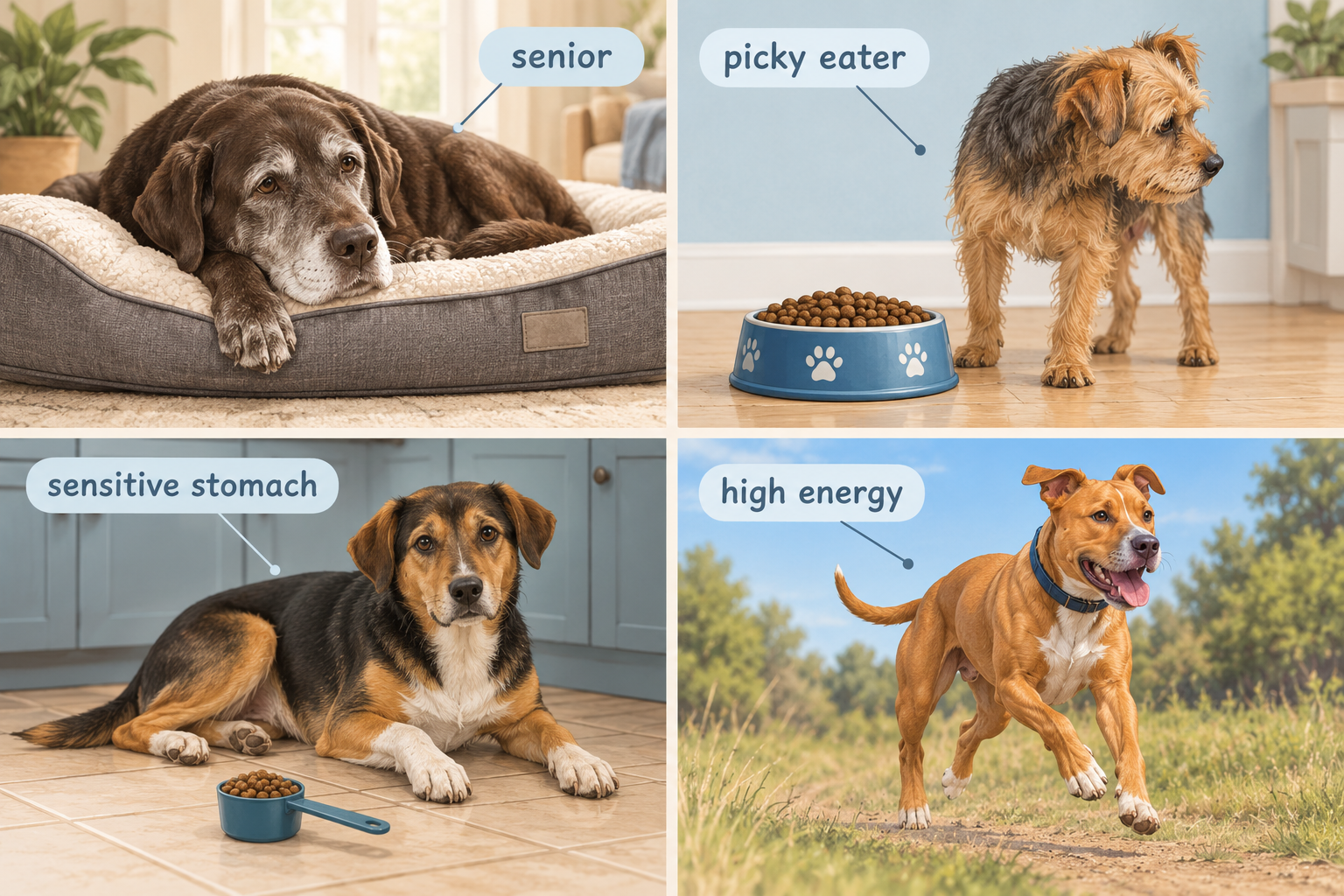
Sensitive stomachs. Single-protein recipes and limited-ingredient style formulas can help some dogs, and a slow transition helps more than the recipe choice does. Persistent loose stools, weight loss or vomiting are veterinary questions, not shopping questions. Our guide to dog food for sensitive stomachs and food allergies explains what an elimination trial actually involves.
Picky eaters. Budget kibble is rarely the fix for a dog refusing meals, and the pattern is usually about routine, portion size, table scraps or an underlying health issue. Warm water, a short-term topper or a stricter mealtime window helps more than another bag. If toppers tempt you, read dog food toppers: what to add to kibble and what to skip before you pour gravy on everything.
Senior dogs. Older dogs often need adjusted calories, adequate protein and joint support, and a healthy weight matters more than any marketing word on the bag. Kirkland’s healthy weight and mature recipes can work for an active senior with normal bloodwork. Dogs with kidney, heart or dental disease frequently need a prescribed diet instead. See dog food for puppies, adults and seniors: what changes.
Who should not feed their dog Kirkland, and which ingredients raise questions?
Skip Kirkland, and especially the grain-free Nature’s Domain lines, if your dog falls into one of these groups:
- Dogs diagnosed with dilated cardiomyopathy or other heart disease. Tufts cardiology guidance favors grain-inclusive diets from makers with rigorous quality control.
- Dogs in breeds with documented cardiac concerns where your vet has advised avoiding pulse-heavy diets.
- Dogs on a prescription diet for kidney, liver, pancreatic, urinary or severe allergy management. A store brand cannot substitute.
- Growing large-breed puppies without a bag that explicitly states it is formulated for growth of large-size dogs, including calcium limits. If the statement is not there, choose a different bag.
On the ingredient panel itself, the concerns worth checking rather than fearing:
- Peas, lentils, chickpeas or pea protein listed high in a grain-free recipe. This is the specific pattern Tufts flagged in 2026.
- “Meal” ingredients such as chicken meal, which are concentrated protein sources and not a red flag on their own.
- Vague fat or protein sources without a named animal.
- Marketing terms with no definition, including “premium,” “holistic” and “ancestral.” None of those are regulated nutrition claims.
For the full list of genuine warning signs, see dog food ingredients to avoid: red flags on the label.
Best dog food alternatives to Kirkland
If you decide to move, pick the replacement by the reason you are leaving, not by whichever bag has the nicest photo of a wolf on it.
- Leaving over cardiac caution: a grain-inclusive diet from a manufacturer that publishes its nutritionist credentials and testing, such as Purina Pro Plan or a similarly documented line.
- Leaving over budget: compare price per pound across grain-inclusive mainstream lines before assuming Kirkland is the cheapest option in your area.
- Leaving over digestion: talk to your vet about a sensitive stomach formula or a diagnostic trial rather than cycling through five bags.
- Leaving over format preference: wet, air-dried and fresh foods each change cost and handling. Our comparison of dry, wet or raw dog food and which one suits your dog lays out the tradeoffs.
Also fine: staying put. A healthy adult dog thriving on grain-inclusive Kirkland Signature, with good body condition and normal bloodwork, is not an emergency waiting to happen.
FAQ
Is Kirkland dog food good quality for the price? For a healthy adult dog, yes. The grain-inclusive Kirkland Signature recipes use named meats and grains at a low cost per pound. The gap compared with premium brands is in published formulation and testing detail, not obviously in the ingredient panel.
Who makes Kirkland dog food? It is a Costco store brand produced under contract. Schell & Kampeter Inc., doing business as Diamond Pet Foods, was named alongside Costco as a defendant in the 2020 Nature’s Domain litigation, which is the clearest public documentation available.
Do vets recommend Kirkland dog food? Some do for healthy dogs on a budget, and many prefer brands with published nutritionist staffing, feeding trials and quality control for medical cases. Veterinary nutrition guidance focuses on manufacturer transparency rather than brand names.
Does Kirkland dog food meet WSAVA guidelines? WSAVA does not approve or certify brands. It publishes questions to ask a manufacturer. Answers to those questions for Kirkland, including who formulates the diets and whether feeding trials were run, were not listed in the sources checked for this article.
Has Kirkland dog food been recalled in 2026? No official Costco or FDA recall notice for Kirkland dog food was confirmed in the sources checked for October 2026. Claims circulating on low-authority sites should be verified against the FDA recall database and your bag’s lot code.
Is grain-free Kirkland dog food dangerous? Not demonstrated. The FDA has not established that grain-free diets cause DCM, and a 2026 Dog Aging Project analysis found no statistically significant link. Tufts has flagged diets high in peas, lentils and chickpeas as the pattern worth watching, so grain-inclusive is the lower-uncertainty choice when grains are medically fine.
Can I keep feeding Nature’s Domain while the lawsuit is pending? That is a conversation for your vet, who knows your dog’s breed, age and heart history. A pending class action is an allegation about marketing claims, not a recall or a safety ruling.
Conclusion: the practical next step
Is Kirkland dog food good? For a healthy adult dog with no cardiac history, the grain-inclusive Kirkland Signature lines are a sensible budget food, and the June 2026 class action concerns marketing claims about the grain-free Nature’s Domain range rather than any proven harm. The science has moved from “grain-free is suspicious” to “pulse-heavy recipes deserve a closer look,” and the largest recent dataset found no significant population-level link.
Three things to do this week:
- Read the AAFCO statement on your current bag and confirm it matches your dog’s life stage.
- Check whether peas, lentils or chickpeas sit in the first six ingredients. If yes and there is no medical reason to avoid grains, switch to a grain-inclusive recipe over seven to ten days.
- Raise it at the next vet visit, especially for a breed with cardiac history, an older dog, or any dog with a cough, exercise intolerance or unexplained tiredness.
Individual variation runs the show here. Two dogs on the same bag can look entirely different after a year, and body condition, coat, stools and bloodwork tell you more than any brand ranking. For the broader framework, start with what makes a dog food good: the six things that matter.