
Quick Answer: Is a Beagle Right for You?
A beagle suits active, patient households with a secure fence and a sense of humor. This is a pack-bred scent hound: friendly with kids, friendly with other dogs, loud when bored, and governed by its nose more than by your voice. Expect an hour or more of daily activity, slower house training than average, and a dog that will counter-surf for the rest of its life. Skip the breed if you need quiet neighbors, off-leash reliability, or a dog who can be alone nine hours a day.
Key Takeaways: Beagle
- Two size varieties. The American Kennel Club breed standard splits beagles into under 13 inches (roughly 18 pounds and under) and 13 to 15 inches (about 20 to 30 pounds).
- Lifespan around 12 to 15 years. A UK VetCompass analysis published January 28, 2025 reported a median life expectancy near 12.7 years for beagles (O’Neill et al., 2025).
- Obesity and dental disease lead the health list. The same VetCompass work found overweight status and periodontal disease among the most commonly recorded conditions (summary).
- Vocal by design. Baying is a working trait, not a training failure. Dense housing plus long alone-time turns it into a neighbor problem.
- Escape risk is the single biggest safety issue. Off-leash freedom belongs in genuinely fenced space or structured scent work.
- Legal note: Pennsylvania’s Senate Bill 381, signed October 2026, created an adoption pathway for research dogs and cats, effective April 20, 2027, per Humane World for Animals.
- Budget roughly $1,000 to $2,500 for a well-bred puppy, plus a heavier first year.
Where Does the Beagle Come From?
The beagle descends from small English scent hounds bred to hunt rabbit and hare in packs, with the modern type consolidated in Britain during the 1800s and refined in the United States soon after. Pack work explains almost everything else about the breed.
Hunters wanted a hound that could be followed on foot, worked shoulder to shoulder with a dozen other dogs, and announced a find loudly enough to be heard over a hill. That job description selected for three things: sociability, stamina, and voice. It did not select for checking in with a handler. A hound that stopped to ask permission lost the rabbit.
You still live with those choices. A beagle greets strangers like returning pack members, tolerates other dogs unusually well, and treats your recall cue as a suggestion to be weighed against the scent in front of it.
Name confusion worth clearing up: the “olde english pocket beagle” and “mini beagle” labels sold online are not separate AKC varieties. Historical pocket beagles were tiny hunting hounds, largely gone by the 1900s. Today those terms usually mean a small individual, a crossbreed, or a marketing angle. And Peter S. Beagle, author of The Last Unicorn, is a novelist, not a dog. Search engines blend them constantly.
What Makes the Beagle So Special (and So Cute)?
What people love about the beagle is the enthusiasm. The breed treats a walk, a visitor, a dropped crumb, and a Tuesday with the same level of commitment.
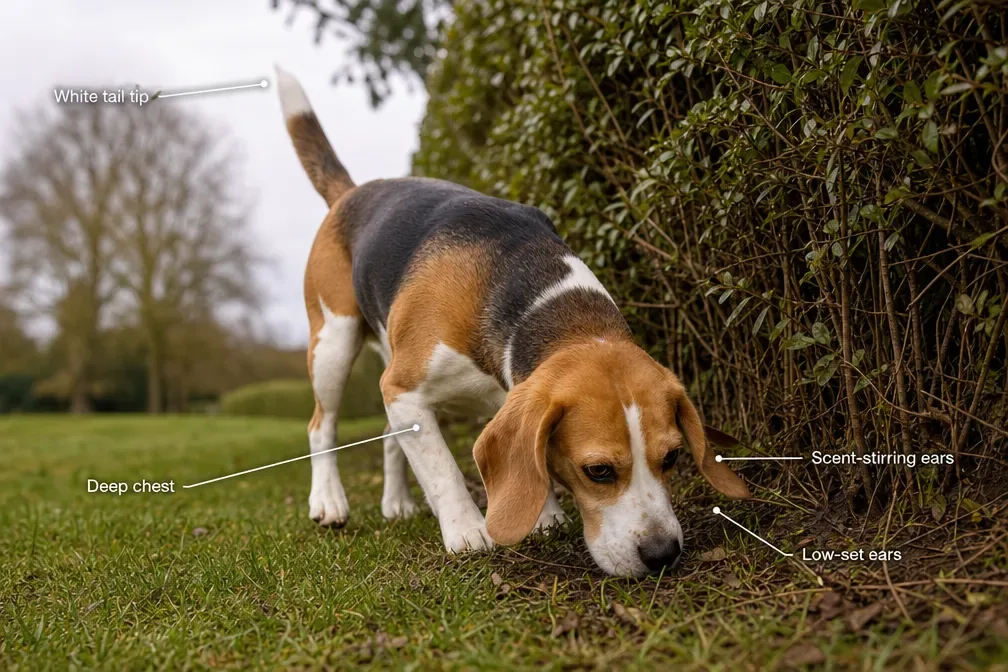
The looks help. Round dark eyes set wide apart, a broad soft muzzle, ears that hang low and fold over the cheeks, a compact body built like a sturdy little barrel. Human faces respond strongly to large eyes and rounded features, and the beagle has both without any of the breathing problems that come with flat-faced breeds. The white tail tip has a practical origin too: it was bred as a flag so hunters could spot the dog in tall cover.
Then there’s the nose. Beagles carry a scenting apparatus that handles airborne and ground odor far beyond human ability, which is why detector programs at airports and agricultural borders use them. Published receptor counts vary widely between sources and methods, so treat the famous “220 million” figure as a rough estimate rather than a measured breed fact. What is well supported: olfactory detection work favors beagles for scenting ability combined with a handler-tolerant temperament.
Those low ears may actually help. One common explanation is that pendulous ears sweep ground odor upward as the dog moves. It is a reasonable mechanical idea, not a settled finding.
The beagle is not a small dog who happens to sniff. It is a nose with a dog attached, and the dog has opinions about dinner.
Beagle Size, Weight and Lifespan
Beagles come in two official height varieties, and both are small to medium dogs weighing roughly 18 to 30 pounds. Males typically run slightly taller and heavier than females, though the difference is modest.
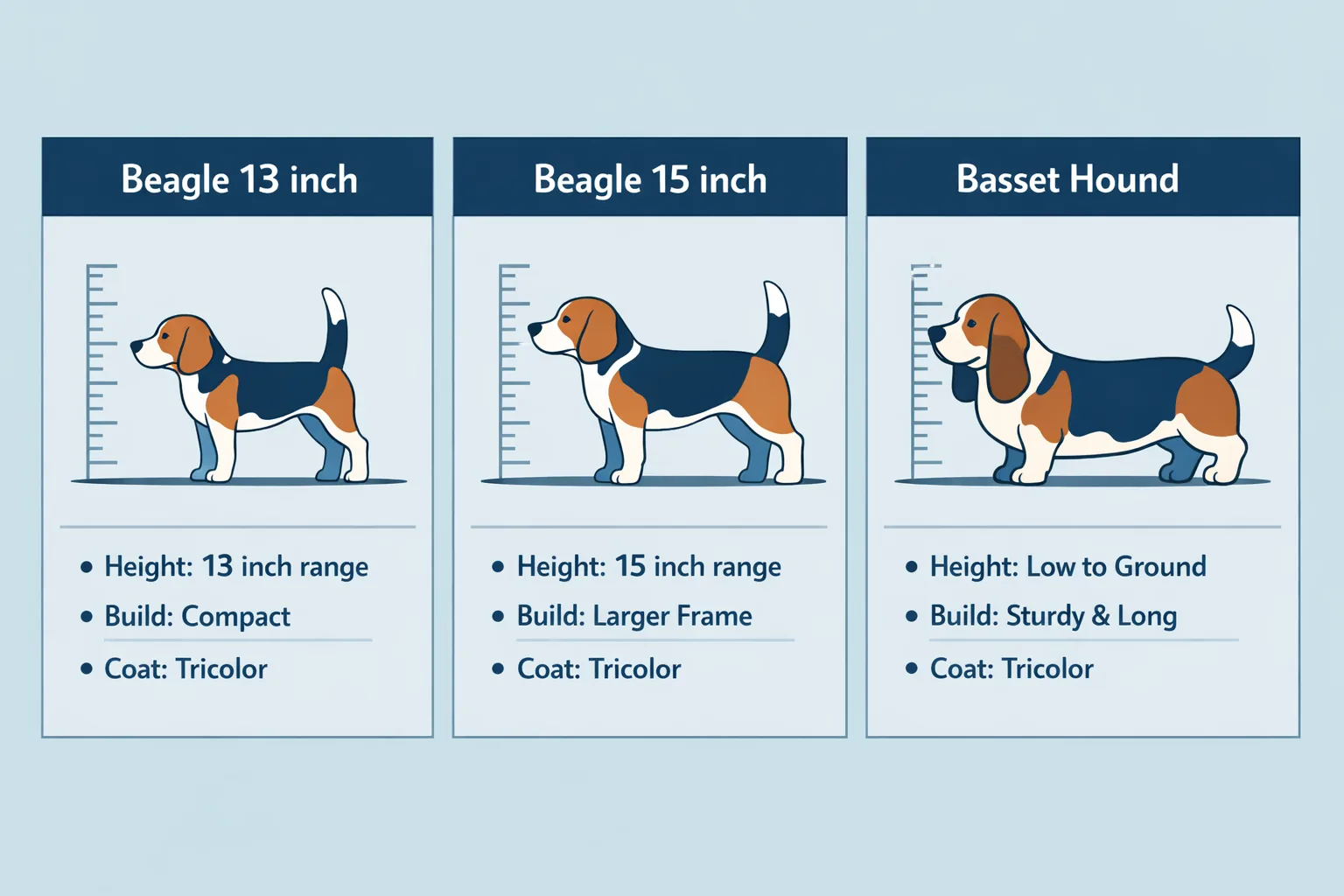
| Dog | Height at shoulder | Typical weight | Typical lifespan |
|---|---|---|---|
| Beagle, 13 inch variety (male) | Under 13 in | 18 to 20 lb | 12 to 15 yrs |
| Beagle, 13 inch variety (female) | Under 13 in | 16 to 19 lb | 12 to 15 yrs |
| Beagle, 15 inch variety (male) | 13 to 15 in | 22 to 30 lb | 12 to 15 yrs |
| Beagle, 15 inch variety (female) | 13 to 15 in | 20 to 26 lb | 12 to 15 yrs |
| Basset Hound (comparison) | 14 in and under | 40 to 65 lb | 12 to 13 yrs |
Height and weight bands follow the AKC breed standard; lifespan figures draw on the 2025 VetCompass analysis reported by PetMD and Dogster.
Beagle vs basset hound: both are scent hounds with low ears and loud voices, but the basset is twice the weight, built long and heavy-boned with short legs, slower moving, and more prone to back and joint strain. A beagle can jog with you. A basset would rather you reconsider. If you want the hound personality in a lighter, faster package, the beagle is the one.
Weight is where owners lose years. Keeping a beagle lean is the most effective lifespan decision you control.
What Is the Beagle Temperament Like?
Beagle temperament is cheerful, sociable, curious, and independently motivated. The AKC describes the breed as “merry,” which is accurate and also understates the volume.
Three traits define daily life:
Scent drive overrides obedience. A beagle that nails recall in the kitchen may blow through an open gate on a deer trail. This is not defiance. The nose simply wins the attention competition.
Food obsession is structural. Beagles were bred to work on modest rations and to be rewarded with food. The result is a dog that will eat a sandwich, a sock, a bag of flour, and your child’s homework with equal interest. Food-motivated dogs are easy to reward and easy to make fat.
They are talkative. Barking, howling, and the long baying note are normal hound communication, and they rise with excitement, frustration, and isolation. Our explainer on why dogs howl covers the mechanics.
Individual variation is real. Some beagles are calm couch dogs at four years old. Background matters too: research-bred dogs leaving laboratory settings may be friendly but unfamiliar with stairs, leashes, toys, and household noise, and the 2025 VetCompass authors cautioned against generalizing between lab and pet populations.
Are Beagles Good With Kids and Other Pets?
Yes, beagles are among the better family dogs for homes with children, mainly because pack breeding selected against dog-dog aggression and for human tolerance. They are sturdy enough to handle a clumsy six-year-old and small enough not to flatten a toddler.
Practical realities:
- Kids and food do not mix well here. A beagle will take a cracker from a seated child. Teach children to eat at the table, and teach the dog a solid “leave it.”
- Noise goes both ways. An excited beagle bays. A child who shrieks back creates a feedback loop. Reward quiet, not escalation.
- Supervise rough play. Beagles rarely bite in anger, but they do mouth during overexcitement.
With other dogs, they are generally easy, and a second dog genuinely helps with alone time. With cats, outcomes are mixed and depend on the individual plus early exposure. A beagle raised with cats from puppyhood often does fine. An adult beagle meeting a cat for the first time may treat it as something to chase. Introduce slowly, use baby gates, and give the cat vertical escape routes. Small pets in open cages (rabbits, guinea pigs, hamsters) are a harder ask and should stay physically separated.
If you want more options, our guide to family-friendly dog breeds for kids compares alternatives.
Who Is the Beagle Made For, and Who Should Skip It?
Choose a beagle if you want a small, hardy, affectionate dog with pack-friendly manners and you can manage noise, fencing, and food security. Skip it if quiet and off-leash reliability are non-negotiable.
Good fit:
- Suburban families with a fenced yard and kids over three
- Households with another dog, or someone home for part of the day
- Owners who enjoy sniffing walks, nose-work games, and long-line training
- People who want a dog friendly enough for a busy, visitor-heavy house
Poor fit:
- Thin-walled apartments with noise-sensitive neighbors (possible, but you must train alone-time from day one)
- Homes with nobody present for nine to ten hours and no walker or daycare
- Owners who want a dog that follows them off-leash on trails
- Anyone expecting Labrador-level biddability in a smaller body. A beagle is lighter, not easier.
Apartment reality check: beagles can live in apartments. Many do. The limiting factors are baying and alone time, not square footage. If you are weighing this, our roundup of apartment-friendly dog breeds is a useful cross-check.
Edge case: retired hunting or former research beagles can be wonderful, but plan for extra decompression time and a vet exam before the first walk.
How Much Exercise Does a Beagle Need?
Plan on 60 to 90 minutes of activity per day for a healthy adult beagle, split across at least two outings, with sniffing counted as real work.
A structured week:
- Two daily walks, 30 to 45 minutes each, with permission to sniff for half of it. A decompression sniff walk tires a hound more than a brisk heel.
- Three or four nose-work sessions a week. Scatter kibble in the yard, hide treats under cups, use a snuffle mat. Ten minutes of searching buys you a nap.
- Secure off-leash running in a fenced area, or on a 30-foot long line in open space.
- Food puzzles at mealtime rather than a bowl. Slows eating, occupies the brain.
Puppies need less: a rough guide used by many vets is about five minutes of formal exercise per month of age, twice daily, with free play on top. Hard running on pavement before growth plates close is not worth the risk.
Common mistake: treating physical exercise as the whole answer. A beagle run to exhaustion and then left alone in a quiet house will still howl. Mental work and company matter as much as mileage.
Heat warning: beagles overheat. Panting that will not settle, bright red gums, wobbling or collapse means heatstroke. Start cooling with cool (not ice) water and call your vet immediately.
Beagle Grooming and Shedding
Beagle grooming is simple: weekly brushing, occasional baths, regular nail trims, and ear checks that matter more than the coat does.
The coat is short, dense, and weather-resistant. Beagles shed year-round at a moderate rate with heavier seasonal periods, usually spring and fall. A rubber curry brush or short-bristle brush once or twice weekly removes most of it. They are not hypoallergenic and the hair is short and stiff, which means it weaves into upholstery rather than drifting in clumps.
The real grooming task is the ears. Low-hanging ears reduce airflow and hold moisture, which makes beagles prone to ear infections.
Weekly ear routine:
- Lift the flap and look. Healthy skin is pale pink and nearly odorless.
- Brown or yellow discharge, a yeasty smell, head shaking or scratching means a vet visit, not a home remedy.
- Dry ears thoroughly after swimming or baths.
- Use a vet-recommended cleaner, never cotton swabs down the canal.
Also on the list: nails trimmed every three to four weeks (hounds rarely wear them down enough), teeth brushed several times a week given how common dental disease is in the breed, and a bath every six to eight weeks or when the hound smell builds. If you are setting up a home routine, start with our beginner’s guide to dog grooming.
Common Beagle Health Problems
Beagles are a reasonably healthy breed overall, but the 2025 VetCompass study of UK beagles found overweight body condition and periodontal disease at the top of recorded conditions, with ear infections, skin problems and obesity-linked issues close behind.
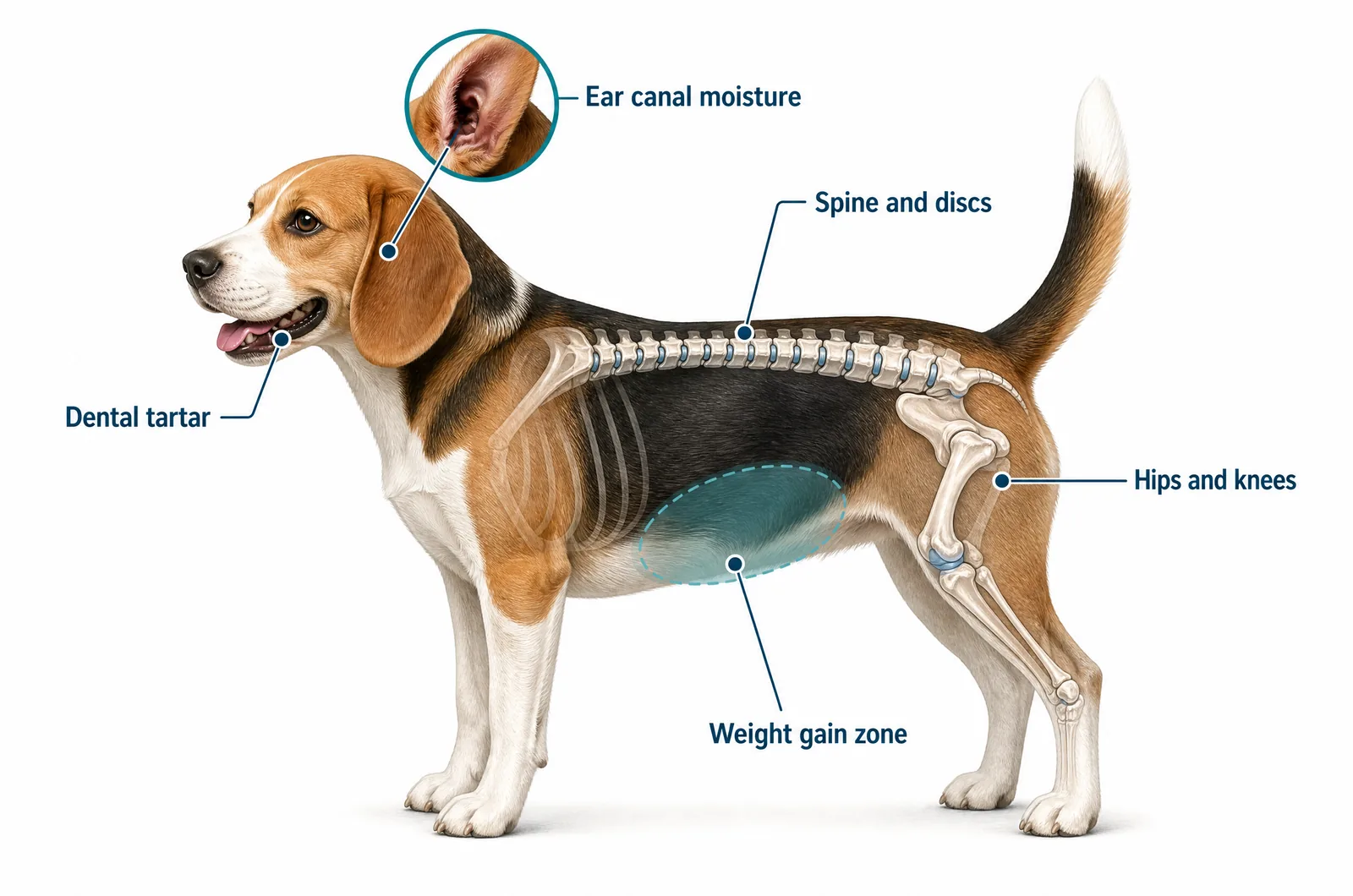
What to watch and screen for:
- Obesity. The most common and most preventable problem. It worsens joints, diabetes risk and lifespan.
- Dental disease. Start brushing in puppyhood. Annual vet dental checks.
- Ear infections (otitis externa). Linked to ear conformation and moisture.
- Hip dysplasia and patellar luxation. Ask breeders for OFA hip evaluations and patella checks.
- Intervertebral disc disease. Less common than in dachshunds but present. Sudden back pain, reluctance to move, dragging or weak hind legs is an emergency. Call a vet the same hour.
- Epilepsy. Idiopathic seizures appear in some lines, typically starting between one and five years.
- Hypothyroidism. Weight gain with lethargy and coat changes warrants a blood panel.
- Eye conditions including glaucoma and cherry eye.
- Musladin-Lueke Syndrome (MLS) and Factor VII deficiency, both with DNA tests available. A responsible beagle breeder will show results.
Beagles are often listed among the healthier dog breeds and that holds up, but only in a lean dog with cared-for teeth and ears. Lifetime care costs vary widely by region and insurance; see the condition breakdown at Vet Explains for a general picture.
Also plainly: bloat (a swollen hard abdomen, unproductive retching, restlessness) and breathing distress are emergencies in any dog. Do not wait.
What Do Beagles Love to Eat? Favorite Foods and Feeding
Beagles love everything, which is exactly the problem. Feed a measured amount of a complete, AAFCO-compliant food twice daily, weigh it rather than scooping, and count every treat against the daily total.
Rough portions for an adult beagle at a healthy weight: about 3/4 to 1.5 cups of dry food per day depending on size, age and activity. Follow the bag’s chart as a starting point, then adjust to body condition. You should feel ribs easily under light pressure and see a waist from above.
Treats most beagles go wild for:
- Small training treats under 3 calories each
- Carrot coins, green beans, cucumber slices (near-zero calorie bulk)
- Plain cooked chicken, pea-sized
- Blueberries and apple slices without seeds
- Frozen food puzzles for slow work
Keep treats to 10% of daily calories. With a beagle that means buying smaller treats, not fewer training reps.
Foods to avoid completely: chocolate, grapes and raisins, xylitol (in peanut butter, gum, some baked goods), onions and garlic, macadamia nuts, alcohol, cooked bones, and large quantities of fatty table scraps, which can trigger pancreatitis.
Security, not willpower. Beagles open bins, nose cabinet doors, and reach counters from chairs. Use a locking trash can, store food in sealed bins inside a closed pantry, and treat “the dog ate the whole bag” as a foreseeable event. If it happens with a large quantity of kibble, call your vet.
For choosing a food, our buyer’s guide to the healthiest dog food walks through labels, life stages and ingredient claims.
How to Train a Beagle
Train a beagle with short, frequent, food-paid sessions and heavy environmental management. Harsh correction backfires with this breed; it produces a hound that avoids you rather than one that listens.
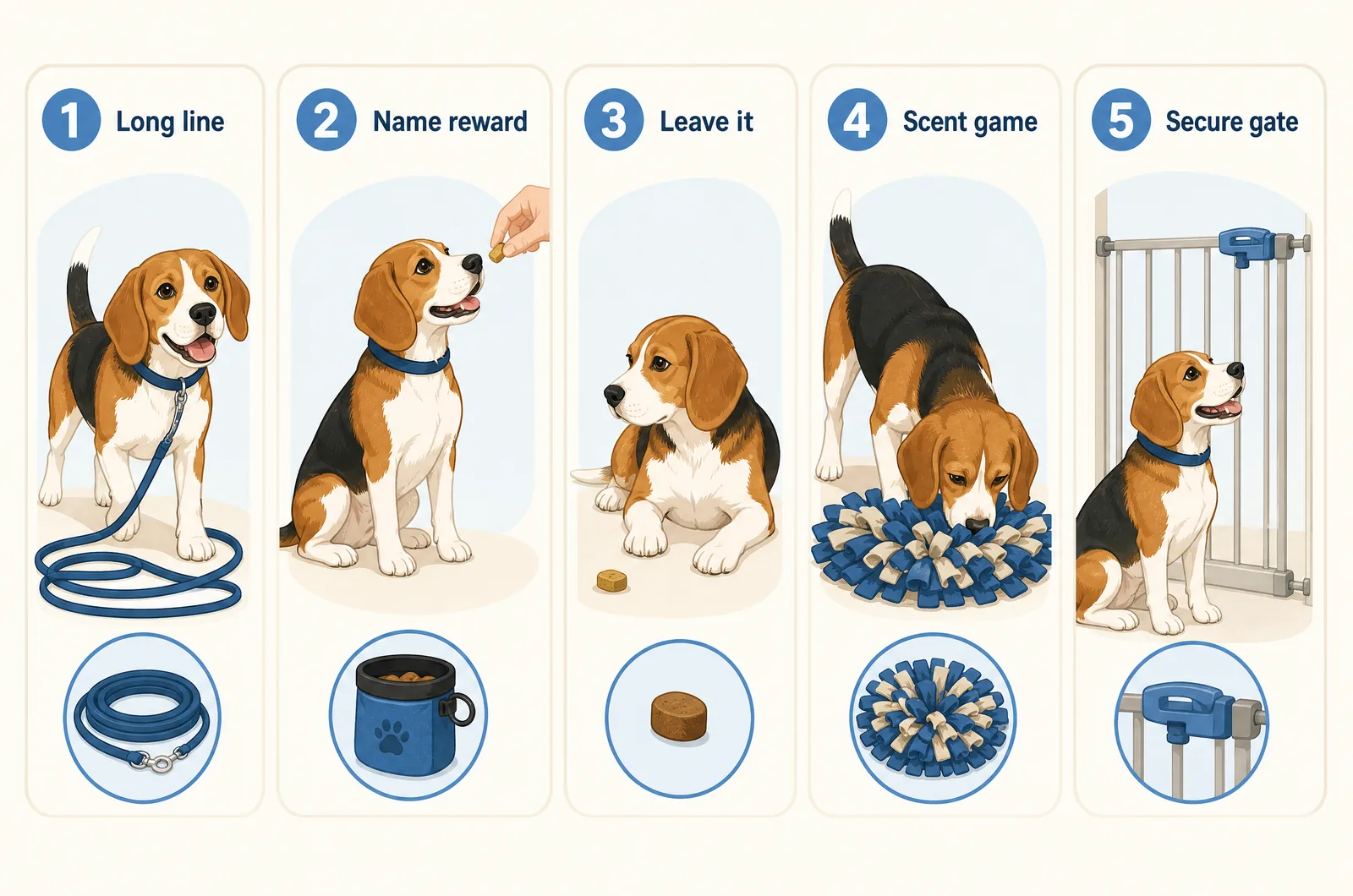
Recall. This is the hard one and the important one. Work on a 15 to 30 foot long line for months before trusting open space, pay recall with something better than anything on the ground (real chicken, not biscuits), and never call your beagle to end something fun. Our step-by-step guide to teaching a reliable recall sets out the progression. Honest limit: many beagles never become safely off-leash in unfenced areas. Plan around that.
Leash walking. Use a front-clip harness and a dedicated “sniff time” cue so the dog knows when nose work is allowed. Trying to ban sniffing entirely creates a dog that pulls the whole walk.
House training. Beagles do take longer than average. Go hard on frequency: out every 45 to 60 minutes with a young puppy, after every nap, meal and play session, plus crate management between. Reward outside immediately, within two seconds. Four to six months is common. Six to nine months is not a failure.
Alone time and barking. Build duration in minutes, not hours. Leave with a frozen stuffed toy, return before distress starts, and increase slowly. If your beagle panics, drools, destroys doorframes or howls continuously, that is likely separation anxiety and needs a structured plan rather than more exercise. Read our separation anxiety guide and consider a certified behavior consultant.
Channel the nose. Formal scent work, barn hunt, or ten-minute find-it games at home give the drive a legal outlet. A beagle with a job bays less at squirrels.
Try It: Beagle Escape Risk Check
A beagle follows its nose first and listens second, so the fence and the front door matter more than the training class. Rate your yard and daily habits below to see where your setup is most likely to fail.
Doggy Rank IQ Tool
Beagle Escape Risk Check

A Beagle follows its nose first and listens second. Rate your yard and habits to see how escape-proof your setup is.
How Much Does a Beagle Cost?
A beagle puppy from a health-testing breeder typically runs $1,000 to $2,500 in the United States, with rescue adoption usually between $150 and $500. Price is the smallest part of the bill.
First-year estimate: roughly $2,000 to $3,500, covering the puppy, vaccine series, spay or neuter, microchip, crate, gates, harness, leash, bedding, puppy classes, food and initial vet visits.
Yearly after that: roughly $1,200 to $2,200 for food, preventives, annual exam, dental care, grooming supplies, and insurance if you carry it. Add daycare or a dog walker and the number climbs fast.
Unplanned costs with this breed cluster predictably: ear infection treatment, emergency visits after eating something inappropriate, and dental cleanings under anesthesia. Budget a cushion of $1,000 or set up insurance before any condition is on record.
What a good breeder shows you: OFA hip results, patella evaluation, eye certification, DNA tests for MLS and Factor VII, the dam on site, and a willingness to take the dog back at any age. Skip anyone selling “teacup,” “pocket” or “miniature beagle” puppies at a premium. Those are not recognized varieties.
Rescue is a strong route here. Beagle-specific rescues handle surrenders, hunting washouts and research retirements, and that last group is growing: Pennsylvania’s 2026 Beagle Bill, effective April 2027, adds the state to the list requiring adoption opportunities for research dogs.
Beagle Puppy Tips for the First 90 Days
The first three months with a beagle puppy should focus on four things: toilet routine, alone-time tolerance, food security, and the beginnings of recall. Everything else can wait.
Days 1 to 14
- Out to toilet every 45 to 60 minutes while awake, plus after naps, meals and play
- Introduce the crate as a nap spot with food, never as punishment
- Start name games: say the name, pay with chicken, repeat 20 times a day
- Vet visit within the first week
Days 15 to 45
- Begin alone-time practice at 30 seconds, build in small steps
- Puppy class with a reward-based trainer
- Socialize to vacuum, doorbell, car, stairs, umbrellas, kids on scooters
- Handling practice: ears, paws, mouth, every single day
Days 46 to 90
- Long-line recall in the yard, paid every time
- Teach “leave it” and “drop it” with real objects, because you will need both
- Introduce a snuffle mat and food puzzles to build sniffing as calm work
- Audit the house: bins latched, food sealed, counters cleared, gates installed
Common mistake: assuming an uneventful first week means separation is a non-issue. Alone-time tolerance is built, not discovered. Start before you need it.
If you are still comparing breeds, the Doggy Rank IQ breed matchmaker sorts by household type.
What Beagle Owners Say
Owner reports line up well with the breed’s working history: endless enthusiasm, strong attachment, and a nose that negotiates.
One owner on Reddit wrote, “He is always happy, always jumps into life with 150%” (r/beagle). That energy is real and it is also a management job. Give it a daily outlet through sniff walks and find-it games rather than trying to flatten it with distance running. An over-tired beagle still bays.
Another owner described the first meeting: “Pete stole our hearts when he ran up and looked us in the eye” (r/beagles). Beagles are genuinely social and that forward friendliness is one of the reasons they work in busy family homes. Pair it with structured greetings so the dog does not learn to launch at every visitor.
And the honest one, from an owner asking for help with a stubborn hound: the dog was “only motivated to listen for food” (r/DogTrainingTips). That is not a flaw, it is the training currency. Use part of the daily food ration for training, raise the value for recall specifically, and stop asking for behavior you have not paid for in low-distraction settings first.
Beagle FAQ
How long do beagles live? Most beagles live 12 to 15 years. The 2025 VetCompass analysis of UK beagles reported a median life expectancy near 12.7 years, with lean body weight being the biggest owner-controlled factor.
Why do beagles howl and bark so much? Baying is a bred-in hunting signal used to tell handlers a trail was found. Modern triggers are excitement, frustration, scent and isolation. Reduce it by cutting alone time, adding daily scent work, and treating prolonged distress howling as a separation issue, not a discipline issue.
Are beagles hard to train? They are slow on recall and house training, quick on anything paid with food. Expect four to six months for reliable house training and ongoing work on recall. Reward-based, short sessions work; punishment does not.
Do beagles shed a lot? Moderately, all year, with heavier shedding in spring and fall. Weekly brushing with a rubber curry handles most of it. The hair is short and embeds in fabric.
Do beagles get along with cats? Often yes when raised together, less reliably as adults meeting a cat for the first time. Use gated introductions, give the cat high escape routes, and supervise for several weeks.
Are beagles good apartment dogs? They can be, in a building tolerant of occasional baying, with an owner home part of the day or a midday walker. Space is not the limiting factor; noise and alone time are.
How much exercise does a beagle need per day? About 60 to 90 minutes for a healthy adult, including sniff-led walking. Add nose-work games several times a week for mental work.
Is a mini or pocket beagle a real breed? No. The AKC recognizes two height varieties, under 13 inches and 13 to 15 inches. “Pocket,” “mini” and “teacup” beagles are marketing terms or crossbreeds.