
Quick Answer
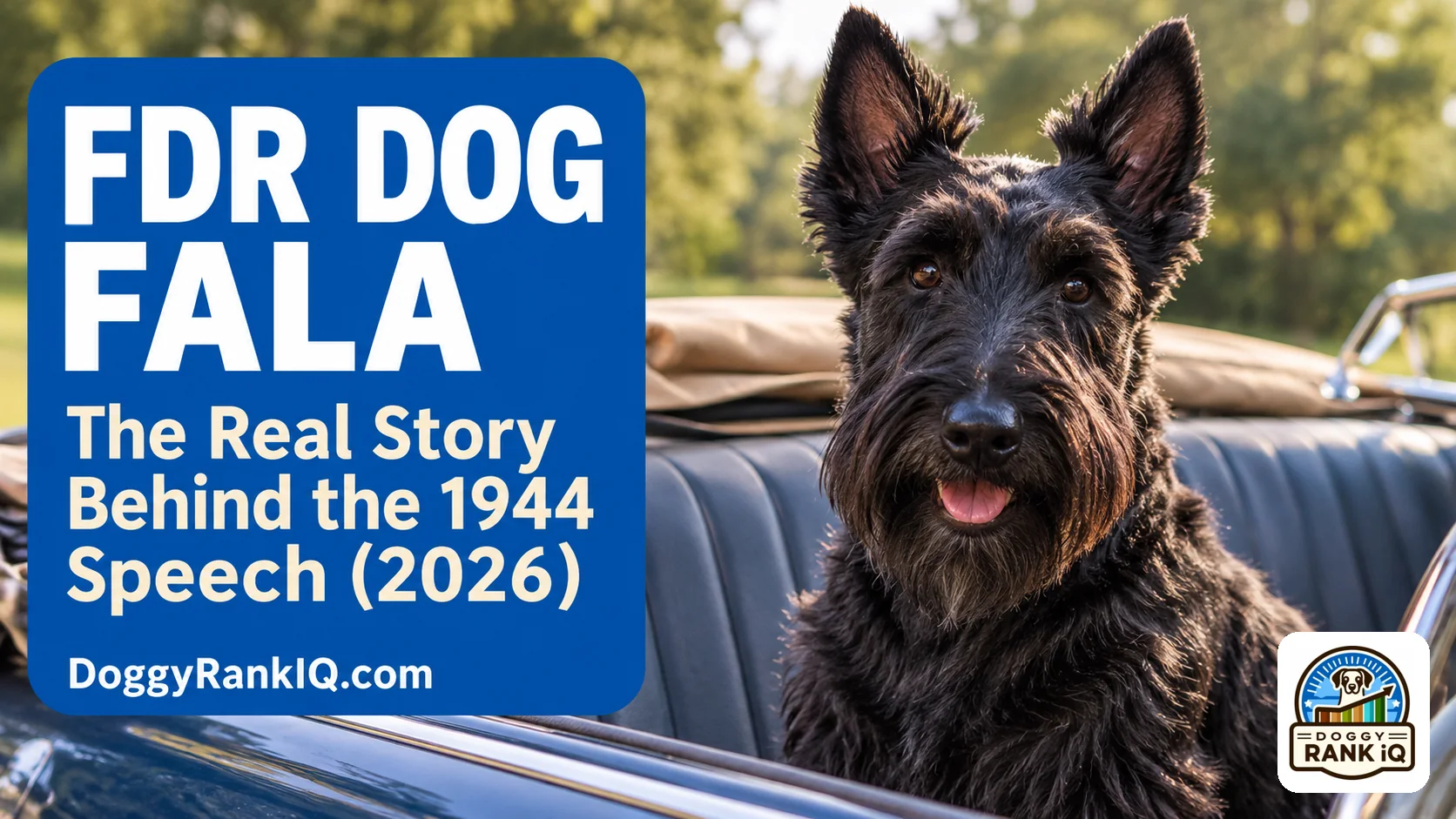
The fdr dog was Fala, a black Scottish Terrier born April 7, 1940, who moved into the White House that November and rarely left Franklin Roosevelt’s side for the rest of his life. Fala’s fame peaked after the September 23, 1944, “Fala speech,” when Roosevelt used a Republican rumor about his dog to defend his record at a Teamsters union dinner. Fala outlived Roosevelt, stayed with Eleanor Roosevelt at Val-Kill, and is buried in the rose garden at Springwood in Hyde Park, New York, near a statue that makes him the only presidential pet memorialized at a presidential library grounds. (fdrlibrary.org, en.wikipedia.org)
Key Takeaways: fdr dog
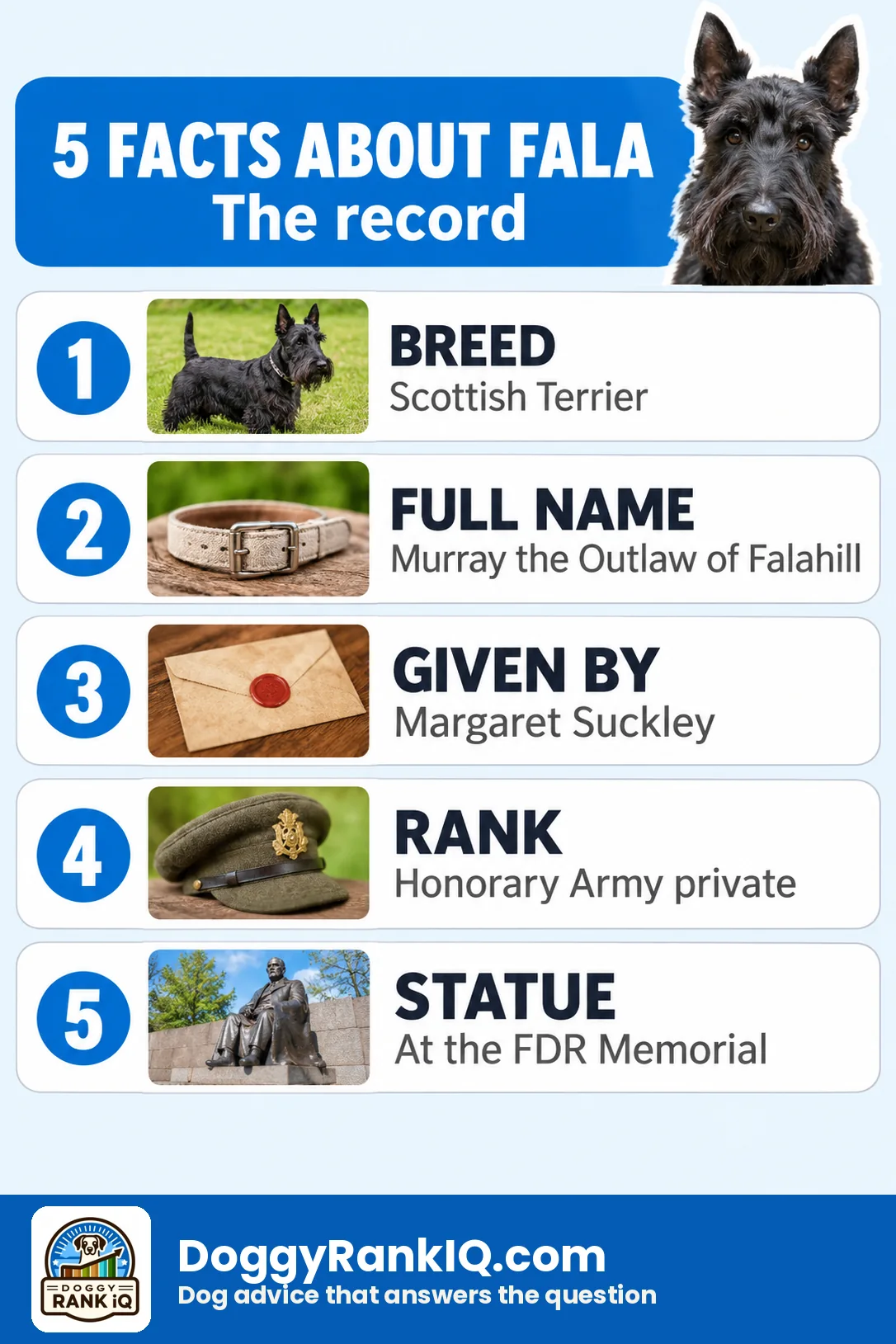
- The fdr dog Fala was a Scottish Terrier, originally named Big Boy, renamed Murray the Outlaw of Falahill by Roosevelt. (fdrlibrary.org)
- Fala arrived as a gift from Roosevelt’s cousin Margaret “Daisy” Suckley and moved into the White House on November 10, 1940. (fdrlibrary.org)
- Fala traveled constantly: trains, cars, the USS Baltimore in the Pacific, and the 1941 Atlantic Charter meeting with Winston Churchill. (fdrlibrary.org)
- The 1944 Fala speech answered a Republican claim that a Navy destroyer was sent to retrieve the fdr dog from the Aleutians at taxpayer expense. (fdr.blogs.archives.gov)
- Representative Harold Knutson of Minnesota was the source of the destroyer rumor Roosevelt mocked in the speech. (fdr.blogs.archives.gov)
- After Roosevelt’s death on April 12, 1945, Fala lived with Eleanor Roosevelt. (fdrlibrary.org)
- Fala died April 5, 1952, and is buried near the Roosevelts at Springwood in Hyde Park, New York. (en.wikipedia.org)
- A bronze statue of Fala sits beside Roosevelt’s statue at the FDR Memorial in Washington, D.C., the only presidential pet with that honor.
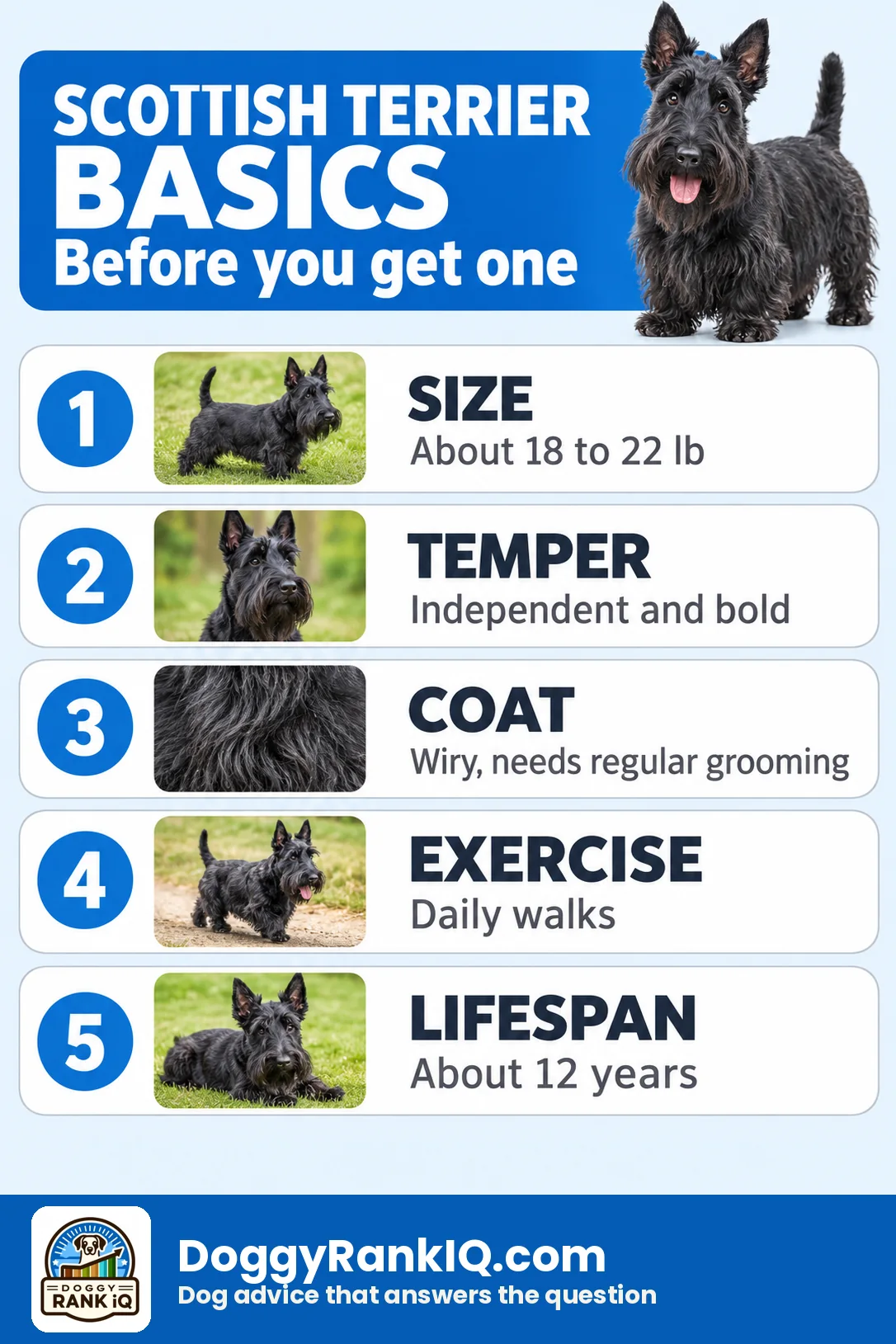
- Scottish Terriers run 18 to 22 pounds, independent minded, and need regular wire-coat grooming.
- FDR also kept a German Shepherd named Major, who was sent away from the White House after biting incidents.

What do you want to know?
Tap an option to see the answer.
The short answer: who the FDR dog was
The fdr dog was Fala, and the name itself is a shortened version of something longer and stranger. Roosevelt officially registered him as Murray the Outlaw of Falahill, a nod to a Scottish ancestor on the Murray side of the family. (fdrlibrary.org) Before that, Fala was simply called Big Boy.
Daisy Suckley, Roosevelt’s cousin and a frequent companion during his presidency, gave him the puppy in 1940. The National Park Service’s “Dogs of the NPS” material lists him among the most recognized presidential pets in American history and confirms the Scottish Terrier breed and the original name. (nps.gov) Roosevelt renamed him almost immediately, then shortened it to Fala for daily use, and the nickname is the one that stuck in newspapers, newsreels, and fan mail.
That fan mail turned out to be substantial. The fdr dog became well known enough that the FDR Library states a staff member was assigned specifically to answer letters addressed to him. (fdrlibrary.org) Few presidential pets, before or since, generated that kind of direct public correspondence.
What kind of dog did FDR have? Fala the Scottish Terrier
FDR’s dog name question has one clear answer: Fala, a black Scottish Terrier. The breed matters here because Scottie traits (small size, strong opinions, a bark louder than the body suggests) shaped a lot of what made him memorable in photographs and newsreels.
Scottish Terriers were already a familiar breed in American households by 1940, known for a wiry double coat and a compact, low-to-the-ground build. Fala fit the type: alert, a little stubborn, devoted to one person. The National Archives’ FDR Library blog describes him as a highly publicized companion whose popularity reached well beyond the White House gates, including an MGM film appearance depicting life in the executive mansion. (fdr.blogs.archives.gov)
A dog that size (Scotties typically weigh 18 to 22 pounds) is easy to carry onto a train car or a ship’s deck, which partly explains why Fala appears in so many travel photos. He was portable in a way a larger breed would not have been, and Roosevelt, who used a wheelchair and traveled constantly for both work and health reasons, valued a companion who could go everywhere without becoming a logistical problem.
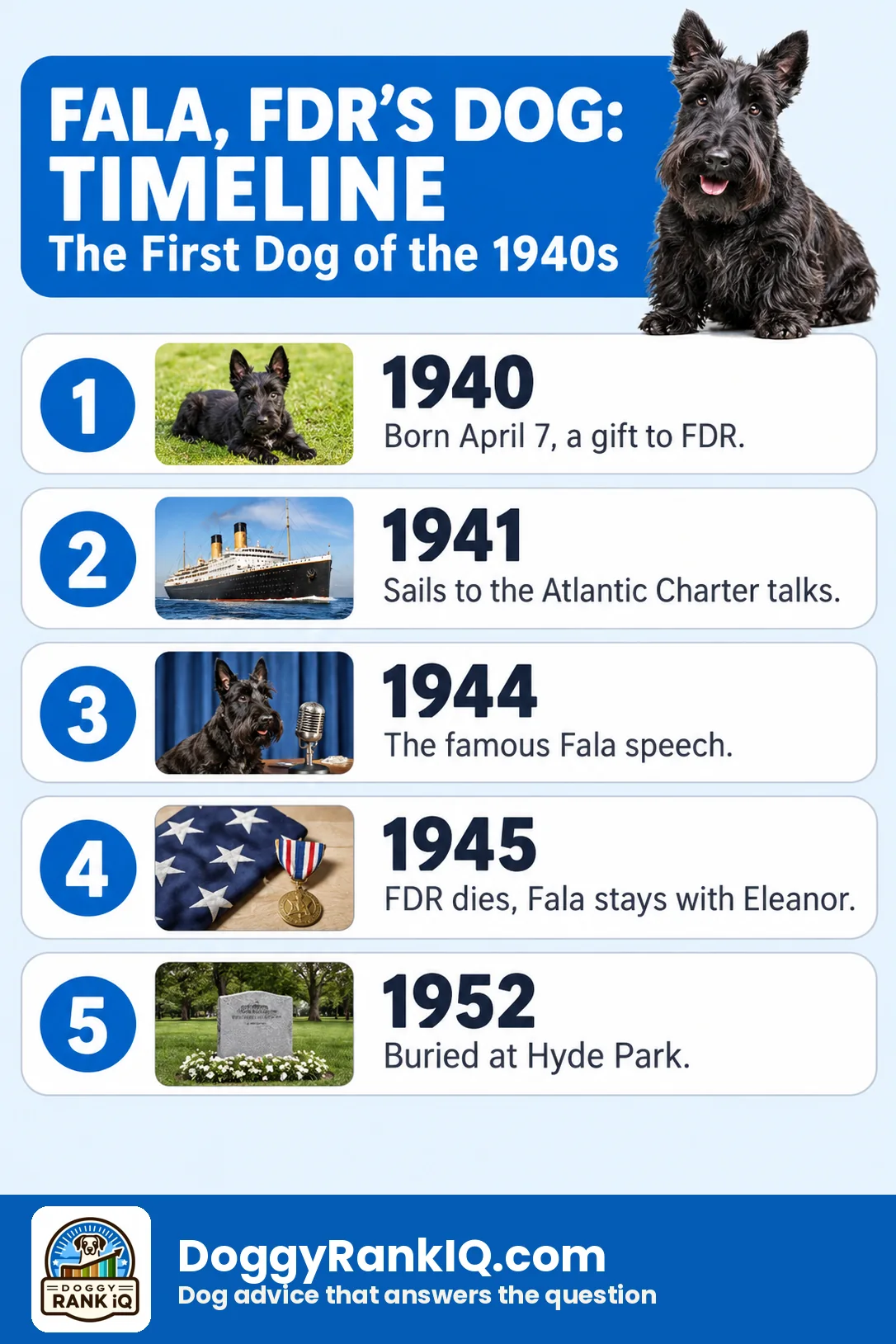
Timeline table: Fala’s life in dates
Here is the fdr dog’s life laid out by year, pulled from the FDR Library and National Archives records. (fdrlibrary.org, en.wikipedia.org)
Life in the White House and on the road
The fdr dog did not spend much time sitting around the Oval Office. He traveled on trains to Hyde Park and Warm Springs, rode along to diplomatic meetings, and crossed the Atlantic for the 1941 summit with Churchill in Placentia Bay, Newfoundland. (fdrlibrary.org)
In July 1944, Fala boarded the USS Baltimore for Roosevelt’s Pacific trip, which carried the president from the West Coast to Hawaii for meetings with General Douglas MacArthur and Admiral Chester Nimitz, according to Paul M. Sparrow, then director of the FDR Library. (fdr.blogs.archives.gov) One detail from that voyage rarely makes it into the shorter versions of the story: sailors reportedly began snipping small locks of Fala’s fur as souvenirs when he wandered near crew quarters. Roosevelt objected and told the crew to limit contact to petting. (fdr.blogs.archives.gov)
That trip, and specifically the Aleutian Islands portion of the itinerary, is where the rumor behind the 1944 speech started. A dog that visible, traveling that widely, was always going to attract commentary. Most of it was affectionate. One piece of it became a national political story.
The real story behind the 1944 speech
The Fala speech was Roosevelt’s response to a false claim that a Navy destroyer had been sent to retrieve his dog from the Aleutians at taxpayer expense, and he delivered it on September 23, 1944, at a Teamsters union dinner in Washington. (fdr.blogs.archives.gov) Representative Harold Knutson of Minnesota was the Republican figure behind the original allegation. (fdr.blogs.archives.gov)
Roosevelt did not deny the story quietly through a press aide. He took the stage himself and turned the accusation into one of the sharpest pieces of political comedy in presidential speech history. He said his Republican opponents had not been content attacking him, his wife, or his sons; they had now attacked his little dog, Fala. He noted that Fala, being a Scotch dog, had not taken it well, and that Fala’s “soul” was outraged at being accused of costing the taxpayers millions of dollars for a destroyer voyage he never took.
The line worked because it did several things at once: it mocked a trivial and clearly exaggerated charge, it modeled confidence instead of defensiveness, and it was genuinely funny on the radio, which mattered in a campaign fought largely through broadcast audio. Contemporary and retrospective accounts, including a 2026 anniversary piece marking the speech’s 82nd year, continue to describe it in the same terms: a turning point that helped steady Roosevelt’s fourth campaign at a moment when his health and stamina were already under public scrutiny. (thejacksonlist.com)
Was the speech a genuine response to a real Republican claim, rather than a setup? Yes. The underlying accusation from Knutson’s camp was a real political attack, not a Roosevelt invention, and the destroyer story had circulated enough that it needed an answer. (fdr.blogs.archives.gov) Roosevelt chose humor over outrage, and the choice is still studied in political communication courses as an example of using a small, personal detail to reframe a larger argument about character and competence. (cornerstone.lib.mnsu.edu)
Did Fala actually attend political events himself? He was present for plenty of official travel and ceremonial occasions, but the sources available do not confirm him physically attending the Teamsters dinner where the speech was given. The Fala speech was about him, not with him.
After FDR: Fala and Eleanor
When Roosevelt died on April 12, 1945, Fala did not go to a kennel or a distant relative. He moved in with Eleanor Roosevelt and lived out his remaining years close to the family that had defined his entire life. (fdrlibrary.org) Eleanor kept him at Val-Kill, her home near Hyde Park, and by most accounts he remained a fixture there until his death.
Fala died on April 5, 1952, just two days short of turning twelve, an age that lands within the broader range researchers associate with small purebred dogs. A large 2024 UK study of 584,734 dogs put typical lifespan for small purebreds around 12.7 years, which places Fala’s lifespan close to that pattern, though that specific study covers UK dogs decades after Fala’s era and is not a direct prediction for any one dog.
He was buried in the rose garden at Springwood, the Roosevelt family estate in Hyde Park, near the graves of Franklin and Eleanor Roosevelt themselves. (en.wikipedia.org) That placement, inside the family plot rather than somewhere separate, says something about how the Roosevelts regarded him. He was not treated as a mascot kept at a professional distance. He was buried as family.
Where to see Fala today: Hyde Park and the FDR Memorial
Two sites let visitors connect directly with the fdr dog’s story today. The first is Springwood in Hyde Park, New York, part of the Home of Franklin D. Roosevelt National Historic Site, where Fala’s grave sits near the Roosevelts’ own resting place in the rose garden.
The second is the Franklin Delano Roosevelt Memorial in Washington, D.C., where a bronze statue of Fala stands beside a seated statue of Roosevelt. According to National Park Service materials describing the memorial’s presidential pets, this makes Fala the only presidential pet honored with a statue at a presidential memorial site in the capital. (nps.gov) Visitors regularly note that the statue’s nose has been worn smoother and shinier than the surrounding bronze, a sign of how often people reach out to touch it.
For anyone planning a trip built around presidential history, pairing these two stops works well: Hyde Park for the grave and the family home, Washington for the memorial statue. Both sites are free to visit and maintained by the National Park Service.
FDR’s other dogs, including Major: facts table
Fala was the most famous, but not the only dog in Roosevelt’s White House. Before Fala, Roosevelt kept a German Shepherd named Major, whose time in residence ended after reported biting incidents involving visitors.
Readers curious about the Shepherd breed Major represented can compare temperament and training needs in our guide to the German Shepherd. And since presidential dogs are frequently cited in loyalty debates, our breakdown of which dog ranks highest for loyalty is worth a look for context on where Scottish Terriers and Shepherds typically land.
🕵️ Fala’s Secret Service nickname and other small truths
Agents assigned to the president had their own name for the FDR dog: “the Informer.”
Roosevelt’s wartime train trips were supposed to be secret. The route, the timing and the passenger were kept out of the papers. Then the train would stop for water or coal, and a small black Scottish Terrier would need a walk on the platform. Everyone in America knew whose dog that was. Fala gave away the president’s location more reliably than any leak, and the agents holding the leash knew it.
“The most recognizable face on the presidential train belonged to the one passenger who needed walking.”
Life inside the White House had its own complications. Staff and visitors slipped Fala so many treats in his first months that he got sick, and Roosevelt gave an order that the dog was to be fed by the president alone. From then on Fala’s dinner came from Roosevelt’s hand, and a bone arrived on the president’s breakfast tray each morning for the dog who slept in a chair near his bed.
He also worked a room. Fala knew a short list of tricks (sit, roll over, jump, and a curl of the lip that guests called a smile) and performed them for dignitaries who had come to discuss the war. Photographers loved him, cartoonists drew him, and the public sent him letters and gifts by the thousand.
All of this is why the 1944 speech worked. By then the country had spent four years reading about Fala. When Roosevelt said his dog’s feelings had been hurt, his audience already knew the dog.
⭐ Top 5 Features We Love
- A nickname with a real backstory. Murray the Outlaw of Falahill is a mouthful. Fala is what stuck, and it is still one of the most recognizable fdr dog names in presidential history.
- He actually traveled. Trains, ships, the Atlantic Charter meeting, a Pacific crossing on the USS Baltimore. Most pets get the backyard. Fala got an itinerary. (fdrlibrary.org, fdr.blogs.archives.gov)
- The 1944 speech still works as a lesson in tone. Roosevelt answered a political attack with humor instead of anger, and it is still referenced in speech and communication coursework decades later. (cornerstone.lib.mnsu.edu)
- He got his own mail. A staff member answered Fala’s fan letters, a detail that says a lot about how visible this one dog became. (fdrlibrary.org)
- He is memorialized permanently. A statue at the FDR Memorial and a grave at Springwood mean his story has two physical places people can still visit.
⚠️ Things to Look Out For
- Independent streak. Scotties were bred to work alone hunting vermin, and that independence shows up as stubbornness during training.
- Wiry coat upkeep. The double coat needs regular brushing and periodic hand-stripping or clipping to stay healthy, not just tidy.
- Strong prey drive. A breed built for digging after small animals will dig in a backyard, too. Fencing and supervision matter.
- Vocal tendencies. Small body, loud opinions. Scotties bark readily at anything unfamiliar.
- Health watch points. Scottish Terriers have documented higher rates of certain cancers in breed health surveys; owners should discuss screening schedules with a veterinarian rather than rely on general breed guides alone.
Anyone weighing whether a Scottie or similar small terrier fits their household might also want to review signs of separation anxiety in dogs, since independent breeds can still struggle when routines change, and our guide to dog body language for reading stress signals early.
Fala books for readers and kids
For readers who want the fuller story beyond a single article, a few books cover Fala specifically and presidential dogs more broadly.
First Dog Fala tells Fala’s story aimed at general readers interested in presidential history. Price: $8.84 (price checked 2026). Check the current price.
Dog Diaries #8: Fala is part of a children’s series told from the dog’s point of view, a good option for younger readers researching presidential dogs for a school project. Price: $7.99 (price checked 2026). Check the current price.
The Dog Encyclopedia (DK) is not Fala-specific but covers Scottish Terrier breed traits and general dog care, useful background for anyone considering the breed after reading his story. Price: $13.29 (price checked 2026). Check the current price.
These prices reflect what Amazon listed when checked in 2026 and can change.
FAQ
The bottom line
The fdr dog Fala was more than a White House mascot. He was a traveling companion present at a wartime summit with Churchill, a figure famous enough to receive his own mail, and the subject of a 1944 speech that historians and communication researchers still study for how Roosevelt handled a political attack with humor instead of defensiveness. He is buried beside the Roosevelts at Springwood and stands in bronze at the FDR Memorial, the only presidential pet given that honor.
Anyone visiting Hyde Park or Washington can see both memorials in person. Anyone considering a Scottish Terrier of their own should go in with clear eyes about the grooming and independence that come with the breed, the same traits that made Fala memorable in the first place.
Doggy Rank IQ is reader supported. As an Amazon Associate we earn from qualifying purchases, at no extra cost to you.