Dog anxiety medication got a new option in May 2026, when the United States Food and Drug Administration approved tasipimidine, sold as Tessie, as the first canine drug cleared for both noise aversion and separation anxiety. That approval matters. It also does not change the part owners most want changed: no pill, gel, or chew fixes anxiety on its own, and every one of these drugs needs a veterinarian, a diagnosis, and a behavior plan behind it.
Quick answer
Veterinarians generally reach for five categories of dog anxiety medication: SSRIs such as fluoxetine, tricyclic antidepressants such as clomipramine, event medications such as trazodone, gabapentinoids such as gabapentin, and alpha-2 adrenoceptor agonists such as dexmedetomidine oromucosal gel and the newly approved tasipimidine. Daily medications usually take weeks to show their full effect. Event medications are given before a known trigger. All of them are prescription only in the United States, all carry side effects including sedation and stomach upset, and the published evidence consistently shows better results when medication is paired with behavior modification rather than used alone.
This article is general information checked in October 2026. It is not a diagnosis, and it contains no doses on purpose.
Key Takeaways: Dog Anxiety Medication
- Five working categories. SSRIs, tricyclic antidepressants, serotonin antagonist and reuptake inhibitors (trazodone), gabapentinoids, and alpha-2 agonists cover most of what vets prescribe for canine fear and anxiety.
- Daily versus event is the first decision. Chronic, most-days anxiety usually calls for a maintenance drug. Thunderstorms, fireworks, car trips, and vet visits usually call for something given in advance.
- Timing is not instant. Fluoxetine and clomipramine are typically assessed over weeks, while trazodone and gabapentin are given hours before a trigger and tasipimidine about an hour before.
- The side effects are real. The FDA-approved label for Reconcile (fluoxetine) lists calmness, lethargy or depression in 32.9% of treated dogs in its North American field studies, decreased appetite in 26.9%, and vomiting in 17.1%.
- Over the counter is not equivalent. Calming chews, pheromone diffusers, and CBD products are not approved anxiety treatments, and human medicine cabinets are a genuine poisoning risk.
- Quieter is not always calmer. A September 2026 shelter trial found more body shaking in dogs given medication alone, a reminder that reduced movement can mask ongoing distress.
- Stopping needs a plan. Never discontinue abruptly without veterinary guidance, and note that the Reconcile label calls for a minimum six-week washout before giving a drug that could interact with fluoxetine.
What causes anxiety in dogs?
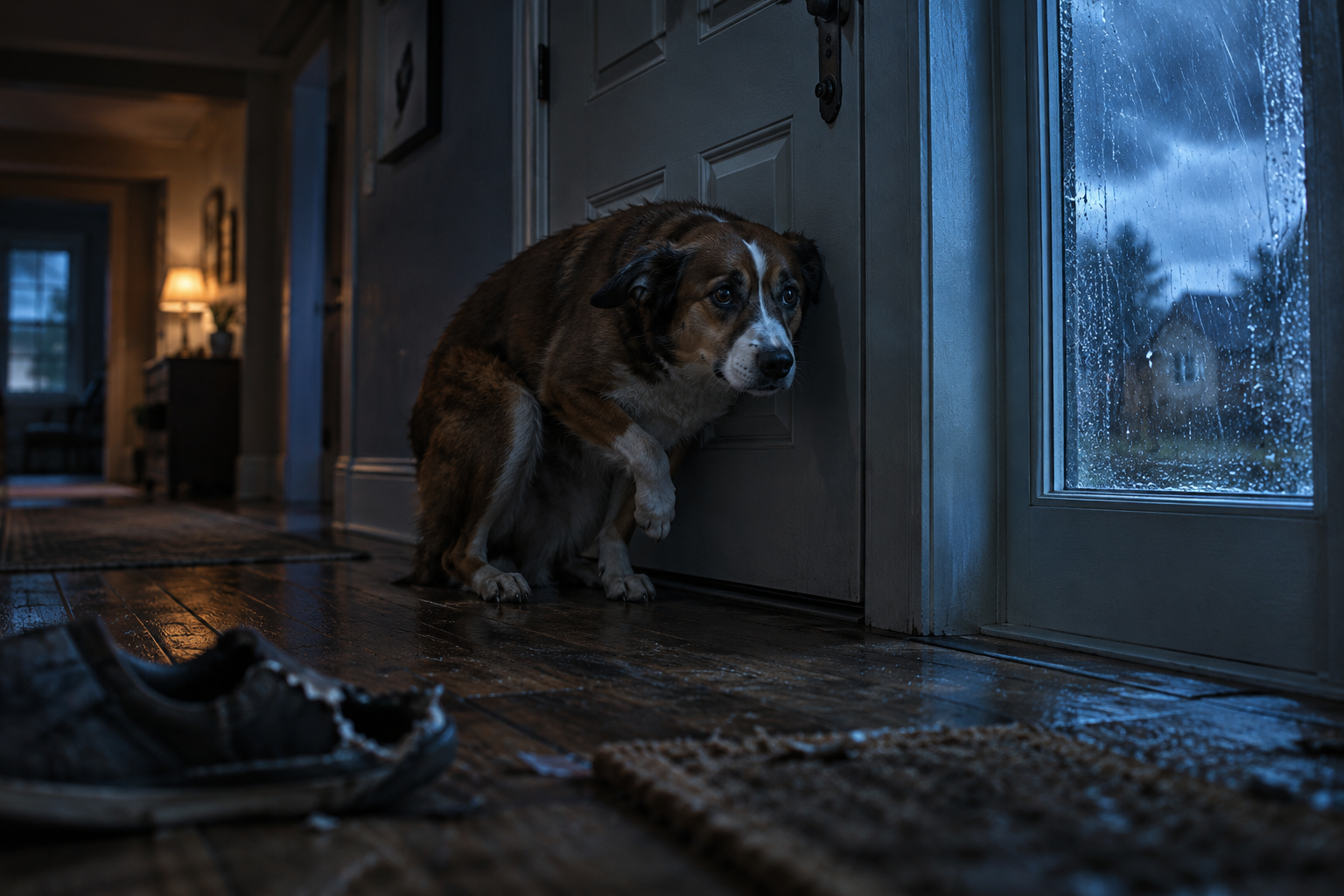
Canine anxiety usually comes from a mix of genetics, early development, learning history, pain, and age-related change, which is why two dogs in the same house can react to the same storm completely differently. There is rarely one cause to find and remove.
The usual contributors veterinary behavior sources describe:
- Genetics and temperament. Fearfulness runs in families and varies between individuals even within a litter. Breed tendencies give you odds, not a forecast, and individual variation does the rest.
- Limited early socialization. Puppies with narrow exposure to sounds, surfaces, people, and handling during their sensitive period often struggle with novelty later.
- A single bad association. One painful slip on a vet room floor, one firework at close range, one aggressive dog at a gate. Fear learning is fast and durable.
- Pain and illness. Arthritis, dental pain, gut discomfort, and declining hearing or vision all show up as behavior change. Pain assessment belongs at the start of the process, not after three failed prescriptions.
- Cognitive decline. Older dogs can develop new nighttime restlessness and new separation distress with no change in routine.
- Routine and environment. Isolation, boredom, unpredictable schedules, and a home with nowhere to retreat all raise baseline arousal.
Worth separating from all of this: a dog who follows you from room to room is not automatically anxious. Attachment and distress are different things, which is part of why what loyalty in dogs actually looks like gets misread so often. Shadowing is a clue. Panic when you leave is a symptom.
What are the different types of dog anxiety medication?
Dog anxiety medication falls into five practical groups: daily SSRIs, daily tricyclic antidepressants, event-based trazodone, event-based gabapentin, and alpha-2 adrenoceptor agonists given before a predictable trigger. The Merck Veterinary Manual maintains a reference list of common drugs used to treat behavior problems in dogs that covers these classes and several others, including alprazolam and clonidine.
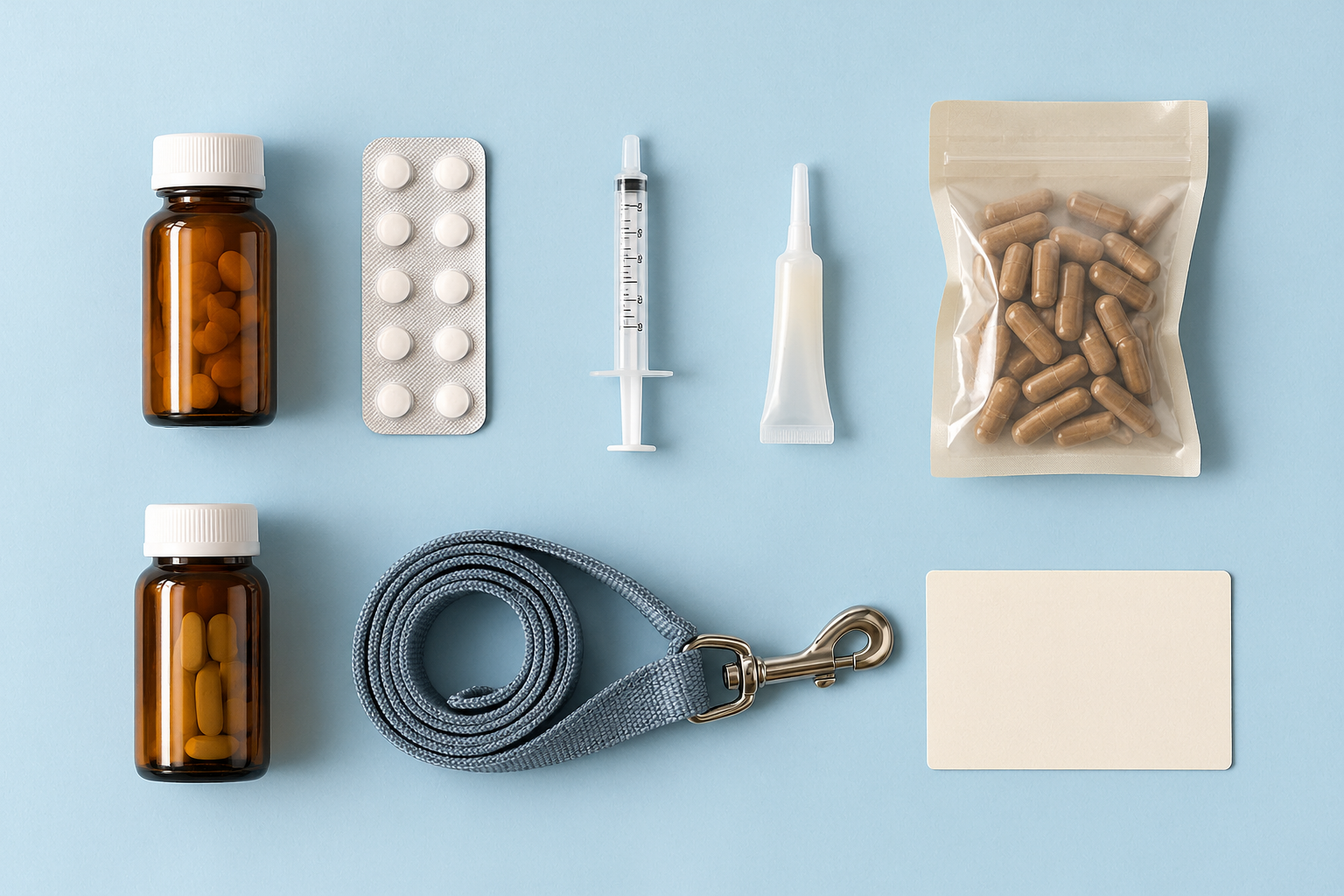
1. SSRIs, mainly fluoxetine. Fluoxetine is sold for dogs as Reconcile and is FDA approved for canine separation anxiety when used alongside a behavior modification plan. It is a daily maintenance drug used for separation anxiety, generalized anxiety, noise phobia, compulsive behaviors, and some fear-related aggression.
2. Tricyclic antidepressants, mainly clomipramine. Clomipramine (Clomicalm) is also FDA approved for separation anxiety in dogs over six months of age as part of a behavioral management program. It is serotonergic like fluoxetine but not interchangeable with it, with its own contraindications and its own side effect profile including dry mouth, sedation, and liver enzyme changes.
3. Trazodone. The most commonly used event medication in general practice, given before travel, grooming, vet visits, fireworks, or post-surgical confinement. It is also used daily or as an add-on in some chronic cases.
4. Gabapentin. Originally an anti-seizure and nerve pain drug, now widely used for situational fear and for dogs whose anxiety has a pain component. Often combined with trazodone.
5. Alpha-2 adrenoceptor agonists. Dexmedetomidine oromucosal gel (Sileo) is approved for noise aversion and is applied to the gum rather than swallowed. Tasipimidine (Tessie), approved May 6, 2026, is the first in this group cleared for both noise aversion and separation anxiety. The FDA notes it is given about one hour before the expected trigger, no more than three times in 24 hours with at least three hours between doses, and that food can delay absorption, so owners are advised to wait at least an hour after feeding.
Benzodiazepines such as alprazolam and diazepam sit alongside these as short-acting panic medications, and clonidine appears as another alpha-2 option.
Doses are deliberately absent from that table. Dose depends on the individual dog, body weight, liver and kidney function, other medications, and the behavior being treated, and only a veterinarian who has examined the dog can set it.
73%
of Reconcile-treated dogs showed significant improvement over 8 weeks, versus 51% on behavior modification alone (229 dogs, FDA-approved Reconcile label)
May 6, 2026
FDA approved tasipimidine (Tessie), the first canine drug covering both noise aversion and separation anxiety
36 Beagles
In a June 2026 placebo-controlled car travel study, trazodone lowered cortisol and several stress behaviors but raised mean heart rate versus gabapentin
3 of 50
shelter dogs on trazodone plus gabapentin had mild gut upset lasting one to two days in a September 2026 trial
Use the explorer below to compare the options by category before your appointment.
How do I know if my dog has anxiety, and is it situational or chronic?
Anxiety shows up as a cluster of body language and behavior changes that appear in a predictable context, and the split between situational and chronic depends on whether the distress has an off switch. Situational anxiety has a clear trigger and ends when the trigger ends. Chronic anxiety sits in the background most days.
Signs commonly noted by veterinary sources include pacing, panting without heat or exercise, trembling, lip licking, yawning, whale eye, tucked tail, flattened ears, drooling, refusing food that is normally eaten, hiding, destructive behavior at exit points, house soiling in a trained dog, and vocalizing when alone. Learning to read these is the single most useful skill an owner can build, and the same careful observation that makes head tilting easier to interpret applies here.
A simple decision rule. If the behavior appears only around fireworks, car rides, nail trims, or your departure, you are likely in situational territory and an event medication plus desensitization work is the usual starting point. If your dog is vigilant, reactive, or restless on ordinary Tuesdays with nothing happening, that leans chronic, and a daily maintenance drug becomes the more likely conversation.
Edge case that trips people up. Fear-related aggression often travels with anxiety, and growling or snapping in a frightened dog is a warning signal worth respecting rather than punishing. If that is part of your picture, read up on why dogs bite their own owners and how to reduce the risk and get professional help early.
Before anything else. Video your dog when you are out. Phones work fine. A thirty-minute clip of what actually happens after the door closes is more useful to your vet than any description you can give from memory.
How long does it take for dog anxiety medication to work?
Event medications work within hours of a single dose. Daily medications are assessed over weeks. Mixing up those timelines is the most common reason owners decide a drug failed.
- Event medications. In the June 2026 randomized placebo-controlled travel study, trazodone and gabapentin were given two hours before a ten-minute road trip. Tasipimidine is given about one hour before the expected trigger per the FDA approval.
- Daily medications. Fluoxetine and clomipramine are usually reviewed at four to eight weeks. The Reconcile field studies ran eight weeks, and while 42% of treated dogs improved in week one, the full result was measured across the trial.
- Dose adjustments add time. If the first daily dose is not enough, your vet may adjust and restart the clock, which can stretch the process past two months.
Common mistake: giving a storm medication after the thunder starts. By then the dog is already in a full stress response, and you are asking the drug to catch up with adrenaline.
What are the side effects of dog anxiety medication, and can it make a dog worse?
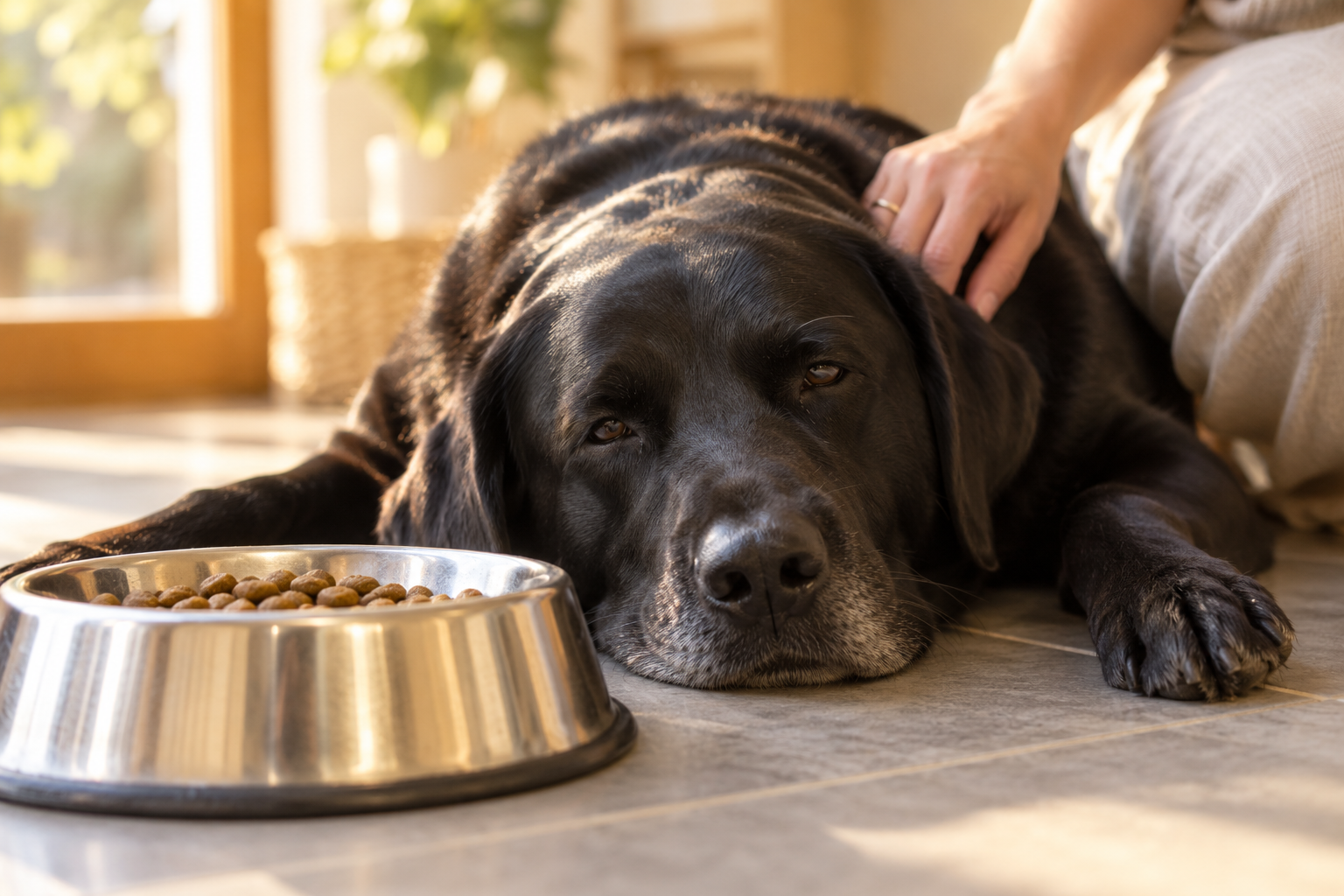
Sedation and gut upset are the most frequent side effects across these drugs, and yes, some dogs do get worse before they get better. The FDA-approved label for Reconcile (fluoxetine) reports these rates from two North American field studies: calmness, lethargy or depression in 32.9% of treated dogs, decreased appetite in 26.9%, vomiting in 17.1%, tremor in 11.1%, diarrhea in 9.7%, and restlessness in 7.4%. The label also lists disorientation, incoordination, weight loss, and rarely seizures.
Clomipramine’s commonly listed effects include reduced appetite, vomiting, diarrhea, dry mouth, sedation, lethargy, liver enzyme changes, and seizures. Trazodone and gabapentin tend toward sedation and wobbliness. In the September 2026 randomized controlled shelter study of 50 dogs with excessive arousal, three dogs on the trazodone plus gabapentin protocol developed mild gastrointestinal upset lasting one to two days, which the shelter veterinarian did not consider severe enough to stop treatment.
Three ways medication can appear to backfire:
- Paradoxical arousal or disinhibition. Some dogs become more restless, more vocal, or less inhibited about reacting. This is reported with sedatives and benzodiazepines in particular, and it needs a call to your vet rather than a second dose.
- Sedation mistaken for calm. The same September 2026 shelter trial recorded more body shaking in the medication-only group, which the authors treat as a caution against reading reduced outward activity as improved welfare. A dog who cannot pace may still be terrified.
- Unmeasured physiological effects. The June 2026 travel study found trazodone-treated dogs had higher mean heart rates than gabapentin-treated dogs before and during travel, and higher pre-travel rates than controls. The authors suggest a possible autonomic effect such as reflex tachycardia, and they are clear about where the facts end: blood pressure and drug concentrations were not measured, so the mechanism and clinical importance stay uncertain.
Appetite loss deserves a practical note. If a daily medication puts your dog off food, do not solve it with a week of improvised toppers. Talk to your vet about timing and food choice, and if you need a baseline for diet decisions, what vets actually look for in a dog food is a better place to start than a comment section.
Which dogs should not take anxiety medication?
Dogs with a seizure history, significant liver or kidney disease, certain cardiac conditions, or an existing drug interaction risk may be poor candidates for specific anxiety medications, and the exclusion depends on the drug rather than the category.
Documented contraindications and cautions include:
- Fluoxetine: contraindicated alongside MAO inhibitors such as selegiline and amitraz, and contraindicated in dogs with epilepsy or a seizure history, per the FDA-approved Reconcile label.
- Clomipramine: contraindicated with tricyclic antidepressant hypersensitivity, with label warnings against use in dogs with a seizure history or alongside drugs that lower the seizure threshold.
- Combination risk: stacking two serotonergic drugs without veterinary supervision raises serotonin syndrome risk. This is one of several reasons leftover prescriptions from another dog are a bad idea.
- Pregnant, nursing, and very young dogs: generally excluded or used only with specific veterinary justification. Clomipramine’s approval covers dogs older than six months.
- Breathing and heart conditions: sedating drugs need extra care in brachycephalic dogs and in dogs with cardiac disease, which is exactly why the heart rate finding in the 2026 travel study is worth raising with your vet.
Decision rule: if your dog has ever had a seizure, is on any other prescription, or has known organ disease, expect your vet to want bloodwork and a different first-choice drug than the one you read about online.
Can I give my dog anxiety medication without a vet prescription?
No. Fluoxetine, clomipramine, trazodone, gabapentin, dexmedetomidine gel, tasipimidine, and benzodiazepines are all prescription-only in the United States, and the FDA states clearly that tasipimidine requires a veterinary diagnosis before use.
What is sold over the counter is a different product class entirely: calming chews, pheromone diffusers and collars, milk protein and L-theanine supplements, melatonin, body wraps, and CBD items. These are not approved anxiety treatments and they are not regulated to the same standard.
Three specific risks with the do-it-yourself route:
- Human medications are not scaled-down dog medications. Human doses, formulations, and inactive ingredients can poison a dog. Some human liquid gabapentin products contain xylitol, which is toxic to dogs.
- Leftovers belong in the bin. A tablet prescribed for a 40 kg dog with normal liver function is not a smaller dose for a 7 kg dog with a heart murmur.
- A missed medical cause stays missed. Pain, thyroid disease, and cognitive decline all masquerade as anxiety. Self-treating skips the exam that would find them.
Are there natural alternatives to anxiety medication for dogs?
Environmental management, structured behavior work, enrichment, and some supplements can meaningfully reduce anxiety in mild cases, but the evidence for over-the-counter calming products is weaker and less consistent than the evidence behind approved prescription drugs. Treat them as support, not substitution.
What the research most clearly supports is the combination approach. In the September 2026 shelter study, medication paired with calm enrichment produced the most consistent reductions in lip licking, panting, vocalization, jumping, and arousal scores. Neither element on its own matched the pair.
Non-drug measures worth doing regardless of whether you medicate:
- Predictable routines and a retreat space. A covered crate or quiet room the dog chooses, never one they are shut into during a panic.
- Sound management for noise fear. Interior room, white noise or music, closed blinds, and no forced exposure.
- Desensitization and counter-conditioning run slowly enough that your dog never tips into panic. This is the part that changes the underlying emotion, and humane training methods matter here because punishment-based handling of a frightened dog reliably makes fear worse.
- Daily enrichment. Scent work, food puzzles, chew outlets, and sniffing walks. Mental work tires dogs in a way that helps, and if you want ideas scaled to your dog’s problem-solving appetite, what intelligence really means across dog breeds is a useful lens.
- Consistent feeding structure. Stable meal timing supports routine, and it matters practically because some medications are given with food while tasipimidine needs a gap after feeding. Our guide to portions, timing and water from vets covers the basics.
Honest limit: for a dog who shreds a door frame and bloodies their paws during a twenty-minute absence, a pheromone diffuser is not a treatment plan.
How much does dog anxiety medication cost?
Total cost is driven by four things: the veterinary exam, any bloodwork, the drug itself, and the follow-up visits. No verified national price figures appear in the sources used for this article, so treat any specific dollar amount you find online as a starting point and ask your own clinic and pharmacy for the real number.
What to price out before you commit:
- Exam and diagnosis. Usually the first and largest single line item, higher if pain workup or imaging is needed.
- Baseline bloodwork. Often requested before starting a daily medication, and sometimes repeated for monitoring.
- Generic versus brand. Fluoxetine, clomipramine, trazodone, and gabapentin all exist as generics, which are typically far cheaper than branded veterinary versions of the same active ingredient. Ask directly whether a generic is suitable.
- Weight. Larger dogs use more drug per dose, so the monthly cost of the same prescription differs widely between a chihuahua and a mastiff.
- Event versus daily. Six storm doses a year costs very little. A daily maintenance drug is an ongoing line in your budget.
- Specialist input. A board-certified veterinary behaviorist consultation costs more than a general practice visit and often saves money by shortening the trial-and-error phase.
Money-saving move that is actually safe: ask your veterinarian to write the prescription so you can compare a human pharmacy generic price against the clinic price. Ask the pharmacy to confirm the formulation contains no xylitol. If budget is tight, say so plainly at the appointment. Good vets build plans around real constraints, and the same honest-budget logic we apply to cheap dog food that is still good applies to medication.
What should I do if my dog’s anxiety medication isn’t working?
Go back to your veterinarian with data before you abandon the drug, because most apparent failures turn out to be a timing problem, a dose problem, a missing behavior plan, or the wrong diagnosis. Stopping on your own, especially abruptly, is the worst of the available options.
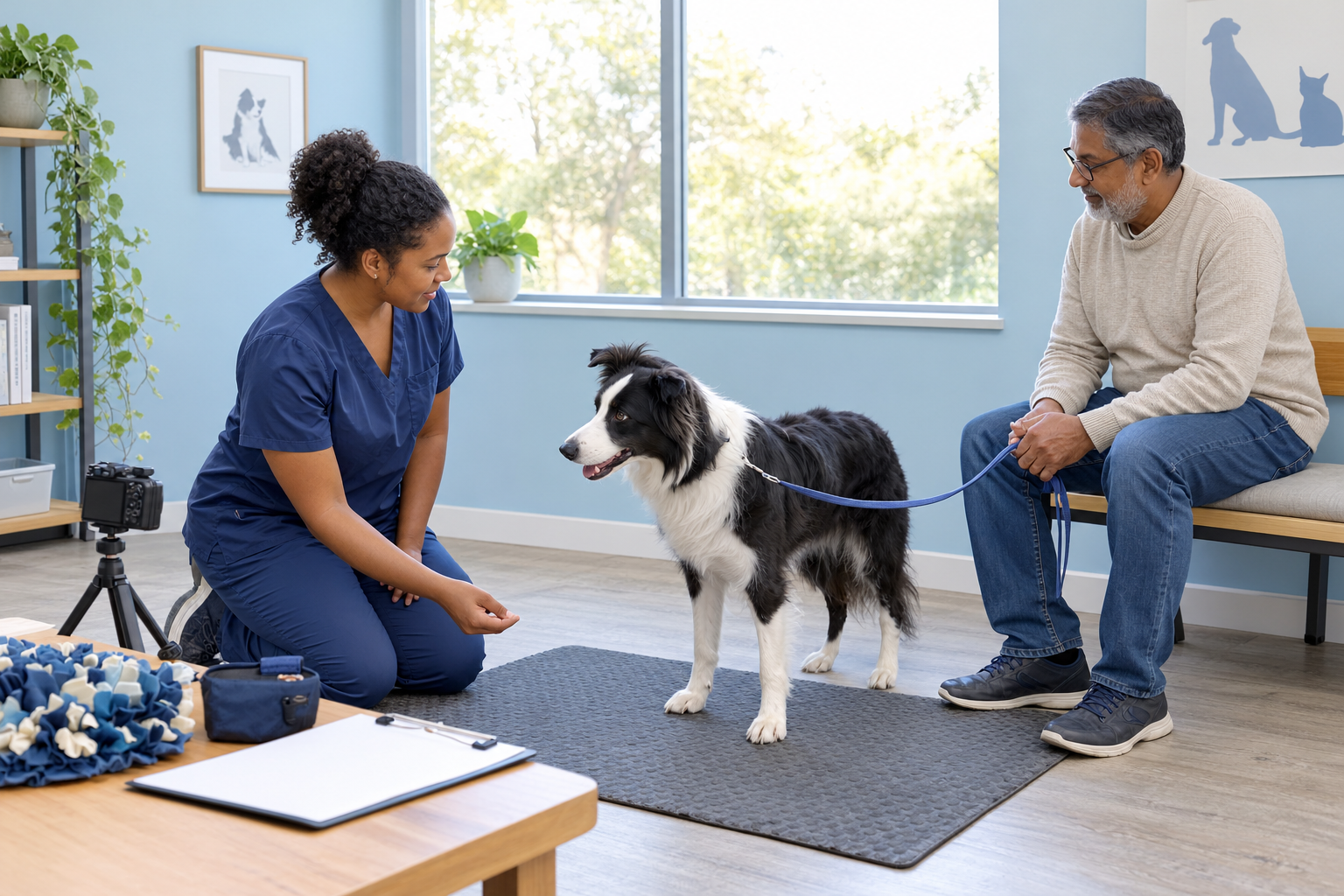
Work through this in order:
- Check the clock. Has the daily medication had four to eight full weeks? Was the event medication given early enough, and on an appropriate stomach?
- Bring records. Two weeks of brief notes plus one or two videos. Note the trigger, the behaviors, the duration, and how long recovery took.
- Confirm the behavior plan exists. The Reconcile field study compared medication plus behavior modification against behavior modification alone. Neither arm was medication by itself. If your plan is a pill and hope, that is the gap.
- Revisit pain and medical causes. New or worsening anxiety in a middle-aged or senior dog earns a fresh physical exam.
- Ask about adjusting, adding, or switching. A dose change, a combination, or a different class may be appropriate. Note that fluoxetine’s label calls for a minimum six-week washout before giving a drug that could interact with fluoxetine or norfluoxetine, which affects how quickly a switch can happen.
- Escalate to a specialist. A board-certified veterinary behaviorist (DACVB in North America) handles severe separation anxiety, aggression with a fear component, compulsive disorders, and cases that have already failed two or more medications. Referral is a reasonable request, not a complaint about your regular vet.
How do I wean my dog off anxiety medication safely?
Tapering should be planned with your veterinarian, done gradually, and started only when your dog has been stable for a meaningful stretch rather than a good week. Abrupt discontinuation of daily psychoactive medication can bring withdrawal effects and a sharp return of symptoms.
How these conversations usually go in practice:
- Stability first. Vets commonly want several months of consistent improvement, with the behavior plan still running, before reducing.
- Gradual reduction. Step-downs over weeks, with a pause at each step to watch for relapse signs.
- Season matters. Do not start a taper the month before fireworks season or a house move. Pick a quiet stretch.
- Keep the training. The medication made learning possible. The learning is what you keep.
- Watch for interactions after stopping. The six-week washout on the fluoxetine label applies after the last dose, not after the last taper decision.
- Some dogs stay on medication long term. That is a legitimate outcome, not a failure of effort.
FAQ
Can trazodone kill a dog? Trazodone is widely used in veterinary practice and is generally considered to have a wide safety margin, but any medication can cause serious harm in overdose, in combination with other serotonergic drugs, or in a dog with an underlying condition. A June 2026 study also found higher mean heart rates in trazodone-treated dogs than in gabapentin-treated dogs, and the authors noted they did not measure blood pressure. Contact a veterinarian or poison control immediately if your dog gets more than the prescribed amount.
What is the difference between trazodone and alprazolam for dogs? Trazodone is a serotonin antagonist and reuptake inhibitor used before predictable stress such as travel or clinic visits, and it is also used in longer courses. Alprazolam is a benzodiazepine with a faster onset, typically reserved for acute panic such as an unexpected thunderstorm, and it carries a greater risk of paradoxical excitement and dependence. Both are prescription only, and some vets combine them with other drugs under supervision.
What is the best medication for dog anxiety? There is no single best option. The right choice depends on whether the anxiety is situational or chronic, your dog’s other health conditions and medications, the specific trigger, and how the dog responds to a trial. Fluoxetine and clomipramine are the FDA-approved daily options for separation anxiety, and tasipimidine is the newest approved event option covering noise aversion and separation anxiety.
What medication helps dog anxiety in the car? Veterinarians commonly use trazodone or gabapentin before travel, sometimes with an anti-nausea drug since motion sickness and travel fear often overlap. In the June 2026 Beagle study, both drugs were given two hours before a ten-minute drive, and the trazodone group showed lower cortisol and fewer stress behaviors than placebo.
Do over-the-counter dog anxiety products work? Some owners report benefit from pheromone products, calming chews, and body wraps, and they may help with mild stress. None is an FDA-approved anxiety treatment for dogs, product potency varies, and the evidence base is thinner than for prescription medication. Check with your vet before combining a supplement with a prescribed drug.
Is dog anxiety medication safe to use long term? Many dogs take fluoxetine or clomipramine for months or years under veterinary supervision, typically with periodic exams and sometimes bloodwork to monitor liver and kidney function. Long-term use is a monitored decision, not a set-and-forget one.
Does my dog need a veterinary behaviorist? Consider a referral if the anxiety involves aggression, if your dog injures themselves or the house during absences, if two or more medications have not helped, or if progress has stalled despite consistent behavior work. Board-certified veterinary behaviorists can prescribe and design detailed treatment plans.
Conclusion
Dog anxiety medication is a real tool with real limits. The published evidence supports it most strongly as part of a package: a diagnosis, an appropriate drug for the pattern of anxiety, a behavior plan, enrichment, and an honest review at a set date. The 2026 approval of tasipimidine widened the approved options, and the 2026 trazodone and gabapentin studies added useful detail about timing and about physiological effects that outward calm can hide. What none of it supports is a pill used alone and judged on vibes.
Your next three steps:
- Record evidence this week. Two short videos of the trigger situation and a simple log of behaviors, duration, and recovery time.
- Book a veterinary exam and ask specifically about pain, bloodwork, which category of medication fits your dog’s pattern, and what the review date will be.
- Start the behavior side now, with a retreat space, sound management, predictable routines, and daily enrichment, so the medication has something to work alongside.
Then write down the questions you want answered at that appointment. The explorer above is built for exactly that.