
How do dogs show affection? Quick answer
How do dogs show affection? Mostly through relaxed proximity and small, repeated choices, not through dramatic displays. A dog that leans on you with a loose body, follows you from room to room without panic, or sleeps touching your foot is communicating trust in ways that hold up better than a lick or a wagging tail on their own. Context (what else is happening, whether anything is being asked for, and how the dog’s muscles look) decides whether a behavior is affection or something else entirely.
Key takeaways
- Wagging reflects emotional arousal, not automatic happiness. A loose, full-body wag reads differently than a fast, stiff one, according to the American Kennel Club body-language guidance published in 2026.
- Many dogs find human-style hugging stressful because the restraint blocks an escape route, a point covered by the AKC in its 2026 behavior reporting.
- A dog checking back during a walk, with eye contact and a brief return to your side, is cited by veterinarians as a bonding signal in coverage from early November 2026.
- Voluntary proximity with no food or toy involved is treated by canine behavior specialists as one of the strongest trust markers available to an owner at home.
- Relaxed sleep touching a person is considered a higher-value signal than casual nearby napping, according to reporting from November 2, 2026.
- Leaning is generally a closeness request, according to veterinary sources, but only when the dog’s body stays loose rather than braced against you.
- A circular “helicopter” tail wag commonly shows up in greetings toward people a dog is strongly attached to, per AKC guidance.
- VCA Animal Hospitals notes that dogs show affection through a mix of proximity-seeking, eye contact, and physical touch, with no single universal gesture.
Doggy Rank IQ Tool
Dog Affection Behavior Decoder
Pick the behavior and the context. You get what trainers and research say it most likely means, and the common misread.
How do dogs show affection? When to call the vet
Call a veterinarian or a veterinary behaviorist if a previously affectionate dog suddenly avoids contact, hides, snaps when touched, or stops following you around the house. Sudden withdrawal can point to pain, periodontal disease, or another medical issue before it ever becomes a behavior problem. Do not wait weeks to see if it resolves on its own, since untreated pain tends to make the underlying behavior worse, not better.
How do dogs show affection?
How do dogs show affection? Through relaxed proximity, soft body language, and small acts of choosing you over the rest of the room, not through a fixed checklist of behaviors that always mean the same thing. A dog’s affection toolkit is smaller and quieter than most owners expect, and it leans heavily on body posture rather than big gestures.
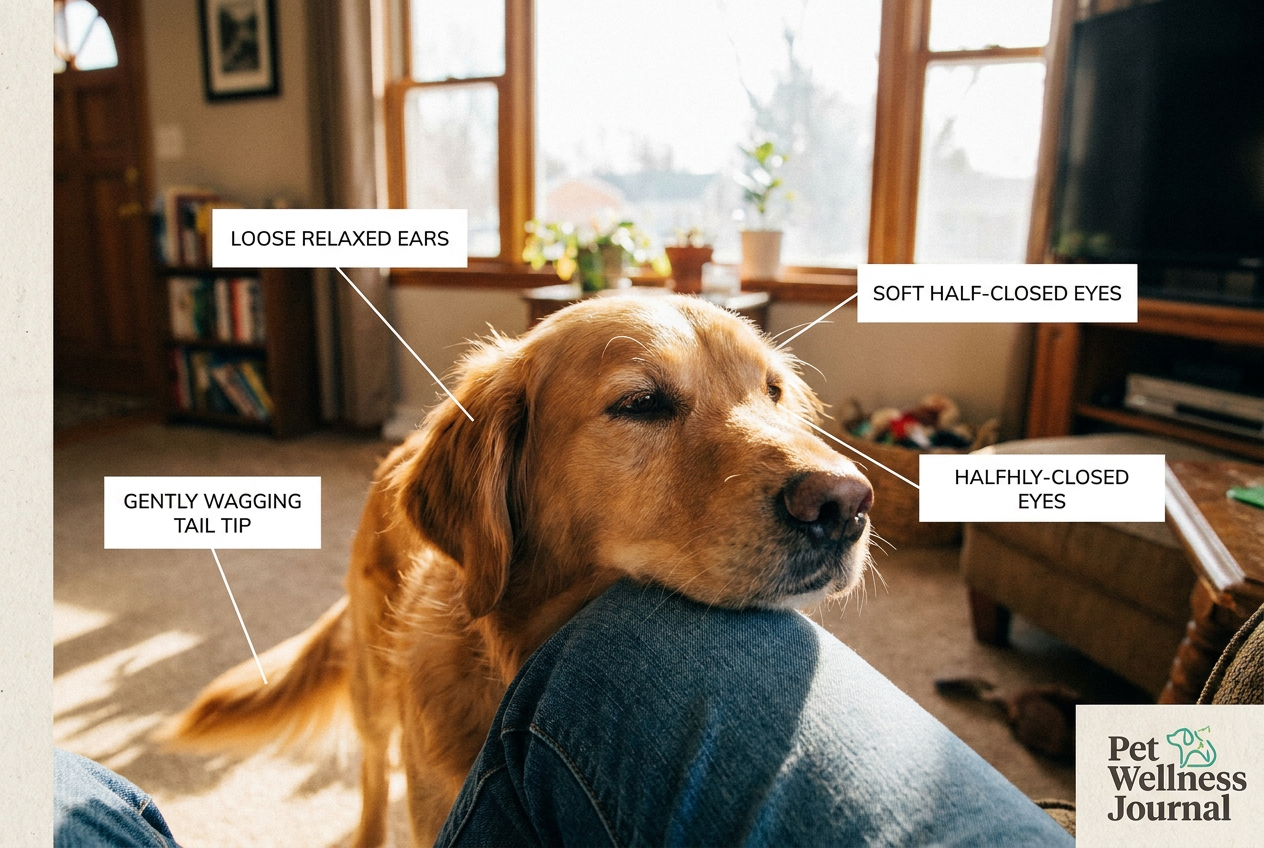
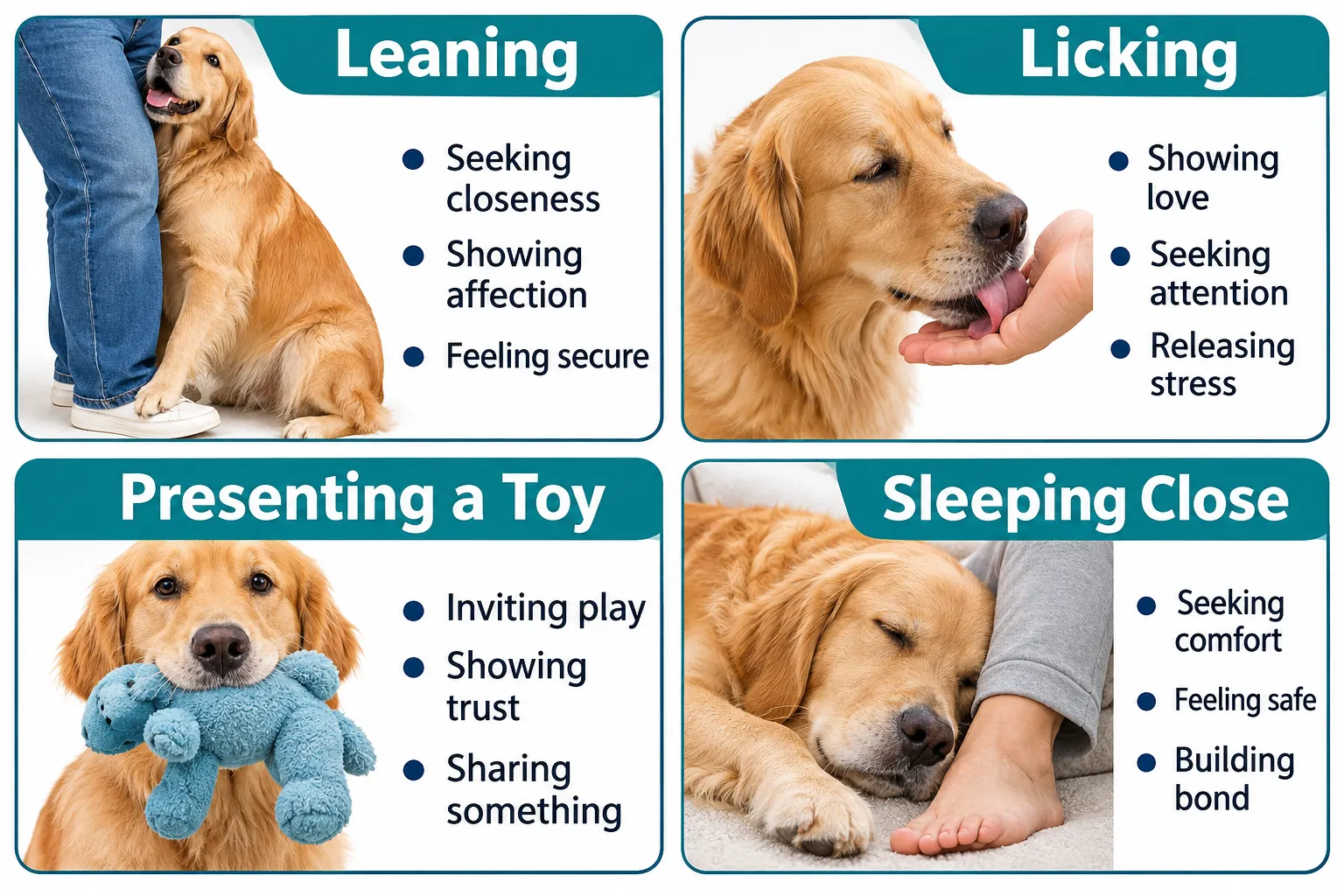
The behaviors that show up again and again across trainer guidance and veterinary sources include leaning against a person with a loose body, resting a head on a leg or hand, sleeping in physical contact, following someone from room to room without being called, making soft blinking eye contact, and bringing a toy over during quiet moments. None of these behaviors are proof on their own. A dog can lean because it loves you, or because the floor is cold and you happen to be warm. Context is what separates affection from coincidence.
Three things change the meaning of a behavior:
- Body tension. Loose muscles, soft ears, and a relaxed mouth point toward comfort. Stiffness, freezing, or a tucked tail point toward stress, even when the behavior looks identical on the surface. VCA Animal Hospitals covers how facial tension alone can change the meaning of an otherwise friendly-looking expression.
- Whether anything is being asked for. A dog nudging your hand near dinnertime is probably asking for food. The same nudge at 9pm on the couch, with no bowl in sight, is closer to a request for contact.
- What happens when you stop. Affectionate behavior tends to continue or escalate gently when ignored. Anxious or demand-driven behavior often gets more frantic instead.
How do dogs show affection differently from how people expect? Mostly by being quieter about it than owners assume. The dramatic, visible stuff (jumping, licking a face, spinning in circles) is easy to notice. The quieter indicators that vets and researchers point to most often, like choosing to nap near your desk instead of alone in the bedroom, are easy to miss simply because they do not ask for applause.
How do dogs show affection? Why does my dog follow me everywhere?
A dog that follows you from room to room is usually showing social bonding and a desire to stay included in whatever you are doing, which is one of the clearest everyday answers to how do dogs show affection without a single dramatic gesture involved. This pattern is common in working and herding breeds especially, but it shows up across most dogs that live closely with one or two people.
The behavior sits on a spectrum. On the calm end, a dog trots after you to the kitchen, flops down nearby, and does not react much if you leave the room again for a minute. On the anxious end, a dog panics, paces, or vocalizes the moment a door closes between you two. That second pattern lines up more closely with separation anxiety than with simple attachment, and it is worth mentioning to a vet if it happens daily.
Decision rule: if your dog follows you but settles quickly once in the same room, treat it as affection and inclusion-seeking. If the following is frantic and the dog cannot relax unless touching you, treat it as a coping behavior first.
How do dogs show affection? What does it mean when a dog licks your face?
A lick to the face usually means greeting, taste interest, or a bid for attention, and it is one of the most visible (though not the most reliable) answers people reach for when asking how do dogs show affection. VCA Animal Hospitals explains that licking has roots in puppy behavior directed at a mother dog’s mouth, and it carries over into adult greeting rituals aimed at people.
Context matters here as much as anywhere else in this article:
- A quick lick at the door after you come home usually reads as excitement and greeting.
- Licking driven by leftover food smell on your hands or face is about the smell, not the relationship.
- Repetitive licking of the same spot on your skin for several minutes can point toward anxiety, boredom, or in some cases a medical issue worth mentioning to a vet.
Common mistake: treating every lick as a kiss. A single greeting lick is usually affectionate. A dog that licks compulsively, especially its own paws or a fixed spot on furniture, is often dealing with stress rather than expressing love.
How can I tell if my dog actually loves me?
The clearest sign a dog loves you is voluntary closeness with nothing to gain, repeated across many ordinary days rather than a single dramatic moment. Canine behavior specialists describe this kind of proximity-seeking, without food or a toy involved, as one of the strongest trust markers available to an owner watching at home.
Look for a cluster of signals rather than one isolated behavior:
- Choosing to rest near you when another, quieter room is available
- Checking in with eye contact during walks, which veterinarians cite as a documented bonding behavior
- Relaxed body language around you specifically, compared to visible stiffness around strangers
- A loose, sweeping tail wag at greetings rather than a stiff, fast one
- Soft, blinking eye contact rather than a hard stare
Example: a dog that naps on the living room rug near your desk, instead of the empty bedroom down the hall, with nothing asked of it, is showing a preference that cannot be explained by food or temperature alone. That is a much stronger signal than a dramatic greeting at the door.
Do all dog breeds show affection the same way?
No. Breed background shapes how affection gets expressed, even though the underlying motivation (closeness, trust, inclusion) tends to be similar across most dogs. Breeds developed for independent work, like many guarding breeds, often show affection through quiet proximity and loyalty rather than constant physical contact. Breeds developed for close partnership with handlers, like many retrievers and herding dogs, tend to be more physically demonstrative and more likely to lean, lick, or bring toys.
A few practical patterns worth knowing:
- Independent working breeds may show love through following and watching rather than cuddling.
- Companion breeds often default to physical closeness, including lap-sitting and leaning.
- Dogs bred for guarding tend to bond tightly with a small circle of people and stay reserved with everyone else.
If you are choosing a dog partly based on how physically affectionate you want the relationship to be, it helps to read up on the best dog breeds for apartment living or breeds suited to first-time owners, since temperament and affection style vary more by breed group than people often expect.
Why isn’t my dog showing affection?
A dog that seems unaffectionate is usually dealing with one of three things: individual temperament, an unmet need, or a medical issue that is changing its behavior. How do dogs show affection when something is actually wrong? Often they simply stop, or they shift from relaxed closeness to avoidance, and that shift is the signal worth paying attention to.
Rule out the common causes in order:
- Temperament. Some dogs are naturally more reserved and show affection through quiet proximity rather than physical contact, which is normal and not a sign anything is wrong.
- Recent change. A new home, a new pet, or a change in routine can make a normally affectionate dog withdraw temporarily while it adjusts.
- Pain or illness. Dental pain, joint pain, or digestive discomfort can make a dog avoid touch, even from people it trusts. This is the one that deserves a vet visit rather than patience.
Common mistake: assuming a dog that avoids touch simply does not like its owner. In many cases the dog is uncomfortable physically, not emotionally distant.
Is it normal for dogs to be unaffectionate?
Yes, within limits. Some dogs are naturally reserved and express closeness through quiet presence rather than touch, and that pattern on its own is not a red flag. It becomes worth investigating when a dog that used to seek contact suddenly stops entirely, or when the dog avoids all forms of interaction, including eye contact and being in the same room.
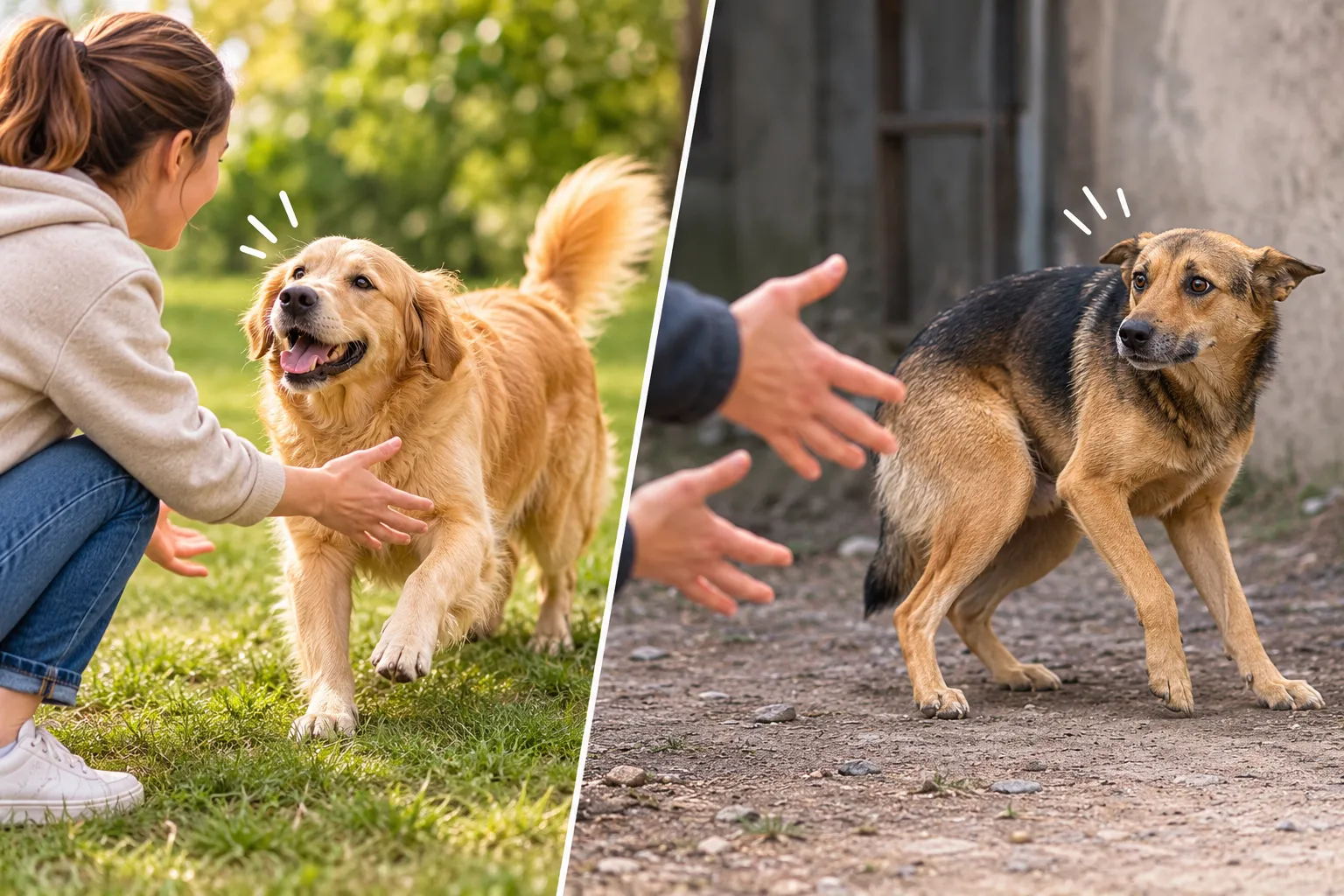
A dog that rarely initiates touch but still relaxes around you, sleeps nearby, and does not flinch when handled is likely just reserved by nature. A dog that actively avoids you, tenses up at approach, or hides regularly is showing something closer to fear or discomfort, and that pattern deserves attention from a vet or trainer rather than being written off as “just independent.”
Can a rescue dog bond with a new owner?
Yes, and most rescue dogs do bond, often on a slower and more gradual timeline than dogs raised from puppyhood in one home. Many stay guarded for the first few weeks in a new house, then shift toward the same leaning, following, and relaxed-sleep behaviors seen in dogs who never changed homes, just later and more gradually.
A few things speed up or slow down the process:
- Consistent daily routines (feeding times, walk times) help a rescue dog predict what happens next, which builds trust faster than affection alone.
- Avoiding forced physical contact in the first weeks, letting the dog approach rather than reaching for it, tends to shorten the guarded period.
- A history of multiple past homes or shelters can extend the adjustment period to several months rather than weeks.
Common mistake: assuming a rescue dog that does not immediately cuddle does not like its new owner. Trust in these dogs usually builds through repeated calm, low-stakes interactions rather than a single dramatic bonding moment.
What’s the difference between a dog that likes you and loves you?
A dog that likes you is comfortable around you and will accept attention, but a dog that loves you actively seeks you out, relaxes its body specifically around you, and treats you differently than it treats other familiar people. The clearest marker is specificity: does the dog’s behavior change depending on who is in the room?
Signs that point toward deeper attachment rather than general comfort:
- The dog checks in with you specifically during walks, even with other people present.
- Sleep location shifts toward you consistently, not just whoever happens to be closest.
- The dog’s body visibly loosens around you in a way it does not around other household members or guests.
Liking a person can look almost identical to loving them in short interactions. The difference shows up over weeks of observation, not in a single afternoon.
Why do dogs lean against you?
Dogs lean against people mainly as a closeness request, according to veterinary behavior guidance, but the meaning depends heavily on whether the dog’s body stays loose or goes rigid during the lean. A relaxed lean, with soft muscles and a loose tail, is one of the more reliable answers to how do dogs show affection in everyday settings, since there is rarely a food or play motive behind it.
A braced, stiff lean is a different story. Dogs sometimes lean into a person’s legs when startled or uncertain, using the contact for stability rather than bonding. The posture can look similar from a few feet away, which is why checking the rest of the body matters more than the lean itself.
Quick example: a dog that leans into your legs during a thunderstorm is seeking reassurance, not simply expressing affection. A dog that leans into you during a calm evening on the couch, with no outside trigger, is making a closeness request in its purest form.
Why do dogs give you their toys?
Bringing a toy over is usually an invitation to interact, not simply a gift, and it is a behavior that gets misread fairly often. Owners tend to assume the dog wants to chew alone nearby, when in many cases the dog is asking for shared play or attention. Treating the gesture as an invitation, by engaging for even a minute, reinforces that the behavior worked and tends to encourage more of it over time.
A dog that drops a toy in your lap and then waits, watching your face, is behaving differently than a dog that just wants company while it chews independently. The waiting and watching is the detail that points toward a social invitation rather than a solo activity.
What are the signs my dog trusts me?
The clearest trust signals are a loose, exposed body during sleep, relaxed muscles during physical contact, and a willingness to be handled around sensitive areas like paws, ears, and mouth without flinching. These signals matter more than how often a dog seeks attention, since trust is about comfort rather than enthusiasm.
Practical signs to watch for:
- Sleeping on its back or side near you, rather than curled defensively
- Allowing paw handling, ear checks, or brief restraint without tensing
- Settling quickly after being startled, rather than staying alert for long periods
- Soft, blinking eye contact rather than a hard, fixed stare
Can anxious dogs still be affectionate?
Yes. Anxiety and affection are not mutually exclusive, and plenty of anxious dogs form strong attachments to their owners while still struggling with specific triggers like being left alone or meeting strangers. The key is separating the affectionate behaviors (leaning, following, sleeping close) from the anxious ones (panic at departures, excessive licking, destructive behavior when alone).
A dog can lean on you calmly during a quiet evening and still struggle badly with being left alone for work hours. Treating the two issues separately, addressing the anxiety with a vet or trainer while still recognizing genuine affection in calmer moments, gives a more accurate picture than assuming one problem erases the other.
Do senior dogs show less affection?
Senior dogs often show affection differently rather than less of it, with lower energy expressions like quiet proximity replacing more physical greetings like jumping or spinning. Arthritis, reduced vision, and reduced hearing can all make an older dog seem less responsive, when in reality the dog is simply less able to express enthusiasm physically.
Watch for these senior-specific patterns:
- Preferring to lie near you rather than actively greet you at the door
- Slower, calmer tail wags that still indicate pleasure despite reduced movement
- A continued preference for your presence over other family members, even if physical demonstrations have faded
A drop in affectionate behavior in an older dog is worth mentioning at a vet visit, since pain from joint issues or dental problems is common in senior dogs and can look like emotional withdrawal when it is actually physical discomfort.
How long does it take for a dog to show affection to a new person?
Most dogs start showing basic comfort signals, like accepting touch and relaxing nearby, within the first one to two weeks in a new home. Deeper attachment behaviors, like consistent following, relaxed sleep contact, and specific preference for one person, typically take two to three months to settle in, and sometimes longer for dogs with a history of multiple homes.
Puppies tend to show affection more physically and less selectively early on, mouthing, climbing into laps, following everyone in the house, before developing a clearer favorite person around social maturity, usually somewhere between one and two years of age depending on breed.
Behavior observation card
Below is a quick reference for reading six common behaviors without jumping straight to “my dog loves me.”
Rescue dogs often show affection on a delayed timeline, as covered above, and puppies show it more broadly before narrowing toward a favorite person. The common mistake across both groups is assuming a dog that does not immediately cuddle does not like its owner. Trust tends to build through repeated calm interactions over weeks, not through one dramatic moment.
Why do proximity and licking depend on the setting?
The same behavior means different things depending on what else is happening around it. A lick after a meal is probably about leftover food smell. A lick during a quiet evening on the couch is more likely social, which is part of why how do dogs show affection questions rarely have a single clean answer.
Setting changes the read on several common behaviors:
- Licking: Licking you at the door after work differs from compulsive licking of the same spot on your arm for ten minutes, which can point toward anxiety or even a medical issue.
- Following room to room: Normal when it is relaxed and intermittent. A red flag for separation anxiety when the dog panics the moment a door closes between you.
- Tail wagging: A loose, sweeping wag at the door reads as friendly. A fast, stiff wag with a raised tail near a stranger or another dog can mean arousal that is closer to tension than joy.
- Dog-to-dog affection versus dog-to-human affection also differs: dogs often show affiliation with other dogs through play bows and mutual grooming, while affection toward humans leans more on proximity, eye contact, and leaning, as described in VCA’s overview of canine communication.
Decision rule: if a behavior only shows up in calm, low-stakes moments, treat it as affection. If it shows up mainly during stress, departures, or conflict, treat it as a coping behavior first and ask a vet or behaviorist if it is frequent.
Comparison: common scenarios and what they likely mean
| Scenario | Likely affection signal | Alternative explanation | What changes the read |
|---|---|---|---|
| Dog leans on legs during TV time | Trust, seeking closeness | Cold floor, poor balance, anxiety | Body is loose vs braced |
| Dog licks face after owner returns home | Greeting, excitement | Residual food smell, overstimulation | Lasts seconds vs continues for minutes |
| Dog follows owner between rooms | Social bonding, wants inclusion | Separation anxiety | Calm vs panicked if door closes |
| Dog rolls onto back near owner | Comfort, invitation | Appeasement toward perceived threat | Wiggly and loose vs frozen and still |
| Dog sleeps touching owner’s foot | High trust, feels safe | Clingy attachment from anxiety | Sleeps elsewhere fine too vs refuses to |
Things to watch out for
The biggest mistake owners make is treating one behavior as proof of love, then ignoring the body language around it. A tight mouth, pinned ears, or a tucked tail paired with an otherwise “affectionate” behavior usually means the dog is coping, not bonding.
- Don’t force hugging. Dogs that freeze, turn their head away, lick their lips, or show whale eye during a hug are telling you to stop, even if they don’t growl.
- Don’t confuse constant following with devotion if the dog also panics during brief separations; that pattern fits separation anxiety better than simple attachment.
- Don’t assume a wagging tail always means a friendly dog, especially around unfamiliar dogs or people; check the speed, height, and stiffness of the wag.
- A dog rolling over is not always requesting a belly rub. A stiff, motionless roll near a stressor can be appeasement, not invitation.
- A sudden drop in affectionate behavior deserves a vet visit before a behavior plan. Pain changes behavior fast, and conditions like dry eye or dental pain are easy to miss at home.
FAQ
How do dogs show affection toward strangers compared to their owners? Dogs typically show more cautious, controlled behavior around strangers, with less leaning, licking, or relaxed sleep contact, since those signals are usually reserved for people the dog knows well and trusts.
Why does my dog only show affection at certain times of day? Many dogs are more physically affectionate during calm, low-energy periods like evenings, since they are less distracted and less likely to be hungry, tired, or overstimulated.
Can a dog love one person more than another in the same house? Yes. Dogs commonly form a stronger attachment to one household member, often based on who handles feeding, walks, and calm daily interaction most consistently.
Does playing fetch count as a sign of affection? Shared play can reflect bonding, especially when the dog brings the toy back specifically to the same person repeatedly, but it also reflects simple enjoyment of the game itself.
Is tail wagging always a reliable affection signal? No. Wagging reflects arousal in general, and a fast, stiff wag with a raised tail can indicate tension rather than friendliness, according to AKC behavior guidance.
Should I worry if my dog never wants to cuddle? Not necessarily. Some dogs are naturally reserved and show closeness through quiet proximity instead of physical contact, which is a normal temperament variation rather than a problem.
How can training affect how a dog shows affection? Consistent, positive training builds predictability, and dogs that trust a routine often become more relaxed and more physically affectionate over time as a result. Starting with basic commands for puppies can help build that foundation early.
Can diet or health issues change how affectionate a dog seems? Yes. Pain, digestive discomfort, and conditions affecting mobility can all reduce a dog’s willingness to engage physically, even when the underlying relationship with the owner has not changed.