
This post contains affiliate links. If you buy through one we may earn a commission at no extra cost to you. As an Amazon Associate I earn from qualifying purchases.
Quick Answer: Dog grooming wipes work best when the sheet is large enough to cover a paw or belly in one pass (roughly 7×7 to 9×9 inches), the formula is fragrance-free or lightly scented for dogs with sensitive skin, and the container has a real snap-close or flip-top lid rather than a peel sticker. Get those three things right and a 100-count pack of dog grooming wipes will stay usable, and damp, from the first sheet to the last.
Key Takeaways
- Dog grooming wipes are a between-bath maintenance tool, not a shampoo replacement.
- Sheet size in the 7×7 to 9×9 inch range covers most small and medium dogs in one pass.
- Fragrance-free and hypoallergenic formulas are the safer default for puppies and dogs with sensitive skin.
- A hinged flip-top or snap-close lid keeps the back half of a pack damp; peel stickers usually fail first.
- Essential oils in wipes deserve caution; check with a veterinarian before using scented products containing them.
- Baby wipes are not a safe substitute because they’re formulated for human skin pH.
- Most dogs tolerate wipes well, but a dog that resists is usually reacting to scent, cold wipes, or handling, not the product category itself.
- Price for a 100-count pack of dog grooming wipes generally runs from under $10 for budget multi-packs to the mid-teens for premium plant-based formulas.
A wipe that dries out by the fortieth sheet is not a bargain. It’s a canister of damp regret sitting next to the leash hooks. If you groom your own dog at home, the things that decide whether a pack of dog grooming wipes earns a permanent spot by the door are sheet size, scent, and how well the lid actually reseals. Everything else on the label is mostly noise.
This isn’t a mysterious product category. A wipe is a cloth with water, a mild surfactant, and sometimes a scent, sealed in a container that either holds moisture or doesn’t. Owners who groom at home between salon visits, or skip the salon entirely, tend to judge dog grooming wipes the way they judge paper towels: by whether the thing does the job without falling apart in your hand. That instinct is correct here too. Our beginner’s guide to dog grooming covers the full at-home routine. This piece stays narrow and focused on the wipe materials and the daily cleanup job they’re actually built for.
What are dog grooming wipes used for?
This grooming wipes are pre-moistened cloths designed to clean paws, bellies, faces, and coats between baths without water or shampoo. They’re meant for surface dirt, mud, dust, drool, and light odor control, not for deep cleaning or treating skin conditions.

Common everyday uses include:
- Wiping muddy paws after a walk before a dog tracks dirt through the house
- Freshening a coat that smells musty between full baths
- Cleaning around the mouth and chin after messy eating
- Wiping tear stains or eye gunk gently (with a wipe formulated for that area)
- Quick cleanup after rolling in something unpleasant outdoors
- Travel and car cleanups when a full bath isn’t an option
The American Kennel Club notes that grooming challenges often come down to consistency and comfort, which is exactly why a quick wipe-down, rather than a full bath, tends to get done more reliably on busy weeks. A dog that gets a 30-second paw wipe after every walk is a dog whose owner actually keeps up the habit.
Doggy Rank IQ Tool
Dog Grooming Wipes Pack Life Calculator

Most packs dry out before they run out. This shows your real pace and what to look for on the pack.
Top 5 Features That Actually Decide the Purchase
Five features separate a pack of this grooming wipes worth repurchasing from one that gets thrown out half-used. Each one maps to a real product decision, not marketing language.
1. Sheet size and thickness (Pogi’s Dog Wipes). Sheet size determines how many wipes a single cleanup actually takes. A 6×6 inch sheet sounds fine until a Labrador’s muddy hindquarters eats through four wipes for what an 8×9 sheet would finish in one. Pogi’s built its wipe around an 8×9 inch, thick, textured bamboo-fiber cloth specifically to cover more surface per sheet. Thicker sheets also resist shredding on coarse or curly coats, which thin wipes tend to do mid-swipe.
2. Reseal mechanism (Skout’s Honor HydroClear). Reviews of Skout’s Honor HydroClear note that its resealable pack seals back well and keeps wipes moist over repeated use. A hinged flip-top or snap-close lid almost always beats a thin peel sticker for keeping the back half of a canister damp. This is the single feature that determines whether wipe number 80 is as usable as wipe number 5.
3. Fragrance-free formulation (Wags & Wiggles Hypoallergenic). Fragrance-free wipes remove a variable entirely for dogs with sensitive skin or allergy history. Earth Rated’s own product pages describe their unscented lines as alcohol-free and paraben-free, positioned for daily use on dogs that might react to added fragrance.
4. Hypoallergenic, alcohol-free ingredients (Earth Rated Dog Wipes). Alcohol in a wipe formula can dry out skin with repeated daily use, especially on paws that already deal with friction from walking. Chewy’s product listing for Earth Rated’s 3-in-1 wipes confirms a hypoallergenic, alcohol-free formula built for frequent use, which matters more than scent for dogs prone to dry or flaky skin.
5. Sheet count and per-wipe cost (Petkin Fresh ‘N Clean Wipes). A 100-count pack of this grooming wipes sounds generous until a large dog burns through three sheets per walk. Petkin’s product listings show counts and sizing clearly on the package, which is worth comparing before assuming a bigger box is automatically the better deal. Per-wipe cost, not pack price, is the number that actually predicts how long a canister lasts.
Sheet Size, Scent, and Reseal: The Three Variables Worth Comparing
The size of the sheet, the presence or absence of fragrance, and the type of lid on the canister are the three variables that determine whether this grooming wipes perform well over the life of a pack. Everything else, from packaging color to marketing copy about “spa-quality,” matters far less.
Sheet size determines how many wipes a job actually takes. Pogi’s built its wipe around an 8×9 inch, thick, textured bamboo-fiber cloth specifically to cover more surface per sheet. Roofus runs a comparable 8×8 inch sheet in its fragrance-free line, confirmed on its Chewy product listing. Smaller dogs can get by with smaller sheets and a lower per-wipe cost, but anyone with a shedding retriever or a mud-prone pointer should check the dimensions before assuming a cheaper small-sheet pack is actually the better deal.
Scent is where marketing works hardest and evidence says the least. A light herbal or green-tea scent, like Pogi’s fragrance-free or scented variants, is cosmetic for the owner, not therapeutic for the dog. Fragrance-free and unscented options exist specifically for dogs with sensitive skin, allergies, or owners who’d rather their dog not smell like a candle aisle. Essential oils deserve a separate line of caution: concentrated essential oils can be harmful to pets, and it’s worth checking with a veterinarian before using any product that lists lavender, tea tree, or citrus oils rather than a synthetic fragrance.
Reseal is the quiet deal-breaker nobody mentions until wipe thirty comes out dry. Packaging claims like “resealable opening,” “snap-close lid,” “moisture seal,” or “double seal” are becoming standard language because keeping the remaining sheets damp is a real differentiator, not packaging fluff. Reviews of Skout’s Honor HydroClear note that the resealable pack seals back very well and keeps wipes moist over time, while some mass-market 200-count packs get called out for sheets going nearly dry partway through the container. A sticker-style peel seal almost always loses to a hinged flip-top or snap lid for long-term moisture retention.
Best Dog Grooming Wipes for Sensitive Skin
For dogs with sensitive skin, the safest category of this grooming wipes is fragrance-free, alcohol-free, and hypoallergenic, with no essential oils on the ingredient list. These formulas remove the two most common irritants (added fragrance and alcohol) while still cleaning effectively.
Earth Rated’s wipe line is built around this exact profile: hypoallergenic, alcohol-free, paraben-free, and suitable for daily use. Wags & Wiggles’ fragrance-free hypoallergenic formula follows the same approach. Vetnique’s guidance on choosing wipes for muddy pets also recommends checking for gentle, pH-balanced formulas when a dog has reactive or easily irritated skin.
A decision rule worth remembering: choose a fragrance-free, alcohol-free wipe if your dog licks its paws after cleaning, has a history of hot spots, or has ever reacted to a scented shampoo or wipe before. If your dog has never shown sensitivity and you simply prefer a lighter experience, a mildly scented wipe is a reasonable preference choice, not a risk.
How Often Should I Use Grooming Wipes on My Dog?
Most dogs can be wiped down once a day after walks, or as needed for specific messes, without any issue, since wipes are far gentler on the skin than frequent bathing. There’s no fixed universal number, but daily paw wipes and occasional full-coat wipes are standard practice for active dogs.
The ASPCA recommends bathing roughly every three months as a general guideline, with variation depending on coat type and activity, while Vetstreet veterinarian Dr. Jennifer Coates places typical bathing frequency closer to every four to six weeks for most dogs. That gap between baths is exactly where this grooming wipes do their job: daily spot cleaning on paws, bellies, and faces without stripping the skin’s natural oils the way frequent full baths can.
A common mistake is treating wipes as a replacement for brushing. Master groomer Ray Truting, cited in a September 2026 Kansas City Star report, describes wipes as useful for muddy paws, dusty coats, and travel touch-ups, not as a bathing replacement, and recommends brushing before bathing when the coat has heavy dirt or mats. Wiping over a matted or heavily soiled coat just moves dirt around instead of removing it.

Are Dog Grooming Wipes Safe for Puppies?
Fragrance-free, alcohol-free formulas are generally the safer starting point for puppies, with a patch test on a small area of skin before full use. Puppy skin is thinner and more reactive than adult dog skin, so minimizing added ingredients matters more at this stage.
Before introducing any wipe to a puppy:
- Choose unscented or fragrance-free over scented or essential-oil-based formulas
- Test on a small patch of skin and wait 24 hours before full use
- Check with a veterinarian before using anything with essential oils, tea tree, or citrus listed
- Avoid wipes near the eyes unless the product is specifically labeled for that area
VCA Animal Hospitals’ new puppy checklist recommends building a gentle grooming routine early, which includes introducing wipes and brushing as low-stress, short sessions rather than forcing a full grooming routine on a young dog all at once.
Dog Grooming Wipes vs Dog Shampoo: Which Is Better?
This grooming wipes and dog shampoo serve different jobs: wipes handle quick, localized cleanup between baths, while shampoo handles a deep, full-coat clean that only water and lathering can achieve. Neither replaces the other; most owners use both for different situations.
Choose this grooming wipes when:
- The mess is localized (muddy paws, a dusty belly, drool around the mouth)
- There isn’t time or space for a full bath
- The dog needs a quick freshen-up before guests or a car ride
- A full bath isn’t due yet based on coat type and activity level
Choose shampoo and a full bath when:
- The dog has rolled in something strongly odorous or sticky
- There’s visible buildup of oil, dander, or dirt across the whole coat
- A veterinarian has recommended a medicated shampoo for a skin condition
- It’s simply been the dog’s normal bathing interval (every four to six weeks for most dogs, per Vetstreet’s Dr. Jennifer Coates)
Over-bathing can strip protective skin oils, which is part of why this grooming wipes exist as a between-bath maintenance tool rather than a cleaning shortcut that replaces proper bathing altogether.
Can You Use Baby Wipes on Dogs Instead?
Baby wipes are not a safe substitute for this grooming wipes because they’re formulated for human skin pH and often contain fragrances or preservatives that haven’t been evaluated for use on dogs. Dog-specific wipes are the safer default, particularly for dogs with sensitive skin or known allergies.
Human skin and dog skin have different pH balances, and ingredients considered mild for a baby’s skin (certain preservatives, fragrance compounds, or cleansing agents) aren’t necessarily tested or formulated for canine skin. If a baby wipe is genuinely the only option in an emergency, a single unscented use is unlikely to cause harm, but it shouldn’t become a routine replacement for proper this grooming wipes.
Do Dog Grooming Wipes Actually Work?
Yes, for the job they’re designed to do: lifting surface dirt, dust, and light odor from paws, bellies, and coats. They’re not designed to deep-clean a heavily soiled coat, treat a skin infection, or replace a bath, and expecting that from a wipe leads to disappointment that isn’t really the product’s fault.
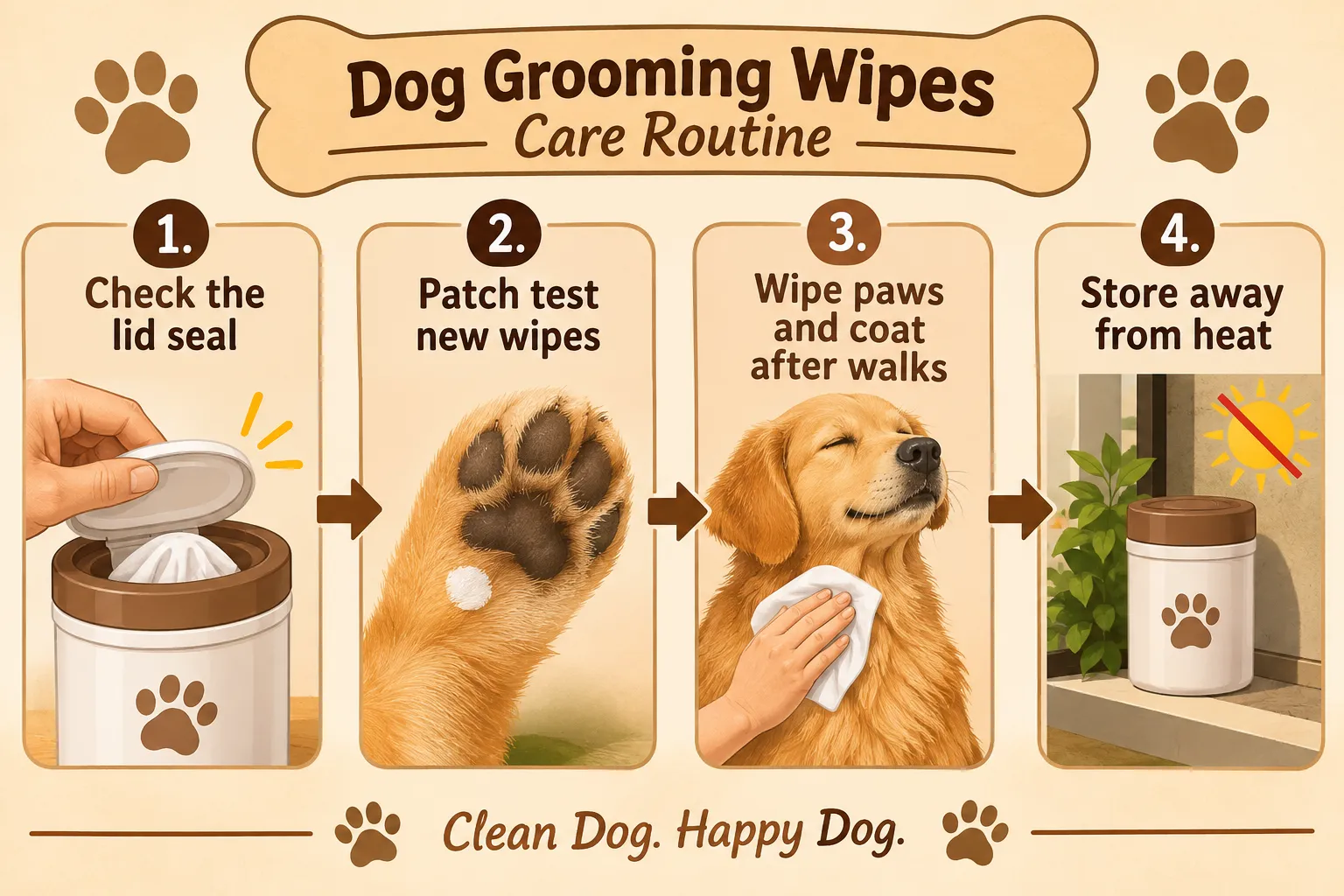
Veterinary and grooming guidance consistently frames wipes the same way: a maintenance tool for between-bath upkeep, not a bathing substitute. For light daily mess, that’s exactly the job a thick, well-saturated wipe is built to handle. For mats, heavy mud caked into fur, or anything involving broken skin, a wipe will not get the job done and a full bath or veterinary visit is the right call.
How Much Do Dog Grooming Wipes Cost?
A standard 100-count pack of this grooming wipes typically costs under $10 for budget multi-packs, climbing into the mid-teens for premium plant-based or bamboo-fiber formulas. Per-wipe cost generally drops as sheet count rises, but only if the wipes stay damp long enough to actually use the full pack.
Price bands worth knowing before shopping:
- Budget multi-packs (100 to 200 count): generally under $10, often with peel-sticker lids
- Mid-range hypoallergenic or fragrance-free formulas (100 count): roughly $8 to $12
- Premium plant-based or bamboo-fiber wipes with reseal packaging (100 count): roughly $10 to $16
A cheap large pack that dries out at sheet 60 can end up costing more per usable wipe than a smaller, better-sealed pack. Reseal quality is part of the actual cost calculation, not a separate consideration.
Dog Grooming Wipes for Muddy Paws
For muddy paws specifically, a thick, textured sheet in the 7×7 to 9×9 inch range handles the job in one or two wipes per paw for most small and medium dogs, while larger dogs benefit from the larger end of that range. Texture matters almost as much as size here, since a smooth, thin wipe tends to push mud around rather than lifting it off.
Vetnique’s guidance on cleaning muddy pets recommends wiping from the top of the leg downward toward the paw to avoid pushing dirt further into the coat, and checking between paw pads where mud and small debris tend to collect. A quick example: a medium-sized dog coming in from a rainy walk typically needs one wipe per paw, plus a second pass on the belly if the dog is low to the ground, which is a reasonable per-walk estimate for budgeting how many sheets a pack will actually last.
Why Does My Dog Hate Grooming Wipes?
Dogs that resist grooming wipes are usually reacting to the scent, the cold or wet sensation, or unfamiliar handling, not to the concept of being wiped itself. Short, calm introductions almost always resolve the resistance within a few sessions.
Common reasons a dog pulls away:
- The wipe is cold from storage; warming it slightly in your hands first can help
- A strong scent is unfamiliar or unpleasant to a dog’s far more sensitive nose
- Paws are a sensitive area for many dogs, and sudden handling there can trigger a flinch
- Past negative association with grooming tools in general, not the wipe specifically
The fix is rarely the product. Short sessions, treats paired with paw handling, and a fragrance-free wipe to remove scent as a variable usually solve the problem faster than switching brands repeatedly. For dogs with broader handling anxiety during grooming, our beginner’s guide to dog grooming covers building tolerance gradually across a full routine.
What Ingredients to Avoid in Dog Wipes
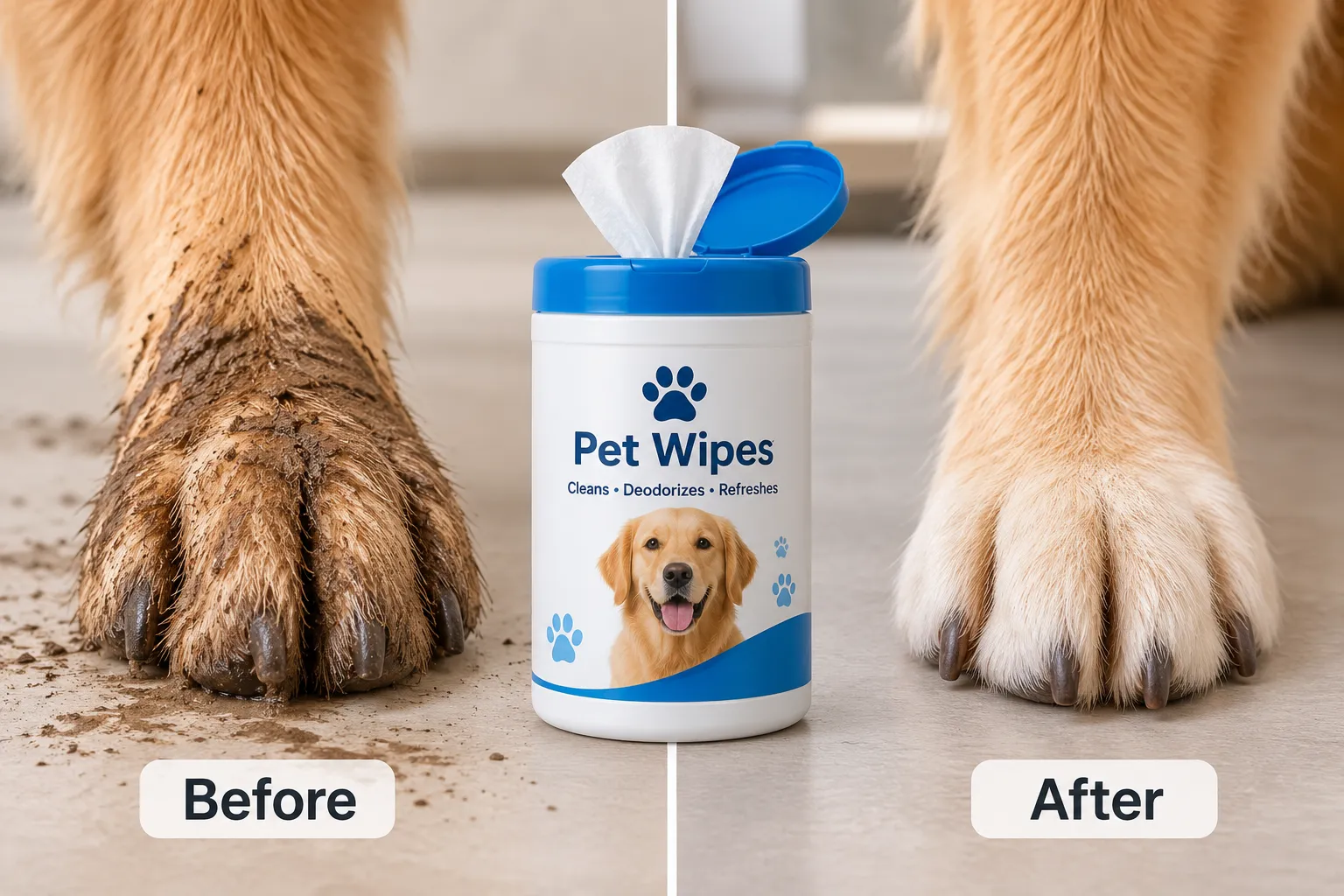
The ingredients worth avoiding or checking carefully in this grooming wipes are added alcohol, concentrated essential oils, and parabens, particularly for dogs with sensitive skin, allergies, or puppies. None of these are automatically dangerous in trace amounts, but they’re the most common sources of irritation reported with wipe use.
Watch for:
- Alcohol (listed as denatured alcohol or similar): can dry out skin with repeated daily use
- Concentrated essential oils (tea tree, citrus, lavender in high concentration): check with a veterinarian before use, since concentrated essential oils can be harmful to pets
- Parabens: some owners and brands avoid these as a precaution, even without definitive harm data in wipes specifically
- Strong synthetic fragrance: a common trigger for skin reactions in already-sensitive dogs
Choosing a product labeled hypoallergenic, alcohol-free, and paraben-free, like Earth Rated’s line, sidesteps most of these concerns without needing to read a full ingredient list every time.
Best Dog Grooming Wipes for Itchy or Dry Skin
For itchy or dry skin, fragrance-free and alcohol-free formulas are the safest starting point, since both added fragrance and alcohol are common drying or irritating agents. A patch test before full use is worth doing even with a product labeled hypoallergenic.
If a dog’s itching or dryness persists regardless of which wipe is used, that’s a signal the issue isn’t the wipe at all, it’s likely an underlying skin condition, allergy, or seasonal dryness that needs a veterinary look rather than a product swap. Wipes can manage surface symptoms temporarily but won’t resolve an underlying dermatological issue.
Can You Use Dog Grooming Wipes Between Baths?
Yes, this is exactly the use case this grooming wipes are designed for. Using wipes for daily or as-needed spot cleaning between full baths keeps a dog’s coat and paws clean without the skin-drying effects of bathing too frequently.
Given that the ASPCA recommends roughly every three months as a general bathing guideline (with Vetstreet’s Dr. Jennifer Coates noting four to six weeks is more typical for many dogs), the weeks in between are where wipes fill the gap. A dog that gets muddy on every walk but only gets a full bath monthly is a textbook case for daily paw wipes handling the in-between mess.
Dog Grooming Wipes for Dogs with Allergies
For dogs with known allergies, fragrance-free, hypoallergenic, alcohol-free wipes with no essential oils are the appropriate choice, and a patch test on a small area is worth doing even with a product marketed as allergy-friendly. “Hypoallergenic” on a label is a formulation claim, not a guarantee, so individual reactions can still occur.
Chewy’s own buying guidance recommends minimal-fragrance formulas for young or sensitive-skinned dogs, with a patch test on a small area first. If a dog has a documented allergy to a specific ingredient (certain preservatives or plant extracts, for example), reading the full ingredient list before purchase is worth the extra two minutes, since allergy-friendly marketing language varies by brand and isn’t standardized.
Picks by Use Case and Budget
These three options cover different priorities: unscented reliability, hypoallergenic simplicity, and a calming scent for dogs who need a little extra ease during handling.
Earth Rated Dog Wipes for Paws & Butt, Deodorizing, Unscented, 100ct is the straightforward pick for owners who want a thick, dependable wipe without added fragrance. Earth Rated’s wipes are described as hypoallergenic, alcohol-free, and paraben-free, positioned for daily use. It suits dogs with routine muddy-walk cleanup or owners who prefer to keep scent decisions separate from grooming. Check current availability for the best-fit model.
Wags & Wiggles Hypoallergenic Dog Wipes, Fragrance-Free, 100 Count targets dogs with known sensitivities or owners who’ve had a reaction scare with a scented brand before. Fragrance-free formulas remove one variable entirely, which matters for dogs that lick their paws after a wipe-down. It’s a sensible budget-conscious default when you’re not sure how a new dog’s skin will react. Check current availability for the best-fit model.
Best Pet Supplies Cleaning Dog Wipes, Calming Lavender, 100 count is the option for owners who want a mild scent and don’t have a dog with known sensitivities. Lavender is a common calming-marketed scent in pet products, though the calming claim is a product description, not a clinical one, so treat it as a preference pick rather than a behavioral tool. Dogs that get anxious during grooming benefit more from a gentle routine and short sessions than from a scented wipe. Check current availability for the best-fit model.
Disclosure: This article contains affiliate links. We may earn a commission from qualifying purchases at no extra cost to you.
Price bands across this category typically run from budget multi-packs under $10 to premium plant-based formulas in the mid-teens for 100 counts, with per-wipe cost dropping as sheet count rises. Review method here is specification comparison: sheet dimensions, ingredient lists, and reseal mechanism pulled from manufacturer product pages and retailer listings, not hands-on lab testing. Price checked November 2026.
Here is how the three stack up on the variables that actually change a buying decision.
| Product | Sheet size | Scent | Reseal type | Count |
|---|---|---|---|---|
| Earth Rated Unscented | Standard thick cloth | Unscented | Flip-top lid | 100 ct |
| Wags & Wiggles Hypoallergenic | Standard thick cloth | Fragrance-free | Flip-top lid | 100 ct |
| Best Pet Supplies Lavender | Standard thick cloth | Calming lavender | Flip-top lid | 100 ct |
| Roofus Fragrance Free Zoomie (reference) | 8 x 8 in | Fragrance-free | Resealable, moisture seal | Varies |
Things to Watch Out For
A few honest failure modes show up repeatedly with this grooming wipes, and most of them aren’t disclosed clearly on packaging. Knowing them ahead of time saves a wasted purchase.
The lid claim doesn’t always match real-world performance. A pack labeled “resealable” can still dry out by the back third if the seal is a thin peel sticker rather than a true hinged lid. Check reviews for mentions of dryness partway through the pack, not just the listing’s own description.
“Hypoallergenic” is a marketing term, not a regulated standard. The FDA does not define or regulate the word “hypoallergenic” for pet products the way it might for other claims, so it indicates a formulation intent, not a guarantee against reaction. A patch test still matters even on products labeled this way.
Essential oils are a real caution, not a scare tactic. Concentrated essential oils can be harmful to pets, and this applies even to oils marketed as calming or natural, such as lavender or tea tree. If a wipe lists essential oils rather than a synthetic fragrance, check with a veterinarian before regular use, especially for cats in multi-pet households where the wipe might be accessible.
Wipes won’t fix a mat or a skin condition. Rubbing a wipe over a matted patch of fur just moves dirt around instead of removing it, and using a wipe on an open wound, hot spot, or active infection delays proper care. Those situations call for a veterinarian or a proper brush-out first, not a scented cloth.
Per-wipe cost is easy to miscalculate. A 200-count pack priced lower than a 100-count pack isn’t automatically the better deal if a third of the sheets arrive dry or shred on use. Compare actual usable wipes, not the number printed on the box.
Skip wipes entirely for active skin issues. If a dog has an active skin infection, an open wound, or a diagnosed allergy flare, that calls for a veterinarian, not a wipe, regardless of how fragrance-free the label reads. Wipes are a surface-cleaning product, not a treatment, and no amount of “hypoallergenic” phrasing changes that.
Storage and Longevity Checklist
Keep the canister closed between uses and store it away from direct heat or a sunny windowsill, both of which speed up evaporation through even a well-made lid. If the last ten sheets in a pack start sliding out dry, that’s a packaging problem, not a quality-of-life inevitability, worth factoring into the next purchase.
- Close the lid fully and firmly after every single use, not just when the pack goes back in the cabinet
- Store away from heat sources, direct sunlight, and car interiors in warm weather
- Check for a hinged flip-top or snap-close lid before buying, not just the word “resealable” on the label
- If sheets near the bottom of the pack are consistently dry, note the brand and avoid repurchasing that specific packaging style
For teeth and odor concerns that wipes don’t touch, guides to cleaning dog teeth without brushing and periodontal disease in dogs cover that separate part of home care. Paw rinsing cups, topical waxes, and ear-specific cleaners sit outside the scope of a grooming-wipe comparison and deserve their own.
If a full at-home grooming kit is the goal rather than shopping one item at a time, the beginner’s guide to dog grooming lays out the tools worth owning before layering in specialty products like wipes and detanglers. And since coat type and body size drive how many wipes a cleanup actually requires, the breakdowns on giant breed size qualifications and large versus giant breed weight help estimate surface area for larger dogs.
FAQ
Which this grooming wipes size works best for muddy paws and a quick coat cleanup? A sheet in the 7×7 to 9×9 inch range covers a paw or a belly pass in one wipe for most small and medium dogs. Larger breeds benefit from the larger end of that range, since a smaller sheet means burning through more wipes per job and running out of a pack faster than the price suggests.
How should you store this grooming wipes so the last sheets stay damp? Keep the lid fully closed after every use, store the canister away from heat sources and direct sun, and check that the lid is a hinged snap-close or flip-top rather than a thin peel sticker. Products marketed with a “moisture seal” or “double seal” are built around this exact problem.
What are this grooming wipes and how do they work? They’re pre-moistened cloths, usually containing water, a mild surfactant, and sometimes a light scent, used to clean fur and paws without a full bath. They lift surface dirt and loose hair but don’t replace shampoo or deep cleaning.
This grooming wipes vs dry shampoo, which is better? This grooming wipes work better for localized messes like muddy paws or a dusty belly. Dry shampoo covers more coat surface and suits a general freshen-up between baths. Many owners keep both and use whichever fits the specific mess.
Are this grooming wipes safe for puppies? Fragrance-free, alcohol-free formulas are generally the safer starting point for young dogs, with a patch test on a small area first. Check with a veterinarian before using any scented or essential-oil-containing wipe on a puppy, and avoid products with concentrated essential oils.
Can you use regular baby wipes on dogs? Baby wipes are formulated for human skin pH and often contain fragrances or ingredients not evaluated for dogs. Dog-specific grooming wipes are the safer default, particularly for dogs with sensitive skin or known allergies.
Do this grooming wipes actually work between baths? For surface dirt, dust, and light odor, yes, which is exactly how veterinary and grooming guidance frames them: a maintenance tool, not a bath substitute. Heavy mud, mats, or skin issues still need a full bath or a veterinary visit.
How often should this grooming wipes be used? Daily use for paws after walks is common and generally safe with a gentle, alcohol-free formula. Full-coat wiping can be done as needed between baths, which typically happen every four to six weeks for most dogs based on individual coat type and activity.
What ingredients should be avoided in this grooming wipes? Added alcohol, concentrated essential oils, and heavy synthetic fragrance are the main ingredients to watch for, especially in dogs with sensitive skin or allergies. A fragrance-free, alcohol-free, paraben-free formula sidesteps most common irritants.
A pack of this grooming wipes earns its spot by the door when the sheet size matches the dog’s actual mess, the scent matches their actual skin, and the lid actually keeps the last twenty sheets as damp as the first twenty. Check those three things before the price tag, and canisters stop getting thrown out half-used every other month.