
Can dogs eat turkey? Quick Answer
Yes, dogs can eat turkey when it’s plain, cooked, boneless, and skinless, in a portion sized to the dog’s weight. The real Thanksgiving danger almost never comes from the turkey meat itself. It comes from the fatty skin, the bones that splinter when cooked, the gravy loaded with drippings, and the stuffing hiding onion and garlic. Sort those categories out before deciding whether tonight is a normal dinner or a call to the vet.
Key Takeaways
- Plain turkey breast (no skin, no seasoning) is an acceptable occasional addition for most healthy adult dogs, according to the American Kennel Club.
- Cooked bones splinter, not bend, which is why AKC guidance on Thanksgiving foods for dogs recommends skipping them entirely.
- High-fat scraps like skin and drippings are flagged by Washington State University’s veterinary hospital as a pancreatitis risk around the holidays.
- Pancreatitis symptoms can appear several days after a fatty meal, so a dog can look fine on Thursday night and get sick by the weekend.
- Onions, garlic, leeks, chives, and scallions, common in stuffing and gravy, can damage a dog’s red blood cells and cause anemia, per Pet Poison Helpline.
- Turkey is one of the less allergenic proteins for dogs and is sometimes used in limited-ingredient diets, according to Hill’s Pet.
- A reasonable portion is a few bite-sized pieces, not a plate of meat, matching the “extra” food cap most vets apply to treats and table food.
Your dog swallowed a cooked bone, ate stuffing or gravy with onion or garlic, shows vomiting, diarrhea, a hunched posture, or stops eating within a few days of a rich meal, or you’re simply not sure what went down. These are not wait-and-see situations.
Doggy Rank IQ Tool
Can Dogs Eat Turkey Risk Checker

Pick what was eaten and your dog's size. You get a calm read on risk, what to watch for tonight, and when to call.

Can dogs eat turkey?
Yes, dogs can eat turkey, but the question really splits into two parts: is turkey meat itself a problem, and is everything served alongside it a problem. Plain turkey, the kind you’d slice for a sandwich, is a lean, digestible protein that already appears in a lot of commercial dog foods.
The trouble starts the moment turkey stops being plain. A holiday bird usually spends hours basted in butter, salt, and sometimes a seasoning packet containing onion or garlic powder. That roasted turkey is a different food, nutritionally, from a bare chicken-style breast. Can dogs eat turkey straight off the holiday platter, drippings included? Not without real risk. VCA Animal Hospitals and the AKC both draw the same line: the meat is fine, the preparation usually isn’t.
Washington State University’s Veterinary Teaching Hospital repeats the same rule every November: small portions of plain turkey meat, no bones, no fat, no skin, no gravy, no seasoning. That’s the whole decision tree in one sentence, worth keeping in mind before the relatives arrive with foil-covered dishes.
What parts of turkey are safe for dogs to eat?
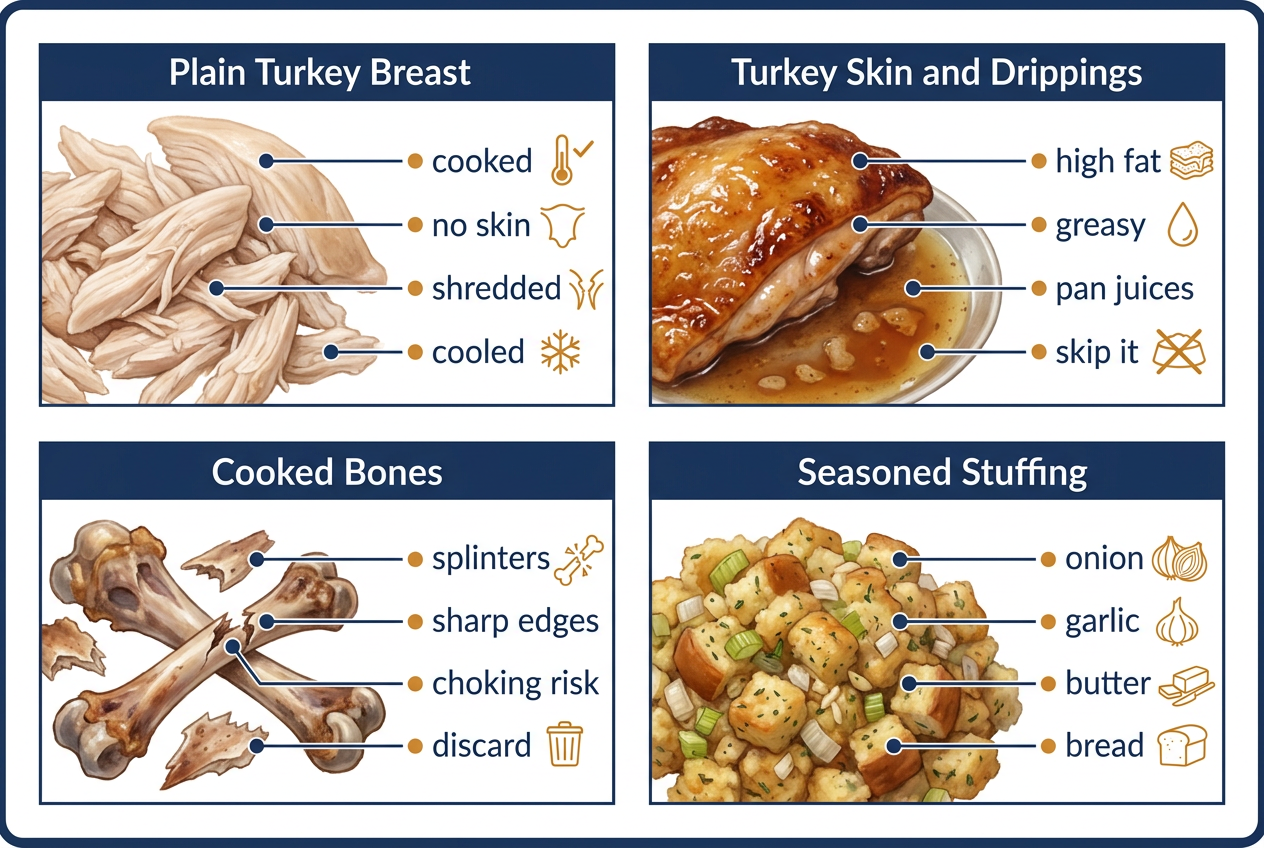
The safe parts are plain, cooked turkey breast or thigh meat with the skin and bone completely removed, cooled to room temperature before serving. Everything else on the carving board carries some level of risk.
Breakdown by component:
Safe in small amounts:
- Plain cooked turkey breast, shredded or cubed
- Plain cooked turkey thigh or wing meat, skin and bone removed
- A small spoon of plain sweet potato, pumpkin, or green beans alongside it, which Purina’s turkey safety guide lists as gentler add-ins than rich human sides
Skip entirely:
- Turkey skin (high fat, often basted in butter)
- Gravy and pan drippings (concentrated fat, often onion)
- Stuffing (onion, garlic, raisins, sometimes raw bread dough)
- Turkey bones, cooked any way
- Deli turkey loaded with sodium and preservatives
Decision rule: if you had to add butter, salt, onion, or a seasoning packet to make it taste like Thanksgiving, it doesn’t go in the dog’s bowl.
For more on everyday ingredients that beat table scraps, see the guide to dog-friendly foods for daily life.
Can dogs eat turkey bones?
No. Cooked turkey bones splinter into sharp fragments rather than bending, and those fragments can lodge in the throat, puncture the esophagus or intestines, or cause a blockage that needs surgery. This applies to roasted, boiled, or fried bones equally, including wing tips and the small bones in a drumstick.
Raw bones are sometimes given to dogs under close supervision by owners who feed a raw diet, but even raw bones carry choking and tooth-fracture risk and should never be a Thanksgiving afterthought. If a dog swallows a cooked bone fragment, don’t wait for symptoms. Call your vet or an emergency clinic the same day, even if the dog seems normal, because internal damage can take hours to show up as vomiting, straining, or lethargy.
Common mistake: leaving the carcass on the counter “to deal with later.” Dogs are expert counter surfers on a holiday, and a turkey carcass left out for even twenty minutes is a common source of emergency vet visits the Friday after Thanksgiving.

Can dogs eat turkey skin?
No, not in any real quantity. Turkey skin is where most of the bird’s fat concentrates, and it’s usually basted in butter or oil during cooking, which pushes the fat content even higher. That combination is the single biggest pancreatitis trigger on the holiday table.
Pet Poison Helpline flags fatty table scraps, skin included, as a leading cause of post-holiday emergency calls. Pancreatitis symptoms, including vomiting, abdominal pain, a hunched posture, and loss of appetite, can show up a day or more after the fatty meal, so a dog that eats skin on Thursday might not look sick until Saturday or Sunday.
Edge case: small breeds, senior dogs, and dogs with a history of pancreatitis face higher risk from even a small piece of skin. Miniature Schnauzers in particular are known among veterinarians for a predisposition to pancreatitis and should avoid fatty scraps entirely.
How much turkey can I give my dog?
A reasonable portion is a few small pieces, about the size of the dog’s regular training treats, not a plate of meat. Most veterinarians cap “extra” human food, including lean meat, at roughly 10% of a dog’s daily calories, with the rest coming from a balanced dog food.
- A 10-pound dog: a bite or two, roughly a tablespoon of shredded meat
- A 30-pound dog: a small handful, about two to three tablespoons
- A 70-pound dog: a slightly larger handful, but still well under a quarter cup
Can dogs eat turkey in bigger amounts without consequences? Probably not without some stomach upset, because a sudden protein-heavy addition to a dog’s normal diet can cause loose stool even when the food itself is safe. Dogs on a prescription or weight-management diet should get an even smaller taste, since extra protein calories can work against a plan their vet has already built around a specific calorie target.
Is turkey good for dogs’ health?
Yes, in moderation. Turkey is a lean source of protein, B vitamins, and minerals like selenium and phosphorus, and it digests reasonably well for most healthy dogs. It’s not a superfood and it won’t replace a complete, balanced diet, but as an occasional topper or training reward it’s a solid choice.
The health upside depends entirely on preparation. Plain turkey breast offers protein without excess fat. The same bird roasted with butter, salt, and a seasoning packet turns into a high-fat, high-sodium food that offers little nutritional benefit and real risk. For dogs managing weight or on a limited-ingredient diet, turkey can be a useful protein rotation option; the guide to the best superfoods for dogs covers how to rotate proteins without upsetting a sensitive stomach.
Turkey vs chicken for dogs: which is better?
Neither is clearly better. Turkey and chicken are nutritionally similar lean proteins, and the right choice usually comes down to what an individual dog tolerates or whether a dog has a known chicken sensitivity.
- Choose turkey if your dog has a suspected chicken allergy, since turkey appears less often in everyday commercial dog food and is less likely to trigger a reaction.
- Choose chicken if your dog already does well on it and you have no reason to switch, since it’s typically cheaper and easier to source plain.
- Either way, preparation matters more than species. A plain chicken breast and a plain turkey breast carry about the same low risk. A fried chicken wing and a buttered turkey leg carry about the same elevated risk, for the same reason: fat and seasoning, not the bird itself.
Can puppies eat turkey?
Yes, in very small amounts, once a puppy is already eating solid food. A puppy’s digestive system is more sensitive to new foods than an adult dog’s, so a teaspoon-sized taste is plenty for most puppies under a few months old.
Puppies are also more likely to swallow something they shouldn’t, including a stray bone fragment off the floor, simply because they investigate everything with their mouths. Keep the floor around the carving station clear when a puppy is in the house, and store the turkey carcass somewhere a puppy absolutely cannot reach, since a determined puppy can climb farther than owners expect. If you’re working on manners around the dinner table, the guide to essential puppy commands covers teaching a reliable “leave it” before the holidays hit.
Is smoked turkey safe for dogs?
Smoked turkey is riskier than plain roasted turkey because it’s typically higher in sodium and sometimes cured with nitrates or nitrites, similar to deli meat. A small taste of plain smoked turkey, without a heavy glaze or seasoning rub, is unlikely to hurt a healthy adult dog, but it shouldn’t become a regular habit.
Dogs with kidney disease, heart conditions, or any sodium-restricted diet should avoid smoked turkey altogether. If the smoked turkey came with a sugary glaze, barbecue rub, or injected brine (common in store-bought smoked turkeys), treat it the same as seasoned turkey and skip it, since those glazes often contain onion powder or excess salt.
Can dogs eat seasoned or garlic turkey?
No. Seasoned turkey, especially anything rubbed with garlic, onion powder, or a packaged seasoning blend, carries real toxicity risk, not just an upset stomach. Garlic and onion in powder form are more concentrated per gram than the fresh vegetable, so a seasoning packet is actually a bigger concern than a single raw onion slice would be.
Watch for vomiting, diarrhea, weakness, pale gums, or a faster heart rate, which can signal the red blood cell damage Pet Poison Helpline associates with onion and garlic ingestion. If a dog licked a seasoning bowl or ate skin coated in a rub, call your vet or Pet Poison Helpline and mention the approximate amount eaten, since dosage affects how urgently a vet will want to see the dog.
What if my dog ate cooked turkey (plain, with skin, or seasoned)?
What to do depends entirely on what kind of turkey the dog ate. Plain, unseasoned turkey in a modest amount usually just needs monitoring. Turkey with skin, seasoning, or bones is a different situation.
- Plain turkey, no skin, small amount: Monitor for loose stool over the next day. No call needed unless symptoms appear.
- Turkey with skin or drippings: Watch closely for 3 to 4 days for vomiting, lethargy, or abdominal pain, which can signal pancreatitis. Call your vet if any of those appear.
- Seasoned or garlic turkey: Call your vet or Pet Poison Helpline, especially if the dog is small or ate a large portion.
- Turkey with bone fragments: Call your vet or an emergency clinic the same day, regardless of how the dog looks.
- Large amount of any kind: Call your vet for guidance on inducing vomiting or monitoring at home, since timing matters.
Example: A 40-pound dog that grabs a two-inch piece of plain turkey breast off a dropped plate is unlikely to need anything beyond normal observation. The same dog eating a buttered turkey leg with skin attached is a candidate for a vet call if any vomiting or lethargy shows up over the following days.
Can dogs eat turkey bacon?
Only in very small amounts, and it’s not a great choice. Turkey bacon is processed, high in sodium, and often cooked in fat or oil, which puts it closer to regular bacon than to plain turkey breast in terms of risk. A tiny piece as an occasional treat probably won’t cause harm in a healthy dog, but it offers no nutritional benefit and isn’t worth making a habit.
Dogs with pancreatitis history, heart disease, or sodium sensitivity should avoid turkey bacon entirely. If a dog steals a strip off the counter, watch for the same signs as any fatty scrap: vomiting, diarrhea, or lethargy over the next few days.
Raw turkey for dogs: safe or not?
Raw turkey carries a bacterial contamination risk (Salmonella and Campylobacter are the most common concerns) similar to raw chicken, and it should be handled the same way: refrigerated promptly, kept separate from other food prep surfaces, and never left out at room temperature. Some raw-fed dogs eat raw turkey regularly without issue, but that requires careful sourcing and handling that a holiday kitchen doesn’t always allow.
For most households, raw turkey scraps from holiday prep (trimmings, raw skin, giblets) are best kept away from dogs entirely, since the kitchen floor during Thanksgiving prep isn’t a controlled raw-feeding environment. For a closer look at the tradeoffs of raw diets generally, see the breakdown in the guide to choosing the best dog food ingredients.
Turkey allergies in dogs: symptoms
Turkey is actually one of the less common food allergens in dogs, and it’s sometimes used in limited-ingredient diets for dogs with beef or chicken sensitivities. A true turkey allergy shows up as itching, recurring ear infections, paw licking, or digestive upset that repeats every time the dog eats turkey, not as a one-time reaction after a big holiday meal.
Symptoms to watch for if you suspect a turkey allergy:
- Chronic itching or skin irritation, often around the ears, paws, or belly
- Recurring ear infections without another clear cause
- Soft stool or vomiting that follows turkey specifically, not other proteins
- Hair loss or hot spots in dogs with a longer history of skin issues
If a dog has a known poultry allergy that includes turkey, skip it regardless of the holiday. For dogs with no history of food reactions, a small amount of plain turkey is unlikely to trigger anything new, since a single exposure rarely causes a true allergic reaction.
Best way to prepare turkey for dogs
The best preparation is plain, boiled or roasted turkey breast with no added fat, salt, or seasoning, cooled to room temperature and cut into bite-sized pieces matched to the dog’s size. This keeps the fat and sodium content low while still giving a tasty, protein-rich treat.
Steps for a dog-safe portion:
- Choose a plain breast or thigh, skin removed before or after cooking.
- Cook by boiling, baking, or roasting with no butter, oil, salt, or seasoning blend.
- Let it cool fully before serving, since hot food can burn a dog’s mouth and some dogs gulp food without chewing.
- Remove every bone fragment, checking twice for small dark meat bones.
- Shred or cube the meat into pieces sized for the dog, smaller for small breeds and puppies.
- Serve as a topper over regular food or as a standalone treat, not as a meal replacement.
Decision rule: if the turkey came from the holiday table rather than a pot you cooked specifically for the dog, assume it has fat, salt, or seasoning on it until proven otherwise.
Which Thanksgiving foods are toxic to dogs?
Several Thanksgiving staples are genuinely toxic to dogs, not just rich, and they deserve attention separate from the turkey question. Onions, garlic, leeks, chives, and scallions, common in stuffing, gravy, and some side dishes, can damage red blood cells and cause anemia. Grapes and raisins, sometimes baked into stuffing or dessert, can cause acute kidney failure in some dogs even in small amounts. Xylitol, found in some sugar-free desserts and baked goods, is highly toxic even in small doses. Alcohol, often left within reach on a crowded table, can cause serious illness in a dog that laps up a spilled glass.
VCA Animal Hospitals recommends keeping these items on a high counter or in a separate room entirely during meal prep and serving, since a busy kitchen makes it easy for a dropped scrap to go unnoticed until a dog has already swallowed it.
FAQ
Can dogs eat turkey every day? Small amounts occasionally are fine for most healthy dogs, but turkey shouldn’t replace a complete, balanced dog food as a daily meal. Treat it as an occasional topper, not a dietary staple.
Can dogs eat turkey necks? Raw turkey necks are sometimes fed to dogs on raw diets under supervision, but cooked turkey necks should never be given, since cooking makes the small bones brittle and prone to splintering.
Can dogs eat turkey giblets? Plain, cooked giblets (heart, liver, gizzard) in small amounts are generally safe for most dogs, but liver is high in vitamin A and shouldn’t be given often or in large quantities.
What breed of dog should avoid fatty turkey scraps most? Miniature Schnauzers and other breeds prone to pancreatitis, along with senior and overweight dogs, face the highest risk from fatty turkey skin and drippings and should avoid them entirely.
Can dogs eat turkey sausage? Turkey sausage usually contains added fat, salt, and seasoning (including sometimes garlic or sage blends), so it’s best avoided or given only in a tiny, plain portion if you’re certain of the ingredient list.
Is ground turkey safe for dogs? Plain, cooked ground turkey with no added fat or seasoning is safe in small amounts and is sometimes used in home-cooked dog meals under veterinary guidance, but check the fat content since ground turkey can include skin and dark meat trimmings.
Can dogs eat turkey the day after Thanksgiving? Leftover turkey is fine if it’s been refrigerated properly and kept plain, but turkey left out at room temperature for more than two hours should be discarded rather than fed to a dog or eaten by anyone in the house.
How do I know if my dog has pancreatitis after eating turkey skin? Watch for vomiting, diarrhea, a hunched or “praying” posture, abdominal pain, and loss of appetite over the following several days. These symptoms warrant a same-day call to your vet rather than a wait-and-see approach.