
How to store dog food? Quick Answer
How to store dog food safely comes down to two habits: keep it cool and sealed, and keep the bag or its lot code intact. The FDA recommends storing the whole bag inside a secondary airtight container rather than pouring kibble loose, so the UPC and lot number stay attached to the food. Dry food should stay below 80°F, and opened wet food belongs in the fridge at 40°F or below.
Key Takeaways
- The FDA recommends storing the whole bag inside a secondary container rather than pouring food loose, so the UPC and lot number stay attached to the food.
- Less than half of pet food complaints the FDA receives include a lot number, which slows recall investigations.
- FDA safe-handling benchmarks call for dry food storage below 80°F and refrigeration at 40°F or below for opened wet food.
- A May 2026 FDA advisory on Raaw Energy dog food used manufacturing date stickers instead of a standard lot number, so owners without the package couldn’t verify affected product.
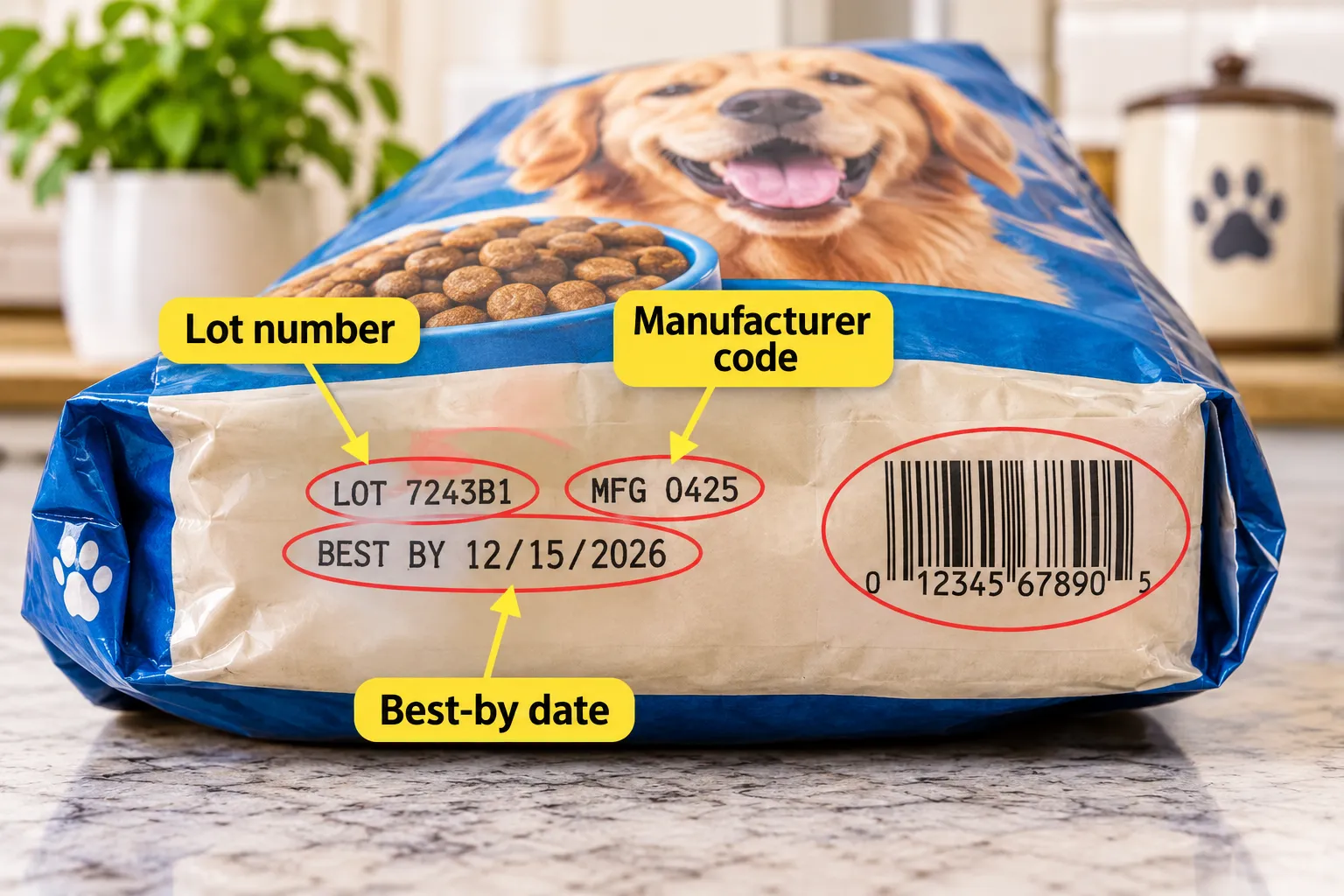
- Keep the portion of packaging showing product name, manufacture date, lot number, and expiration date even if you discard the rest of the bag.
- Lipid oxidation in dry kibble’s fat content speeds up with heat, which is part of why the 80°F ceiling exists.
- An August 2026 Fromm wet food recall for possible metal contamination is a real example of why batch information matters during a recall.

How to store dog food? When to call the vet
Call your vet or an emergency clinic right away if your dog has vomiting with lethargy, bloody stool, tremors, or sudden refusal to eat after a food change, especially if you suspect spoiled or recalled food. Keep the bag or a photo of the lot code before you call, since both the clinic and the CDC complaint process will ask for it. If your dog seems fine but the food smells rancid, looks moldy, or has a chewed-through corner from pests, stop feeding it and talk to your vet rather than waiting for symptoms to show up.
How to store dog food
The short answer: keep dog food in a cool, dry spot below 80°F, inside an airtight container, with the original bag (or at least the part showing the lot code) kept intact. This single habit solves two separate problems at once, freshness and traceability, and most kitchen disasters trace back to skipping one of them.
Dry kibble holds up best sealed against air and moisture because its fat content oxidizes with exposure, which is the slow process that turns food rancid and strips out nutritional value over time. Canned and fresh food behave differently. Once opened, wet food needs refrigeration or disposal promptly, and FDA guidance puts the safe fridge temperature at 40°F or below. Raw food has its own handling rules that belong more to food safety than storage; see Is Raw Food Good for Dogs? 5 Risks Videos Skip (2026) for that discussion.
Here’s where owners usually go wrong. They dump a 40-pound bag of kibble into a decorative bin, toss the paper bag in the recycling, and feel organized. Then a recall notice comes out for a specific lot number. No bag, no lot number, no way to check. The fix costs nothing: fold the empty bag flat and tuck it behind the bin, or cut out the panel with the lot code and tape it to the container lid.
Choose this approach if: you buy large bags and want both freshness and traceability without buying anything new. If you free-feed multiple dogs or rotate between a few brands, labeling each bin with the date opened and the lot code saves time when you’re trying to keep in mind which bag is which.
Doggy Rank IQ Tool
Dog Food Storage Setup Checker

Pick your food and setup. You get the container approach, how long it stays fresh, and a lot code label plan.
How to store dog food? Why should you keep the original bag and lot code?
The lot code is the fastest way to prove whether your dog’s food is part of a recall, and it’s the detail most owners throw away without thinking. FDA veterinarian Lauren Carey has pointed out that fewer than half of pet food complaints submitted to the agency include a lot number, which slows down finding the affected plant and batch.
A lot code is not the same as the UPC. The UPC identifies the product and company; the lot code can pinpoint the manufacturing plant and the specific production run. That distinction matters during an actual recall, when the difference between “this brand” and “this exact batch” decides whether your bag is dangerous or fine.
Real-world example: a May 2026 FDA advisory on Raaw Energy dog food noted that some affected product used manufacturing date stickers instead of a standard lot number, printed on white labels on the tube and box. Owners who had already tossed the package had no way to check which batch they owned. The FDA’s instruction in that case was blunt: if you don’t have the package or can’t read the code, throw the food away.
Common mistake: pouring the whole bag into a bin on day one. Fold the bag flat and keep it, or cut the panel with the lot code and store that instead, taped to the inside of the lid where you’ll actually see it again.
How to store dog food? What’s the best container for storing dog food?
The best container is a hard-sided, airtight bin with a gasket seal, large enough to hold the entire unopened bag inside it rather than loose kibble poured directly in. Food-grade plastic totes with locking or snap-seal lids work well for most households, and stainless steel bins are a solid upgrade if you want something that won’t absorb odors over time.
A few practical notes make a real difference:
- Size the bin to the bag, not the other way around. A bin that’s too small forces you to leave part of the bag folded awkwardly, which can tear the panel with the lot code.
- Look for a rubber or silicone gasket around the rim. Snap-on lids without a gasket let in more air and moisture than owners expect.
- Wheels matter if you’re lifting 30 to 40 pound bags regularly; a bin with a hinged lid and wheels saves your back.
- Avoid bins that previously held chemicals, cleaning supplies, or anything with a strong odor, since plastic can retain smells that transfer to food.
Choose a stainless steel bin if you’ve had pantry moths or other pests before, since plastic is more prone to chewed-through corners. Choose a simple plastic tote if** you’re storing a single dog’s food and budget matters more than longevity.
How to store dog food? How long can you store dry dog food?
Unopened dry dog food generally stays good until the printed best-by date, often 12 to 18 months from manufacture, when kept in a cool, dry spot. Once opened, most owners should plan to use the bag within about 6 weeks for best nutritional quality and flavor, even though the bag’s printed date can be months further out.
That 6-week window isn’t an arbitrary cutoff. Exposure to air starts the oxidation process in the fat content of kibble the moment the bag is opened, and that process continues slowly even inside an airtight bin. A large bag that takes two or three months for a small dog to finish will likely taste and smell duller by the end, even if it isn’t unsafe.
Edge case: if you buy in bulk because of price breaks on Amazon or Chewy, consider splitting a 30-pound bag into smaller resealable portions and keeping the unopened portion in a cooler spot like a basement closet (not a damp basement) until you’re ready to open it.
How to store dog food? Can you leave dog food in the original bag?
Yes, and in fact the FDA specifically recommends it. The bag itself is not the problem, pouring food loose into a bin without keeping the bag or its lot code is the problem. Leave the kibble inside its original bag, seal that bag with a clip or by folding and taping the top, and place the whole thing inside your airtight storage container.
This approach gives you three things at once: the bag’s inner liner (often a foil or wax-coated layer) continues doing its job of blocking air and light, the lot code and UPC stay with the food, and you avoid cross-contaminating a reused bin with old fat residue from a previous bag.

How to store dog food? What clues tell you dry dog food should be discarded?
Trust your nose and your eyes before the calendar. Rancid fat smells sharp or like old paint, kibble that looks greasy, dusty, or has visible mold should go in the trash, not the bowl.
Signs dry dog food has gone bad:
- A sour or paint-like smell, a sign of fat oxidation
- Visible mold, usually a greenish or white fuzzy texture
- Small holes chewed through the bag or bin, a pest sign
- Kibble that feels damp or clumps together
- Food stored past the best-by date in a warm spot
Does dry dog food go bad? Yes. Fat in kibble oxidizes over time, and that process speeds up with heat and air exposure. How long does dry dog food last once opened? Most owners should plan to use an opened bag within about 6 weeks for best quality, even though an unopened bag’s printed date can be much further out.
Edge case: a bag that smells fine but was stored in a garage that regularly tops 90°F in summer may already have degraded nutrients without an obvious smell. When in doubt, don’t gamble on a dog with a sensitive stomach.
How to keep dog food fresh and prevent bugs
Keeping dog food fresh and bug-free depends on two things working together: an airtight seal and a dry environment, since pantry moths and weevils are drawn to the grain content in kibble and can get through thin plastic or a loose lid. A hard-sided bin with a gasket seal, stored off the floor, is the most reliable barrier.
Practical steps that actually work:
- Store bins on a shelf rather than directly on a concrete floor, since concrete holds moisture that attracts pests.
- Check bulk bags for tiny holes or webbing before you even bring them inside, a sign of an infestation that started at the warehouse or store shelf.
- Clean up spilled kibble promptly rather than letting it sit under the bin.
- If you’ve had a pest problem before, consider keeping a bay leaf near (not in) the storage area, a folk remedy some owners swear by, though it isn’t a substitute for a sealed container.
Common mistake: assuming a zip-top bag liner alone keeps pests out. Weevils and moths can chew through thin plastic liners; the hard outer bin is what actually stops them.
Plastic vs glass dog food storage containers
Plastic containers are lighter, cheaper, and more widely available in large sizes, while glass containers resist odor retention and scratching better but are heavier, pricier, and impractical for a 30-pound bag of kibble. For dry food in bulk, food-grade plastic or stainless steel bins are the practical choice. Glass works well for smaller portions, treats, or single servings kept on a counter.
| Factor | Plastic bin | Glass container |
|---|---|---|
| Weight for large bags | Lighter, easier to move | Heavy, impractical over 10 lbs |
| Odor retention | Can hold onto fat smells over time | Resists odor well |
| Cost | Lower | Higher |
| Best use | Full bags of dry kibble | Treats, small portions, short-term storage |
Choose glass if you’re storing treats or rotating small amounts of food and want something that won’t pick up smells. Choose plastic or stainless steel if you’re storing a full bag of kibble for weeks at a time.
Does dog food go bad if stored wrong?
Yes. Dog food stored above 80°F, in a humid space, or with a loose-fitting lid can spoil faster than the printed date suggests, through fat oxidation, mold growth, or moisture absorption. Wrong storage doesn’t always produce an obvious smell right away, which is why temperature and humidity control matter even when the food looks fine.
The most common wrong-storage scenarios:
- A bin left near a heat vent, oven, or sunny window, pushing internal temperature well above the 80°F benchmark.
- A bag left open on a garage floor where humidity swings with the weather.
- A bin reused without washing between bags, letting old fat residue go rancid and transfer to fresh food.
Can you freeze dog food to store it longer?
Yes, dry kibble and many fresh or raw formulas can be frozen to extend shelf life, though freezing dry kibble is less common and can introduce condensation problems when thawed. Raw and fresh refrigerated dog foods are designed for freezing and typically ship or are sold frozen for exactly this reason.
If you do freeze dry kibble (useful for bulk buys you won’t finish in 6 weeks), portion it into airtight freezer bags first, squeeze out excess air, and thaw only what you’ll use within a few days in the fridge rather than at room temperature. For raw frozen food, keep it at 0°F and check the package for a lot code or date sticker before thawing, since some brands, like the Raaw Energy product in the May 2026 FDA advisory, used date stickers instead of a standard lot number.
How to store dog food in a humid climate
In humid climates, the priority shifts from just blocking air to actively blocking moisture, since humidity speeds up both mold growth and clumping in dry kibble. A gasket-sealed bin matters even more here than in a dry climate, and a silica gel packet or two (kept away from where your dog could reach them) inside the bin can help absorb excess moisture.
Additional steps for humid regions:
- Avoid storing bins in a basement or garage without climate control if humidity regularly runs high.
- Check kibble weekly for clumping or a musty smell, which shows up faster in humid conditions than the printed best-by date would suggest.
- Buy smaller bags more often rather than bulk bags that sit open for months, since a shorter open window reduces moisture exposure time.
Best way to store wet dog food after opening
Opened canned or pouched wet food should be covered tightly, refrigerated at 40°F or below, and used within 5 to 7 days according to FDA guidance. A reusable silicone can lid works better than plastic wrap, which can shift and let air in.
Steps for wet food specifically:
- Cover the open can or transfer unused portion to a sealed container.
- Refrigerate immediately, don’t leave it out at room temperature for more than two hours.
- Label the container with the date opened so you don’t lose track.
- Discard anything left past 5 to 7 days, even if it still smells fine.
Dog food storage getting moldy, what to do
If you find mold in a storage bin or on kibble itself, discard the affected food immediately, wash the bin thoroughly with hot soapy water, dry it completely, and let it air out for a few hours before refilling. Mold on pet food can produce mycotoxins that cause vomiting, tremors, or worse in dogs, so don’t try to scoop around visible mold and feed the rest.
If mold appears on the inside of a bin that previously held a different bag, that’s usually a sign the bin wasn’t dried fully before the new bag went in, or that moisture got in through a cracked seal. Check the lid gasket for cracks and replace the bin if the seal has failed.
Can you store dog food in the garage or basement?
Garages and basements can work for dog food storage only if the space stays consistently below 80°F and isn’t prone to humidity swings or flooding. Many garages run well above that temperature in summer, and basements can trap moisture even when they feel cool, so both locations need some scrutiny before you commit a bin to them long-term.
Decision rule: if your garage or basement has air conditioning or stays shaded and dry year-round, it’s a reasonable spot. If it swings above 80°F for weeks at a time or smells musty, move storage indoors to a closet or pantry instead.
How to store dog food when traveling with your dog
When traveling, portion dog food into a resealable travel container sized for the trip length, and bring a photo or small cut-out of the bag’s lot code panel in case you need to reference it. For short trips, a simple zip-top bag inside a cooler-style tote works fine for dry kibble; for longer trips, bring a smaller airtight travel bin rather than the full-size storage container.
For wet or fresh food on the road, pack a small cooler with ice packs and treat it the same as you would at home: refrigerate or keep it cold, and don’t let it sit out past the two-hour window in warm weather. If you’re road-tripping with your dog for the first time, pairing good food storage with basic training habits makes the trip smoother; see 5 Essential Commands Every Puppy Should Learn for groundwork that helps on unfamiliar stops.
Does dog food need an airtight container?
Yes, for dry kibble specifically, an airtight container is the single biggest factor in slowing fat oxidation and keeping out moisture and pests. A loosely closed bag or a bin with a snap lid that doesn’t fully seal lets in enough air over weeks to noticeably dull freshness, even if the food isn’t visibly spoiled.
Wet, fresh, and raw foods need airtight sealing too, but refrigeration or freezing does more of the preservation work for those categories than the container itself.
How often should you change dog food storage containers?
Wash a reusable bin between every new bag of food, and consider replacing a plastic bin entirely every 1 to 2 years, or sooner if the lid gasket cracks, the plastic develops a persistent odor, or you notice scratches deep enough to harbor bacteria. Stainless steel bins last considerably longer and mainly need replacement if the seal fails.
Common mistake: refilling a bin without washing it first because “it looks clean.” Fat residue isn’t always visible, and it goes rancid inside the bin even when no food is touching the walls directly.
Storage diagram and lot-code checklist
A simple visual helps more than a paragraph here. Think of storage as two jobs done together: keep the food fresh, and keep its paperwork.
Checklist, in order:
- Check the bag for the lot code and best-by date before opening.
- Photograph the panel with your phone as a backup in case the bag gets damaged.
- Keep the bag closed and place it whole inside an airtight bin, rather than pouring food loose.
- Store the bin below 80°F, away from direct sun and the furnace.
- Wash the bin with soap and hot water between bags, then dry completely before refilling.
- For opened canned food, cover and refrigerate at 40°F or below, used within about a week.
Choose “bag inside bin” if you want both pest protection and traceability without buying anything special. It’s the approach the FDA points to directly.
Comparison table: how to store dog food by type
| Food type | Storage method | Max open time | Temperature target |
|---|---|---|---|
| Dry kibble | Bag inside airtight bin | About 6 weeks | Below 80°F |
| Canned / wet food | Covered, refrigerated after opening | 5 to 7 days | 40°F or below |
| Fresh refrigerated | Original container, fridge | Per package date | 40°F or below |
| Raw frozen | Freezer, original packaging | Per package date | 0°F freezer |
Sourced stat cards
Less than 50%of FDA pet food complaints include a lot number
80°FFDA’s upper benchmark for dry food storage
40°FFDA refrigeration target for opened wet food
5 to 7 daysGeneral window for opened canned food once refrigerated
Things to watch out for
A few specific traps catch even careful owners.
- Humidity. A damp basement or a bin near a dishwasher vent can let moisture in through a loose-fitting lid, inviting mold even before the best-by date.
- Pests. Bags left open on a floor or in a thin plastic bin are an invitation. A hard-sided airtight bin with a gasket seal is the real pest barrier, not the paper bag alone.
- Water damage. If a bag gets soaked by a leak or spill, don’t try to salvage it. Discard the food and clean the storage area, which matches FDA direction after contamination advisories.
- Washing the bin. Residue and fat left in an unwashed bin can go rancid and contaminate the next bag. Wash with soap and hot water, dry fully, between bags.
- Garage storage. Garages swing wildly in temperature. If yours regularly tops 80°F in summer, that’s a reason to move the bin inside, not just a comfort preference.
If you’re also comparing which food to buy in the first place, a beginner’s guide to choosing the best food for your dog covers that decision separately from storage.
Editor’s take
Keeping the lot code isn’t an extra chore tacked onto feeding your dog. It’s the five-second habit that makes an actual recall solvable instead of a guessing game. The food itself usually survives a messy pantry just fine for a while. The paperwork doesn’t survive the recycling bin, and that’s the piece owners lose first. Pairing good storage with informed buying decisions, like checking best dog food choices recommended by veterinarians, rounds out the full picture of feeding your dog well.
FAQ
Q: How do you store dry dog food so it stays fresh? Keep the bag sealed inside an airtight container, stored below 80°F and away from direct sunlight. This limits the air exposure that causes fat oxidation in kibble, which is the main driver of rancid smell and dulled nutrition over time.
Q: Is it okay to store dog food in the garage? Only if the garage reliably stays below 80°F. Many garages run hotter than that in summer, which speeds up spoilage, so a pantry or closet is usually a safer bet for how to store dog food long term.
Q: Should you keep dog food in the original bag? Yes. The FDA recommends placing the whole bag inside a secondary container rather than pouring food loose, so the UPC and lot number stay with the food in case of a recall.
Q: How long does opened dog food last? Dry kibble is best used within about 6 weeks of opening. Opened canned food should be refrigerated and used within 5 to 7 days.
Q: Can you store dog food in the fridge or freezer? Fresh and raw products are designed for refrigeration or freezing per their packaging. Dry kibble doesn’t need cold storage and can develop condensation issues if frozen then thawed, so it’s not usually the right approach for how to store dog food day to day.
Q: What’s the biggest mistake people make when storing dog food? Pouring the entire bag into a bin and throwing away the original packaging. That one habit is why fewer than half of FDA pet food complaints include a usable lot number, which slows down recall checks.
Q: Does dog food storage matter if my dog eats the bag within a week or two? Less so. A fast-finishing household faces lower oxidation risk, but keeping the bag or lot code is still worth the few seconds it takes, since recalls can surface even within a bag’s normal use window.
Q: Can I transfer dog food to a container without keeping any part of the original bag? It’s not recommended. At minimum, cut out the panel with the lot code, product name, and best-by date and keep it taped inside the container lid, even if you discard the rest of the bag.