
This post contains affiliate links. If you buy through one we may earn a commission at no extra cost to you. As an Amazon Associate I earn from qualifying purchases.
Best dog raincoat: Quick Answer
The best dog raincoat has a water-resistant shell rated for sustained rain, a belly or chest flap that extends past the ribcage, and a back-mounted leash portal that clears a harness clip without bunching the fabric. For low-slung dogs like Dachshunds, belly coverage matters more than hood coverage. For dogs who already wear a harness, check the leash opening placement before you check the price.
Key Takeaways
- A water column rating of 10,000 mm or higher is generally considered suitable for sustained rain rather than light drizzle, according to Treeline Review’s testing.
- Treeline Review named the Non-stop Dogwear Fjord Raincoat 2.0 its top pick, citing a 20,000 mm waterproof rating and 20,000 g/m²/24-hour breathability.
- Business Insider tested multiple jackets on dogs of different shapes and chose the Ruffwear Sun Shower as a strong overall option in the $70 to $80 range.
- Hoods are often a lower-value feature because they can block a dog’s vision and shift out of place during normal movement.
- Low-slung breeds including Corgis, Dachshunds, and Basset Hounds benefit most from dedicated belly or chest coverage rather than standard torso-only coats.
- The American Kennel Club notes that short-coated, small, and senior dogs tend to get the most practical benefit from wearing a raincoat.
- Correct sizing depends on both back length and chest girth, not weight or breed name alone, per AKC’s gear-measuring guidance.
Doggy Rank IQ Tool
Dog Raincoat Coverage Checker

Most raincoats cover the back and leave a soaked belly. Measure and check leash access before buying.
What is the best dog raincoat
The best dog raincoat is the one sized to your specific dog’s back length and chest girth, with belly coverage that matches the weather you actually walk in and a leash opening positioned where your harness clip sits. There is no single “best” model across every dog, because a Dachshund’s needs and a German Shepherd’s needs barely overlap.
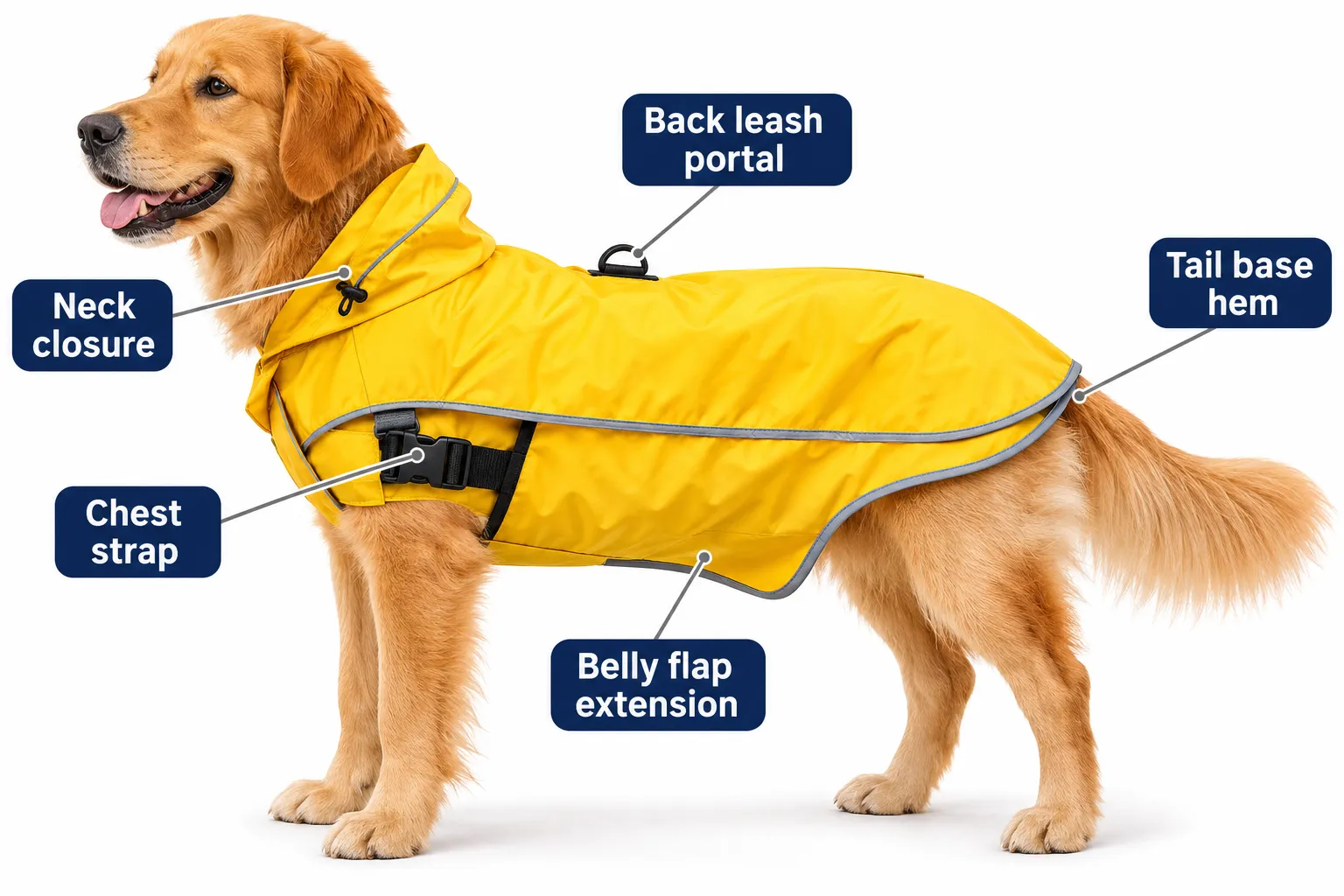
Three things decide whether a raincoat actually works on a real walk, not just in product photos:
- Coverage length. The coat should run from behind the neck to near the base of the tail, with belly or chest extension if your dog is low to the ground or regularly walks through puddles and wet grass.
- Leash placement. A mid-back portal lets the leash clip to a harness underneath the coat without distorting the fit. A collar-only opening can pull the whole coat forward and leave a gap where rain gets in.
- Material rating. A hydrostatic head of 10,000 mm or more handles sustained rain; lower numbers are fine for drizzle but will wet through in a real downpour.
Price does not automatically track with any of these three things. A $25 coat with the correct leash portal beats a $90 coat with the wrong one, every time, because the dog that can’t move comfortably in a coat simply won’t wear it past the first block.
Best dog raincoat: What should I look for in a dog raincoat
Look for belly or chest coverage, a leash opening that matches your harness clip, taped or sealed seams, adjustable chest and waist straps, and a waterproof rating appropriate to your typical rainfall. These five factors matter more than color, brand name, or hood style.
- Coverage length and belly extension: measure from the base of the neck to the base of the tail and compare it to the product’s listed back length. If your dog is long-bodied or short-legged, look specifically for a belly flap rather than assuming torso coverage is enough.
- Leash portal location: a back-mounted slit or flap-covered hole that lines up with a harness clip is far more useful day to day than a hood.
- Seam construction: taped seams keep water from seeping through stitch holes, which matters more in sustained rain than in a five-minute bathroom break.
- Adjustability: look for actual straps with multiple hole settings or hook-and-loop closures at the chest and waist, not just a stretchy neck opening.
- Breathability: a coat with zero airflow can leave a dog damp from its own body heat even if no rain gets in, so a listed breathability figure (grams per square meter per 24 hours) is worth checking alongside the waterproof rating.
Decision rule: if your dog wears a back-clip harness, check the leash opening location before anything else on the spec sheet. A coat with perfect waterproofing and the wrong leash hole still fails on the first walk.
Coverage CheckerAnswer four quick questions to see how much belly coverage and what leash setup your dog likely needs.
Dog Raincoat Coverage Checker
function cgCheck(){ var back=parseFloat(document.getElementById(‘cg-back’).value)||0; var chest=parseFloat(document.getElementById(‘cg-chest’).value)||0; var clip=document.getElementById(‘cg-clip’).value; var rain=document.getElementById(‘cg-rain’).value; var belly = (back>0 && chest/back>1.4)? “High: low-slung body shape needs a belly flap”: “Moderate: standard chest coverage should suffice”; var leash = (clip===’back’)? “Need a back-mounted leash portal that clears a harness clip”: “Collar-area opening is fine”; var hood = (rain===’downpour’)? “Optional, prioritize a high adjustable collar over a hood”: “Not needed for light rain”; var pick = (back>0 && chest/back>1.4)? “Long Dog Dachshund Raincoat”: (rain===’downpour’? “Spark Paws Dog Raincoat”: “HDE Dog Raincoat with Hood & Leash Hole”); document.getElementById(‘cg-result’).style.display=’block’; document.getElementById(‘cg-result’).innerHTML=”Belly coverage: “+belly+”Leash access: “+leash+”
Hood: “+hood+”
Likely fit: “+pick; }
Belly Coverage and Leash Access: why these two features decide everything
Belly coverage and leash access are the two things most dog raincoats get wrong, and they’re the two things that determine whether the coat actually works on a real walk. A coat can carry a great waterproof rating and still send your dog home with a soaked underside and a tangled leash clip.
Belly coverage matters because rain doesn’t just fall straight down. It splashes up off wet pavement, soaks through long grass, and gets kicked up by your dog’s own paws. A coat that stops at the ribcage leaves exactly the area most exposed to ground splash uncovered. Low-slung dogs like Dachshunds, Corgis, and Basset Hounds carry their bellies closer to that splash zone, so a wide belly flap isn’t a bonus feature for them, it’s the main feature.
Leash access matters because most dogs wearing raincoats also wear a harness, and most harnesses clip on the back between the shoulders. A raincoat with a collar-only opening forces the leash clip to sit on top of the fabric, which drags the coat forward, bunches it around the neck, and leaves a gap at the collar where rain gets in. A back-mounted portal, sized to fit around the harness clip, keeps the coat sitting correctly and keeps the leash where it belongs.
For owners refining leash habits while introducing new gear, it’s also worth reviewing loose leash walking fixes, since a new raincoat can briefly change how a dog responds to leash pressure during the first few wears.
Dog raincoat vs dog rain jacket: what’s the difference
There is no meaningful technical difference between a “best dog raincoat” and a “dog rain jacket.” Both terms describe the same category: lightweight, water-resistant outerwear meant to shed rain rather than trap heat.
The confusion usually comes from a third term, “winter coat,” which is a different product entirely. A raincoat is unlined and built to repel water. A winter coat adds insulation to block cold. Some products blend both, but the best dog raincoat should prioritize shedding water and drying fast, not keeping your dog warm. If you need both rain protection and insulation for genuinely cold wet weather, that’s a separate buying decision, and this guide focuses on rain shells rather than insulated winter gear.
Best waterproof dog raincoat brands compared
Among the brands most frequently tested by independent reviewers, Non-stop Dogwear, Ruffwear, and Hurtta come up repeatedly for sustained waterproof performance, while budget-friendly options like HDE and Spark Paws compete on leash access and coverage at a lower price point.
- Non-stop Dogwear: Treeline Review’s testing named the Fjord Raincoat 2.0 its overall pick, citing a 20,000 mm waterproof rating and 20,000 g/m²/24-hour breathability, numbers that put it well above typical budget coats.
- Ruffwear: the Sun Shower was highlighted in Business Insider’s testing across multiple dogs, with a large flap-covered back portal that accommodates most harness clips.
- Hurtta: the Monsoon Coat II ECO includes a wide belly flap and taped seams, though its built-in lead loop is only standard on certain sizes, so check the size chart before assuming leash compatibility.
- HDE and Spark Paws: both sit in the budget-to-midrange bracket and focus on functional basics (leash holes, adjustable straps, torso coverage) rather than premium fabric technology.
Decision rule: choose a premium brand if your dog walks daily in sustained rain and you want multi-season durability. Choose a budget brand if your dog only needs occasional protection during short walks between rain showers.
Top 5 Features That Decide the Purchase
The best dog raincoat purchase comes down to five features, and skipping any one of them usually explains why a coat ends up unused in a drawer.
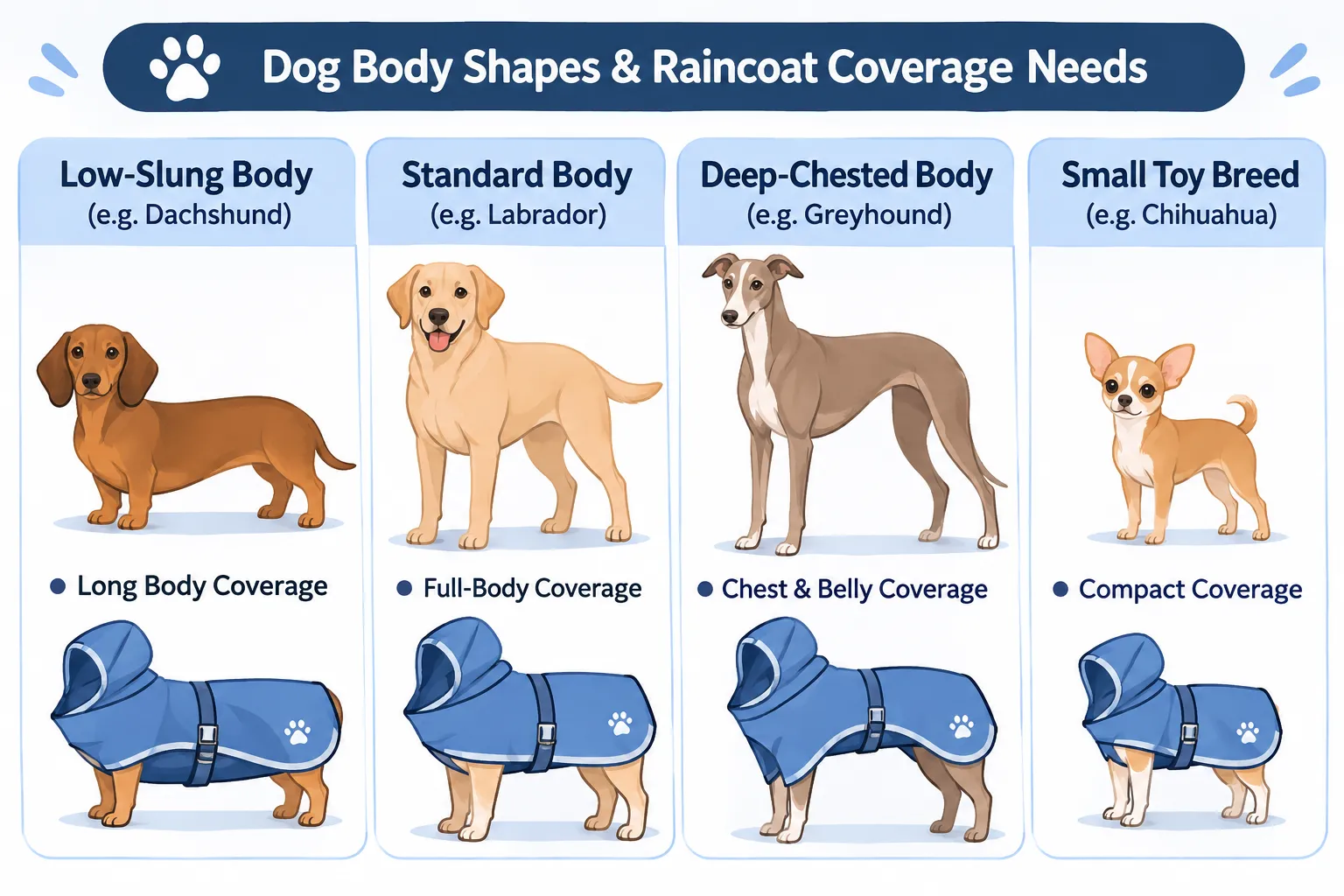
- Belly or chest flap extension. The Spark Paws Dog Raincoat advertises full coverage down the torso, which matters for dogs that walk through wet grass or puddles.
- Leash portal placement. The HDE Dog Raincoat with Hood & Leash Hole includes a dedicated leash hole built into the back panel, designed to work with a harness underneath.
- Adjustable chest and waist straps. A coat with only elastic and no adjustment points will not hold its shape on a dog shaped differently than the size chart assumes.
- Waterproof rating appropriate to your climate. A rating in the 10,000 mm-plus range handles sustained rain; lighter ratings are fine for occasional drizzle.
- Length matched to body shape. The Long Dog Dachshund Raincoat is built specifically for long-bodied dogs, where a standard-length coat leaves the lower back and hindquarters exposed.
Comparison Table: Belly, Back and Leash Opening Fit
| Model | Price Band | Belly Coverage | Leash Opening | Best For |
|---|---|---|---|---|
| HDE Dog Raincoat with Hood & Leash Hole | Around $15 to $25 | Moderate, chest-length | Dedicated back leash hole | Small to XL dogs, budget shoppers |
| Spark Paws Dog Raincoat | Around $35 to $50 | Full coverage, wraps lower torso | Back opening with hood | Dogs needing heavier rain protection |
| Long Dog Dachshund Raincoat | Around $25 to $40 | Extended belly flap for long torsos | Back-mounted, harness-compatible | Dachshunds and other long-bodied breeds |
| Ruffwear Sun Shower (reference) | Around $70 to $80 | Chest-length, not full belly | Large flap-covered back portal | Dogs needing a tested, name-brand option |
| Hurtta Monsoon Coat II ECO (reference) | Around $60 to $80 | Wide belly flap, taped seams | Lead loop standard on select sizes only | Dogs in sizes where the lead loop is included |
Which pick fits which dog and owner?
The right best dog raincoat depends on your dog’s body shape, your harness setup, and your budget, not on which model has the most marketing photos.
- Choose the HDE Dog Raincoat with Hood & Leash Hole if you want a budget-friendly option with a built-in leash hole and a size range from small to XL. This is the pick for owners who want functional leash access without paying for premium materials.
- Choose the Spark Paws Dog Raincoat if your dog walks in genuinely heavy rain and you want full-torso coverage plus a hood for added neck protection.
- Choose the Long Dog Dachshund Raincoat if your dog has a long body relative to its height. Standard-length coats leave the lower back exposed on these builds, and this one is cut specifically to fix that.
- Budget pick: the HDE model, which sits in the lowest price band of the three while still including a dedicated leash opening, a detail some pricier coats skip entirely.
Owners comparing gear decisions alongside general dog care routines may also want to browse the dog grooming basics guide, since a wet, muddy coat often means more frequent paw and coat cleanup after walks.
How much should I spend on a dog raincoat
A functional best dog raincoat generally falls between $20 and $80, and spending more only pays off if it buys better seam sealing, a proper leash portal, or a size built for your dog’s actual shape. Price alone is not a reliable predictor of fit or function.
Pay for: taped seams, an adjustable harness-compatible leash portal, and a size chart with actual back-length and girth numbers. Don’t pay extra for: decorative prints, built-in sound chips, or multiple color options at the same coverage level.
Example: a $24 coat with a correctly placed leash hole and a belly flap will outperform a $60 coat with a collar-only opening, on every walk where your dog wears a harness.
Best dog raincoat for small dogs
Small dogs under about 20 pounds generally need a raincoat with a snug chest fit, a lightweight shell, and a leash opening sized for a smaller harness clip, since oversized portals on small coats tend to let water leak through the gap.
Toy and small breeds like Chihuahuas, Yorkies, and Shih Tzus also lose body heat faster than larger dogs, so a raincoat that also blocks wind (not just water) adds real value during cooler, wet months. Look for a chest strap with multiple adjustment holes rather than a single fixed loop, since small-breed proportions vary widely even within the same weight range.
Best dog raincoat for large breeds
Large breeds need a raincoat with reinforced seams, a wider back panel to accommodate a harness clip, and enough length to cover the torso without restricting the shoulders during a full walking stride.

For large dogs like Labradors, Shepherds, and Goldens, breathability matters more than it does for small dogs, since a bigger body generates more heat during movement. A coat with a mesh lining or vented back panel helps prevent overheating on warmer rainy days. Large-breed owners should also double check chest girth measurements rather than relying on breed-based size charts, since build varies enormously even within large breeds.
How to get my dog to actually wear a raincoat without fussing
Most dogs accept a raincoat faster when it’s introduced indoors, with treats, before the first wet walk. Rushing the first fitting outside in active rain tends to create a negative association that’s harder to undo.
A simple approach:
- Let the dog sniff and inspect the coat indoors, rewarding calm curiosity.
- Drape the coat over the dog’s back for a few seconds at a time, building up to a full fastening.
- Let the dog wear the coat indoors for five to ten minutes while doing normal activities like eating or resting.
- Take a short walk in dry weather wearing the coat before the first actual rainy outing.
- Keep sessions short and positive, and avoid forcing the dog to stand still while you fasten straps.
Dogs who are still building basic comfort with handling and new equipment may benefit from reviewing foundational puppy commands, since a dog that reliably holds a stand or sit position makes coat fitting far less stressful for both of you.
My dog raincoat leaks, what should I do
A leaking raincoat usually means the seams aren’t sealed, the waterproof rating is too low for the rain you’re walking in, or the coat has worn down from repeated washing. Before replacing the coat, check all three possibilities.
- Check seam sealing first. Many budget coats use stitched but untaped seams, which let water seep through the needle holes during sustained rain.
- Check the waterproof rating against your weather. A coat rated for light drizzle will wet through in a genuine downpour, even if it’s brand new.
- Check wear and washing history. Repeated machine washing can break down waterproof coatings over time; hand washing and air drying extends coat life.
- Check fit. A coat that rides up or shifts during walking exposes gaps at the neck or legs where water gets in, even if the fabric itself is fully waterproof.
Common mistake: assuming a leaking coat is defective when the real issue is a mismatch between the coat’s rating and actual rainfall conditions. A 3,000 mm coat is not going to perform like a 10,000 mm coat, regardless of brand.
Dog raincoat vs dog sweater: which is better
A raincoat sheds water and keeps a dog’s coat from getting soaked; a sweater adds warmth but offers little to no water resistance and can actually absorb rain and become heavier and colder against the skin.
Choose a raincoat if your main concern is keeping your dog dry during walks in wet weather. Choose a sweater if your main concern is warmth in cold, dry conditions, such as a chilly but clear evening walk. For cold and wet conditions together, look for a coat specifically built to handle both, rather than layering a sweater under a non-waterproof shell, which traps moisture against the skin instead of blocking it.
Does my dog really need a raincoat
Not every dog needs a raincoat, and the dogs that benefit most are older dogs, small dogs, and short-coated breeds, according to veterinary guidance referenced in raincoat testing coverage. Thick double-coated breeds built for cold, wet climates often tolerate rain just fine without added gear.
- Likely benefits from a raincoat: short-coated breeds (Greyhounds, Boxers, Dobermans), small and toy breeds, senior dogs with reduced mobility or thinner coats, and dogs recovering from illness or surgery who need to stay dry and warm.
- Likely doesn’t need one: double-coated breeds built for wet or cold climates, such as Newfoundlands, Bernese Mountain Dogs, and Labradors, who generally handle brief rain exposure without added protection.
- Edge case: a healthy, thick-coated dog who still dislikes being wet (some dogs simply hate the sensation) can still wear a raincoat for comfort, even if it isn’t medically necessary.
How to size and fit a dog raincoat correctly
Measure your dog’s back length from the base of the neck to the base of the tail, and measure chest girth around the widest part of the ribcage, while the dog is standing normally rather than sitting or lying down. Compare both numbers to the brand’s actual size chart rather than guessing from breed name or weight.
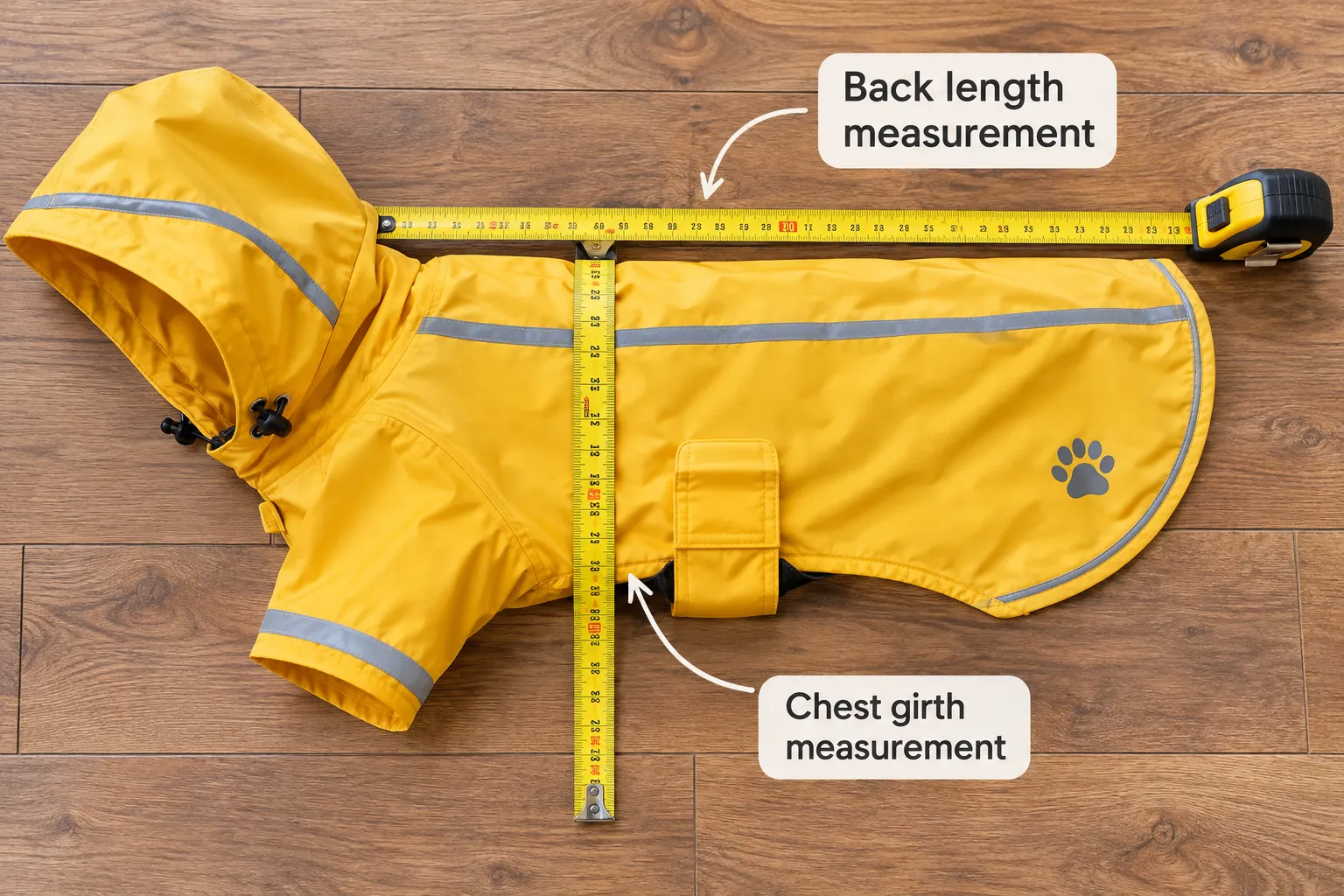
Common mistakes:
- Measuring only back length and guessing at girth.
- Ordering based on weight alone, since weight doesn’t reflect torso shape.
- Ignoring the harness clip location, which causes the leash portal to sit in the wrong spot.
- Buying a coat with fixed, non-adjustable straps for a dog mid-way between size charts.
Fix: measure your dog in the position they’ll actually wear the coat in (standing, not sitting), and check the dimensions against the brand’s chart, not a generic size guess. The AKC’s gear-fitting guidance recommends re-measuring at least once a year for growing puppies or dogs with recent weight changes.
Best raincoat for long-haired dogs
Long-haired dogs need a raincoat with a smoother interior lining that won’t tangle or mat fur, along with a looser fit around the neck and legs to avoid friction against longer coat hair during movement.
Breeds like Shih Tzus, Afghan Hounds, and Collies also benefit from a raincoat that reduces how much mud and debris their longer fur picks up on wet walks, which cuts down on post-walk grooming time. Look for coats with a satin or nylon lining rather than rough synthetic fabric directly against the fur.
Dog raincoat alternatives: what else works
If a full raincoat doesn’t suit your dog, options include a water-resistant bandana-style wrap for light drizzle, paw wax to reduce ground moisture tracking, or simply toweling off thoroughly after walks instead of using gear at all.
- Light drizzle only: a simple water-resistant vest or bandana may be enough if walks are short and rain is minimal.
- Dogs who refuse coats entirely: focus on quick post-walk toweling and paw cleaning rather than forcing a coat.
- Muddy, wet conditions without rain: a belly band or lower-torso wrap can reduce mud pickup without the full coat.
None of these fully replace a raincoat in sustained rain, but they’re reasonable options for dogs who tolerate gear poorly or for owners who only need occasional protection.
How to clean and care for a dog raincoat
Most dog raincoats should be hand washed or machine washed on a gentle cycle in cold water, then air dried rather than tumble dried, since heat can damage waterproof coatings over time.
- Rinse off visible mud and debris before a full wash to avoid grinding dirt into the fabric.
- Use a mild detergent without fabric softener, which can break down water-repellent coatings.
- Air dry completely before storing to prevent mildew, especially with coats that have inner lining layers.
- Reapply a waterproofing spray periodically if the coat starts absorbing rain instead of beading it off, which is a sign the factory coating is wearing down.
Best raincoat for senior or older dogs
Senior dogs often benefit most from a raincoat with easy on-off fastening, lightweight fabric that doesn’t add strain to joints, and a looser fit that accommodates reduced flexibility during dressing.
Older dogs frequently have thinner coats and less effective body temperature regulation, so a raincoat that also blocks wind can help prevent the chill that sometimes worsens joint stiffness after a wet walk. Avoid coats with complicated multi-strap systems that require a lot of bending or twisting to fasten, since this can frustrate dogs with arthritis or mobility limits.
Things to Watch Out For
A handful of recurring problems account for most raincoat complaints, and checking for them before buying saves a return shipment later.
- Leash portals that don’t actually clear the harness clip, forcing the coat to bunch or the clip to sit outside the fabric.
- Elastic-only closures that stretch out after a few washes and stop holding the coat in place.
- Non-breathable fabric that traps moisture against the skin even when no rain gets in, leading to a damp, uncomfortable dog.
- Hoods that block peripheral vision, which can make some dogs more anxious or reactive on walks.
- Size charts based on breed name rather than measurements, which fail for mixed breeds and dogs with atypical proportions.
Who Should Skip This
Dogs with thick double coats built for wet or cold climates, dogs who show clear distress or freezing behavior when coats are introduced gently and repeatedly, and dogs who only go outside for brief bathroom breaks in mild rain may not need a dedicated raincoat at all. For these dogs, a quick towel-off after walks accomplishes the same practical goal without the cost or the hassle of fitting gear.
Frequently Asked Questions
What is the best dog raincoat for everyday walks? For most dogs on daily walks in moderate rain, a coat with a 10,000 mm or higher waterproof rating, a back-mounted leash portal, and chest-length belly coverage covers the majority of real-world walking conditions without overpaying for extreme-weather features you won’t use.
Do raincoats actually keep dogs dry? A properly fitted raincoat with taped seams and an appropriate waterproof rating keeps a dog’s torso largely dry in sustained rain, though paws, lower legs, and the face typically still get wet since most coats don’t cover those areas.
Can I put a raincoat over a harness? Yes, as long as the raincoat has a back-mounted leash portal sized to clear the harness clip. Coats without this feature will bunch or shift when the leash is clipped on top of the fabric.
How do I know if my dog’s raincoat fits correctly? A correctly fitted raincoat sits flat along the back without pulling at the neck or restricting the front legs, and the leash opening lines up with the harness clip without stretching the fabric. If the coat twists or slides during a short test walk indoors, it likely needs a size adjustment.
Is a more expensive raincoat always better? Not necessarily. A higher price often buys better seam sealing and a higher waterproof rating, but a cheaper coat with the correct leash portal and proper fit will outperform an expensive coat that doesn’t match your dog’s shape.
How often should I replace a dog raincoat? Most raincoats last one to three years with regular use, depending on wash frequency and how often the waterproof coating is refreshed. Visible fraying, cracked coating, or water soaking through instead of beading off are signs it’s time to replace.
Do small dogs need raincoats more than large dogs? Small and short-coated dogs generally lose body heat faster and benefit more consistently from raincoats, though any dog walking in sustained rain can benefit from one, especially if they already dislike getting wet.
What’s the difference between water-resistant and waterproof dog coats? Water-resistant fabric slows water absorption but will eventually wet through in sustained rain, while a waterproof coat with a rated hydrostatic head (ideally 10,000 mm or higher) is built to handle continuous exposure without soaking through.