
This post contains affiliate links. If you buy through one we may earn a commission at no extra cost to you. As an Amazon Associate I earn from qualifying purchases.
Best elevated dog bed: Quick answer
The best raise dog bed for most indoor or patio dogs is a steel or aluminum frame cot with a taut mesh or breathable fabric cover, sized so the sleeping surface is at least as long as your dog plus 4 inches, with a replacement cover sold separately by the same brand. Frames rarely fail first. Covers do, usually within the first year of regular use, so buying into a brand that still sells matching replacement covers matters as much as the bed itself.
Key Takeaways
- Chewy’s raise-bed listings in November 2026 included Coolaroo replacement covers around $19 and Frisco covers around $12.49, confirming that cover-only shopping is now standard practice for this category Chewy.
- Kuranda recommends measuring the fully assembled frame, not just the fabric sleeping area, and sizes its beds using dog length plus about 4 inches.
- Breathable mesh is typically excluded from chew-proof warranties, so dogs that chew through fabric need vinyl or aluminum builds instead.
- PETMAKER sells standalone replacement mats in sizes like 30×24 inches and 36×30 inches, both marked “cot not included.”
- A replacement cover from ULTECHNOVO lists exact frame compatibility of 122 x 72 x 21 cm, a reminder that covers are frame-specific, not universal.
- Elevated mesh cots cool dogs through airflow underneath the body, a different job than an orthopedic foam bed, which focuses on joint support rather than temperature BestReviews.
- Dogs with arthritis or hip dysplasia often do better on supportive foam than on a raised mesh surface, according to multiple pet bed buying guides Dogster.
- Most raise bed price bands fall between $25 and $70, with outdoor-rated and large-dog frames at the top of that range.
Best elevated dog bed: Affiliate disclosure line
This post contains affiliate links. If you buy through one of them, Doggy Rank IQ may earn a commission at no extra cost to you. Price bands below are checked as of November 6, 2026 and move seasonally. Check the dimensions and current listing before buying.
Best elevated dog bed: Best raise dog bed
The best raise dog bed for most indoor, mid-life or senior dogs is a steel or aluminum frame cot with a taut mesh or breathable fabric cover, sized so the sleeping surface is at least as long as your dog plus 4 inches, with a replacement cover sold separately by the same brand. That’s the full answer, but it skips the part that actually ruins these beds: the cover.
A frame rarely fails on its own. The mesh does, usually around the 10 to 14 month mark if the dog is a leaner, a digger, or heavy for the weight rating. When that happens, owners search for a replacement and find out the brand changed the frame dimension two years ago, the color is discontinued, or the cover was a one-size “universal” fit that was never universal to begin with.
Check three things before buying any raise bed, not after the mesh rips:
- Frame footprint, outside edge to outside edge, compared with your actual floor space, including the doorway if the bed moves between rooms
- Weight rating, printed by the manufacturer, not estimated from a photo
- Replacement cover availability, confirmed on the brand’s own site, not assumed from a marketplace listing
Individual variation matters here. Two 60-pound dogs can need different frame widths depending on whether they curl up or sprawl. A dog that sleeps stretched flat needs several extra inches of frame length that a curled sleeper never uses. If you’re still working out basic home setup decisions for a new dog, a beginner’s guide to choosing the best food and sleeping gear often go hand in hand during that first year.
Doggy Rank IQ Tool
Elevated Dog Bed Frame and Cover Checker

The mesh fails first. Check the frame, the weight rating and whether a spare cover exists before buying.
Best elevated dog bed: What exactly is an raise dog bed
An raise dog bed, often called a raised cot or raise pet bed, is a rigid frame (usually steel, aluminum, or PVC) with a fabric, mesh, or vinyl sleeping surface stretched across it, holding the dog several inches off the floor. The gap between the bed surface and the ground is what separates it from a standard cushion bed.
That gap does two things: it lets air move underneath the dog’s body, and it keeps the dog off cold tile, hot concrete, or damp ground. Business Insider’s testing of large-dog beds notes that raised designs are a common pick for owners dealing with heat, humidity, or outdoor use, specifically because of that under-bed airflow Business Insider. Unlike a memory foam bed that compresses under the dog’s weight, an raise bed’s surface stays taut, which is why vets and bed guides treat the two as different categories rather than competing versions of the same product.
Best elevated dog bed: Why would my dog benefit from an raise bed
A dog benefits from an raise bed mainly through temperature control and joint pressure distribution that differs from a floor-level cushion. The raised surface keeps a dog off cold floors in winter and off radiant heat in summer, while the mesh or taut fabric reduces the “sinking in” feeling some dogs dislike.
Specific benefits worth knowing:
- Airflow underneath reduces the heat a dog’s body traps against hard flooring, which matters more for short-haired or heavy-coated breeds in warm climates
- A stable, taut surface can feel steadier underfoot for dogs climbing on and off repeatedly through the day
- Raised cots keep the dog’s coat and skin away from floor-level dust, allergens, and drafts near exterior doors
- Outdoor raise beds keep a dog off wet grass or hot patio stone, which lowers the risk of skin irritation during long outdoor stays
None of that replaces orthopedic support for a dog with joint disease. The benefit is about temperature and hygiene first, comfort second.
Best elevated dog bed: Are raise beds good for large dogs
Elevated beds work well for large dogs when the frame is rated for their weight and the footprint is long enough for a full stretch, but a frame built for a 40-pound dog will sag or bend under a 90-pound dog regardless of how sturdy it looks. Check the manufacturer’s stated weight rating, not the general size label, before buying for a large breed.
Large-dog specific notes:
- Look for frames rated above 90 pounds if your dog is a large breed close to that range, since the rating usually reflects a safety margin, not a hard ceiling
- A 48 to 51 inch frame length fits most large dogs that sleep stretched out; anything shorter forces a curled sleeping position
- Steel tube frames with welded or reinforced corners handle repeated jumping on and off better than snap-together plastic corner pieces
- The Bedsure Outdoor Elevated Cooling Dog Bed uses a 49-inch frame built with larger dogs in mind, which fits patio or yard use better than a compact indoor model
Choose a steel or aluminum frame over PVC if your dog weighs more than 60 pounds, since PVC corner joints are more prone to cracking under repeated large-dog weight cycles.
Best elevated dog bed: Best raise dog beds for senior or arthritic dogs
Most senior or arthritic dogs do better on supportive orthopedic foam than on a raised mesh surface, because mesh does not compress to cushion pressure points the way foam does. If your dog has diagnosed arthritis or hip dysplasia, an raise mesh cot should not be the only bed in the house.
That said, some senior dogs still benefit from a raised bed used alongside a foam bed:
- A low-profile raise frame (4 to 6 inches off the ground) is easier for a stiff dog to climb onto than a taller frame
- Non-slip rubber feet on the frame legs prevent sliding when a dog pushes off with weaker hind legs
- Dogster’s raise bed coverage notes that firm, stable mesh can help some dogs with mobility issues get up more easily than a soft, sinking cushion, since there’s a solid surface to push against Dogster
Choose orthopedic foam over an raise cot if your dog has a vet-diagnosed joint condition and needs pressure relief at pressure points like hips and elbows. Choose a low raise frame as a secondary option if your dog mainly needs a cooler, easier-to-rise-from surface without diagnosed joint disease.
Best elevated dog bed: Frame Fit and Mesh Covers
Frame fit means the sleeping surface, measured frame edge to frame edge, matches your dog’s resting length plus room to stretch. Mesh cover fit means the fabric sleeve or mesh panel is sold by the same brand, in the same size code, so it actually slides back onto the original frame.
Most of the “my raise bed broke” complaints aren’t frame failures. They’re mesh failures the owner couldn’t fix, because the cover was never sold separately, or because the replacement listing didn’t match the frame they owned.
Measuring the outside dimensions of the fully assembled bed, frame included, rather than just the fabric area, and sizing to dog length plus about 4 inches is the habit that prevents most fit mistakes people make when ordering online without seeing the bed in person first.
How do I know what size raise bed my dog needs
Measure your dog lying flat on their side, nose to base of tail, then add 4 inches for a comfortable margin, and compare that number to the frame’s outside length, not the fabric sleeping area. A dog that measures 32 inches needs a frame at least 36 inches long to lie fully stretched.
Steps to get this right:
- Have your dog lie on their side on the floor and measure nose to tail base with a tape measure
- Add 4 inches to that number for the minimum usable frame length
- Check the product listing for outside frame dimensions, not just “fits up to X lbs”
- Compare the frame width to your dog’s shoulder-to-shoulder width when curled, adding a couple of inches for turning room
- Confirm the floor space available, including walking clearance around the bed
A common mistake is sizing off the weight category alone. A long, lean 55-pound dog and a compact 55-pound dog need different frame lengths even though the weight label is identical.
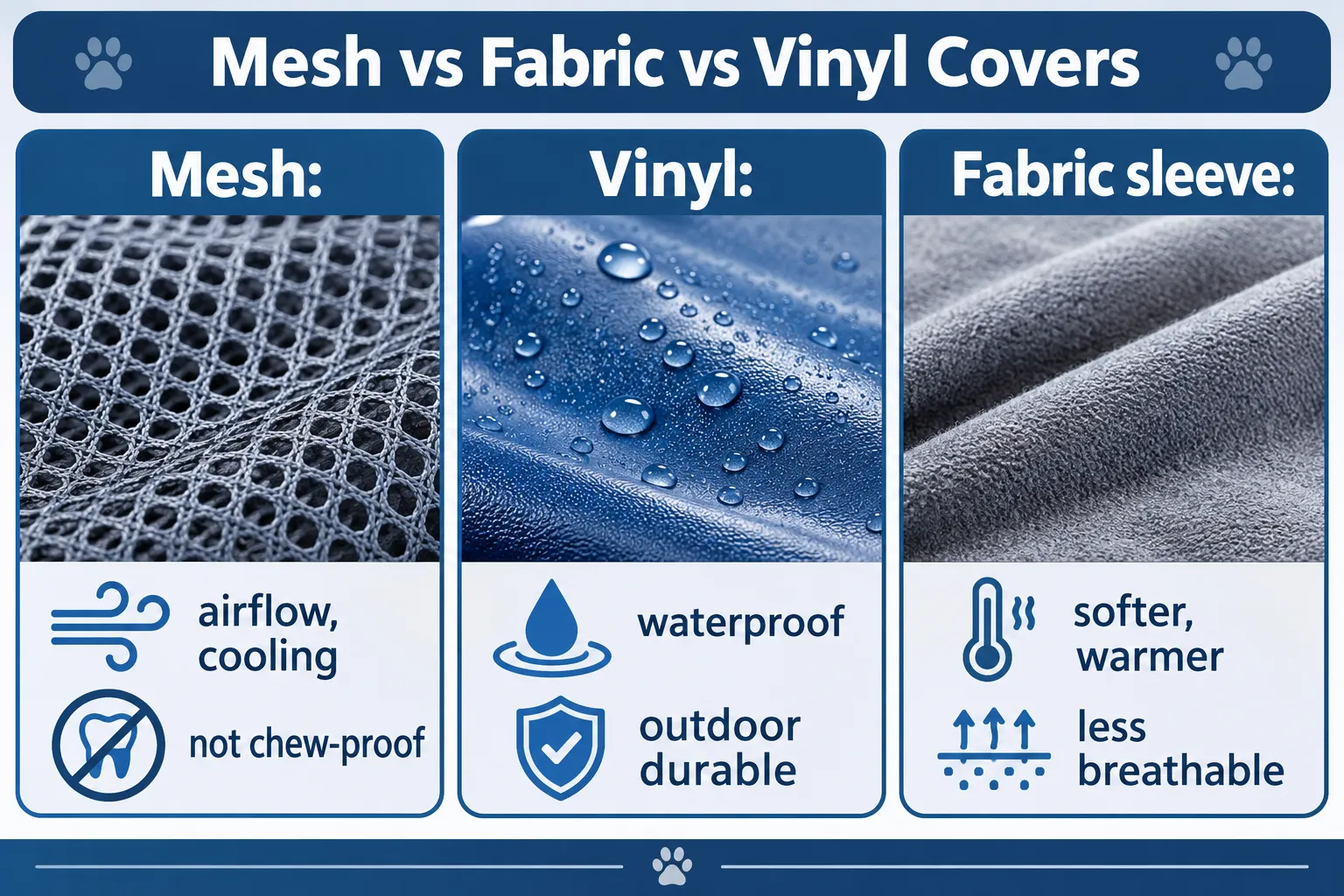
What’s the difference between mesh and fabric covers? Mesh is an open weave that lets air and water pass through, helping with cooling and quick drying outdoors. Fabric or vinyl sleeves are solid, often more chew-resistant, but trap more heat. Breathable mesh is commonly excluded from chew-proof warranty coverage, while heavier vinyl and aluminum builds are positioned for persistent chewers.
Do dogs actually like raise beds or will mine avoid it
Most dogs adapt to an raise bed within a week or two, but some avoid it permanently if the surface feels too firm, too bouncy, or too high to climb onto comfortably. A dog raised entirely on soft floor beds may need a slow introduction rather than a cold swap.
Common reasons dogs avoid a new raise bed:
- The surface is too firm or too bouncy compared to what the dog is used to
- The height makes climbing on awkward for a dog with stiff joints or short legs
- The mesh has started to sag and feels unstable underfoot
- The bed was placed somewhere with foot traffic or noise the dog associates with being disturbed
A practical fix: place a familiar blanket on top of the new raise bed for the first week, then gradually remove it once the dog associates the frame with a safe resting spot.
Can you put an raise dog bed outside? Yes, if the frame is rated for outdoor use and the cover is a waterproof mesh designed for it. Check that the frame material resists rust (powder-coated steel or aluminum) and that direct sun exposure is limited, since UV weakens most synthetic mesh over a season or two.
Can you wash the covers on raise dog beds
Most mesh and fabric covers on raise beds can be hand washed or machine washed on a gentle cycle once removed from the frame, though exact care depends on the material. Vinyl mesh usually just needs a wipe-down with soap and water rather than a washing machine cycle.
- Knitted vinyl mesh (used on Coolaroo-style beds): wipe clean or hose off, air dry, avoid high heat which can warp the weave
- Woven fabric sleeves: machine wash cold, air dry flat to prevent shrinkage that could make the cover too tight to reattach
- Always check the specific care tag before machine washing, since some covers have reinforced grommets or buckles that can snag in a washing machine drum
Best elevated dog bed: Top 5 Features That Decide the Purchase
The five features below decide whether an raise dog bed earns its floor space for more than one season.

- Frame material and weight rating. The K&H Outdoor Best elevated dog bed uses a steel frame built for medium to large dogs, which matters if your dog is close to the stated limit rather than well under it.
- Mesh breathability for heat. The Coolaroo The Original Cooling Best elevated dog bed uses knitted vinyl mesh specifically marketed for airflow underneath the dog, a cooling design rather than a cushioning one BestReviews.
- Replacement cover availability by exact size. PETMAKER sells separate 30×24 inch and 36×30 inch replacement mats, each clearly marked “cot not included,” so buyers can replace only the worn part.
- Indoor versus outdoor rating. The Bedsure Outdoor Elevated Cooling Dog Bed is built with a 49-inch frame meant for larger dogs who need patio or yard use, not a delicate indoor accent piece.
- Assembly and portability. A bed that breaks down flat travels well between a sunroom and a deck; one with welded joints does not move at all once assembled.
Best elevated dog bed: Elevated dog beds that keep dogs cool
Elevated beds cool dogs mainly through airflow underneath the body, not through any active cooling material, so the frame height and mesh openness matter more than marketing claims about “cooling gel.” A bed with at least 4 inches of ground clearance and an open-weave mesh moves far more air than a solid vinyl sheet.
- Look for knitted or woven mesh with visible weave gaps rather than a solid fabric labeled “cooling”
- Pair the bed with shade if used outdoors; direct sun heats the frame and the dog’s body regardless of mesh quality
- A fan or cross breeze near the bed amplifies the airflow effect far more than the bed material alone
Elevated dog bed with memory foam or cooling gel
A true raise frame with memory foam or cooling gel padding on top is a hybrid product, not a standard mesh cot, and it changes the airflow benefit since foam blocks some of the under-bed ventilation. These hybrids suit dogs that need both joint support and some airflow, but they cost more and the foam insert typically is not machine washable the way a mesh cover is.
Choose a plain mesh frame if cooling and easy cleaning matter most. Choose a foam-topped raise bed if your dog needs some joint cushioning but still benefits from a slightly raised, ventilated base.
How much should I spend on a good raise dog bed
A solid raise dog bed for a medium to large dog typically runs $35 to $65 for the frame and initial cover, with replacement covers running $12 to $40 depending on brand and size. Budget options under $30 usually use thinner PVC frames and lighter mesh that wear faster under daily use.
- Entry level ($20 to $35): PVC or light steel frame, smaller size, best for dogs under 40 pounds with lighter use
- Mid-range ($35 to $60): Steel frame, 42 to 49 inch length, suitable for most medium and large dogs, replacement covers usually sold separately
- Outdoor or heavy-duty ($50 to $70+): Rust-resistant steel or aluminum, UV-rated mesh, built for daily outdoor exposure
Factor in a yearly cover replacement cost of roughly $12 to $40 on top of the initial purchase, since the cover is the part that wears out first.
Elevated dog bed vs regular orthopedic bed which is better
Neither bed is universally better; they solve different problems. An raise mesh bed is built for airflow and keeping a dog off the floor, while an orthopedic foam bed is built for joint pressure relief and sinks to contour around the body.
- Choose an raise bed if your main concern is heat, floor temperature, or outdoor use
- Choose an orthopedic foam bed if your dog has joint pain, is a senior, or prefers a softer sinking surface
- Some households use both: an raise cot on a patio or sunroom, and an orthopedic bed in the main sleeping spot
NBC Select’s coverage of mesh cots describes them as a cooling solution through airflow, explicitly separate from the joint-support role foam beds play, which lines up with how most vets frame the choice BestReviews.
Comparison table: Frame dimensions and replacement cover matrix for the best raise dog bed picks
| Model | Frame size | Price band | Cover notes |
|---|---|---|---|
| Bedsure Outdoor Elevated Cooling Dog Bed | 49 in, large dogs | around $40 to $60 | Mesh panel, check current listing for separate cover |
| K&H Outdoor Elevated Dog Bed | 42×30 in, medium-large | around $35 to $55 | Steel frame, brand sells matching replacement fabric |
| Coolaroo The Original Cooling Elevated Dog Bed | 51×31.5×8 in, large | around $45 to $65 | Replacement covers around $19 at Chewy, some colorways discontinued |
Scope note: this guide covers the category and shopping logic for the best raise dog bed in general terms. If the question is specifically Coolaroo versus K&H on identical criteria, that’s a separate exact-model comparison, not a general buying guide.
Which pick fits which dog and owner?
Pick the bed that matches your dog’s size, your climate, and your floor space, not the one with the nicest photo. Here’s how the three picks above split by situation.
- Large outdoor dog, hot climate: The Coolaroo bed’s knitted vinyl mesh is built around airflow, and Chewy’s replacement cover stock at roughly $19 means the frame should outlast several covers.
- Medium to large dog, mixed indoor and patio use: The K&H Outdoor Best elevated dog bed’s steel frame and standard 42×30 inch size fit most hallways and sunrooms without crowding furniture.
- Large dog, maximum floor length needed: The Bedsure 49-inch frame suits dogs who sleep fully stretched, which a shorter frame would force into a curled position.
- Budget pick: A PETMAKER-style raise cot paired with its own separately sold replacement mat (around $20 to $35 depending on size) keeps the frame in service for years without replacing the whole bed.
Best raise dog beds for outdoor use generally need a rust-resistant frame (powder-coated steel or aluminum), a waterproof or quick-dry mesh, and legs with rubber feet to prevent sliding on patio stone or decking. Check the listing specifically states outdoor use; some mesh cots are indoor-only and will degrade fast in direct sun or rain.
Best raise dog bed for large dogs: look for a frame at least 48 inches long with a steel or aluminum rating over 90 pounds, confirmed on the manufacturer’s own spec sheet, not a generic marketplace size chart.
Will an raise bed help my dog with joint pain
An raise mesh bed alone is unlikely to meaningfully relieve joint pain, since mesh does not compress or contour the way orthopedic foam does. For a dog with diagnosed arthritis or hip dysplasia, a supportive foam bed is the better primary choice, with an raise cot used only as a secondary, cooler resting spot.
- If your dog’s main issue is pain at pressure points (hips, elbows, shoulders), prioritize foam density and thickness over a raised frame
- If your dog’s main issue is overheating or floor-level drafts, a low raise frame can help without replacing the need for joint support elsewhere
- Always check with a vet before assuming a new bed type will address a mobility change, since sudden stiffness can also signal a condition that needs treatment, not just a different surface
Most durable raise dog bed for heavy chewers
The most durable option for a heavy chewer is a vinyl-covered or aluminum-reinforced frame rather than standard breathable mesh, since mesh is typically excluded from chew-proof warranty coverage entirely. Determined chewers will work through standard knitted mesh in days, regardless of brand reputation.
- Choose heavy-gauge vinyl over woven mesh if your dog has a known history of chewing bedding
- Aluminum frames with reinforced corner locks resist both chewing and bending better than PVC snap-together frames
- If a dog is an extreme chewer, consider a chew-resistant bed built specifically for that purpose rather than a standard raise cot with a chew-resistant label added after the fact
Things to Watch Out For
The biggest trap is buying a “universal” replacement cover that isn’t actually universal. One listing, for example, states a 109×72 cm fabric area built for a specific 122x72x21 cm frame, and does not include the frame or legs. That precision is good. It also means a cover built for one brand’s frame rarely fits another brand’s frame, even at the same labeled size.
Other things worth checking before you buy:
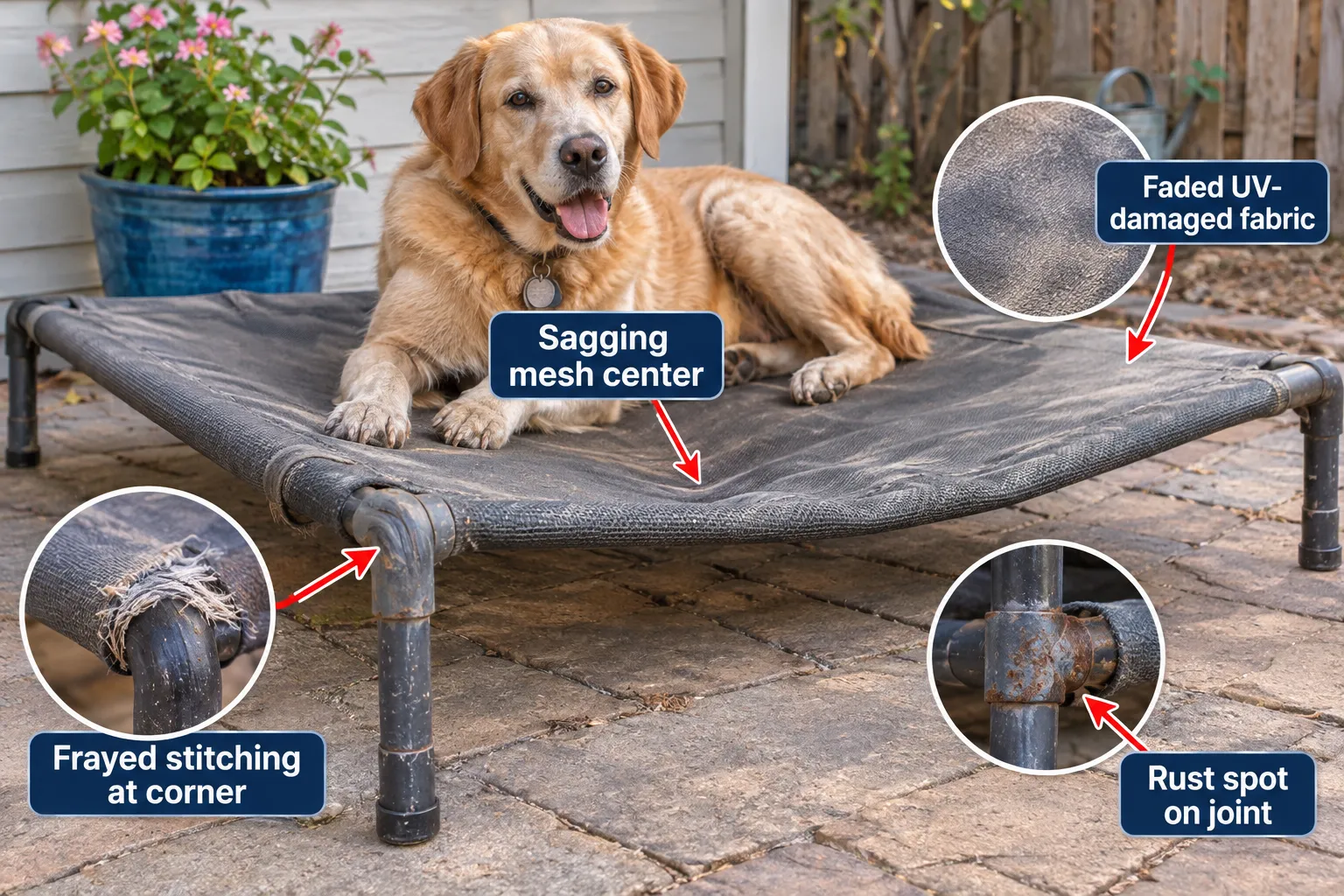
- Sagging over time. A too-loose cover stretches with repeated use. Re-tightening buckles or hardware regularly slows this; a cover with no adjustment at all will sag faster.
- Discontinued colors or sizes. At least one popular replacement cover color has been listed as discontinued on major retail sites, which means stocking up on a spare cover early is smarter than waiting for the original to fail.
- Weight rating gaps. A dog near the top of a frame’s rated weight puts more stress on both the frame joints and the mesh seams than a dog well under the limit.
- Outdoor UV exposure. Mesh left in direct sun for a full season degrades faster than mesh kept in partial shade, regardless of brand.
Most durable raise dog bed frame that won’t wobble: aluminum or thick-gauge steel with locking corner joints, not snap-together plastic corners, holds up best under repeated jumping on and off.
Who Should Skip This
Elevated mesh beds aren’t the right fit for every dog or every home. Here’s who should look elsewhere.
- Dogs with arthritis or mobility limits. Guidance from multiple pet bed retailers recommends orthopedic foam for dogs with arthritis or hip dysplasia rather than a mesh cot, because foam distributes pressure while mesh mainly provides airflow Dogster.
- Determined chewers without a vinyl or aluminum option. Standard breathable mesh isn’t typically covered under chew-proof warranty terms, so a dog that chews through fabric needs the heavier build or a different bed entirely.
- Very small floor spaces. A 51-inch frame doesn’t shrink to fit a narrow hallway. Check the dimensions against your actual floor space before ordering, including clearance to walk around it.
- Owners who want zero maintenance. Even a well-built frame needs occasional hardware checks and a cover swap eventually.
Before buying any bed, it also helps to understand your dog’s general behavior and comfort needs. Guides like whether retractable leashes are bad and choosing the best food for your dog cover related daily-care decisions that affect overall comfort just as much as bedding does. For households managing a senior dog’s broader care routine, resources on the dog aging project and general dog behavior topics are worth a look alongside bed shopping.
FAQ
What is the best raise dog bed for most households? The best raise dog bed for most households is a steel-frame cot with taut mesh or breathable fabric, sized to the dog’s length plus 4 inches, from a brand that still sells matching replacement covers.
Do raise dog beds work on carpet? Yes, raise beds work on carpet, though legs with rubber feet or wider bases prevent sinking into thick carpet pile and keep the frame from tipping.
How often do raise bed covers need replacing? Most covers last 10 to 18 months under daily use before mesh stretching, sagging, or tearing requires replacement, though heavy chewers or dogs over the weight rating will need replacements sooner.
Are raise dog beds safe for puppies? Elevated beds are generally safe for puppies once they are stable on their feet, but very young or small puppies can slip through gaps in wide mesh weaves, so check the weave tightness before use.
Can raise dog beds be used indoors year-round? Yes, indoor-rated raise beds work year-round, though dogs in cold climates may prefer a softer floor bed or blanket layered on top during winter months since the raised mesh offers less insulation than a cushioned bed.
Is a higher weight rating always better? Not necessarily for cost, but buying slightly above your dog’s current weight gives a safety margin for weight gain or growth, especially in puppies or dogs prone to gaining weight.
Why do some raise beds cost more than double others at the same size? Price differences usually come down to frame material (aluminum versus PVC), mesh quality (knitted vinyl versus basic polyester), and whether replacement parts are sold separately by the manufacturer long-term.
Do raise dog beds help with shedding and cleanup? Yes, raised mesh beds are generally easier to clean than cushioned beds since hair and dirt fall through or wipe off the mesh rather than embedding in foam or fabric fill.