
This post contains affiliate links. If you buy through one we may earn a commission at no extra cost to you. As an Amazon Associate I earn from qualifying purchases.
Stocking stuffers for dogs: Quick answer
Stocking stuffers for dogs work best when chosen by two factors: the dog’s weight class and how that specific dog chews, not by how festive the packaging looks. A good rule of thumb is one treat, one toy matched to chew style, and one practical item per stocking, with squeakers, loose stuffing, and rawhide skipped for any dog known to swallow pieces.
Key takeaways
- Stocking stuffers for dogs should be sorted by chew style first (gentle, average, destroyer, or piece swallower), not by breed or price tag, according to chewing-risk guidance from WebVet.
- Dog toys sold in the United States are not regulated the same way children’s toys are, so checking material and construction matters more than trusting a “holiday safe” label.
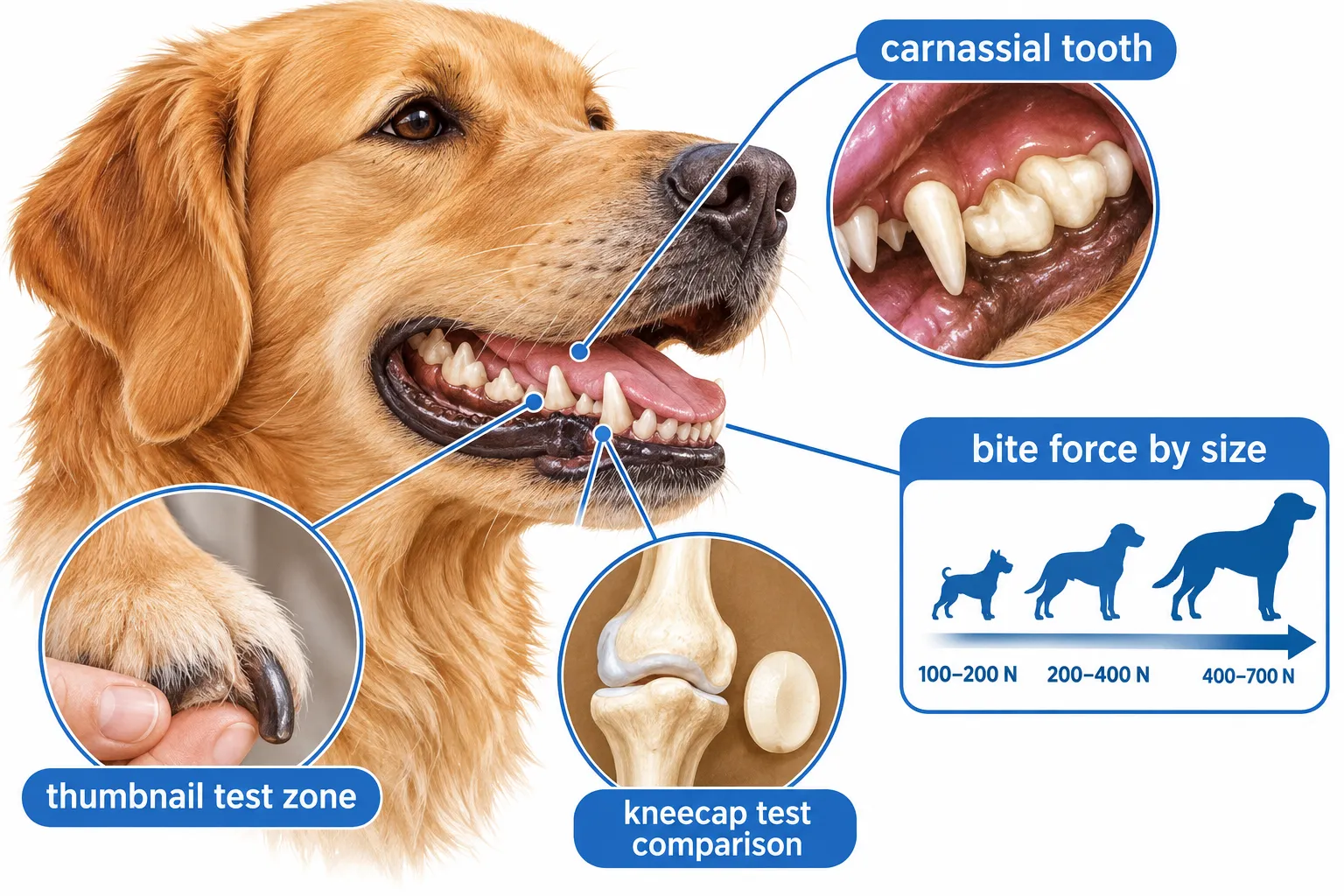
- The thumbnail test (press a nail into the toy; no visible mark can mean it is too hard) and the kneecap test (if it would hurt to be hit with it on the kneecap, it is too hard for teeth) help flag objects that can fracture the carnassial tooth.
- PetSmart recommends keeping stocking items small, functional, and limited in number rather than overstuffing with novelty items the dog will ignore.
- The FDA flags tinsel, ribbon, small ornaments, and holiday food scraps as common emergency-room triggers during the December gift season.
- Loose squeakers, glued-on plastic eyes, and stuffing are the top three items the Humane Society-aligned shelter guidance tells owners to check before handing a toy to any dog.
- A reasonable stocking for most adult dogs costs under $35 total when built from one treat, one toy, and one gear item rather than a bundle of five cheap novelties.
- Rawhide is not automatically dangerous, but it is a poor stocking stuffer choice for any dog with a known habit of swallowing large pieces whole.
Stocking stuffers for dogs are an easy category to get wrong because the holiday aisle is built around what looks cute in a photo, not what survives contact with a real dog’s mouth. A 9-pound terrier and an 80-pound shepherd mix should never get handed the same toy out of the same bin, yet most seasonal displays are stocked as if every dog chews the same way at the same strength.
Doggy Rank IQ Tool
Stocking Stuffer Picker by Size and Chew Style

Most lists are random cute things. This picks by what your dog actually does to a toy.
Stocking stuffers for dogs: answering the main question
The honest answer to “what’s a good stocking stuffer for my dog” is that it depends on two things that have nothing to do with the holiday theme: the dog’s size and how that dog physically chews. Owners searching for stocking stuffers for dogs usually want something small, affordable, and safe enough that it will not end up in an emergency vet visit on December 26th.
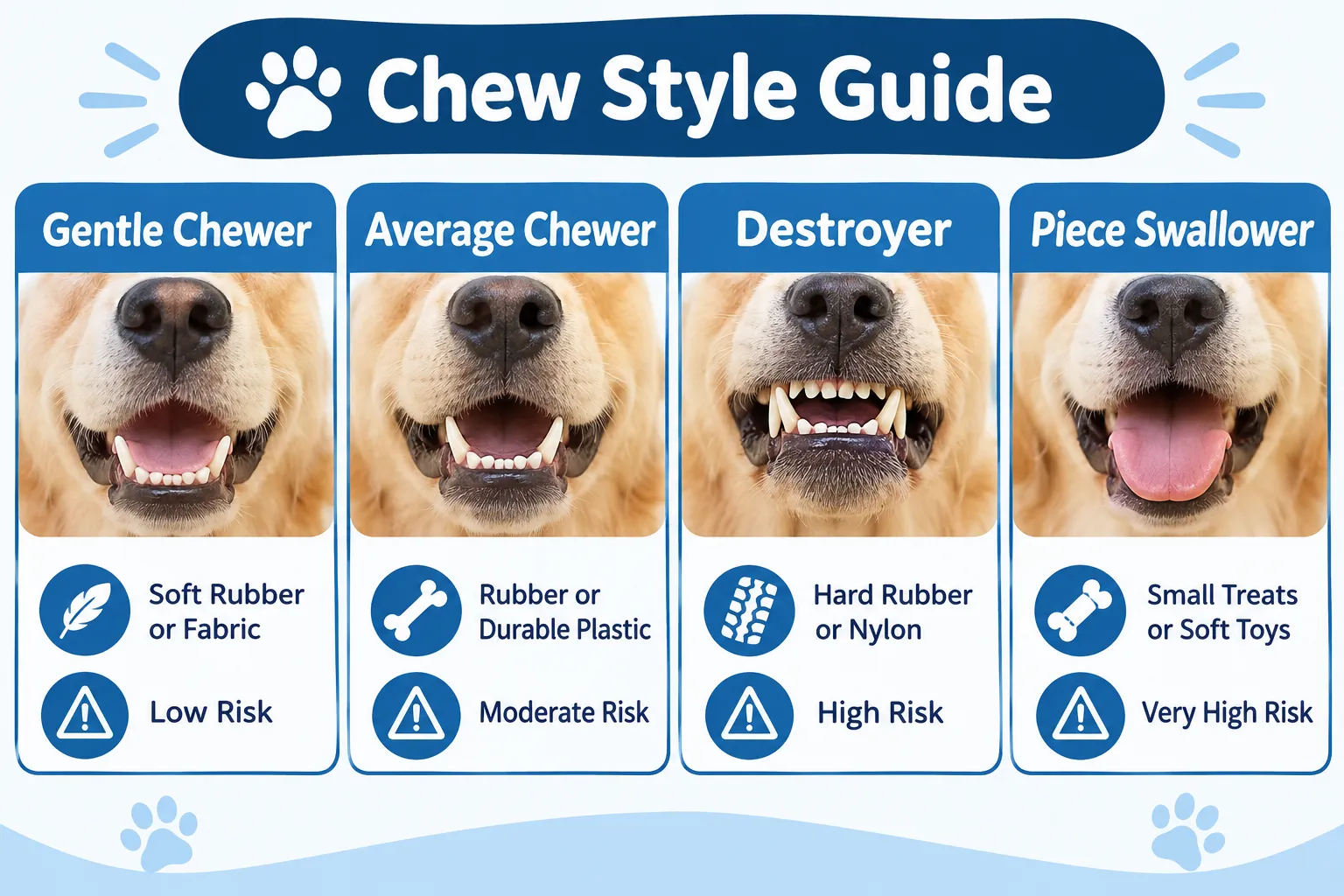
Four chew styles cover most dogs, and this framework (used in chew-safety guidance from WebVet) matters more than breed stereotypes:
- Gentle chewers lick, carry, and mouth toys without much force. Many small dogs and seniors fall here, but plenty of large dogs do too.
- Average chewers chew normally during play but do not obsess over one toy for an hour straight.
- Destroyers apply heavy, sustained pressure and can disassemble a toy in minutes.
- Piece swallowers are a separate risk category regardless of chew strength, because the danger is obstruction, not tooth damage.
Size matters alongside chew style because a toy built for a 70-pound dog can be a literal choking hazard for a 12-pound dog, and a toy sized for a Chihuahua will not survive one bite from a Labrador. Checking stated dimensions before buying is not a nice-to-have step, it is the entire safety check.
A reasonable stocking for most adult dogs mixes one edible treat, one toy matched to chew style, and one small practical item such as a grooming wipe or a travel bowl. PetSmart’s stocking guidance echoes this: keep the gift-wrapped novelty items for the humans in the house and build the dog’s stocking around things that get actual use.
Stocking stuffers for dogs: What makes a good stocking stuffer for dogs
A good stocking stuffer for dogs is small enough to fit a stocking, matched to the dog’s chew style and jaw size, and free of parts that can detach and be swallowed. Price and seasonal branding matter far less than material and construction.
Four criteria decide whether an item belongs in the stocking at all:
- Material density matches bite force. A soft plush toy for a gentle chewer is fine. The same plush handed to a destroyer-type dog lasts minutes, and the squeaker inside becomes an immediate hazard once the fabric tears.
- No glued-on or loosely stitched parts. Plastic eyes, noses, bows, and tags that are glued rather than embroidered come off with repeated chewing.
- Size is proportionate to the dog’s mouth. A toy too small for the dog’s head is a choking risk. A toy too large for a small dog just gets ignored, which is safer but wastes the money.
- The item has a clear use, not just a cute photo. A toy the dog will actually chew or carry beats a toy that only photographs well for a holiday card.
Common mistake: buying based on the stocking’s own size (small bin, small toy) instead of the dog’s size. A tiny rope toy rated for a 10-pound dog will not slow down an 80-pound chewer for more than a few seconds, and it will not satisfy the dog’s actual need to chew.
Stocking stuffers for dogs: Best stocking stuffer brands for dogs
No single brand works for every dog, but a handful of brands show up repeatedly across chew-safety and gift guides because of consistent material quality across their product lines. Pumpkin Pet Insurance’s gift roundup and WebVet’s chew-style breakdown both point to brands built around specific chew profiles rather than one-size-fits-all marketing.
- Planet Dog (Orbee-Tuff line): known for durable rubber built for gentle to average chewers, with the Orbee-Tuff Strawberry commonly priced near $11, a reasonable stocking-sized spend.
- West Paw (Zogoflex line): built from a pliable, recyclable rubber that holds up for gnawers and average destroyers, with items like the Zogoflex Qwizl generally priced in the mid-$20s range, a bit above a strict stocking budget but worth it for a dog that destroys cheaper toys weekly.
- Milk-Bone: a reliable low-risk treat brand for a holiday biscuit tin, since the pieces vary in size and work across most dog sizes when broken down for smaller mouths.
- KONG: widely available at most price points and useful as a base for puzzle-style stuffing, especially for dogs that benefit from slower feeding.
Choose a brand based on your dog’s chew style first, then compare price within that category. A $9 toy that survives six months of average chewing is a better value than a $20 toy a destroyer-type dog finishes in a day.
Cheap dog stocking stuffers under $10
Plenty of safe, useful stocking stuffers for dogs exist under $10, especially in the treat and small-gear categories. The key is checking that “cheap” does not mean “flimsy” in exactly the spot where the dog applies the most pressure.
Reasonable under-$10 options by category:
- Treats: single-serving training treat pouches, a few loose biscuits pulled from a larger holiday tin, or a small bag of freeze-dried single-ingredient treats for sensitive stomachs.
- Gear: a travel-size silicone bowl, a pack of grooming wipes, or a simple reflective collar charm.
- Toys: small dense rubber balls for destroyers, or a basic plush with reinforced seams for gentle chewers, both commonly found in the $6 to $9 range depending on size.
Edge case: ultra-cheap toys sourced from unknown overseas manufacturers sometimes use unlabeled plastics or dyes. Since dog toys are not regulated the same way children’s toys are in the United States, a low price with no material disclosure is a bigger red flag than the price itself. If a product page does not say what the toy is made of, that is worth a second look before adding it to the cart.
Stocking stuffers for small dogs vs large dogs
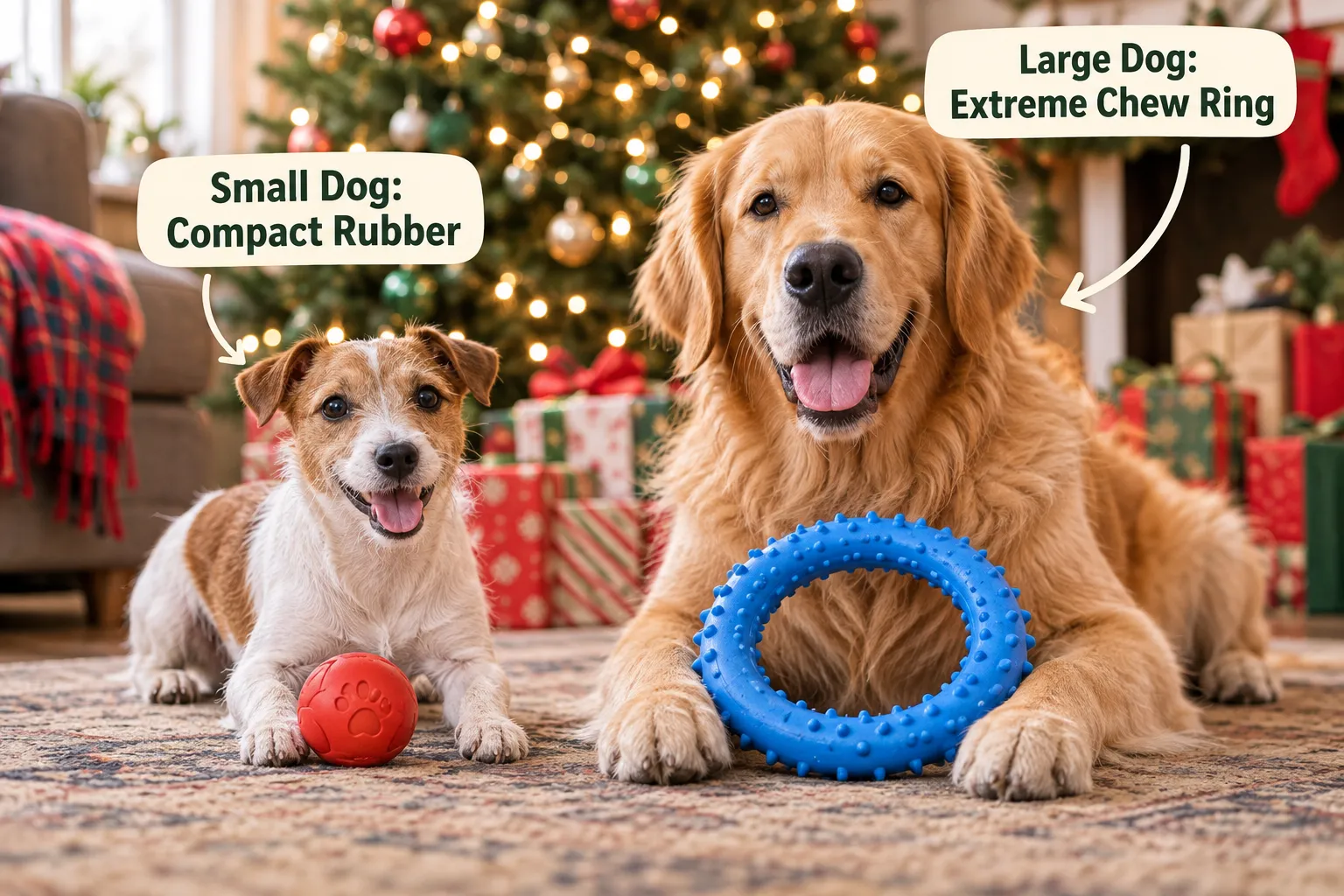
Small dogs under 25 pounds need compact, lightweight items sized so a whole treat or toy piece cannot be swallowed in one gulp, while large and giant dogs (50 pounds and up) need toys built for real bite force even when the dog is not a hard chewer. The same toy rarely works for both.
Small dogs (under 25 pounds):
- Compact rubber chews sized for a small jaw, not a scaled-down large-dog toy.
- Rope toys with a tight weave so strands do not pull loose easily.
- Treats broken into pieces rather than handed over whole, especially for dogs under 10 pounds.
- The Milk-Bone Holiday Dog Biscuits, 24 oz Collectible Holiday Tin works across sizes because the biscuits vary, but a tiny dog should still get the smaller pieces broken down rather than a full biscuit.
Large and giant dogs (50 pounds and up):
- Toys marketed as “large dog” but built from thin plush will not survive contact with a 90-pound jaw for more than a few minutes, regardless of how calm the dog’s temperament is.
- Extreme-rated rubber chew rings and reinforced tug toys hold up better than standard plush for dogs in this weight class.
- The Christmas Dog Squeaky Toys for Large Dogs Tug of War Dog Plush Toys suits larger dogs who play rough but are not full destroyers. A true power chewer will likely remove the stuffing within one session, so this pick is better for average chewers than destroyers.
Medium dogs (25 to 50 pounds) have more margin for error but not unlimited margin. A medium gentle chewer does fine with reinforced-seam plush. A medium average chewer handles most mid-weight rubber or rope toys without issue.
Choose by weight class first, then refine by chew style within that class, since a small destroyer and a small gentle chewer should not receive the same toy just because they share a size bracket.
Stocking stuffers for puppies vs senior dogs
Puppies need softer, supervised chew items because their teeth and jaw strength are still developing, while senior dogs often need low-firmness toys and treats that require less chewing effort due to worn or missing teeth. Age changes the calculation almost as much as size does.
For puppies:
- Soft rubber teething toys sized for a small mouth, used under supervision since puppies explore everything by mouth and chew style has not stabilized yet.
- Smaller training treats that reward frequent short sessions rather than one large biscuit.
- Avoid anything rated “extreme” or “power chew” for an adult dog, since a puppy’s baby teeth and developing jaw are more prone to injury from overly rigid materials.
For senior dogs:
- Low-firmness rubber toys that do not require strong bite pressure to interact with.
- Soft-baked treats that break apart easily, since older dogs frequently have reduced chewing capacity from missing or worn teeth.
- A warm bed liner or joint-friendly mat often makes a better stocking stuffer for a senior dog than another toy, since comfort items see more daily use than play items in older dogs.
Common mistake: assuming an older dog that used to be a destroyer still chews the same way. Chew strength often drops with age even when the dog’s personality has not changed, so last year’s extreme-rated chew toy may no longer be the right pick.
Which stocking fillers match your dog’s size and chewing habits?
Size and chew style work together rather than separately, and matching both at once is what prevents most holiday toy injuries. A small gentle chewer handles a soft plush with a squeaker just fine. A small destroyer (and small destroyers absolutely exist) needs a firmer rubber item sized for a small mouth, not a scaled-down large-dog toy.
Chew style changes the material choice within every size bracket:
- Gentle chewers do well with plush and soft rubber.
- Average chewers need medium-density rubber or rope.
- Destroyers need the toughest version of a pliable material, not the hardest object available, because rigid items transfer more force into the teeth and are more likely to cause fractures WebVet.
Decision rule: choose rubber and rope over rigid nylon or bone-style chews if your dog is a known destroyer, since pliable materials flex under pressure instead of concentrating force on one tooth.
Which small gifts should you skip for a dog that swallows toy parts?
Skip anything with a loose squeaker, glued-on plastic parts, visible stuffing, or small plush bodies under about six inches for any dog with a history of swallowing pieces, since the risk here is obstruction rather than tooth damage. This category of dog needs a fundamentally different gift list, not just a smaller version of the standard list.
Items to skip for a piece swallower:
- Squeakers that sit loose once outer fabric tears.
- Plastic eyes, noses, or ribbons that are glued or stitched on rather than embroidered.
- Small stuffed toys under roughly six inches, which disappear fast once a determined dog starts working on them.
- Rawhide chews, which soften with saliva and can break into chunks that do not fully break down the way the digestive system expects.
- Antlers, real bones, and hard nylon bones, not because they break into swallowable bits easily but because a dog determined to finish a chew sometimes bites off a final chunk small enough to swallow once the piece gets short.
Shelter-based guidance from the Humane Society specifically flags loose eyes, stuffing, ribbons, and squeakers as the parts to check before handing a toy to a dog, and recommends pulling the toy once those parts become accessible rather than waiting for a full failure.
What actually works for a piece swallower:
- Puzzle feeders that cannot be disassembled by hand.
- Lick mats loaded with a dog-safe spread, which slow down eating and remove the small-piece risk entirely.
- Oversized rubber toys too large to fit in the mouth whole.
If food puzzles are new territory, the lick mat guide style of slow feeding can cover safe fillings and sizing in more detail before buying.
Are rawhide chews safe for dog stocking stuffers?
Rawhide is not inherently toxic, but it is a risky stocking stuffer for any dog known to swallow large pieces, since it softens with saliva and can be bitten off in chunks that do not break down the way the stomach expects. For a dog with no history of gulping chews, rawhide carries lower but still present risk and should always be supervised.
Safer alternatives to rawhide for most dogs include dense dental chews sized for the dog’s weight class, bully sticks consumed under supervision, or rubber chew toys that cannot be bitten into swallowable sections. The FDA’s holiday pet safety guidance recommends supervising any chew treat during active holiday gatherings, since distraction from guests and decorations is when swallowing incidents are more likely to go unnoticed.
What toxic items should I avoid in dog stockings?
Holiday-specific hazards go beyond toy construction and include food items, decorations, and wrapping materials that commonly end up near a dog’s stocking. The FDA lists several categories worth checking before stocking day.
Items to keep out of a dog’s stocking entirely:
- Chocolate of any kind, including holiday-themed chocolate treats meant for humans.
- Xylitol-sweetened items, including some “sugar-free” baked goods and certain peanut butter brands.
- Tinsel, ribbon, and small ornament pieces, which are common swallowing hazards during the holiday season according to FDA guidance.
- Alcohol-adjacent items like rum-soaked fruitcake or eggnog-flavored treats not formulated specifically for dogs.
- Onion or garlic-flavored human snacks, which sometimes appear in holiday-themed charcuterie gifted to households with dogs.
Edge case: some “dog-safe” holiday treats sold at grocery stores use artificial sweeteners not clearly labeled on the front of the package. Checking the ingredient list on the back, not just the holiday-themed front label, is worth the extra thirty seconds.
How many stocking stuffers should I get my dog?
Three to five items per dog is a reasonable range for most households: one treat, one toy matched to chew style, and one practical gear item, with two more as optional additions if budget allows. More items do not improve the experience for the dog and often just mean more unused toys in a bin by January.
PetSmart’s stocking guidance supports keeping the list short and functional rather than overstuffed, since dogs respond to novelty and use, not quantity. A dog with six mediocre toys typically plays with one or two of them regularly, while a dog with three well-matched items uses all three.
Decision rule: if you’re buying for multiple dogs in one household, resist the urge to buy identical stockings for each. A senior dog and a young destroyer in the same house need completely different items even if they share a holiday theme.
Do dogs actually like stocking stuffers?
Dogs respond to the function of an item (chewing, carrying, smelling, eating) far more than to the holiday wrapping or seasonal design, so a well-matched toy or treat gets genuine engagement while a mismatched novelty item often gets ignored within a day. The “liking” a dog shows is really a proxy for whether the item fits how that dog plays.
A dog that is a known shredder will show interest in a plush toy specifically because shredding is satisfying to that dog, which is also why plush is a poor fit for that chew style from a safety standpoint. A gentle chewer may carry the same plush around for months without damaging it. The mismatch between what a dog enjoys doing and what is safe for that dog to do is exactly why size and chew style matter more than novelty when selecting stocking stuffers for dogs.
Best natural or healthy dog stocking stuffer ideas
Natural and healthier stocking stuffer options for dogs generally mean single-ingredient treats, limited-ingredient chews, and toys free of artificial dyes, with ingredient transparency mattering more than a “natural” label on the front of the package. Betterpet’s holiday gift coverage and Pumpkin’s gift roundup both point toward simple, recognizable ingredients as the practical definition of “healthy” in this category.
Reasonable natural picks:
- Single-ingredient freeze-dried treats (one named meat, nothing else) for dogs with food sensitivities.
- Sweet potato or pumpkin-based chews, which tend to be easier on digestion than highly processed biscuits.
- Natural rubber toys (not vinyl) for chew-focused play, since natural rubber tends to hold up better and avoids some of the softer plastic blends used in cheaper imports.
Common mistake: assuming “natural” on the label means safe for every dog. A natural bully stick is still a choking risk for a piece swallower, and a natural peanut butter spread can still contain xylitol if it is a sugar-free variety. Reading the ingredient list remains the deciding factor, not the marketing language on the front.
Stocking stuffers for dogs with sensitive stomachs
Dogs with sensitive stomachs do best with single-ingredient or limited-ingredient treats, smaller portion sizes, and avoiding rich fillers like cheese-stuffed or bacon-wrapped holiday novelty treats that are common in seasonal displays. New treats around the holidays are also a common trigger for stomach upset simply because they are new, regardless of ingredient quality.
Practical approach for a sensitive-stomach dog:
- Stick to a treat the dog has had before, or introduce a new one in a very small quantity first, ideally a few days before the holiday itself rather than on the day.
- Avoid rich, fatty holiday-themed treats (the kind marketed as “extra indulgent”) since these are more likely to cause gastrointestinal upset than a plain biscuit.
- Favor treats with short ingredient lists, since added flavors, fillers, and preservatives are more likely culprits than the primary protein source.
Stocking stuffers for picky eater dogs
Picky eaters respond better to treats with strong smell and soft texture than to large, dry biscuits, since aroma and chewing ease drive interest more than the actual flavor label. Starting with a small quantity of a new, highly aromatic treat is a better test than buying a full bag based on packaging alone.
Reasonable approach for a picky eater: buy the smallest available size of a new treat first (many brands offer sample pouches around the holidays), confirm the dog will actually eat it, then decide whether a full-size version is worth the stocking slot. A picky eater’s stocking is also a good place to prioritize toys over treats, since a toy that the dog ignores is a smaller loss than a bag of uneaten treats.
Toys vs treats for dog stockings: what’s better?
Neither toys nor treats are inherently better for a dog’s stocking. The right mix depends on what the specific dog actually uses: a dog that plays constantly benefits more from a well-matched toy, while a food-motivated dog gets more lasting enjoyment from treats and slow-feeding gear. Most stockings benefit from including both rather than choosing one category exclusively.
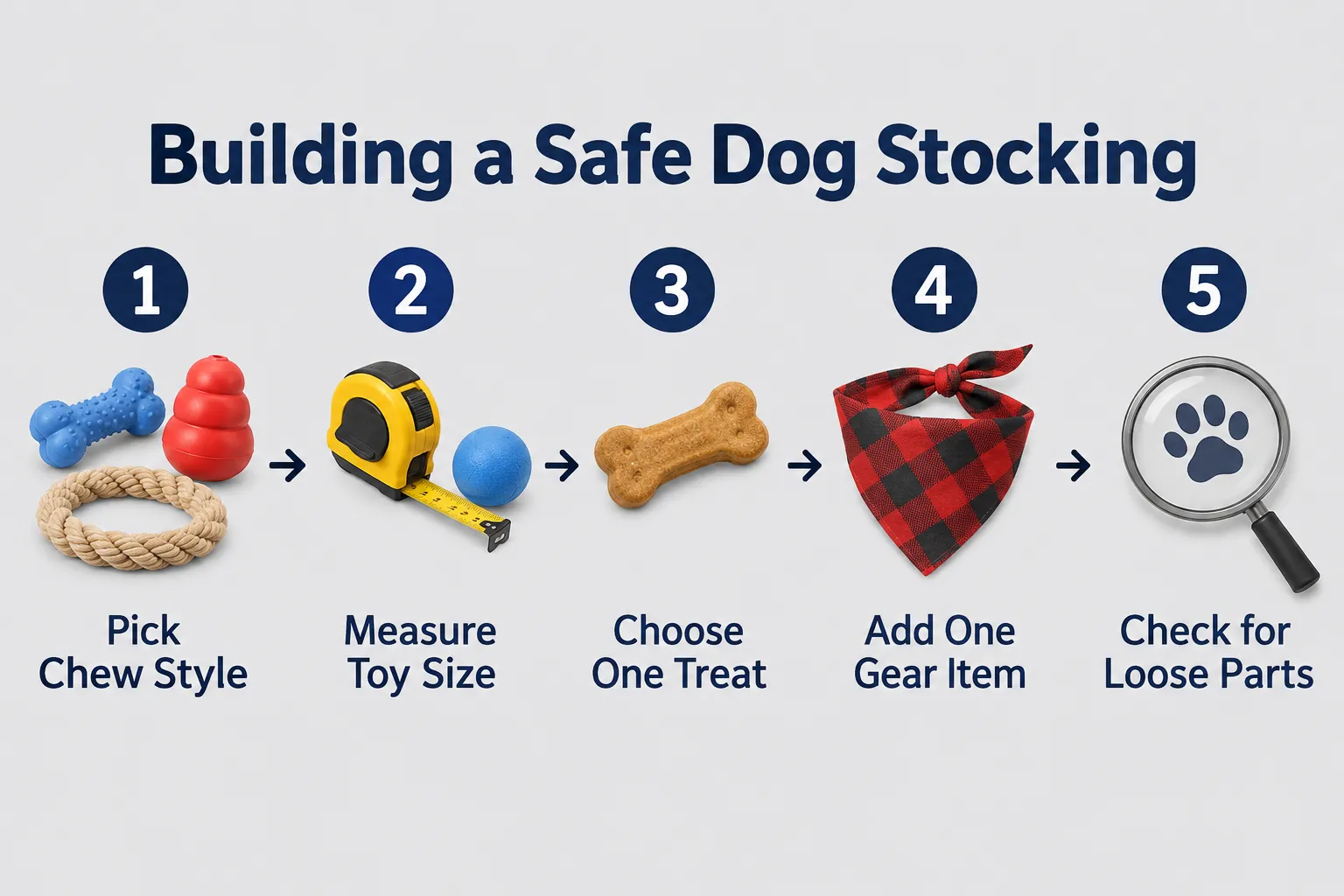
A simple decision rule: if the dog already has a pile of unused toys at home, lean the stocking toward treats and gear. If the dog goes through treats in one sitting but barely touches toys, lean toward a toy matched to chew style plus one small treat rather than several treats. For most dogs, one of each (treat, toy, gear) remains the most balanced approach, as outlined in the stocking list by size and chew style below.
My dog destroys toys immediately, what should I get?
For a known destroyer, choose the toughest version of a pliable material (rubber or thick rope) rather than the hardest rigid object available, since rigid items transfer more force into the teeth and raise fracture risk. Extreme-rated rubber chew rings, dense rubber balls, and reinforced rope toys built specifically for power chewers are better choices than standard plush, nylon bones, or antlers.
Checklist for a destroyer-type dog’s stocking:
- Confirm the toy is explicitly rated for aggressive or power chewers, not just “durable” in general marketing language.
- Run the thumbnail test: press a thumbnail into the material. If it leaves no mark at all, the material may be too hard for safe chewing.
- Run the kneecap test: if being hit with the object on the kneecap would genuinely hurt, it is likely too rigid for a dog’s teeth.
- Expect to replace even “extreme” toys periodically. Durability claims reduce destruction speed, they do not eliminate it.
Stocking list by dog size and chew style
The table below breaks down treat, toy, and gear picks for common dog profiles, useful as a quick reference when shopping for stocking stuffers for dogs across a multi-dog household.
| Dog Profile | Treat Pick | Toy Pick | Gear/Extra |
|---|---|---|---|
| Small, gentle chewer | Mini soft-baked biscuits, broken into pieces | Small plush with reinforced seams | Soft collar charm or travel bowl |
| Small, destroyer | Dense dental chew, small size | Mini dense rubber ball | Nylon-reinforced small rope |
| Medium, average chewer | Holiday-shaped biscuit tin | Mid-weight rope or rubber chew | Grooming wipes, travel size |
| Large, destroyer | Long-lasting dental chew, large size | Extreme-rated rubber chew ring | Reinforced large tug toy |
| Any size, swallows pieces | Lick mat filler, not whole treats | Oversized rubber toy, no small parts | Slow feeder puzzle |
| Senior, soft mouth | Soft-baked treat, low chew effort | Low-firmness rubber toy | Warm bed liner or joint-friendly mat |
interactive widget
.cg-wrap{font-family:system-ui,sans-serif;max-width:600px;margin:0 auto;background:#F0F5FA;padding:16px;border-radius:10px;border:1px solid #D1D5DB;} .cg-wrap h3{color:#1E293B;font-size:18px;margin-top:0;} .cg-row{margin-bottom:10px;} .cg-row label{font-weight:600;color:#334155;display:block;margin-bottom:4px;font-size:14px;} .cg-row select{width:100%;padding:8px;border-radius:6px;border:1px solid #D1D5DB;font-size:14px;} .cg-btn{background:#046BD2;color:#fff;border:none;padding:10px 16px;border-radius:6px;cursor:pointer;font-size:14px;font-weight:600;width:100%;margin-top:6px;} .cg-btn:hover{background:#045CB4;} .cg-result{margin-top:14px;background:#FFFFFF;border:1px solid #D1D5DB;border-radius:8px;padding:12px;font-size:14px;color:#334155;display:none;} .cg-result h4{margin:0 0 6px 0;color:#1E293B;} .cg-skip{color:#b91c1c;margin-top:8px;}Stuffer Picker: Size and Chew Style
Shortlist for “+size+” / “+chew+”
Treat: “+treat+”
Toy: “+toy+”
Gear: “+gear+”
Skip: “+skip+””;
document.getElementById(‘cg-out’).style.display=”block”;
}
Top 5 features that decide the purchase
1. Material density matched to bite force. The Christmas Dog Squeaky Toys for Large Dogs Tug of War Dog Plush Toys, built with crinkled paper and large plush construction, suits larger dogs who play rough but are not full destroyers. A true power chewer will likely remove the stuffing within one session.
2. Squeaker and stuffing accessibility. Any plush toy with a squeaker the dog can reach once the fabric tears needs supervision or an early retirement from the toy bin, per shelter-level chew safety guidance from Vetdogs.
3. Size relative to the dog’s mouth. A toy too small for the dog’s head is a choking risk. A toy too large for a small dog just gets ignored, which solves the safety problem but wastes the money.
4. Treat piece size and chew time. The Milk-Bone Holiday Dog Biscuits, 24 oz Collectible Holiday Tin gives flexibility because the biscuits vary in size, letting small dogs get broken pieces while bigger dogs get full biscuits.
5. Novelty appeal versus actual use. The PUPROAR Pup Cup Dog Toy, Christmas Gift for Girl Dogs (Pink Peach Dust) photographs beautifully for social media, but check whether the dog will actually chew or carry it before assuming the cute factor equals play value.
Things to watch out for
- Products with no material disclosure on the listing, since dog toys are not regulated like children’s toys in the United States.
- Novelty items sized for a stocking rather than sized for the dog, which is the single most common mismatch during the holidays.
- Holiday-scented or flavored treats with unclear ingredient lists, especially anything marketed as “sugar-free,” which can signal xylitol.
- Toys with glued rather than embroidered decorative parts, which detach faster than owners expect.
Who should skip this
Owners whose dogs have a documented history of swallowing toy parts whole should skip small plush toys, rawhide, and any item with removable decorative parts entirely, regardless of size or chew style classification. These dogs need puzzle feeders, lick mats, and oversized rubber toys instead, as outlined in the piece-swallower section above. Owners with dogs on a strict prescription diet should also skip any treat not cleared with their veterinarian first, since even “healthy” holiday treats can interfere with certain medical diets.
Budget pick
For most households, the Milk-Bone Holiday Dog Biscuits, 24 oz Collectible Holiday Tin functions as the most flexible budget pick among stocking stuffers for dogs, since the mixed biscuit sizes work across small, medium, and large dogs when portioned appropriately, and the collectible tin doubles as a reusable treat container after the holidays end.
FAQ
What makes a good stocking stuffer for dogs? A good stocking stuffer for dogs is sized correctly for the dog’s mouth, matched to the dog’s chew style, and free of parts like loose squeakers or glued-on decorations that can detach and be swallowed.
What is the best brand for dog stocking stuffers? No single brand fits every dog. Planet Dog and West Paw are strong picks for average to heavy chewers, while Milk-Bone works well as a flexible treat option across most sizes.
Are there good stocking stuffers for dogs under $10? Yes. Single-serving treat pouches, travel bowls, grooming wipes, and small dense rubber toys commonly fall under $10 while still meeting basic safety standards for construction and material.
Do small dogs and large dogs need different stocking stuffers? Yes. A toy sized for a 70-pound dog can be a choking risk for a 12-pound dog, and a toy sized for a small dog will not survive one bite from a large dog, so size-specific shopping is necessary rather than optional.
Are stocking stuffers different for puppies versus senior dogs? Yes. Puppies need softer, supervised chew items due to developing teeth, while senior dogs often need low-firmness toys and soft treats due to reduced chewing capacity from aging teeth.
What toxic items should be kept out of a dog’s stocking? Chocolate, xylitol-sweetened treats, tinsel, ribbon, small ornaments, and alcohol-adjacent holiday foods should all stay out of a dog’s stocking, per FDA holiday safety guidance.
How many stocking stuffers should a dog get? Three to five items is a reasonable range, built around one treat, one toy matched to chew style, and one practical gear item, rather than a large number of mismatched novelty items.
Do dogs actually enjoy stocking stuffers? Dogs respond to function (chewing, carrying, eating) more than holiday packaging, so a well-matched item gets genuine use while a mismatched novelty item is often ignored within a day.
Are rawhide chews safe to include in a dog’s stocking? Rawhide is not inherently toxic but is risky for dogs known to swallow large pieces whole, since it softens with saliva and can break into chunks that do not digest the way the stomach expects. Supervision is recommended for any dog given rawhide.
What should I get a dog that destroys toys immediately? Choose extreme-rated rubber chews, dense rubber balls, or reinforced rope toys built specifically for power chewers, and run the thumbnail and kneecap tests before buying to confirm the material can safely absorb bite force.
Are toys or treats better for a dog’s stocking? Neither is universally better. A play-driven dog benefits more from a well-matched toy, while a food-motivated dog gets more value from treats and slow-feeding gear. Most stockings do best with a mix of both.
What should I buy for a dog with a sensitive stomach? Single-ingredient or limited-ingredient treats in small portions work best, and any new treat should be introduced in a small amount a few days before the holiday rather than all at once on the day itself.
Related reading
For more on keeping dogs comfortable and occupied during the holidays, see guides on calming products for dogs, choosing the best food for your dog, and basic grooming routines that pair well with new holiday gear.