
This post contains affiliate links. If you buy through one we may earn a commission at no extra cost to you. As an Amazon Associate I earn from qualifying purchases.
Best dog grooming clippers: Quick Answer
The best dog grooming clippers for thick coats are corded or high-torque cordless models paired with a wide #10 or #7F detachable blade, not whatever clipper happens to be cheapest on the shelf. For double-coated breeds like Huskies, Golden Retrievers, and German Shepherds, a sealed rotary motor (corded) or a brushless cordless motor holds speed under resistance, while a #7F blade leaves enough coat length to protect the undercoat’s insulating function. Budget cordless kits work fine for silky or short-coated dogs that need light maintenance between salon visits.
Key Takeaways
- Andis rates its AGC Super 2-Speed at 3,400 and 4,400 strokes per minute, built for sustained detachable-blade work according to Andis product specifications.
- Wahl’s Constant Speed Control line is built to hold power when a blade hits dense or matted fur, per Wahl’s own product pages.
- Budget cordless kits from brands like oneisall run around $30 to $45, while professional-grade corded clippers like the Andis 24675 sit closer to $140 to $180, consistent with pricing patterns reported in The Spruce Pets’ clipper roundup.
- A #10 blade leaves roughly 1/16 inch of coat, while a #7F leaves about 1/8 inch, a difference that matters for paws versus a full body trim.
- The AKC and groomers widely advise against shaving double-coated breeds down to the skin for cooling, since it can damage the undercoat’s ability to insulate and regulate temperature.
- Low-cost cordless clippers generally carry less torque than corded units and work better on fine or short coats than tangled, matted ones, a pattern confirmed across multiple Dogster clipper reviews.
- Three named options worth comparing for home use: a low-noise oneisall kit, a thicker-coat oneisall cordless clipper, and the Andis 24675 UltraEdge corded clipper.
- The best dog grooming clippers for a given household depend more on coat type and noise tolerance than on brand reputation alone.


Best dog grooming clippers: Affiliate disclosure
This article contains affiliate links to Amazon. Doggy Rank IQ may earn a commission on qualifying purchases, at no added cost to the buyer. Product picks reflect stated specifications and publicly available reviews, not commission size.
Best dog grooming clippers: what actually matters
The best dog grooming clippers for a thick coat come down to two things: enough torque to keep cutting without stalling, and a blade sized for the job rather than a brand name on the box. A clipper that glides through a beagle’s short coat can bog down completely in a Husky’s undercoat, and that mismatch is where most home groomers get burned.
Home grooming has grown because salon visits typically run $40 to $90 depending on region and dog size, and a thick-coated dog often needs a trim every six to eight weeks, according to pricing data cited by BestReviews’ dog clipper guide. A decent clipper pays for itself within a few sessions if it actually performs on the coat in front of it.
Marketing copy rarely distinguishes between a clipper built for a Chihuahua’s face trim and one built to push through a Golden Retriever’s undercoat weekly. Specs like “cordless” and “quiet” sound appealing on a product page, but torque and blade compatibility decide whether the tool survives contact with a real dog. The best dog grooming clippers for thick coats get judged by motor class and blade system first, convenience features second.
Thick-coated breeds, especially those with a double coat, need a clipper that maintains speed under resistance. Andis builds that into a sealed rotary motor and corded power delivery. Wahl approaches the same problem through Constant Speed Control electronics in both cordless and corded models. Both solve hair pulling and stalling when fur gets dense. For owners just starting out, pairing this with a broader primer like a beginner’s guide to dog grooming helps set expectations before the first at-home session.
Best dog grooming clippers: What should I look for when buying dog grooming clippers
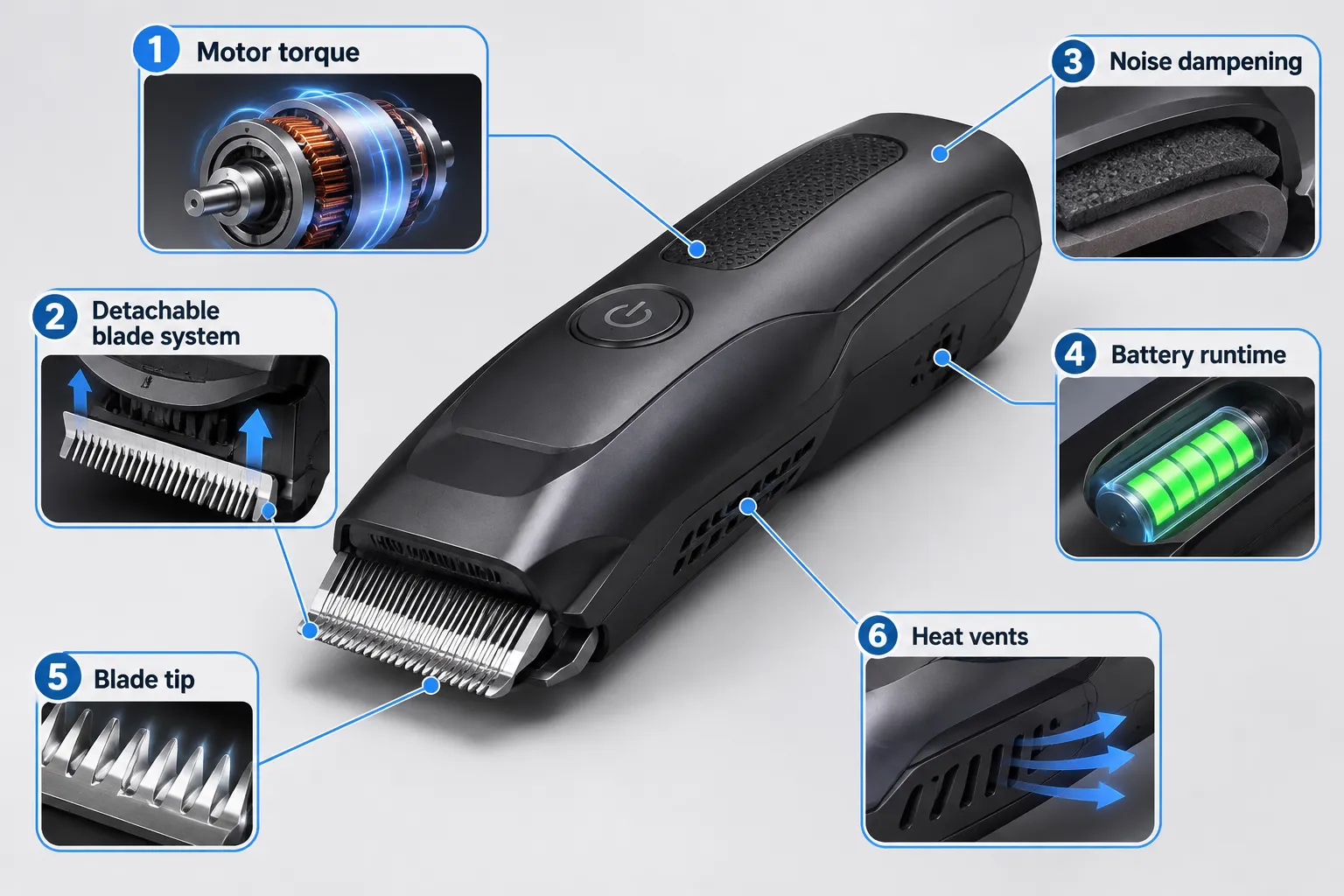
Look for motor torque, detachable blade compatibility, battery honesty (if cordless), noise level, and heat management, in that order of importance for thick coats. Price matters less than whether the clipper can finish a full session without stalling or overheating.
A practical checklist for comparing options:
- Motor type. Rotary motors (common in professional corded units) sustain more torque than the vibrating pivot motors found in many cheap cordless kits.
- Blade system. Detachable-blade clippers (Andis A5, Oster A5-compatible systems) let owners swap blade sizes as the dog’s coat or grooming goal changes. Fixed-blade or snap-on comb clippers limit flexibility.
- Battery runtime, if cordless. Manufacturer claims of 60 to 90 minutes often drop by a third or more when the motor works against a dense undercoat rather than a light trim.
- Noise output. Dogs that bolt at vacuum cleaners usually react the same way to a loud clipper motor.
- Weight and grip. A clipper that feels light for five minutes can feel heavy by minute thirty, especially on a large dog’s full-body trim.
- Included guards. “Complete kit” marketing sometimes means two guard combs, not the six or eight needed for a full range of cut lengths.
Choose a clipper with a metal detachable-blade clip (not plastic snap-on) if the household plans to groom more than one dog or more than one coat type over time. A common mistake is buying based on the number of accessories in the box rather than the motor spec sheet buried in the description.
Best dog grooming clippers: Andis vs Oster dog clippers: which brand is better
Neither brand is better across the board; Andis tends to win on detachable-blade variety and sealed-motor durability, while Oster is known for simpler, rugged designs that have been standard in professional grooming shops for decades. The right choice depends on blade compatibility, service availability, and what local groomers already use.
Andis clippers, including the AGC Super 2-Speed, run at 3,400 and 4,400 strokes per minute and use a detachable blade system that is one of the most widely supported in the industry, meaning replacement and specialty blades are easy to find. Oster’s A5 clipper line, a longtime professional standard, uses a similar detachable-blade mount and is often praised for being simple to repair and maintain over many years of shop use.
Both brands build clippers aimed at sustained, heavy use rather than occasional home trims. For a household buying one clipper to last several years across multiple dogs or coat types, either brand’s mid-tier detachable-blade model (Andis AGC or Oster A5-style) outperforms generic cordless kits sold under smaller brand names. Dogster’s breakdown of top clipper picks and The Spruce Pets’ comparison both treat Andis and Oster as the two reference points against which newer cordless brands get measured.
Decision rule: choose Andis if blade variety and brand-specific accessories (like ceramic edge blades) matter; choose Oster if simplicity and decades-proven mechanical durability matter more than having the newest motor tech.
Best dog grooming clippers: Best dog clippers for thick double coats
The best dog grooming clippers for thick double coats are corded, detachable-blade models with sealed rotary motors, paired with a #7F or #10 blade depending on how much length the owner wants to leave. Cordless clippers can work for lighter double coats, but only if they are rated specifically for “thick” or “heavy” coats rather than general-purpose use.
Double coats (Huskies, Golden Retrievers, German Shepherds, Pomeranians) carry a dense undercoat beneath a longer guard coat. That undercoat sheds heavily twice a year and mats easily if not brushed between grooming sessions. A clipper working through this coat needs sustained torque, not just a high top speed, because the resistance from dense undercoat fur is constant rather than occasional.
The Andis 24675 UltraEdge 2-Speed Detachable Blade Clipper fits this job because its sealed rotary motor is built to sustain detachable blades through dense fur, the kind of load that stalls a cheap vibration-style clipper within minutes. For cordless households, the oneisall Dog Clippers for Grooming Thick Heavy Coats targets the same job with a higher-torque motor than typical budget kits, though it still trails a corded rotary motor on sustained output.
A common edge case: dogs with a double coat that has already matted close to the skin should not go straight to clipping. Mats pulled tight against skin can tear during a clipping pass. In that situation, a professional groomer with mat-breaking tools and experience is the safer route, a point echoed in Dogster’s guide to clippers for thick and matted hair.
How much should I spend on good dog grooming clippers
A functional cordless clipper for light maintenance costs $30 to $65, while a professional-grade corded clipper built for thick or matted coats runs $140 to $220. Spending more generally buys a stronger motor and wider blade compatibility, not just extra accessories.
Rough price bands based on current market listings and The Spruce Pets’ November 2026 roundup:
- $25 to $45: Basic cordless kits (oneisall Low Noise, similar entry brands). Fine for silky or short coats, light touch-ups, sanitary trims.
- $45 to $90: Mid-range cordless clippers marketed for thick or heavy coats. Better torque, wider blade guards, but still battery-limited for long sessions.
- $90 to $150: Entry professional corded or cordless models (Wahl Bravura, some Andis lines). Built for repeated use, often with Constant Speed Control electronics.
- $150 to $220+: Full professional detachable-blade systems (Andis AGC Super, Andis UltraEdge, Oster A5). Sealed motors, widest blade ecosystem, built to run for an hour or more without overheating.
A dog with a thick coat needing trims every six to eight weeks can justify the higher end of this range within one to two grooming seasons, especially compared to repeated $60 to $90 salon visits. Choose the lower price band only if the coat is fine, short, or maintained mostly through brushing rather than clipping.
Why do my dog clippers keep pulling hair
Clippers pull hair almost always because of a dull blade, a blade misaligned against the cutting bar, or insufficient blade oil, not because of anything wrong with the dog’s coat. A clipper in good working order should glide, not tug.
Three causes account for most pulling complaints:
- Dull blade teeth. Blades lose their edge faster on thick or dirty coats, since the motor works harder and heat builds faster, which accelerates wear.
- Missing lubrication. Blade oil reduces friction between the moving blade and the stationary cutting bar. Skipping this step between sessions is one of the most common home-grooming mistakes.
- Wrong blade for the coat. Running a full-tooth #10 blade over a half-matted coat forces the blade to grab clumps instead of cutting cleanly, which feels and looks like pulling even with a sharp blade.
A quick example: an owner running a dull #10 blade through a Labrador’s thick undercoat without oiling first will notice the dog flinching and the clipper heating up within a few minutes, even though the clipper itself is not defective. Oiling the blade before and during the session, and switching to a sharper or wider blade for dense sections, usually solves it immediately.
Cordless vs corded dog clippers: pros and cons
Cordless clippers offer mobility and quieter startup, while corded clippers offer sustained torque and no battery limit, which matters most for thick or matted coats. The right pick depends on coat density and how long each session runs.
Cordless clippers:
- Pros: easier to maneuver around paws and faces, no cord to manage around a moving dog, generally quieter on startup, good for touch-ups and small dogs.
- Cons: battery runtime drops under heavy load, generally lower sustained torque than corded rotary motors, charging time between sessions on larger dogs.
Corded clippers:
- Pros: unlimited runtime, generally higher sustained torque, better suited to detachable-blade systems used by professional groomers.
- Cons: cord management during grooming, less convenient for small touch-up jobs, sometimes louder motor housing.
Decision rule: choose cordless for small to medium dogs with fine or short coats and occasional trims. Choose corded for large or double-coated dogs needing full-body sessions lasting 20 minutes or more. Chewy’s clipper guide and Rover’s review of grooming clippers both note that cordless convenience trades off against sustained cutting power on dense coats.
Can you use human hair clippers on dogs
Human hair clippers are not built for pet coat density, blade sharpness standards, or the heat generated by thicker fur, and using them regularly on a dog risks skin irritation, dull cutting performance, and clipper burnout. They can work in a pinch for a very light trim on a thin-coated dog, but they are not a substitute for pet-specific clippers.
Dog coats differ from human hair in diameter, density, and the presence of an undercoat in many breeds. Pet clippers are built with blade geometry and motor torque matched to that difference. Human clippers also typically lack the wider blade guard options (like a #7F) needed for a full-body dog trim, and their motors are not designed to run continuously at the duty cycle a dog grooming session demands.
A common mistake is grabbing a leftover human clipper for a “quick” dog trim. It usually ends with a patchy cut, an overheated motor, and sometimes skin irritation from a blade not meant for fur this coarse.
Best dog clippers for sensitive skin
For dogs with sensitive skin, look for clippers with ceramic blades, lower vibration motors, and a wide guard comb that keeps the blade edge away from direct skin contact. Low-noise models also help with dogs that tense up and move unpredictably during clipping, which increases nick risk.
Ceramic blades run cooler over long sessions than steel blades, which reduces the chance of heat irritation on thin or sensitive skin areas like the belly, groin, and inner legs. A wider guard comb (standard with #7 or #7F sizes) adds a buffer between the blade edge and skin, useful for dogs prone to razor burn or clipper rash.
The oneisall Low Noise Dog Clippers Grooming Kit fits this profile well for small to medium dogs because its reduced motor sound keeps anxious dogs calmer, and calmer dogs hold still better, which lowers nick risk more than any blade spec alone. For dogs with diagnosed skin conditions, a veterinary consult before clipping sensitive areas is worth the extra step, and background reading on common dog behavior and anxiety signals can help owners read stress cues during a session.
How to clean and maintain dog grooming clippers
Clean clipper blades after every session by brushing off loose hair, wiping with a blade cleaning spray or rubbing alcohol, and applying blade oil before storage. Skipping this routine is the single biggest reason clippers dull faster than their rated lifespan.
A simple maintenance routine:
- Brush loose hair off the blade with the small brush included in most kits, right after each session.
- Spray or wipe with blade cleaner to remove oil residue, skin debris, and trapped hair between the teeth.
- Apply two to three drops of blade oil along the top of the blade before storing, and again briefly during long sessions if the blade starts to drag.
- Check the blade tension spring periodically, since a loose or over-tight spring changes cutting pressure and can cause pulling.
- Store in a dry case, away from humidity that can rust steel blades over time.
A common mistake is oiling the blade only once, at the start of a session. For thick coats or sessions longer than 15 minutes, re-oiling partway through keeps the blade running cooler and cutting cleaner.
When should I replace my dog clippers blades
Replace a clipper blade when it starts pulling hair even after cleaning and oiling, when visible nicks appear along the cutting edge, or after roughly 20 to 30 full grooming sessions on a thick-coated dog, whichever comes first. Lighter use on small, short-coated dogs can stretch blade life well beyond that.
Signs a blade needs replacing rather than just sharpening:
- Pulling or snagging persists after fresh oil and a clean blade.
- Visible chips or uneven teeth along the cutting edge.
- The cut leaves visible tramlines or uneven length despite a steady hand.
- The blade heats up unusually fast compared to earlier sessions.
Ceramic blades tend to hold an edge longer than steel but are more likely to chip if dropped, which can force early replacement regardless of total use. Owners grooming multiple dogs or one heavily matted dog regularly should budget for blade replacement or professional sharpening roughly twice a year.
Do professional groomers use different clippers than home users
Professional groomers generally use the same core brands (Andis, Oster, Wahl) as serious home users, but in higher-tier models with stronger motors, wider blade ecosystems, and corded power for all-day use. The difference is less about brand and more about duty cycle: a shop clipper might run for six to eight hours a day, five days a week, while a home clipper runs for 20 to 40 minutes every six to eight weeks.
Shop-grade clippers also tend to pair with a wider range of detachable blades (sizes from #4F for a thick finish down to #40 for surgical-close work), letting groomers switch quickly between dogs with very different coat needs. Home users rarely need that full range, which is why a two or three blade setup (a #10 and a #7F, for example) covers most household needs.
Choose a shop-grade clipper at home only if grooming multiple dogs regularly or running a side business; otherwise a mid-tier model saves money without sacrificing much performance for typical household use.
What blade size do I need for my dog breed
Blade size depends on desired coat length and coat type more than breed alone, though certain breeds have typical starting points. A #10 blade (about 1/16 inch) suits sanitary trims, paw pads, and short-coat breeds, while a #7F blade (about 1/8 inch) suits full-body trims on double-coated breeds that need length retained.
Rough starting points by coat type:
- Short, silky coats (Chihuahua, Beagle): #10 blade for sanitary and face trims, often no full-body clip needed.
- Double coats (Golden Retriever, Husky, German Shepherd): #7F for body trims, #10 reserved for paws and sanitary areas only. Full shaving is discouraged by groomers and the AKC because it can damage the undercoat’s insulating structure.
- Curly or wiry coats (Poodle, Terrier mixes): #7F or coarser detachable guard combs, often requiring more frequent blade oiling due to coat texture. Dogster’s guide to clippers for Poodles covers this coat type in more detail.
- Matted sections on any breed: skip-tooth blades (marked without an “F”) move through tangles that a full-tooth blade would choke on, though severe mats close to skin should go to a professional.
A common mistake is using the same blade size for a dog’s whole body regardless of area. Paws, face, and sanitary zones usually need a closer #10 cut, while the body coat on a double-coated breed looks better and functions better left longer with a #7F.
Best budget dog clippers that actually work
A good budget clipper for home use costs $30 to $45, runs cordless, and performs well on silky to medium coats, light touch-ups, and noise-sensitive dogs, but it will not hold up to thick double-coat sessions or heavy mats. The oneisall Low Noise Dog Clippers Grooming Kit is a reasonable example in this price range.
What separates a budget clipper that works from one that disappoints after a month:
- A stated torque or motor spec, even a basic one, rather than vague “powerful motor” marketing language.
- At least four to six guard comb sizes included, not just two.
- Reviews specifically mentioning use on thicker coats, not just small dog trims.
- A blade that is listed as detachable or replaceable, rather than fixed and non-serviceable.
Choose a budget clipper if the dog’s coat is short to medium, grooming happens every four to six weeks rather than daily, and the household is comfortable replacing the unit within a year or two rather than investing in a professional-grade motor. BestReviews’ roundup of dog clippers and The Consumer’s Guide to cordless dog clippers both note that budget cordless models consistently underperform on coats heavier than medium density.
How often do dog clippers need to be sharpened
Clipper blades used regularly on thick or matted coats typically need professional sharpening every three to four months, while blades used occasionally on light coats can go six months to a year between sharpenings. Signs the blade needs attention sooner include pulling, dragging, or uneven cuts despite regular cleaning and oiling.
Professional blade sharpening services (often run through pet supply stores or online mail-in services) restore the cutting edge without replacing the whole blade, which is cheaper than buying new blades repeatedly. Ceramic blades hold their edge longer between sharpenings than steel, which can offset their higher upfront cost for frequent groomers.
A simple rule: if a household grooms one dog every six to eight weeks, plan on sharpening once or twice a year. If grooming multiple dogs or dealing with regular mats, plan on sharpening every three to four months, or keep a spare blade in rotation while the primary gets serviced.
Doggy Rank IQ Tool
Dog Clipper and Blade Picker

Blade numbers confuse everyone. Pick the coat and get the clipper class, starting blade and guard.
Blades for thick coats
Thick coats need a wider, higher-torque blade setup, usually a #10 or #7F detachable blade, not the narrow snap-on combs bundled with budget kits. Blade choice decides whether the best dog grooming clippers glide through a coat or pull against it.
A #10 blade leaves about 1/16 inch of coat and is common for sanitary trims and paw pads. A #7F leaves about 1/8 inch, a finish suited to body coats on double-coated breeds where owners want length kept, not a shave. The “F” marks a full-tooth finish blade, which cuts cleaner than a skip-tooth blade, while skip-tooth blades (used in matted sections) cut rougher but move through tangles the full-tooth version would choke on.
Ceramic blades run cooler over long sessions and hold an edge longer than steel, but they cost more and chip if dropped. Steel blades are cheaper, easier to find replacements for, and sharpen more predictably. Neither is better across the board; it depends on how often the clipper runs and how careful the household is with equipment.
Decision rule: choose a #7F full-tooth blade for a healthy double coat getting a routine trim, and a #10 skip-tooth for tangled sections that need to come apart before the full-tooth blade finishes the job. A common mistake is running a narrow #10 over a whole Golden Retriever body coat. It bogs down, heats up, and leaves visible tramlines.
Top 5 features that decide the purchase
The five features below separate a clipper that lasts from one that dies in a season, especially on thick-coated dogs.
- Motor torque, not top speed. The Andis 24675 UltraEdge 2-Speed Detachable Blade Clipper runs on a rotary motor built to sustain detachable blades through dense fur, the kind of job that kills a cheap vibration-style clipper in minutes.
- Detachable blade compatibility. A clipper locked to one proprietary blade limits what coats it can handle. The Andis system accepts a wide range of detachable blades, which matters once a dog’s grooming needs change with age or season.
- Low noise for sensitive dogs. The oneisall Low Noise Dog Clippers Grooming Kit for Dogs Cats Pets is built around reduced motor sound, a real factor for dogs that bolt at the first buzz.
- Runtime and battery honesty. Cordless thick-coat models like the oneisall Dog Clippers for Grooming Thick Heavy Coats need enough runtime to finish a full-body session without a mid-groom charge.
- Heat management during long passes. Thick coats mean longer clipper runtime per session, so a motor that stays cool matters more than it sounds, since overheated blades are the leading cause of skin irritation during home grooming.
Comparison table: blade type and coat suitability
The table below lines up the three named clippers covered in this guide by price, power type, and the blade setup each works best with.
| Model | Price band | Power type | Best blade/guard | Best coat fit |
|---|---|---|---|---|
| oneisall Low Noise Dog Clippers Grooming Kit for Dogs Cats Pets | around $30 to $45 | Cordless, low-noise motor | #10 blade, close guard | Silky to medium coats, noise-sensitive dogs |
| oneisall Dog Clippers for Grooming Thick Heavy Coats | around $45 to $65 | Cordless, higher-torque motor | #10 or #7F, wide guard | Double coats, medium mats |
| Andis 24675 UltraEdge 2-Speed Detachable Blade Clipper, 120V | around $140 to $180 | Corded, sealed rotary motor | #7F skip-tooth, detachable system | Dense double coats, matted coats, daily salon-style use |
Which pick fits which dog and owner?
A quiet apartment dog with a soft coat needs a different clipper than a farm dog with a matted double coat, and buying for the wrong profile wastes money twice.
- Budget pick: the oneisall Low Noise Dog Clippers Grooming Kit for Dogs Cats Pets fits owners with small to medium dogs, fine to average coats, and dogs that spook at loud equipment. It is not built for daily thick-coat work.
- Mid-range, thick-coat cordless: the oneisall Dog Clippers for Grooming Thick Heavy Coats suits owners who want cordless convenience and have a double-coated dog without severe mats.
- Heavy-duty, matted-coat corded: the Andis 24675 UltraEdge 2-Speed Detachable Blade Clipper fits owners grooming large double-coated breeds regularly, or anyone dealing with recurring mats who wants a sealed, long-running motor instead of a battery timer.
Choose the budget pick if the dog’s coat is manageable between grooming sessions. Choose the Andis if clipper stalling or overheating has already ruined a previous grooming attempt. Owners researching breed-specific coat needs before buying might also find America’s favorite dog breeds guide useful for understanding typical coat types by breed.
Things to watch out for
Heat buildup is the most common complaint with thick-coat clipping, and it usually traces back to a dull blade or a motor undersized for the job, not a defective unit. Running a #10 blade over a fully matted coat forces the motor to work far harder than intended, which generates heat and can burn skin through the blade.
Cordless runtime claims deserve skepticism. A battery rated for an hour on the box may deliver less once it is working against a thick undercoat instead of a light maintenance pass. Check the guard comb set included in any kit, since a product advertised as “complete” sometimes ships with only one or two guards suited for finish work, not bulk removal.
Watch for clippers that pull hair rather than cut it. That almost always means a dull blade, a blade misaligned against the cutting bar, or too much speed against too little lubrication, not a defect in the dog’s coat.
Who should skip this
Owners of dogs with severely matted coats close to the skin should skip home clipping entirely for that session and see a professional groomer, since mats pulled tight against skin risk injury that no home clipper setup should attempt. The oneisall Low Noise kit should be skipped by anyone with a true double-coated breed needing weekly maintenance; it is not rated for that volume of work. The Andis 24675 should be skipped by apartment owners who need a fully cordless, closet-storable setup, since it is a corded tool built for sustained output, not portability.
FAQ
What are the best dog grooming clippers for home use?
For most home groomers, a mid-torque cordless model handles routine maintenance, while a corded detachable-blade clipper like the Andis 24675 UltraEdge handles thick or matted coats more reliably over repeated sessions. The best dog grooming clippers for any given household depend on coat type, dog size, and how often grooming happens.
What blade number should I use on my dog?
Use a #10 blade for close trims like paws and sanitary areas, and a #7F blade for a fuller body trim on a double-coated dog that still needs coat length left on.
Wahl or Andis: which clipper is better for dogs?
Both brands build professional-grade motors; Wahl emphasizes Constant Speed Control electronics to hold power under resistance, while Andis relies on sealed rotary motors and a wide detachable-blade ecosystem. The better choice depends on which blade system and price band fits the coat being groomed.
Can human clippers be used on a dog?
Human hair clippers are not built for pet coat density, blade sharpness standards, or the heat generated by thicker fur, and using them regularly risks skin irritation and poor cutting performance. A dog-specific clipper is worth the cost even for occasional home trims.
Why do my dog clippers get hot?
Heat usually comes from a dull or clogged blade working too hard, insufficient blade oil, or a motor too small for the coat’s density. Thick or matted coats make this worse because the blade stays under load longer, and regular oiling during long sessions reduces the problem significantly.
What clippers cut through matted hair?
A corded clipper with a sealed rotary motor and a skip-tooth blade, such as the Andis 24675 paired with a #7 or #10 skip-tooth blade, handles moderate mats best. Mats pulled tight against the skin should go to a professional groomer rather than being attempted with any home clipper.
How much do good dog grooming clippers cost?
Functional cordless clippers for light maintenance run $30 to $65, while professional-grade corded clippers built for thick or matted coats run $140 to $220. The higher price generally buys a stronger motor and wider blade compatibility rather than extra accessories alone.
Do I need different blades for different dog breeds?
Blade needs depend more on coat type than breed label, though breeds with similar coats share similar starting points. Short-coated breeds typically need only a #10 blade, while double-coated breeds benefit from a #7F for the body and a #10 reserved for paws and sanitary trims.
How often should dog clippers be oiled?
Blades should be oiled before every session and again partway through sessions longer than 15 minutes, especially on thick or dense coats. Skipping this step is one of the most common reasons clippers start pulling hair.
Are cordless or corded clippers better for a first-time dog groomer?
A cordless clipper is usually easier for a first-time groomer managing a small to medium dog with a light coat, since there is no cord to handle around a moving dog. First-time owners with large, double-coated dogs may still do better with a corded model for the extra torque, paired with patience and short practice sessions. Reviewing basic grooming fundamentals before the first attempt helps avoid common early mistakes.