
Quick Answer
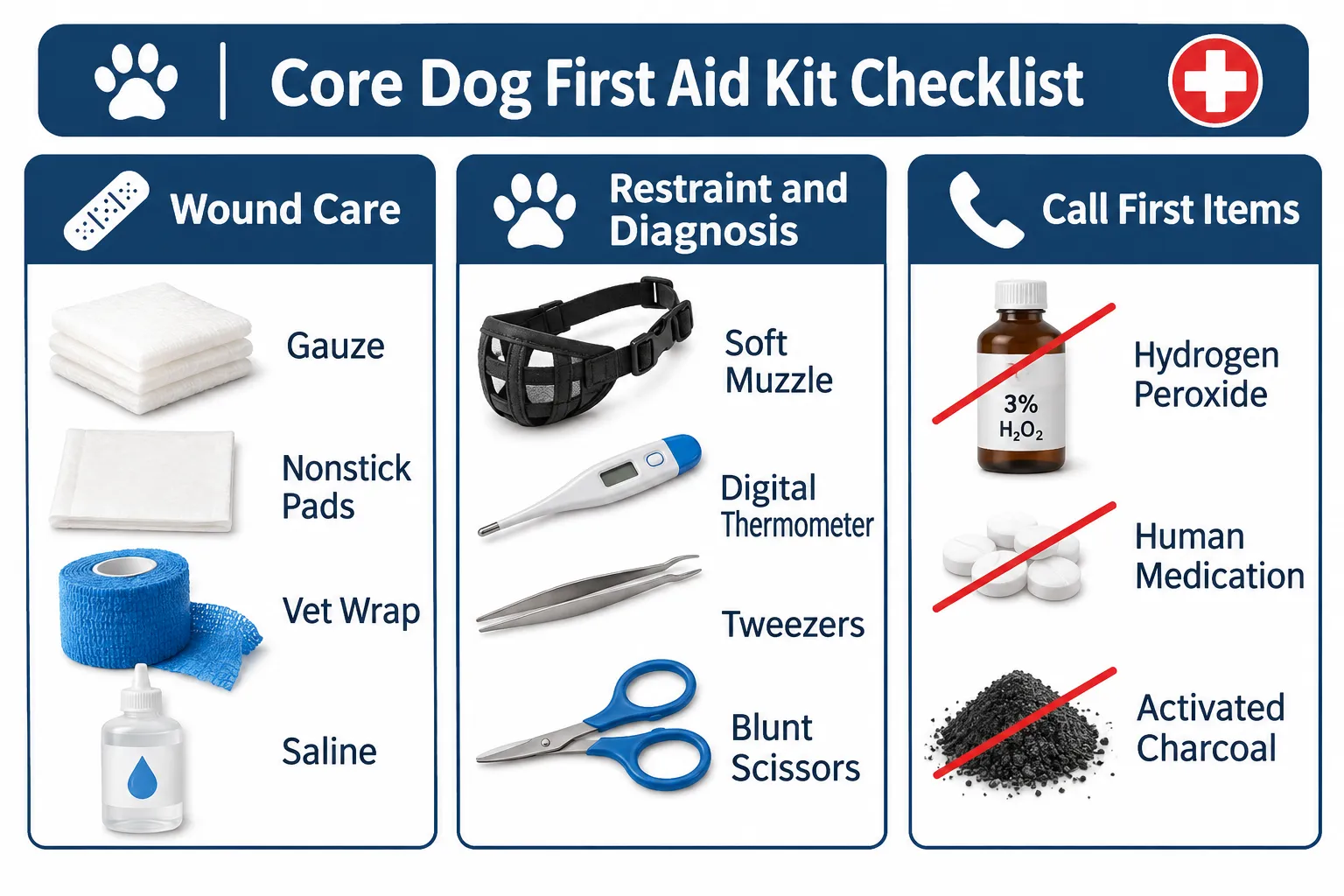
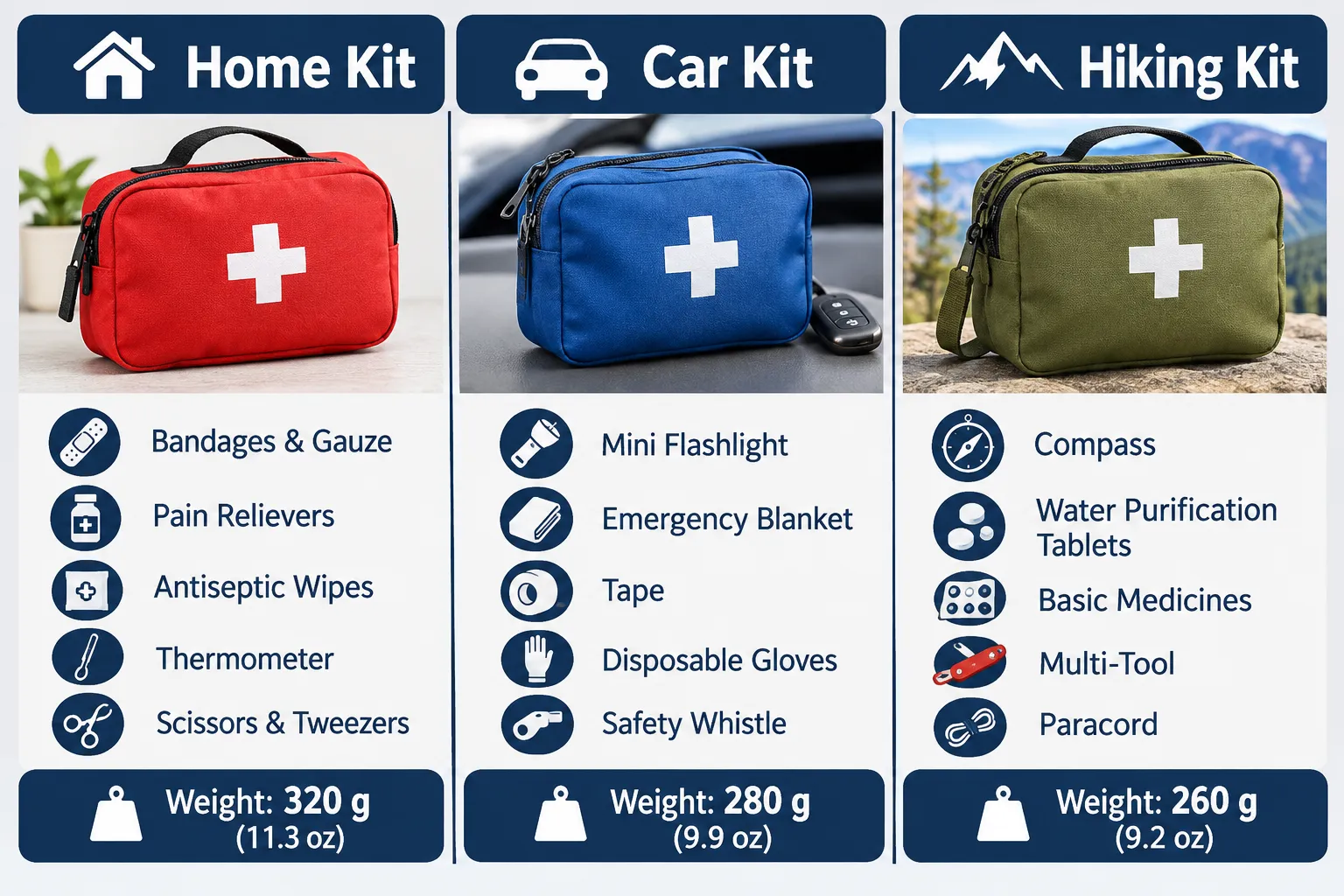
A dog first aid kit needs wound supplies (gauze, nonstick pads, vet wrap, saline), a muzzle, a digital thermometer, tweezers, blunt scissors, a printed emergency contact card, and nothing that requires a vet’s direction to use safely, like hydrogen peroxide or human medication. Build a home kit, a car kit, and a smaller hiking version separately instead of carrying one oversized bag everywhere. If bleeding will not stop after 5 minutes of direct pressure, or your dog is unresponsive, call a veterinarian or emergency clinic immediately, not after trying everything in the bag.
A dog first aid kit will not fix a broken bone or stop internal bleeding, but it can slow bleeding, protect a wound, and buy the time it takes to get a dog into a car and headed to a vet. That is the honest job of a dog first aid kit: a bridge to professional care, not a replacement for it.
Key Takeaways
- The American Veterinary Medical Association’s core checklist includes gauze, nonstick dressings, self-adhering tape, scissors, tweezers, a digital thermometer, and a muzzle, with poisoning supplies used only under veterinary or poison-control direction.
- Hydrogen peroxide can cause bloody vomiting, gastric ulceration, aspiration injury, seizures, and even death when used to induce vomiting without guidance, so it belongs in the “call first” column, not the DIY column.
- Owners should begin CPR immediately on an unresponsive, non-breathing dog while arranging transport, a point echoed in emergency veterinary training resources.
- A functional dog first aid kit, whether bought or assembled at home, typically runs about $15 to $60 depending on pouch quality and included tools like a thermometer or muzzle.
- The American Red Cross encourages pet owners to complete a short pet first-aid course covering choking, wounds, CPR, and seizures.
- Ohio State University’s Veterinary Medical Center recommends a separate evacuation kit with extra food and medication for disaster scenarios, which is a larger category than a basic first aid pouch.
- AVMA specifically warns: do not muzzle a dog that is vomiting, and do not induce vomiting without professional direction.
Call immediately for: bleeding that soaks through gauze in under 5 minutes, a dog that is unresponsive or not breathing normally, suspected poisoning, a swollen or hard abdomen, repeated collapse, or a seizure lasting more than 2 minutes. A the kit buys time. It is not a treatment plan.
Doggy Rank IQ Tool
Dog First Aid Kit Builder and Call or Treat List

Pick the kit type and dog size. You get the checklist and a plain call now versus treat and watch list.
What is a dog first aid kit
A the kit is a stocked set of wound care and stabilization supplies kept at home, in the car, or in a pack, built to manage minor injuries and slow down emergencies until a dog reaches a veterinarian. It is not a home pharmacy and it is not a substitute for an emergency vet visit.
The confusion usually starts the day the kit arrives. It gets a shelf in a closet, a nod of approval, and then sits zipped and forgotten until a torn nail or a bee sting forces someone to dig through it at 9pm wondering which item is actually safe to use. That gap between owning a kit and knowing how to use it is the real problem, and closing it is the point of this guide.
A functional the kit should answer three questions fast: what do I use, how do I use it, and when do I stop trying and call someone. The Penn Vet Small Animal First Aid Tip Sheet notes that emergency care usually starts with a phone call to the veterinarian, who can walk an owner through airway problems, bleeding control, and safe transport before the dog ever arrives at the clinic. The kit supports that call. It does not replace it.
What should I actually put in a dog first aid kit?
Pack wound care, restraint, and diagnostic basics, and skip anything that requires a vet’s judgment to use correctly. AVMA’s recommended list is the most reliable baseline available and covers the scenarios owners actually face: cuts, limping, mild shock, and transport.
Core supplies (AVMA-based list):
- Gauze rolls and nonstick pads
- Self-adhering wrap (vet wrap style)
- Adhesive tape
- Blunt-tip scissors
- Tweezers (for splinters, not embedded objects)
- Digital rectal thermometer (normal dog temperature runs 101 to 102.5°F)
- Soft muzzle, sized for your dog
- Sterile saline or eyewash
- Disposable gloves
- Clean towels
- Spare leash and collar or slip lead
- Printed emergency contact card
- Current vet records and vaccine proof
Leave out hydrogen peroxide, activated charcoal, and any medication unless your own veterinarian has told you, by name, what dose to give for what situation. AVMA ties these items to veterinarian or poison-control direction, not routine self-use.
Decision rule: if an item requires guessing a dose or guessing whether it’s safe, it goes in the “call first” category, not the kit itself.
How much does a good dog first aid kit cost?
A usable the kit runs about $15 to $60 whether you buy it ready-made or build it yourself, with price differences mostly coming from pouch quality and whether a thermometer and muzzle are already included. A basic version pulled from items already in a bathroom cabinet (gauze, tape, saline, gloves) can cost under $20.
A labeled, zippered kit with a sized muzzle and splint material pushes toward the higher end. Neither price point guarantees usefulness on its own. A $60 kit nobody has opened is worth less than a $15 kit an owner has actually practiced with once, because muscle memory matters more than inventory when a dog is bleeding and stressed.
Best dog first aid kit brands or is DIY better?
DIY and ready-made the kits both work fine as long as the supplies match the AVMA baseline list, so the choice comes down to time and confidence rather than one option being objectively better. Buying a pre-assembled kit saves research time and guarantees a muzzle and thermometer are already sized and included. Building one from scratch lets you choose quality items (like a real digital thermometer instead of a flimsy one) and add breed-specific extras.
Checklist for judging any kit, store-bought or homemade:
- Does it include a muzzle sized for your dog’s head shape
- Does it include a digital thermometer
- Does it skip hydrogen peroxide and other professional-direction items
- Is the pouch clearly labeled so a panicked family member can find things fast
- Does it fit where you’ll actually keep it (glove box, mudroom shelf, hiking pack)
If a kit’s marketing photo looks suspiciously tidy and full of items you would never recognize under stress, that is a sign to simplify, not to buy a bigger one. DoveLewis Emergency Animal Hospital recommends building your own kit around items you already know how to use, which is often more practical than an unfamiliar pre-packed bundle.
When should I use a dog first aid kit vs going to the vet?
Use home first aid for minor, visible, stable injuries: small cuts, a torn nail with light bleeding, a minor burn, or a bee sting with no swelling of the face or throat. Call a veterinarian first for anything involving heavy bleeding, breathing changes, suspected poisoning, collapse, or an injury you cannot fully see, like a limp with no visible wound.
AVMA’s guidance is built around the idea that first aid buys time and does not replace diagnosis. The Jacksonville Animal Care and Protective Services first aid checklist reinforces calling ahead so a clinic can prepare, especially for suspected fractures, toxin exposure, or heatstroke.
Common mistake: waiting to see if a wound “gets better overnight.” Infection and internal injury do not announce themselves early, and a few hours of delay can change the outcome for conditions like bloat or internal bleeding. If you’re unsure what warning signs matter most, our guide on bloat symptoms in dogs breaks down what a true emergency abdomen looks like.
How do I treat a dog cut or scrape at home?
Rinse with sterile saline, apply gentle direct pressure with clean gauze for a full 5 minutes without checking early, then cover with a nonstick pad and vet wrap, not so tight that two fingers cannot slide under the bandage. If bleeding has not slowed after 5 minutes of steady pressure, that is a call-the-vet situation, not a bigger-bandage situation.
Steps for a minor cut or scrape:
- Put on gloves before touching the wound.
- Rinse debris away with sterile saline, not tap water and soap.
- Apply direct pressure with clean gauze for 5 full minutes.
- Cover with a nonstick pad, then wrap with self-adhering tape.
- Check the bandage every few hours for swelling, cold toes, or odor.
- Leave the bandage on no longer than 24 hours without a recheck.
Edge case: a cut on the paw pad often looks small on top and runs deeper than it appears. Pad wounds and bite wounds deserve a same-day vet look even if bleeding stops, because of infection risk.
Can I use human first aid stuff on my dog?
Some items cross over safely, like plain sterile gauze, saline, and disposable gloves, but most medications and adhesive bandages made for people are a poor fit for dogs. Standard stick-on band aids generally do not work because the adhesive pulls fur and the pad is too small to stay put once a dog starts licking or walking on it.
Cotton balls are also a poor substitute for gauze pads on open wounds because loose fibers can stick in tissue. Children’s Benadryl, aspirin, and Pepto-Bismol are often assumed to be safe for dogs, but dosing depends on weight, breed, and existing health conditions, so none of them belong in a kit without a veterinarian naming the exact dose first. Keep the poison control number (ASPCA Animal Poison Control or Pet Poison Helpline) on your contact card instead of guessing from a search result.
What’s the difference between a dog first aid kit and a regular one?
A human first aid kit is built around items like adhesive bandages, antiseptic wipes, and over-the-counter pain relievers that are either the wrong size or unsafe in dog-specific doses, while a the kit swaps those for gauze and wrap, a muzzle, and a rectal thermometer. The muzzle is the biggest difference most people overlook: even a gentle, well-trained dog may bite when it’s in pain, and a human kit never includes one.
A the kit also skips most oral medications entirely, where a human kit leans on them (acetaminophen, ibuprofen, antihistamines at human doses). None of those translate safely to a dog without veterinary direction, and some, like ibuprofen, are outright toxic to dogs even in small amounts.
Best dog first aid kits you can buy ready made
A ready-made the kit is worth buying when you want a complete starting inventory without researching every item yourself. Most useful commercial kits include a muzzle, gauze, vet wrap, tweezers, and a thermometer in one labeled pouch. This guide does not rank specific commercial products, since the goal is teaching what belongs in any kit, not steering toward one brand.
What to check before buying one, regardless of brand: a muzzle sized for your dog, a thermometer, and the absence of hydrogen peroxide or other professional-direction items. The Banfield Pet Hospital first aid guide offers a similar baseline list that lines up closely with AVMA’s recommendations, which is a good sign the core list is stable across sources.
Where to buy dog first aid kits online
The kits are sold on Amazon, Chewy, and through most national pet retailers, along with individual components if you’d rather assemble one yourself. Buying individual pieces (gauze, vet wrap, a muzzle, a thermometer) from a pharmacy or pet store often costs less than a bundled kit and lets you pick quality items instead of the cheapest version of each.
If you’re shopping online, read the product description closely rather than relying on the cover photo. Look for the actual contents list, confirm a muzzle is sized (not one-size-fits-all for a 10-pound dog and an 80-pound dog alike), and check reviews for complaints about flimsy thermometers or wrap that won’t stick. A kit with four stars and specific complaints about one weak item is often still a fine base if you swap that one piece.
Do I need a first aid kit for my dog?
Yes, a basic the kit is worth having for any dog that goes outside, rides in a car, or lives in a household with stairs, other pets, or small children, which covers most dogs. The value is not abstract: AVMA’s checklist exists because minor injuries (scrapes, torn nails, bee stings) happen often enough that having supplies ready saves a scramble.
It matters even more for active breeds and working dogs that spend time on trails, farms, or in yards with fencing and wildlife. If you’re weighing which breed fits your household and lifestyle before adoption, our guide to best dogs for first time owners covers activity level and care demands that affect how often a kit actually gets used.
Dog first aid kit for puppies vs adult dogs
A puppy’s the kit needs a smaller muzzle, a lower-range thermometer reference, and extra attention to choking hazards since puppies chew and swallow things adult dogs usually avoid. Puppies also dehydrate and crash faster than adult dogs during vomiting, diarrhea, or blood loss, so the threshold for calling a vet should be lower and faster with a young puppy.
Adult dog kits can lean more toward trauma and mobility injuries (torn nails, joint strain, cuts from fences or trail debris), especially for larger or more active breeds. If you’re raising a puppy, pairing a basic first aid kit with early training (like the commands covered in our guide to essential puppy commands) makes emergency handling easier later, since a puppy that already knows “stay” is far easier to treat calmly.
How do I bandage a dog’s paw properly?
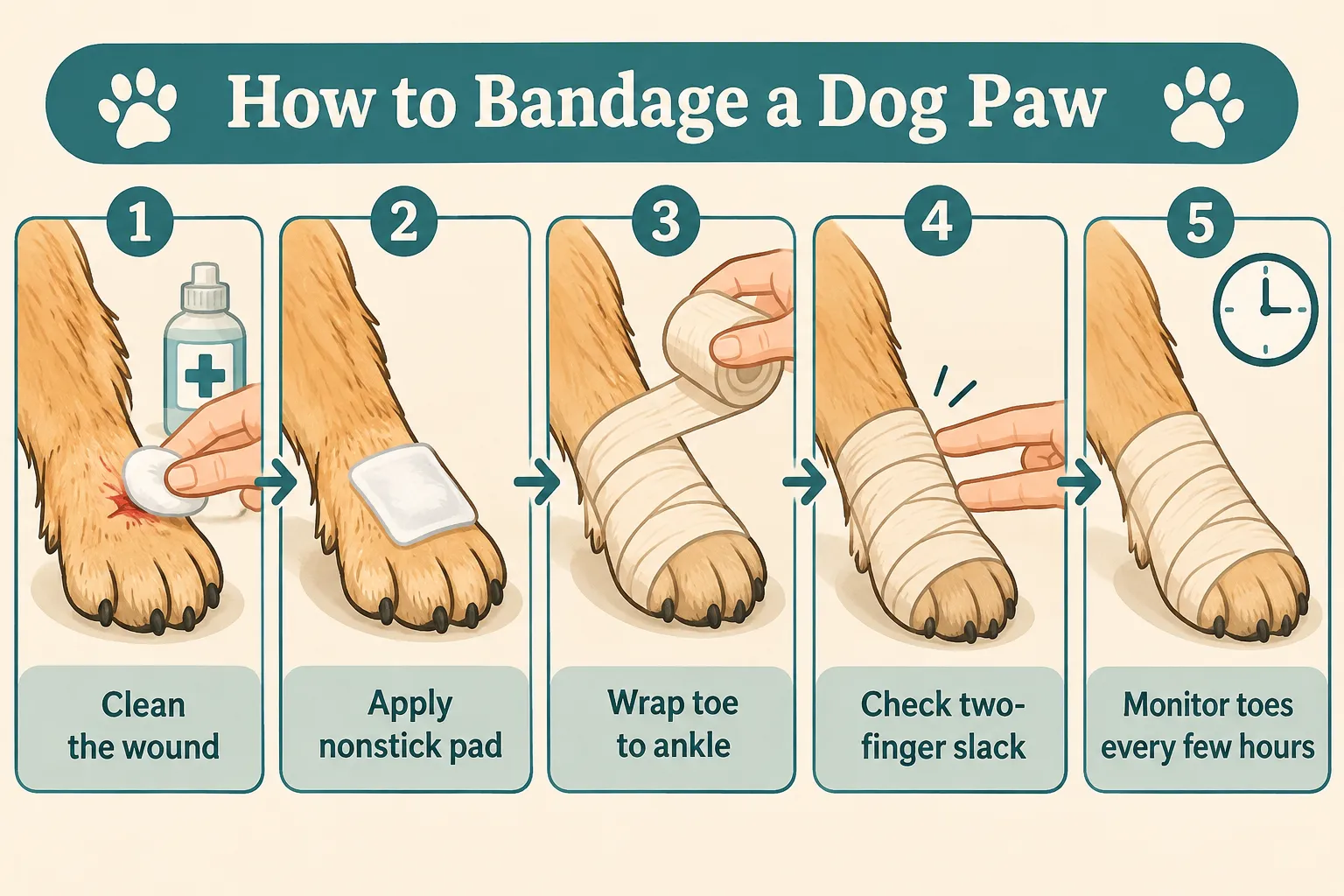
Wrap a paw with a nonstick pad against the wound, then self-adhering wrap in overlapping layers from toe to ankle, leaving the wrap loose enough to slide two fingers underneath. Too tight cuts off circulation within hours. Too loose falls off within an hour. There’s a narrow, correct middle.
Check the exposed toes every 2 to 3 hours for swelling, cold temperature, or a gray color, any of which means the bandage is too tight and needs to come off immediately. A paw bandage is a bridge to the vet, not a long-term fix, and most paw wounds deserve a professional look within 24 hours even if the bleeding has stopped.
How do I know if my dog’s injury needs emergency care?
An injury likely needs emergency care if bleeding will not stop after 5 minutes of pressure, your dog is limping and refusing to bear any weight, there is visible bone or deep tissue, or your dog seems disoriented, pale-gummed, or collapsed. Any of these means stop treating with the kit and start driving.
A good gut check: would you feel comfortable waiting until morning if this were your own injury? If the answer is no, it’s no for your dog too. The VCA/Livermore Family Pet Hospital emergency guidance lists pale gums, labored breathing, and abdominal swelling as signs that should never wait for a morning appointment.
What if my dog won’t let me touch an injury?
A dog that growls, snaps, or pulls away from an injured area is reacting to pain, not acting aggressively, and forcing contact without a muzzle usually makes both the injury and the behavior worse. Apply a soft muzzle first (unless your dog is vomiting, since AVMA warns against muzzling a vomiting dog), then approach slowly and keep your voice calm and low.
If a dog still will not allow any handling, wrap it loosely in a towel or blanket to limit movement and prevent further injury during transport, and let the clinic handle direct examination. Forcing a frightened, injured dog into a bandage at home is often less safe than driving to the vet with the wound simply covered by a towel held in place.
Do I need a dog first aid kit if I have pet insurance?
Yes, pet insurance and a the kit solve two different problems: insurance helps cover the cost of veterinary treatment, while a first aid kit helps you stabilize a dog in the minutes before that treatment starts. Insurance does nothing for a dog bleeding on your kitchen floor at 11pm. A kit and a calm, practiced response do.
Even with excellent coverage, the first 10 to 15 minutes after an injury often determine how well a dog tolerates the car ride and how much damage control happens before arrival. A the kit is the part of emergency preparedness insurance cannot replace.
Expired items in a dog first aid kit still okay to use?
Saline, antiseptic wipes, and any item with a printed expiration date should be replaced once expired, since their sterility and effectiveness are not guaranteed past that point. Gauze and vet wrap without liquid ingredients generally last longer, but tape and self-adhering wrap can lose adhesion over time even unopened, especially after sitting in a hot car or garage.
Check a the kit every 6 months and replace anything opened, anything with a visible expiration date, and any wrap that feels stiff or dried out. A forgotten kit is usually an expired kit, so set a recurring reminder rather than relying on memory.
Smallest dog first aid kit for travel or hiking
A car or travel the kit needs the same wound basics plus printed copies of vaccine records, a spare leash, and the nearest emergency clinic’s address already saved before leaving, not searched for mid-drive. AVMA’s travel guidance points to carrying medical records and contact information as part of basic preparedness.
A hiking kit trims weight: smaller gauze rolls, a compact muzzle, a tick removal tool, and a printed map note of the nearest emergency vet along the route, since cell service on trails is unreliable. For true evacuation scenarios, Ohio State’s emergency kit guidance recommends a separate, larger kit with several days of food and medication, which is a different category entirely from a basic first aid pouch. Rural Veterinary Outreach’s first aid resources also note that rural and trail settings often mean longer drive times to a clinic, which makes a stocked, practiced kit even more valuable than in a city.
What common mistakes do people make with dog first aid?
The most common mistakes are using hydrogen peroxide to induce vomiting without calling poison control first, muzzling a vomiting dog, and over-tightening a paw bandage. Each one is well-intentioned and each one can make things worse.
- Using hydrogen peroxide casually: this can cause bloody vomiting, gastric ulceration, aspiration injury, and death from unsupervised use.
- Muzzling a vomiting or struggling-to-breathe dog: AVMA explicitly warns against this, since a muzzle on a vomiting dog risks choking.
- Treating and waiting instead of calling: a quick call to the vet or an emergency line often takes less time than the home remedy itself.
- Letting the kit expire silently: saline and some wraps have shelf lives, and a forgotten kit is often an expired kit.
- Buying a kit and never opening it: practicing with the supplies once, even on a calm day, makes a real emergency far less chaotic.
How often should I replace items in the kit?
Check a the kit every 6 months and replace saline, any opened gauze packaging, and items with a visible expiration date. Tape and wrap lose adhesion over time even unopened, especially after a summer in a hot car, so test a scrap piece on your own skin if you’re unsure whether it still sticks.
A simple system: tape a small card inside the kit listing the date it was last checked, and set a calendar reminder for every 6 months. This takes less than 5 minutes twice a year and prevents the common failure of reaching for a kit mid-emergency only to find dried-out wrap and empty saline.
FAQ
What is the single most important item in a the kit? A soft, properly sized muzzle is the most important item, since even calm dogs may bite when injured and frightened, and most other supplies are useless if you cannot safely handle the dog.
Can I make my own the kit instead of buying one? Yes, a DIY the kit built from AVMA’s checklist works just as well as a store-bought one, and often costs less since many items (gauze, saline, gloves) are already in a home medicine cabinet.
How do I know if my dog’s temperature is dangerous? A normal dog temperature runs 101 to 102.5°F. A reading above 104°F or below 99°F is an emergency and warrants an immediate call to a veterinarian.
Should I include medication in my dog’s first aid kit? No, avoid including any medication unless your veterinarian has specifically named the drug and dose for your dog, since many human medications are toxic to dogs even in small amounts.
How long should I apply pressure to a bleeding wound before giving up? Apply steady direct pressure for a full 5 minutes without checking early. If bleeding has not slowed by then, stop trying home remedies and call a vet or emergency clinic immediately.
Is a the kit different for small breeds versus large breeds? Mostly in sizing: small breeds need a smaller muzzle and gauze width, while large breeds need more gauze volume and a sturdier splint material if included. The core supply list stays the same.
Do I need a separate kit for hiking trips? Yes, a smaller, lighter the kit built for trail use (compact muzzle, tick tool, less gauze) is more practical than carrying a full home kit on a hike.
What should I do if my dog swallows something toxic? Call ASPCA Animal Poison Control or Pet Poison Helpline immediately rather than inducing vomiting at home, since hydrogen peroxide and other home remedies can cause additional injury without professional guidance.
Related reading
For more on keeping dogs healthy and safe day to day, see our guides on choosing the best food for your dog, recognizing bloat symptoms early, and training essential commands in puppies.