
This post contains affiliate links. If you buy through one we may earn a commission at no extra cost to you. As an Amazon Associate I earn from qualifying purchases.
Quick Answer
A dog paw washer is a cup, foam, or brush tool built to remove mud, salt, and grit from a dog’s paws between baths. It works well when the cup opening actually matches your dog’s paw width and when you rinse with enough lukewarm water to lift debris rather than smear it. For dogs that panic at paw handling, a no-rinse foam with a brush solves the same mess problem without the cup.
Punchline
A dog paw washer only earns its spot by the door if the cup actually fits your dog’s paw width. Buy the wrong size and you’ve bought a cup that sits in a drawer while the towel does the real work.

Key Takeaways
- Dexas sizes its MudBuster line by paw width: small up to 2 inches, medium 2.5 to 3.5 inches, large above 3.5 inches, according to animalso.com.
- Retailer size labels for the same product line are not always consistent with the manufacturer’s own chart, so measuring the paw before buying matters more than trusting the size name on the box.
- The American Kennel Club recommends wipes or a damp cloth for ordinary dirt, and a full wash plus a portable paw cleaner for heavy mud or winter road salt, per AKC.
- Ice melt and de-icing salt can irritate or burn paw pads, which is why VCA Animal Hospitals recommends rinsing paws after any walk on treated sidewalks.
- Plain lukewarm water handles most mud and salt. Save medicated or antiseptic rinses for anything a vet has actually recommended.
- A dog paw washer needs its own cleanup: empty the water, rinse the bristles, separate removable parts, and dry fully before the next use.
- Dandylion’s no-rinse foam skips the cup step entirely, which matters for dogs that resist paw handling or have sore, arthritic joints that make standing on three legs uncomfortable.
- Torn or injured paw pads need a vet, not a cleaning tool. VCA’s first aid guide covers what to do when a pad is actually bleeding or cut.
What is a dog paw washer and how does it work
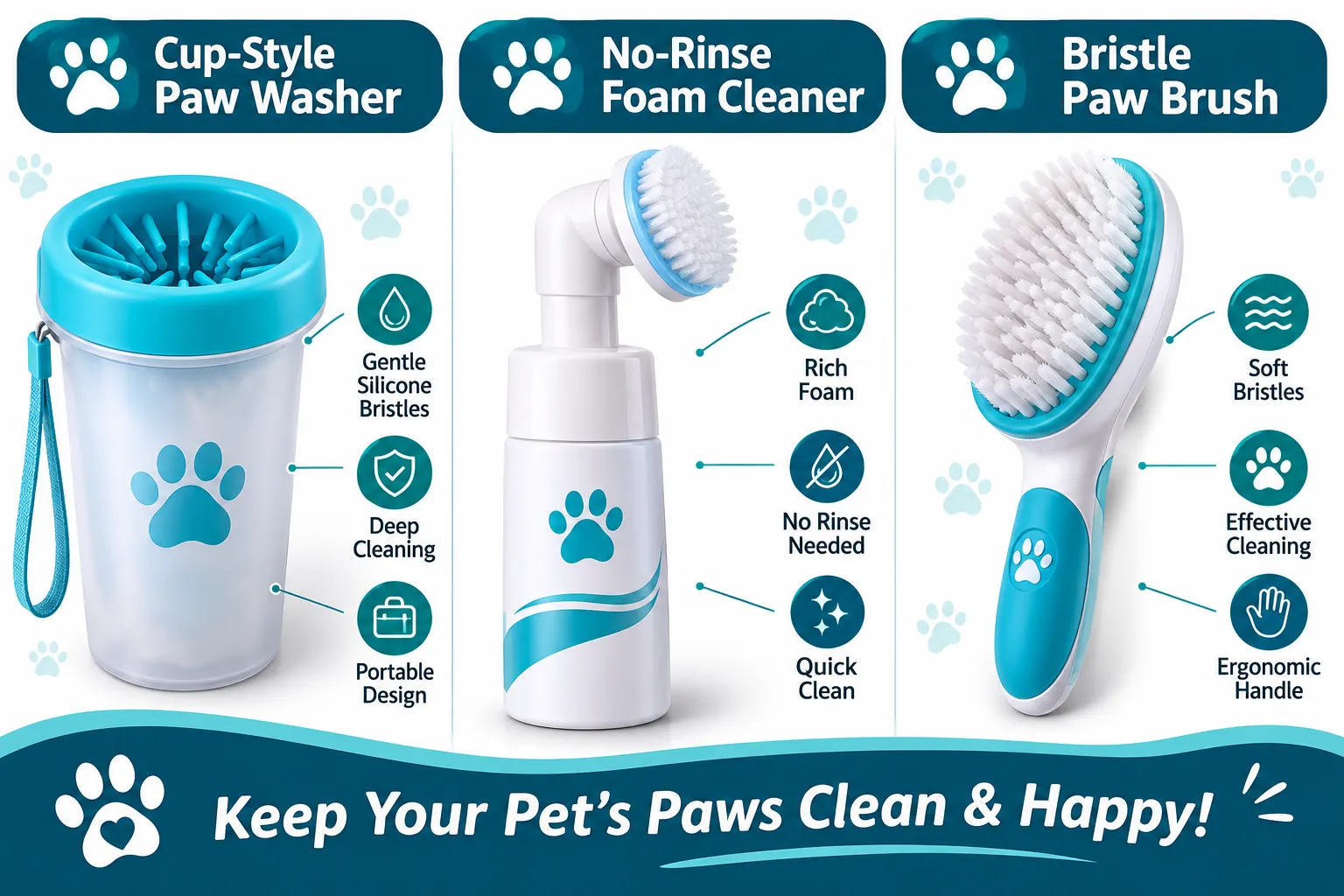
A dog paw washer is a small grooming tool designed to clean a dog’s feet without a full bath. The most common style is a cup lined with soft silicone bristles: you fill it partway with water, dunk the paw in, twist gently, and the bristles work mud and grit loose while the water catches the mess. Other styles include no-rinse foam cleaners applied with a brush, simple paw brushes for dry debris, and microfiber mitts for a quick wipe.
The cup style works through friction and water, not soap in most cases. The silicone bristles flex against the paw as it rotates, loosening dried mud or packed dirt between the pads and around the nails. Because the water stays contained in the cup instead of running across your floor, it is mainly a convenience and mess-control tool rather than a deep-cleaning device. Good Housekeeping’s testing of portable paw cleaners found that the cup designs worked fastest on wet mud, while dried, caked dirt needed a longer soak before the bristles could loosen it.
A dog paw washer does not replace a full bath, and it is not a medical tool. It will not diagnose cracked pads, yeast infections between the toes, or allergy-driven licking. If a dog is limping, chewing at a foot constantly, or has visibly red or swollen skin between the toes, that calls for a vet visit, not a cleaning cup.
Best dog paw washers to buy
The best dog paw washer for most households is a correctly sized silicone bristle cup, with a no-rinse foam as the backup for dogs that won’t tolerate the cup. PEOPLE’s roundup of paw cleaners and testing from Pet Science Review both point to the same conclusion: fit and bristle softness matter more than brand name.
Three products worth comparing directly:
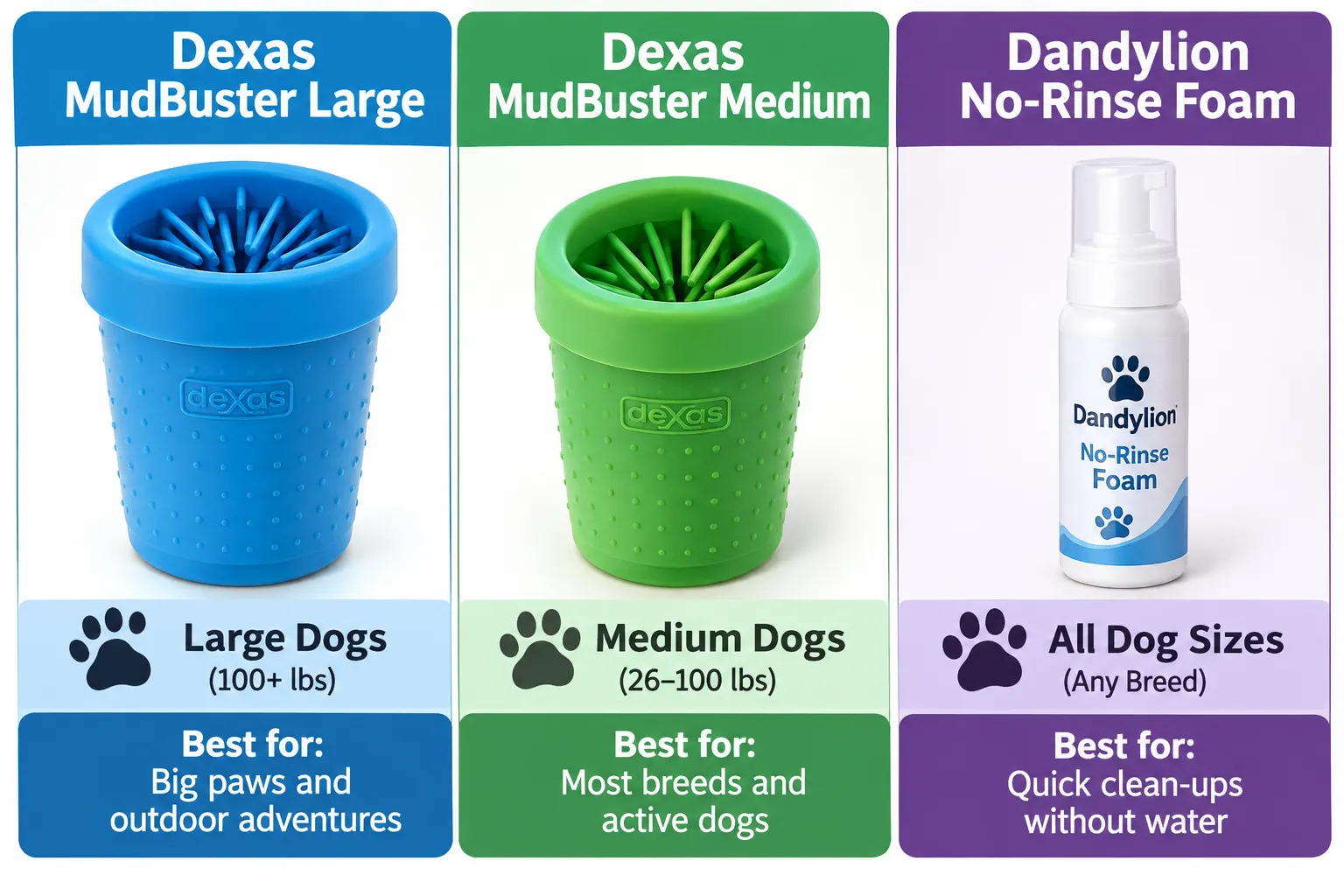
- Dexas MudBuster Large Dog Paw Cleaner, Blue. Built for wider paws, with a tall cup and soft silicone bristles. Good for dogs in the 2.5 to 3.5 inch paw width range, though you should measure first since listings vary.
- Dexas MudBuster Portable Dog Paw Cleaner, Medium, Blue. A smaller, travel-friendly version of the same cup design, suited to most mid-size dogs and everyday mud.
- Dandylion Dog Paw Cleaner, No Rinse Foam with Brush. Skips the cup step entirely. You spray or pump foam onto a brush and work it through the paw, then towel off. No water, no dunking.
Chewy reviewers of the MudBuster line frequently mention two things: the bristles hold up well over repeated use, and sizing confusion is the most common complaint, echoing the fit issue covered in the next section (see Chewy’s MudBuster reviews).

How much do dog paw washers cost
Most this paw washer cups run from about $10 to $25, depending on size and brand, while no-rinse foam cleaners sit in a similar $15 to $25 range for a bottle that lasts weeks of regular use. Paw brushes and microfiber mitts tend to be the cheapest option, often under $10.
Price differences mostly track size and material, not performance. A medium Dexas MudBuster costs less than the large version simply because it uses less material, not because it cleans worse. If you’re budget-conscious, buying the correctly sized medium cup instead of defaulting to “large because my dog is big” saves money and avoids the fit problems covered below.
Dog paw washer vs just rinsing with a hose
A hose rinse works fine outdoors in warm weather, but it soaks the dog’s legs and belly along with the paws, and most owners don’t want to hose a dog down every time they come in from a walk, especially in winter. A this paw washer targets just the foot, which is faster and keeps the rest of the dog dry.
The tradeoff: a hose uses more water and rinses more thoroughly, which matters if a dog has walked through something you want fully flushed off, like de-icing salt. VCA’s ice melt safety guide recommends a thorough paw rinse after exposure to sidewalk salt because residue left on the pad can cause irritation or get ingested when the dog licks its feet. A quick dunk in a paw washer cup with enough water to fully submerge the paw handles this nearly as well as a hose, as long as you don’t shortcut the water level.
Choose a hose if you’re dealing with a dog that just rolled in something or walked through standing water contaminated with chemicals. Choose a this paw washer for the routine, everyday mud and salt scenario where speed and a dry living room floor matter more than a full rinse.
Do dog paw washers actually clean paws well
Yes, for surface-level mud, dirt, and salt residue, a this paw washer with soft bristles and enough water does the job, based on testing from Good Housekeeping and Pet Science Review. The results depend heavily on two things: using enough water to actually submerge and agitate the paw, and letting the bristles work for a few seconds rather than a one-second dunk.
Where a cup falls short:
- Dried, caked mud that’s been sitting for hours needs a longer soak, sometimes 15 to 20 seconds, before the bristles loosen it.
- Debris stuck deep between the pads or in the fur around the foot (common in longer-haired breeds) may need a separate comb-out first.
- Odor from something like skunk spray or rolling in something dead won’t come out with water alone.
A this paw washer is a surface-cleaning tool. For anything beyond mud, salt, dust, and light debris, plan on a proper bath or a trim of the paw fur.

Dog paw washer for small dogs vs large dogs
Paw width, not overall body size, determines which size this paw washer fits a dog. Dexas sizes the MudBuster by paw width: small for paws up to 2 inches, medium for 2.5 to 3.5 inches, and large above 3.5 inches, according to animalso.com’s breakdown. Cup dimensions scale with that: roughly 4.3 by 3.65 inches for small, 6 by 4 inches for medium, and 8.85 by 4.75 inches for large.
This matters because paw width doesn’t always track with breed stereotypes. A heavy-bodied but short-legged dog can have a narrower paw than a lankier dog half its weight. Measure the paw across its widest point (flatten it gently on a table) before assuming “large dog, large cup.”
Here’s the catch most buyers miss: retailer listings don’t always match the manufacturer’s own chart. One Amazon listing for the MudBuster large describes it as fitting 2.5 to 3.5 inch paws, which is actually Dexas’s medium range on the brand’s own site. Measure the paw. Don’t trust the size name on the box, and don’t trust the breed photo on the listing either.
Will my dog hate the paw washer
Some dogs tolerate a this paw washer cup immediately, and some never will, and both are normal reactions that depend on the dog’s temperament and past handling experiences. A dog that’s had its paws handled regularly since puppyhood (nail trims, grooming) usually adapts faster than one that’s never had its feet touched much.
Signs a dog is struggling with the cup, not just mildly annoyed:
- Pulling the paw away repeatedly and refusing to let it go back in
- Shaking, panting, or whale-eye (showing the whites of the eyes) when the cup comes out
- Growling or snapping, which signals real fear or discomfort, not just fidgeting
If a dog shows any of those signs consistently, forcing the cup usually makes things worse over time rather than better. Switch to a no-rinse foam with a brush, which lets you clean the paw without enclosing the foot in a tube. Or go back to basics: a damp washcloth, paw by paw, with treats for cooperation, following the gentle handling approach described in AKC’s paw cleaning guide.
Decision rule: if a dog tolerates nail trims and vet exams without a struggle, a cup-style this paw washer is worth trying. If a dog already fights basic paw handling, start with foam or a towel instead and build up tolerance slowly before introducing a cup.
Dog paw washer alternatives that work
A this paw washer isn’t the only option, and for some dogs and situations, it’s not even the best one. Reasonable alternatives include:
- Damp microfiber cloth or towel. Works for light dirt and dust, costs nothing extra, and is the AKC’s recommended option for ordinary mess.
- Dog wipes. Convenient for quick cleanups between walks, widely available at pet stores and online.
- No-rinse foam with a brush. Covered above, best for handling-averse dogs.
- A dedicated outdoor mat plus towel routine. Wipe paws on a textured mat at the door, then finish with a towel. Costs nothing beyond the mat.
- A shallow basin with a towel nearby. For dogs too large to comfortably fit a standard paw washer cup, a basin of lukewarm water and a hands-on rinse can work better than forcing a foot into an undersized cup.
Choose a towel or wipe if the mess is light and daily. Choose a this paw washer cup if the mess is heavy mud or salt and the dog tolerates the cup. Choose foam if the dog resists handling. For dogs that also need broader grooming help, a beginner’s guide to dog grooming covers routines beyond just the paws.
How often should I use a paw washer on my dog
Use a this paw washer after walks through mud, standing water, road salt, or heavy debris, not as a daily ritual regardless of conditions. Washing a dog’s paws every single day, especially with any kind of soap or cleaning solution, can dry out the pads and strip natural oils that protect the skin.
A reasonable routine:
- Dry, clean sidewalks: skip the washer, a quick visual check is enough.
- Light dust or pollen: a damp towel wipe suffices.
- Mud, wet grass, or standing water: use the paw washer cup or foam.
- Winter sidewalks treated with salt or ice melt: rinse every time, since residue left on the pad can cause irritation, per VCA’s ice melt guidance.
Common mistake: owners who buy a this paw washer often start using it after every single walk out of habit, even on dry days. That’s unnecessary wear on the dog’s pads and the cup’s bristles alike. Save it for the walks that actually produce visible dirt.
Dog paw washer not cleaning properly troubleshooting
If a this paw washer isn’t lifting mud or salt the way it should, the problem is almost always water level, soak time, or bristle condition, not the product itself. Work through these in order:
- Check the water level. A shallow fill means the paw gets wet but the bristles don’t fully contact the mess. Fill past the bristle line so the paw is genuinely submerged.
- Increase soak and agitation time. A one-second dunk rarely works on dried mud. Hold the paw in for 10 to 15 seconds with gentle rotation.
- Replace the water if it’s gotten muddy. Reusing dirty water from a previous paw just redeposits grime. Empty and refill between paws if the mess is heavy.
- Inspect the bristles. Matted or flattened silicone bristles lose their scrubbing action over time. Rinse them clean after every use and check for buildup.
- Confirm the paw actually fits. A cup too narrow forces the paw against the bristles unevenly, leaving gaps that never get touched. This loops back to the sizing problem: measure the paw, don’t guess.
If all of that checks out and the cup still underperforms on caked, dried mud, that’s a soak-time limitation, not a defect. Caked mud sometimes needs a bath instead.
Is a dog paw washer safe for sensitive paw pads
Yes, for dogs with normal, healthy pads, a this paw washer with soft silicone bristles and lukewarm water is safe and gentle. It becomes a problem only when pads are already cracked, cut, or inflamed, or when someone scrubs too hard.
Pet Science Review’s walk-cleaning guide recommends gentle rinsing rather than hard scrubbing for ordinary mud and salt, and that applies even more to sensitive pads. Warning signs that a paw washer isn’t appropriate today:
- Visible cracks, splits, or bleeding on the pad surface
- Redness or swelling between the toes, which can signal pododermatitis, an inflammatory condition that needs veterinary treatment, not home cleaning
- A torn or partially detached pad, which VCA’s first aid guide says should be seen by a vet promptly, with cleaning limited to gentle rinsing and bandaging, not a cup washer
For dogs with generally healthy but sensitive pads (some senior dogs, some thin-coated breeds), lukewarm water and a light touch with the bristles is fine. Skip hot water entirely, and skip any antiseptic or medicated rinse unless a vet has specifically recommended it for that dog.
Can you use a paw washer for a puppy
Yes, but introduce it slowly and expect the puppy to need more patience than an adult dog. Puppies are still forming associations with having their feet handled, and a cup that’s too big, too cold, or introduced too fast can create a lasting fear response.
Practical approach for puppies:
- Start with a dry run: let the puppy sniff and step near the empty cup with treats, before any water goes in.
- Use lukewarm, not cold, water the first several times.
- Keep sessions under 30 seconds per paw at first, building up gradually.
- Choose the small size if the puppy’s paw width is under 2 inches, and resize as the puppy grows rather than buying one large cup “to grow into.”
A puppy that associates the cup with treats and calm handling from early on will generally tolerate a this paw washer far better as an adult than one introduced to the tool for the first time at age three or four, after months of towel-only cleanups. For broader training groundwork that makes handling easier generally, see 5 essential commands every puppy should learn.
Dog paw washer for arthritis or senior dogs
A this paw washer can still work for senior or arthritic dogs, but the cup design, which requires standing on three legs briefly, can be uncomfortable for a dog with joint pain. For these dogs, a no-rinse foam applied while the dog is lying down, or a seated wipe-down with a damp towel, is often more comfortable than the cup.
Practical adjustments for senior or arthritic dogs:
- Clean paws while the dog is lying on its side rather than standing, if using foam or a towel.
- If using a cup, support the dog’s weight with a hand under the belly or chest so it doesn’t have to balance fully on three legs.
- Keep water lukewarm, not cold, since cold water on an arthritic joint area can increase stiffness afterward.
- Watch for any reluctance to lift a particular paw, which can be a sign of pain rather than simple avoidance of the washer itself.
If a senior dog seems to avoid one paw more than the others, that’s worth a vet visit before assuming it’s just dislike of the cleaning tool.
Common mistakes people make with paw washers
The most common mistake is buying based on the dog’s breed or overall size rather than measuring actual paw width, which leads directly to the large-vs-medium mismatch problem covered earlier. Beyond sizing, these mistakes come up repeatedly in product reviews and grooming guidance:
- Not enough water in the cup, which means mud smears instead of lifting off.
- Skipping the cleanup step after use. A this paw washer left wet and dirty between walks grows odor fast. Empty the water, rinse the bristles, separate any removable insert, and let it dry fully.
- Scrubbing too hard, which can irritate skin between the toes rather than just removing dirt.
- Treating the cup as a cure for skin problems. It removes surface grime. It does not address swelling, bleeding, embedded debris, or chronic licking, all of which call for a vet look.
- Forcing a scared dog’s foot into the cup repeatedly, which tends to deepen the fear response rather than build tolerance.
- Using hot water. Lukewarm is correct. Hot water can be uncomfortable on pads and doesn’t clean any better than lukewarm.
Doggy Rank IQ Tool
Dog Paw Washer Matcher
The viral cup fails half the dogs that try it. Pick by tolerance and mess type.
Fit, Rinse and Cleanup
The honest answer to “how wide should a this paw washer be for your dog” is simple: wide enough that the paw goes in without forcing it, with room left for the toes to spread naturally. Dexas lists small for paws up to 2 inches, medium for 2.5 to 3.5 inches, and large above 3.5 inches, with cup dimensions around 4.3 by 3.65 inches (small), 6 by 4 inches (medium), and 8.85 by 4.75 inches (large).
Retailer listings don’t always match the manufacturer’s own numbers. One Amazon listing for the MudBuster large describes it as fitting 2.5 to 3.5 inch paws, which is actually Dexas’s medium range on the brand’s own site. Measure the paw. Don’t trust the breed name on the box.
Rinse technique matters as much as fit. Check the paw against the opening first, never force it in, and rinse thoroughly rather than a quick dunk. Cleanup after use isn’t optional either: empty the dirty water, rinse the silicone bristles, separate any removable insert, and let it dry fully before the next walk. Skipping that step is how a this paw washer starts smelling like the mud it was supposed to remove.
Top 5 Features That Decide the Purchase
The feature that decides most purchases isn’t the brand name. It’s whether the opening actually matches your dog’s paw.
- Cup opening width matched to paw size. The Dexas MudBuster Large Dog Paw Cleaner, Blue is built for 2.5 to 3.5 inch wide paws, with a wider opening and taller cup for bigger feet.
- Bristle softness. Soft silicone bristles loosen mud without scraping sensitive pads, a detail both MudBuster sizes share.
- One-handed stability. A base that doesn’t tip when a wet, wiggling paw gets pulled sideways, which matters more on a slick mudroom floor than most photos suggest.
- No-rinse option for handling-averse dogs. Dandylion’s foam cleaner with brush skips the cup step entirely, which solves a different problem: a dog that won’t tolerate a foot going into anything.
- Easy cleanup design. Removable inserts and simple rinsing keep the washer itself from becoming a second mess.
Check the dimensions on each listing before buying, including whether the “large” label matches the manufacturer’s own size chart.
Comparison table: 3+ named rows with exact model names, price bands, key specs
This comparison table lines up three named products against price band, best-fit use case, and the one spec that matters most for each: cup size or formula type.
| Product | Price band | Best for | Key spec |
|---|---|---|---|
| Dexas MudBuster Large Dog Paw Cleaner, Blue | around $15 to $25 | Paws 2.5 to 3.5 inches wide | Silicone bristle cup, wide base |
| Dexas MudBuster Portable Dog Paw Cleaner, Medium, Blue | around $10 to $20 | Smaller to mid-size paws | Compact cup, travel friendly |
| Dandylion Dog Paw Cleaner, No Rinse Foam with Brush | around $15 to $25 | Dogs that resist paw handling | No-rinse foam, included brush |
Check current price for the Dexas MudBuster Large Dog Paw Cleaner, Blue (rel=”sponsored nofollow”)
Which pick fits which dog and owner?
A large, calm dog with wide feet suits the Dexas MudBuster Large Dog Paw Cleaner, Blue, built for 2.5 to 3.5 inch wide paws. Measure first since some retailer listings describe “large” differently than Dexas’s own chart.
- Budget pick: Dexas MudBuster Portable Dog Paw Cleaner, Medium, Blue, priced lower and sized for most everyday paws. It covers the routine mud scenario without paying for a bigger cup you don’t need.
- Handling-averse dogs: Dandylion’s no-rinse foam with brush, since nothing gets forced into a tube-shaped cup.
- Large breed owners: the large MudBuster, but check the width spec against your own tape measure, not the product photo.
- Owners short on time at the door: the foam and brush combo is faster than filling a cup with water each time.
- Puppies and seniors: start with a towel or foam, then move to a correctly sized cup once the dog tolerates basic paw handling comfortably.
Things to Watch Out For
The biggest complaint about a this paw washer isn’t the design, it’s fit mismatch. A cup too narrow for the paw means forcing it in, which teaches the dog to associate the whole process with discomfort.
- Inconsistent size labels. Amazon’s large listing and Dexas’s own large description don’t always match. Measure the paw before ordering.
- Not enough rinse water. A shallow fill means mud just smears instead of lifting off. Fill past the bristle line.
- Skipping the cleanup step. A cup left wet and dirty between walks grows odor fast; rinse the bristles and dry it.
- Scrubbing too hard. Gentle rinsing, not hard scrubbing, is the right approach for ordinary mud and salt.
- Treating the cup as a cure. It removes surface grime. It doesn’t address swelling, bleeding, or embedded debris, which need a vet look, especially anything resembling pododermatitis.
Who Should Skip This
Skip a cup-style this paw washer if your dog fights every attempt at paw handling, even gently. Forcing a scared dog’s foot into a tube repeatedly can make the fear worse, not better. The Dandylion no-rinse foam, or simply a damp cloth, solves the same mess problem with less resistance.
Skip it also if your dog’s paw width sits right on a size boundary and you’re not willing to measure first. Buying blind based on “my dog is a large breed” is exactly how the 2.5 to 3.5 inch mismatch happens. And skip the gadget altogether if your main mess is light dust or dry debris, where a towel or quick brush does the job without extra gear. For a dog with actual skin, nail, or dental issues alongside muddy paws, check the best harness for dachshund backs guide if handling or posture is part of the problem, or see a vet rather than assuming a cleaning tool will fix it. Owners building a broader at-home grooming routine might also find the beginner’s guide to dog grooming useful alongside paw care.
FAQ
Q: Are this paw washers worth it for muddy walks? A: For dogs that tolerate paw handling and have a reliably measured fit, a this paw washer saves time over a sink rinse or multiple towels, especially during wet-season walks.
Q: How do I safely clean my dog’s paws after a walk? A: Use lukewarm water, rinse gently rather than scrub, separate the toes to get trapped grit, and dry thoroughly between pads, following the approach described by AKC.
Q: What paw washer works for a dog that hates its feet touched? A: A no-rinse foam with a brush, like Dandylion’s, avoids pushing the foot into a cup and tends to be easier on handling-averse dogs than any cup-style design.
Q: Can you use a paw washer cup on a large dog? A: Yes, if the cup opening matches the paw width. Dexas’s large size is built for paws over roughly 2.5 to 3.5 inches depending on the listing, so measure before buying.
Q: How often should you wash a dog’s paws? A: After walks through mud, salt, or heavy debris. Daily washing isn’t required for every dog, and over-washing can dry out pads.
Q: Do paw washers remove road salt? A: A thorough rinse helps lift salt residue, and AKC specifically recommends a full wash during salt season rather than a quick wipe, since leftover salt on pads can cause irritation per VCA’s ice melt safety guidance.
Q: Is a foam paw cleaner safe if the dog licks it? A: Check the product label for ingredients and follow manufacturer guidance. This article doesn’t substitute for reading the actual label or asking a vet about a specific formula.
Q: How do you dry paws after washing? A: Use a dedicated towel, press rather than rub, and get between the toes where moisture collects, since trapped dampness between pads can cause irritation.
Q: Can a this paw washer help prevent pododermatitis? A: Regular rinsing removes irritants like mud and salt that can contribute to paw inflammation, but a this paw washer does not treat pododermatitis itself. VCA’s overview of pododermatitis explains the condition needs veterinary diagnosis and treatment, not home cleaning alone.
Q: What should I do if my dog has a torn paw pad? A: Stop using any cleaning tool on it and follow basic first aid: gentle rinsing with clean water, light bandaging if needed, and a prompt vet visit, as outlined in VCA’s first aid guide for torn foot pads.
Next step
Measure your dog’s paw width tonight, compare it against the size chart before you buy, and if your dog also needs grooming help beyond the paws, see our complete guide to cleaning dog teeth without brushing for another at-home routine that saves a salon trip.