
Comparing dog food brands is easier when you run every food through the same three checks: find the AAFCO statement, read the first five ingredients, and work out the cost per 1,000 calories instead of the cost per bag. As of 2026, that short routine still cuts through most of the marketing on the front of the package.
This article walks through each check, then covers labels, life stages and how to switch foods safely. Whether you are comparing dog food brands for a puppy, an adult or a senior dog, the same method holds up.
Product names on dog food bags can be misleading. A food named “beef” has to contain a much higher share of beef than one named “beef dinner,” and the rules shift again for “recipe” and “flavor” labels. Differences like these are why comparing dog food brands takes more than a glance at the front of the bag. With so many options claiming to be the best, a clear method saves time and money.
Working out the basics first? Read Best Dog Food: How to Choose the Right One for Your Dog.
In an ideal world, all dog food would be created equal. Instead, dog owners are presented with an overwhelming array of options, all claiming to be the best on the market. Wading through these choices to find a brand that is healthy, affordable, and appealing to your pet is often frustrating, and a simple routine takes much of the stress out of it. Complete and balanced commercial dog foods are made to meet established nutrition standards. The right food for your dog should meet their nutritional needs, as the nutritional requirements vary throughout a dog’s life. Checking with your veterinarian is a smart part of any food decision.
Key Takeaways
- Understand the importance of dog nutrition and the different nutritional needs of puppies, adults, and senior dogs
- Look at brand reputation and veterinary recommendations alongside the three checks when comparing dog food brands
- Explore life stage formulas and breed-specific diets to ensure your dog’s unique nutritional requirements are met
- Compare cost per 1,000 calories rather than price per bag, and treat customer reviews as a secondary clue
- Ask your veterinarian to review your shortlist before you commit to a food
Comparing Dog Food Brands in Three Steps
Use the same three checks on every food on your list, so each one is judged the same way.
- Step 1: The AAFCO line. Look for the statement that the food is complete and balanced for your dog’s life stage, such as growth, adult maintenance or all life stages. If the statement is missing, move on to the next food.
- Step 2: The first five ingredients. Ingredients are listed by weight, so the first few tell you most about what the food is built on. Look for named animal proteins rather than vague terms.
- Step 3: Cost per 1,000 calories. Bag prices hide differences in how calorie dense each food is. Find the calories per cup or per kilogram on the label, divide the price by the total calories in the bag, then scale that figure to 1,000 calories.
Before you switch, ask your vet if your dog has a medical condition that may need a special diet. Introduce the new food over 7 to 10 days, and keep treats to no more than 10 percent of daily calories.
Nutrition Basics to Know Before Comparing Dog Food Brands
Dogs, unlike cats, are not strict carnivores. While meat makes up the majority of their diet, domestic dogs can also derive nutrients from grains, fruits, and vegetables. A good dog food will contain meat, vegetables, grains, and fruits. The best dog foods contain high-quality versions of these ingredients that are appropriate for your dog’s digestive system.
Dogs’ Nutritional Requirements
Dogs require a wide range of nutrients in different quantities over the course of their lives, and the nutritional needs of a puppy are different from an adult dog. The Merck Veterinary Manual lists the recommended nutrients for dogs, along with the recommended amount by weight and age. Large breed dogs and puppies have different nutritional requirements than small breed dogs and puppies.
Ingredients in Quality Dog Foods
Carbohydrates, protein, fats, vitamins, minerals, and water are the essential nutrients that make up a quality pet diet. Carbs like properly processed wheat, milled corn, rice, rye, oats, and millet are an important energy source for pets. Taurine is an amino acid found in animal-based proteins. Vitamins and minerals like calcium, phosphorus, inositol, pantothenic acid, and cobalamin are also essential for healthy body functions.
Evaluating Nutrient Levels
Quality pet foods come in a range of prices, ingredients, flavors, and forms. Commercial diets formulated by veterinary nutritionists and labeled according to species and life stage meet industry standards set by the USFDA and AAFCO. Comparing dog food brands across wet and dry formats is fair, since there is no clear nutritional superiority between the two. Switching to a new food should take 7 to 10 days.
Reading Labels When Comparing Dog Food Brands
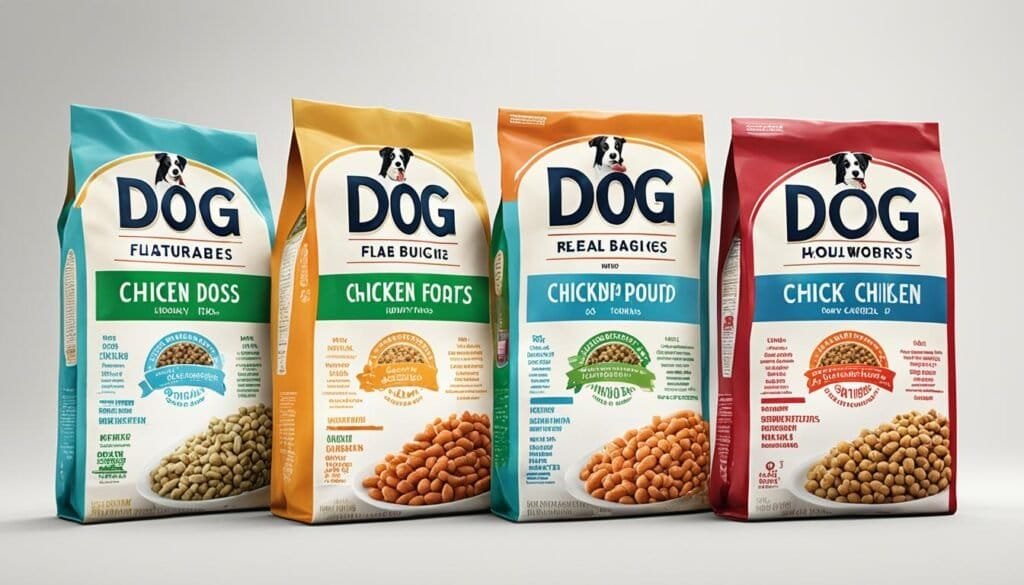
The label is where comparing dog food brands really happens. It shows the nutritional content, the ingredient makeup, and how suitable the food is for your dog.
Product Name Rules
The product name alone can provide a wealth of information about the dog food. For example, a label that reads “Turkey Dog Food” must contain at least 95% turkey. A “Turkey Recipe Dog Food” label means the product contains at least 25% turkey, but no more than 95%. In contrast, a “Turkey Flavor Dog Food” likely has less than 3% total turkey content.
Ingredients List Breakdown
While the ingredients list may seem straightforward, it’s important to look beyond the order of the items. Manufacturers can split up ingredients to make the distribution appear more even. The list also does not tell you about the quality or origin of the components used in the dog food. That is why the first five ingredients are a starting point, not the full story.
Guaranteed Analysis Limitations
The guaranteed analysis section on a dog food label provides the percentages of crude protein, fat, fiber, and moisture content. But this information only guarantees the minimum amounts of protein and fat, as well as the maximum amounts of fiber and moisture. This can be a relatively limited way to compare pet foods or assess the overall nutrient levels of a particular product.
Consider Your Dog’s Specific Needs
One size does not fit all in dog food. Dogs have varying nutritional requirements based on their age, size, and individual needs, so comparing dog food brands should start with the right life stage. As a responsible owner, pick a food that suits your own dog.
Dog Food for Puppies
Puppies have different nutritional needs compared to adult dogs. They require a diet that supports their rapid growth and development, with a balanced formula of proteins, fats, carbohydrates, vitamins, and minerals. Look for puppy-specific formulas that provide the necessary nutrients for brain, eye, and immune system health. Feeding a large breed puppy food can also help monitor the growth of your growing pup and prevent potential bone and joint issues.
Dog Food for Senior Dogs
As your canine companion reaches their golden years, typically around 7 years of age or older, their nutritional needs begin to change. Senior dogs may need a diet suited to a slower metabolism, lower activity levels, and health concerns such as weight management or palatability. Consider senior-specific formulas, and ask your vet what fits your aging pup.
Dog Food for Large and Small Breeds
The size and breed of your dog play a significant role in their nutritional requirements. Large breed dogs have different needs compared to their smaller counterparts, especially for supporting musculoskeletal health. Small breed dogs may require smaller kibble sizes and different nutrient balances to meet their specific nutritional needs. Be sure to select a dog food formulated for your pup’s size and breed so they receive proper nourishment.
Final Checks Before You Choose a Brand

Before you settle on a food, run through a few last checks, since comparing dog food brands is simpler when you finish the same way every time. First, make sure the label carries the nutritional adequacy statement from the Association of American Feed Control Officials (AAFCO). It indicates the food is complete and balanced for the life stage listed.
Research Brand Reputability
Researching the brand’s reputation is a useful step. Look for companies that have a long history of producing nutritious pet foods. Some reputable brands employ full-time veterinary nutritionists and own their manufacturing plants, which can give them more control over ingredient quality and the production process.
Evaluate Ingredient Quality
Go back to the ingredient list on the dog food label. Good foods list whole-food ingredients like named meats, vegetables, fruits, and whole grains near the top. Be cautious with vague ingredient names or heavily processed ingredients, as these may be less nutritious or harder for your dog to digest.
Consult Veterinary Recommendations
Your veterinarian is a valuable resource when you are comparing dog food brands. They can provide personalized recommendations based on your dog’s individual needs, such as age, size, and any health considerations. If your dog has a medical condition, ask whether a therapeutic diet makes sense before changing foods. A trustworthy pet food company should be willing to answer your questions and provide more information than what is available on the product label or website.
Putting the Three Steps Together
Comparing dog food brands takes less guesswork once you know what to look for. Start with the AAFCO line, read the first five ingredients, and compare the cost per 1,000 calories. Then factor in your dog’s life stage, size, and health.
Talking with your veterinarian and researching brand reputation and ingredient quality are useful final steps. Look for products that meet AAFCO standards and contain high-quality, named animal protein sources. Switch your dog to a new food gradually over 7 to 10 days, and ask your vet before adding supplements.
By taking the time to learn how labels work and what your dog needs, you can make an informed decision that supports your dog’s health and longevity. With the right food, you give your pup the nutrients to thrive and enjoy many good years by your side.
FAQ
What are the essential elements of dog food nutrition?
How can I tell a good dog food from a weaker one?
How do the nutritional needs of dogs vary throughout their life?
What should I check when comparing dog food brands?
Keep reading
- Frozen and Raw Dog Food: Storage, Safety and Cost
- Fresh Dog Food Delivery: Is a Subscription Worth It
- Vet Recommended Dog Food for Specific Health Problems
- Homemade Dog Food: Balanced Meals You Can Cook at Home
More in Food & Treats, or start from the Doggy Rank iQ homepage.