
Some dogs guard the house because territorial dog breeds were shaped over generations to watch, warn and defend, and that instinct is still strong in family homes today. Genetics, hormones, early socialization and daily management decide how much of it shows up in any one dog.
As of 2026, the best advice is still simple: know your dog’s breed history, read the warning signs early, and manage the setting before guarding turns into aggression. This article covers the biology behind the behavior, which territorial dog breeds are named most often, and what owners can do at home.
Guarding can be a useful trait, offering protection and a sense of security, but it can turn aggressive and even dangerous if it is not properly managed1. Understanding what drives canine territoriality is the first step toward a calm relationship with your dog.
Working out the basics first? Read what the dog bite data actually shows.
What Makes Territorial Dog Breeds Guard the House
Territorial aggression in dogs is a natural instinct that is deeply rooted in their evolutionary history. Dogs, like many other animals, have an innate drive to defend their personal space, resources, and family members from perceived threats. This drive is often stronger in territorial dog breeds that were historically bred for guarding, hunting, or fighting1. Understanding the underlying causes is important for owners who want to manage and reduce this behavior.
Keeping Territorial Dog Breeds From Over-Guarding
Guarding is normal, but a dog that lunges, snaps or cannot settle when people pass the window or gate needs help. These general steps are widely recommended by veterinarians and trainers.
- Socialize early and keep going, with calm, positive meetings with visitors, other dogs and new places.
- Manage the view. If watching the street sets off barking or lunging, limit access to windows and fence lines.
- Reward calm behavior, such as settling on a mat when guests arrive.
- Avoid punishment. It can raise fear and make guarding worse.
- Call your vet if the change in behavior is sudden, since pain or illness can affect temperament. Ask for a referral to a veterinary behaviorist or certified trainer if the guarding is intense.
Biological Factors Behind Territorial Dog Breeds
Genetics play a significant role in a dog’s propensity for territorial aggression2. Breeds that were selectively bred for traits like strength, size, and high prey drive are more likely to exhibit territorial behaviors1. Hormonal imbalances, such as excess testosterone, can also contribute to heightened aggression in some dogs2.
Environmental Factors Shaping Territorial Behavior
While genetics provide a foundation for territorial behavior, environmental factors also play a major role in shaping a dog’s personality and aggression levels. Dogs that experience abuse, neglect, or lack of proper socialization during their developmental stages are more likely to exhibit territorial aggression2. Exposure to violence or a lack of positive interactions with people and other animals can also contribute to this behavior2.
Which Territorial Dog Breeds Guard the House Most?
Among the most territorial dog breeds, a few stand out due to their unique characteristics and breeding history. Breeds like the Chihuahua, Rottweiler, Pitbull Terrier, Neapolitan Mastiff, Presa Canario, Chow Chow, Dogo Argentino, German Shepherd, and Basenji are often considered among the most aggressive and territorial1. These breeds may have a higher predisposition to guarding and protective behaviors, which can lead to territorial aggression if not properly socialized and trained2.
Key Takeaways
- Territorial aggression in dogs is a natural instinct rooted in their evolutionary history.
- Genetics, hormones, and breeding history can contribute to a dog’s propensity for territorial behavior.
- Environmental factors, such as socialization and exposure to violence, also play a significant role in shaping a dog’s territorial aggression.
- Some territorial dog breeds, like the Chihuahua, Rottweiler, and Pitbull Terrier, are often named among the most protective because of their breeding history.
- Responsible ownership and proper training are essential to manage territorial aggression in dogs and ensure the safety of both the dog and its human companions.
How Territorial Aggression Works
Canine aggression is a complex behavior that can have various underlying causes, including biological factors and environmental influences. Territorial aggression, in particular, refers to a dog’s defensive or protective behavior toward individuals or animals that approach their perceived territory3. This type of aggression is primarily fear-based, as dogs aim to defend their space and resources from potential threats3.
Genes, Hormones and Brain Chemistry
Genetics and hormonal imbalances can play a significant role in a dog’s propensity for territorial aggression3. Territorial dog breeds that have been bred for guarding and watchful behaviors may be more prone to intense territorial displays without proper socialization and training4. Neurological conditions or imbalances in neurotransmitters like serotonin can also contribute to heightened fear and anxiety, further worsening territorial behaviors3.
How Daily Life Shapes Territorial Behavior
Inadequate socialization, lack of proper training, and exposure to abuse or neglect can also shape a dog’s territorial behavior4. Dogs that are physically prevented from gaining access to perceived threats may develop heightened aggression or displacement behaviors, as they become increasingly frustrated4. On the other hand, early socialization, good control, and teaching dogs to respond positively to new arrivals can help mitigate territorial tendencies4.
Understanding the biological and environmental factors that contribute to territorial aggression is key to preventing and managing this behavior in dogs34. By addressing the root causes and using consistent training and management, pet owners can help their canine companions feel secure and reduce the risk of harmful incidents.
Proper socialization and training are key to managing territorial behaviors in dogs.
“Territorial aggression in dogs is a complex issue that requires a multifaceted approach, addressing both biological and environmental factors to achieve the best outcomes for pet owners and their canine companions.”34
Why Territorial Dog Breeds Still Differ as Individuals
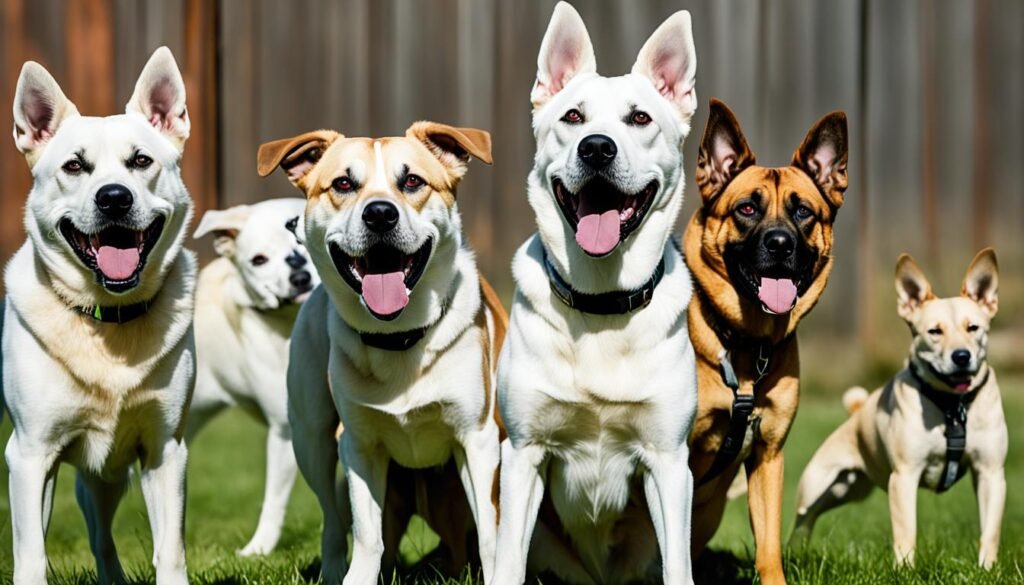
While certain territorial dog breeds, such as Pit Bull Terriers, Rottweilers, and German Shepherds, have a reputation for being more protective, it’s important to recognize that aggression is not solely determined by breed5. Male dogs tend to exhibit stronger territorial characteristics, while female dogs also display territorial behavior to an extent5. Factors like breeding for specific traits, lack of socialization, and improper training can all contribute to a dog’s territorial behavior5.
It’s essential to approach each dog as an individual and address any aggressive tendencies through responsible ownership, positive reinforcement training, and early socialization. Breed-specific traits can be misleading, as dogs of the same breed can have vastly different temperaments and behavioral tendencies5. For instance, Doberman Pinschers are noted for their highly territorial nature5, while other breeds such as Rottweilers, Bull Mastiffs, Rhodesian Ridgebacks, German Shepherds, and Giant Schnauzers are also known for their territorial behaviors5.
Misconceptions about breed aggression can lead to unfair prejudices and discrimination against certain dogs. By understanding the complex factors that influence a dog’s territoriality, you can make informed decisions about selecting and training your canine companion, ensuring a safe and harmonious living environment for both you and your pet5.
The table below compares size and lifespan for several breeds that often come up in guarding discussions.
| Breed | Average Weight | Average Height | Life Expectancy |
|---|---|---|---|
| Chihuahua | 2 to 7 pounds | 6 to 9 inches | 12 to 14 years |
| Dachshund | 15 to 30 pounds | 15 to 19 inches | 12 to 16 years |
| Chow Chow | 40 to 90 pounds | 17 to 22 inches | 11 to 13 years |
| Akita | 60 to 100 pounds | 23 to 28 inches | 8 to 10 years |
| American Pitbull Terrier | 35 to 60 pounds | 18 to 21 inches | 8 to 14 years |
| Cane Corso | 100 to 110 pounds | 24 to 28 inches | 10 to 12 years |
| Doberman Pinscher | 60 to 100 pounds | 24 to 28 inches | 10 to 12 years |
| German Shepherd | 66 to 88 pounds | 24 to 28 inches | 9 to 13 years |
| Rottweiler | 110 to 130 pounds | 24 to 27 inches | 8 to 10 years |
| Siberian Husky | 45 to 60 pounds | 21 to 24 inches | 12 to 14 years |
One cited source reports that the average cost of a claim for treating behavioral problems in dogs is around $2756.
“Approach each dog as an individual and address any aggressive tendencies through responsible ownership, positive reinforcement training, and early socialization.”
Living With Territorial Dog Breeds
Managing canine aggression, including territorial behavior, takes a combined approach that addresses both biological and environmental factors. While certain territorial dog breeds may be more prone to guarding, research indicates that breed alone does not determine a dog’s behavior7. Instead, a mix of genetics, socialization, training, and environmental influences shapes a dog’s overall temperament and aggression levels7.
Responsible dog ownership, which includes providing proper training, socialization, and positive reinforcement, is essential for mitigating aggressive tendencies7. Seeking the guidance of veterinarians and animal behaviorists can also help dog owners build individual plans for managing canine aggression and keeping a safe, harmonious relationship between dogs and their human companions8.
By understanding how territorial aggression develops, choosing a balanced approach to dog training and management, and recognizing the individual nature of each dog, owners can create a home where both the dog and the family can thrive. This approach, grounded in responsible dog ownership and the support of professionals, is key to addressing the complex issue of canine aggression and protecting the well-being of everyone involved78.
FAQ
What factors influence a dog’s territorial behavior?
Which territorial dog breeds are known to be the most protective?
How can dog owners manage territorial aggression in their pets?
Keep reading
- Most Intelligent Dog Breeds and What Smart Really Means
- French Bulldog: America’s Favorite and Most Debated Dog
- Dog on Dog Aggression: Which Breeds Start Fights
- Dog Bite Statistics by Breed and What They Leave Out
More in Breed Matchmaker, or start from the Doggy Rank iQ homepage.